NMP generally offers the lower residual-metal risk. Traditional Atom Transfer Radical Polymerization (ATRP) uses transition-metal catalysts, commonly copper or iron complexes, so catalyst removal can be a significant purification challenge. Nitroxide Mediated Polymerization (NMP) uses a metal-free reversible deactivation mechanism based on stable nitroxyl radicals and alkoxyamine species, making it better suited to polymers intended for medical, electronic, or other high-purity applications.
The central distinction is the catalyst system: ATRP introduces transition metals that may remain as trace residues, while NMP avoids intentional metal catalysts. Metal-free PTFE and PFA apparatus further reduce contamination by preventing metals from the reaction vessel and wetted surfaces from entering the polymerization.
How the Polymerization Mechanisms Differ
ATRP Uses Transition-Metal Catalysis
ATRP controls radical polymerization through reversible activation and deactivation of polymer chains. This process typically relies on a transition-metal complex, such as copper or iron, to mediate the reaction.
The catalyst is essential to the conventional ATRP mechanism, but it creates a downstream purification requirement. Even when the catalyst concentration is optimized or reduced, residual metal can remain in the polymer unless effective removal steps are used.
NMP Uses Nitroxyl Radical Control
NMP controls chain growth through reversible reactions involving stable nitroxyl radicals and alkoxyamine end groups. Because the mechanism does not require a transition-metal catalyst, the polymerization introduces substantially less intentional metal contamination.
This makes NMP attractive when the polymer's metal content is a critical specification. The process is still dependent on suitable reaction conditions and compatible monomers, but its basic control mechanism is inherently metal-free.
Why Residual Metal Content Matters
Trace Metals Can Affect Polymer Performance
Residual copper, iron, or other metals can alter polymer color, electrical behavior, oxidation stability, or interactions with other formulation components. The significance depends on the polymer's end use and the required purity level.
In medical and high-purity applications, even small amounts of contamination may require investigation, additional purification, or batch rejection. The issue is therefore not only catalyst cost but also the difficulty of proving and maintaining a low-metal specification.
ATRP Requires Deliberate Purification
ATRP polymers may require catalyst-removal operations such as adsorption, extraction, precipitation, filtration, or related purification methods. These steps add processing time and can affect polymer recovery, molecular-weight distribution, or scale-up practicality.
Modern ATRP variants can reduce catalyst loading and residual-metal levels, so it is inaccurate to treat all ATRP products as highly metal-contaminated. However, the use of a metal catalyst still creates a contamination source that NMP avoids by design.
NMP Reduces the Primary Metal Source
NMP does not intentionally add transition-metal complexes to the reaction mixture. Consequently, its residual metal content is generally determined more by raw materials, utilities, processing equipment, and handling than by the polymerization mechanism itself.
That distinction is valuable when the target is an ultra-pure fluoropolymer or another material whose application has strict limits on trace metals.
Why Metal-Free Fluoropolymer Equipment Is Critical
Reaction Vessels Can Become Contamination Sources
Metal contamination can come from more than the catalyst. Stainless-steel vessels, metal fittings, probes, valves, stirrer components, and damaged or inadequately passivated surfaces may release trace elements into the reaction mixture.
In a process designed to avoid metals, contamination from the apparatus can undermine the purpose of the chemistry. The polymer may be nominally metal-free in its formulation while still acquiring measurable metal residues during reaction or transfer.
PTFE and PFA Limit Metal Leaching
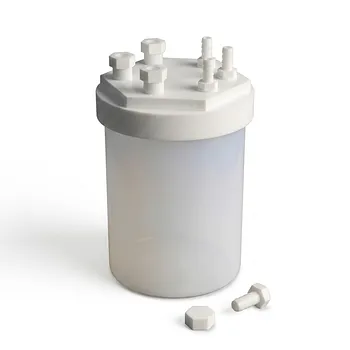
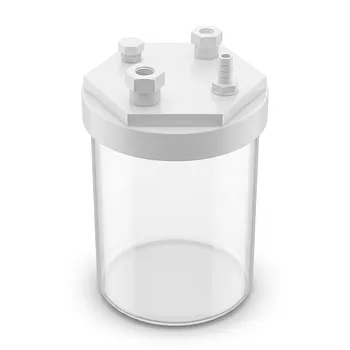
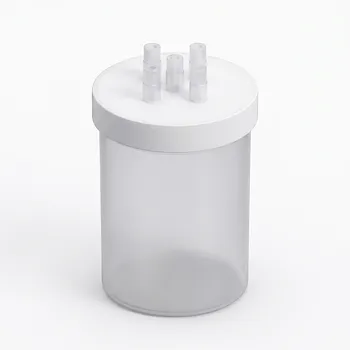
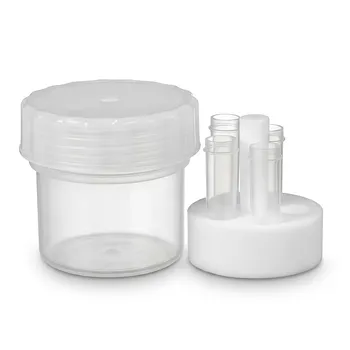
PTFE and PFA are chemically resistant fluoropolymers that can provide nonmetallic wetted surfaces for laboratory equipment and reaction vessels. Using these materials reduces the opportunity for container walls and fluid-contact components to contribute metal ions or particles.
PFA is often useful for transparent vessels and tubing, while PTFE is common for liners, fittings, stir bars, and other chemically resistant components. The appropriate material depends on temperature, pressure, mechanical requirements, solvent compatibility, and equipment design.
Equipment Purity Must Match Process Purity
A metal-free vessel alone is not sufficient if the remaining system contains metal parts that contact the reaction mixture. The complete fluid path should be reviewed, including seals, tubing, sampling hardware, agitators, transfer tools, and cleaning procedures.
This is analogous to producing clean water through a clean filter and then transferring it through a contaminated pipe: the final result is controlled by the entire path, not just the main reactor.
Protecting Fluoropolymer Polymerizations
Fluoropolymer Chemistry Can Be Sensitive to Contamination
Fluoropolymer reactions may involve demanding solvents, temperatures, pressures, and reactive intermediates. Trace contaminants can affect initiation, termination, catalyst behavior, particle formation, or the reproducibility of molecular-weight control.
The exact effect depends on the monomer and process, but contamination control is particularly important when the polymerization is being optimized for narrow specifications or high-value applications.
Nonmetallic Surfaces Improve Background Control
Using PTFE and PFA components establishes a lower-contamination baseline for the reaction environment. This helps distinguish impurities originating in reagents from those introduced by the apparatus.
That distinction is important during process development. Without controlled equipment, a measured metal signal may be incorrectly attributed to the chemistry, leading to unnecessary changes in formulation or purification.
Cleanability Also Matters
Fluoropolymer equipment is resistant to many chemicals and can be cleaned without relying on coatings that might flake or shed. However, fluoropolymer parts can still retain particles, residues, or contamination from previous processes if cleaning and handling are poor.
A metal-free design should therefore be paired with validated cleaning, dedicated equipment where practical, and suitable analytical verification.
Understanding the Trade-offs
NMP Is Not Universally Interchangeable With ATRP
NMP and ATRP differ in monomer scope, temperature requirements, kinetics, initiator systems, and the types of end-group functionality they provide. A lower metal burden does not automatically make NMP the best choice for every polymer architecture.
The process must still meet the required conversion, molecular weight, dispersity, functionalization, and scale-up targets.
ATRP May Offer Valuable Synthetic Advantages
ATRP can provide strong control over chain growth and broad access to functional polymer structures. Reduced-catalyst ATRP methods may also achieve low residual-metal levels when followed by appropriate purification.
The practical question is whether the achievable metal level, purification burden, and analytical verification are acceptable for the intended application.
Metal-Free Equipment Does Not Eliminate All Metals
PTFE and PFA apparatus prevent or reduce metal leaching from wetted equipment, but they cannot remove metals already present in monomers, solvents, initiators, additives, water, or laboratory dust. NMP also uses nitroxide compounds and other reagents that must be evaluated for their own purity and residual content.
Low contamination therefore requires both a suitable mechanism and a controlled materials, equipment, and cleaning strategy.
Analytical Confirmation Remains Necessary
The phrase “metal-free” should be treated as a process objective or specification, not as an assumption based only on material selection. Techniques such as inductively coupled plasma mass spectrometry or related elemental analysis may be needed to verify residual copper, iron, and other relevant elements.
Testing should cover raw materials, equipment blanks, process samples, and the final polymer when trace-metal performance is critical.
Making the Right Choice for Your Goal
The best approach depends on whether the primary constraint is metal purity, polymer architecture, or overall process performance.
- If your primary focus is minimizing residual metal: Prefer NMP where the monomer and target polymer structure are compatible, and use PTFE or PFA for all practical wetted equipment.
- If your primary focus is maximum synthetic flexibility: Consider ATRP, but select a low-catalyst process and design an effective catalyst-removal and verification strategy.
- If your primary focus is ultra-pure fluoropolymer production: Control the complete reaction and transfer path with metal-free fluoropolymer components, high-purity reagents, validated cleaning, and elemental analysis.
- If your primary focus is process reproducibility: Treat equipment materials, contamination controls, and analytical testing as part of the polymerization process rather than as afterthoughts.
Choosing NMP and controlling the entire equipment path together provides the strongest foundation for reliable, low-metal polymer synthesis.
Summary Table:
| Criteria | ATRP | NMP |
|---|---|---|
| Catalyst | Transition metal (e.g., Cu, Fe) | Nitroxyl radical (metal-free) |
| Residual metal risk | Higher (requires purification) | Lower (by design) |
| Purification need | Significant | Minimal |
| Metal-free equipment importance | Important to avoid additional contamination | Critical to maintain low metal levels |
| Best for | Synthetic flexibility | High-purity applications |
Looking for high-purity polymer synthesis solutions? At KINTEK, our PTFE and PFA reaction vessels and components ensure minimal metal contamination, supporting advanced ATRP and NMP processes. With our custom CNC machining, we deliver tailored laboratory equipment for your specific needs. Contact us today to learn more!
Related Products
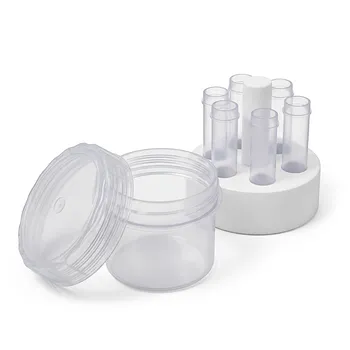
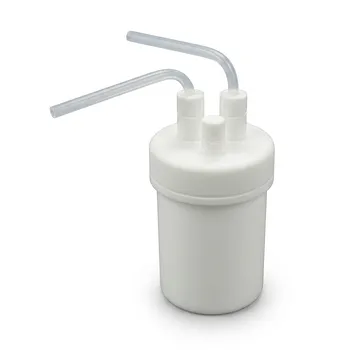
- High Purity Corrosion Resistant PFA Reaction Vessel with PTFE Holder and Integrated Sampling Tube for Trace Analysis
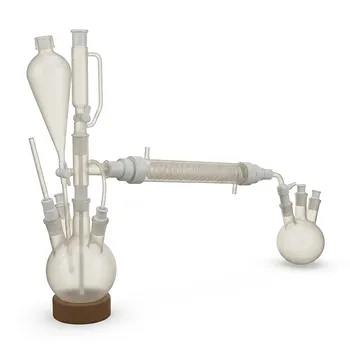
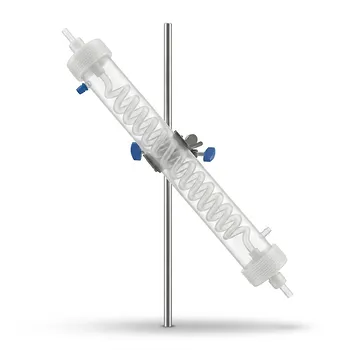
- PTFE Distillation Condensation Apparatus High Temperature Hydrofluoric Acid Resistant Fluorination Reaction Flask
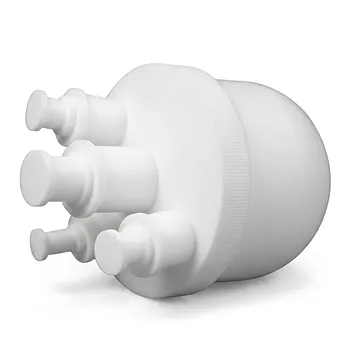
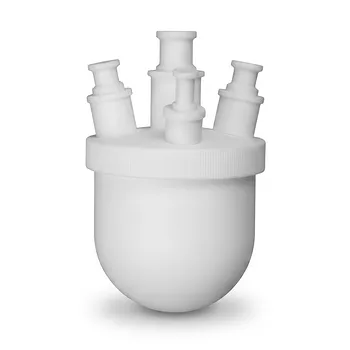
- High Purity PTFE Single Neck Reaction Flask Acid Resistant Customizable Fluoropolymer Laboratory Reactor
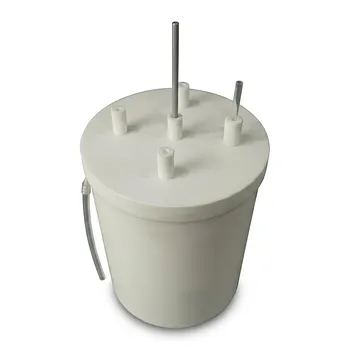
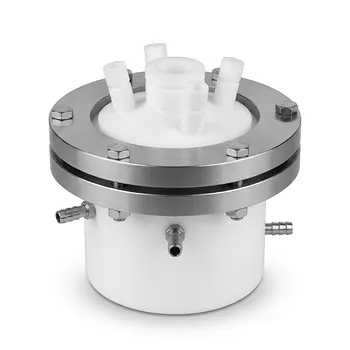
- PTFE 10L Reaction Vessel with Stirring Paddle Customizable Corrosion Resistant High Temperature Reactor for Biopharmaceutical and Chemical Processing
- PFA Chemical Reaction Tank with Customizable Fittings for Corrosive Solvent Synthesis and High Purity Lab Applications
People Also Ask
- Why is the choice of reaction vessel material critical during B-NiBDC synthesis? Optimize MOF Purity & Performance
- What is the function of corrosion-resistant reaction vessels in the acid hydrolysis process of molasses for microalgae culture media?
- How do the material choice and sealing integrity of the reaction vessel affect the growth of NiFe-LDH? Optimize Synthesis
- Why are corrosion-resistant vessels needed for alkaline cellulose extraction? Ensure Purity and Process Safety
- Why are well-sealed reaction vessels necessary for superacid-promoted Friedel-Crafts polycondensation? Optimize Synthesis