Control the heat and the contact surfaces. During high-shear dispersion of fluoropolymer powders, continuously monitor the millbase temperature and control heat generation with jacket cooling and, when necessary, lower agitator speed. Prevent sample contamination by using high-purity, chemically inert PTFE or PFA labware and fluid-transfer components that do not introduce metallic or ionic contaminants during processing or collection.
The most reliable approach is a two-part control strategy: remove heat as it is generated, and prevent contamination by keeping the formulation in contact only with compatible, high-purity fluoropolymer equipment wherever practical.
Control Temperature During High-Shear Dispersion
Monitor the Millbase Continuously
High-shear equipment converts mechanical energy into heat, so temperature can rise rapidly during processing. Operators should monitor the millbase temperature continuously, rather than relying only on elapsed process time or the equipment’s setpoint.
Continuous monitoring provides an early warning that the formulation is approaching a temperature at which its chemistry, viscosity, or dispersion quality may be affected.
Use Jacket Cooling to Remove Heat
For jacketed vessels, regulate the cooling-water flow to remove heat from the millbase as it is generated. Cooling should be managed throughout the run, not applied only after the batch has already overheated.
The objective is to maintain a stable operating temperature while preserving the shear conditions needed for effective dispersion.
Reduce Agitator Speed When Necessary
If cooling capacity is insufficient or the temperature continues to rise, decrease the agitator or rotor speed. Lowering RPM reduces the rate at which mechanical energy is converted into heat.
This adjustment may reduce dispersion intensity, so operators should balance temperature control against the required degree of powder wetting, mixing, and deagglomeration.
Prevent Contamination from Equipment and Sampling
Select Chemically Inert Labware
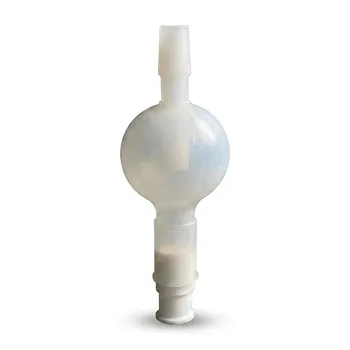
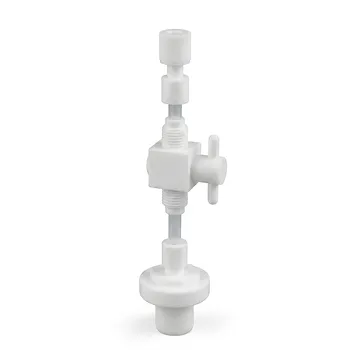
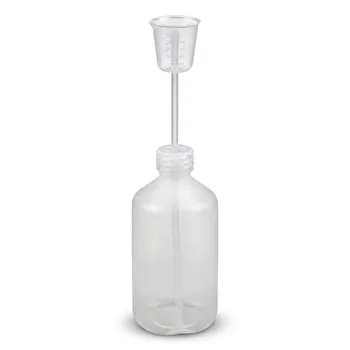
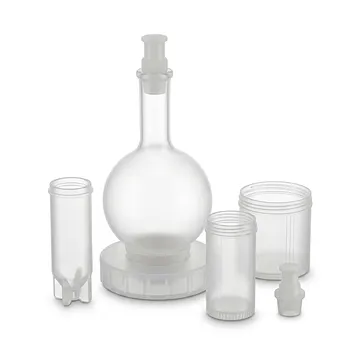
Use high-purity PTFE and PFA labware for processing, transfer, and sample collection where compatibility and purity are critical. Suitable components include digestion tubes, centrifuge tubes, reagent bottles, and fluoropolymer fluid-transfer fittings.
These materials provide strong chemical resistance and help prevent the container from contributing extractables or reactive contaminants to the sample.
Minimize Metallic and Ionic Leaching
High-energy mixing and milling can increase the risk that unsuitable contact surfaces contribute metallic or ionic contaminants. This is particularly important when the sample is later analyzed for trace impurities or used in a sensitive formulation.
Using compatible fluoropolymer contact materials reduces the likelihood of container-induced contamination during both dispersion and sample handling.
Control the Sampling Step
Sample collection is part of the process, not an afterthought. Use clean, high-purity PTFE or PFA containers and transfer fittings that are compatible with the formulation and avoid unnecessary contact with metallic surfaces.
The same contamination-control standard should apply to the vessel, transfer path, collection tube, and storage container.
Protect the Formulation from Thermal Degradation
Treat Temperature as a Process Variable
Temperature affects more than operator safety. Excessive heat can alter a sensitive fluoropolymer formulation and may compromise the intended dispersion result.
Temperature should therefore be considered a controlled process variable alongside RPM, mixing time, and cooling flow.
Avoid Conditions That Promote Decomposition
Fluoropolymers can produce hazardous thermal degradation products when heated to sufficiently high temperatures. Maintaining effective cooling and avoiding uncontrolled temperature excursions are essential to keeping the process well below decomposition conditions.
The applicable operating limit should be established from the specific fluoropolymer formulation, equipment design, and laboratory safety procedures rather than assumed from a generic value.
Use Proper Ventilation
High-temperature fluoropolymer operations should be conducted with appropriate fume-hood ventilation, particularly when using fluoropolymer reaction vessels, digestion tubes, or custom components under high-heat conditions.
This control complements temperature management. Ventilation is not a substitute for preventing overheating, and cooling is not a substitute for proper containment.
Build a Practical Operating Sequence
Establish the Cooling Before Applying High Shear
Confirm that the vessel jacket and cooling-water system are functioning before starting high-shear dispersion. Starting with cooling available gives the process a way to remove heat immediately as mechanical energy is introduced.
This is more effective than attempting to recover from a rapid temperature rise after the batch has already become hot.
Increase Shear While Watching the Temperature
Apply the required shear while observing the temperature trend continuously. If the temperature rises faster than the cooling system can offset it, first increase cooling flow where appropriate and then reduce RPM if additional control is needed.
The operator should respond to the rate of temperature rise, not only to the absolute temperature displayed.
Collect Samples Using Compatible Components
After dispersion, transfer samples through compatible PTFE or PFA fittings into high-purity containers. Avoid introducing unverified metals, elastomers, or other materials into the sample path when trace contamination could affect the result.
This preserves the integrity of the sample from the mixing vessel through analysis or storage.
Understanding the Trade-offs
Cooling Can Affect Process Behavior
Increasing cooling can stabilize the batch temperature, but excessive thermal control may change viscosity or mixing behavior. The process should be adjusted gradually while confirming that dispersion quality remains acceptable.
Temperature control is successful only when it protects both the formulation and the required mixing performance.
Lower RPM May Reduce Dispersion Efficiency
Reducing agitator speed lowers heat generation, but it can also reduce shear intensity and extend the time needed to achieve the target dispersion. Operators may need to find a stable operating range rather than simply selecting the lowest possible speed.
The correct setting is the one that meets dispersion requirements without allowing uncontrolled heating.
Fluoropolymer Labware Is Not a Substitute for Clean Handling
PTFE and PFA reduce contamination risk, but they do not eliminate the need for proper cleaning, inspection, storage, and handling. Residues from previous samples or poor sampling technique can still compromise the result.
Material compatibility and laboratory cleanliness must be managed together.
Ventilation Does Not Replace Temperature Control
A fume hood helps contain airborne degradation products, but it does not make overheating acceptable. Polymer fume fever is associated with exposure to airborne thermal degradation products, so the primary protection remains preventing excessive temperature and maintaining appropriate ventilation.
How to Apply This to Your Process
Use a controlled workflow that links temperature monitoring, cooling, shear adjustment, and contamination-resistant sample handling.
- If your primary focus is temperature control: Monitor the millbase continuously, regulate jacket cooling, and reduce agitator RPM when heat generation exceeds cooling capacity.
- If your primary focus is sample purity: Use high-purity PTFE or PFA vessels, tubes, bottles, and transfer fittings to minimize metallic, ionic, and container-derived contamination.
- If your primary focus is operator safety: Keep the process well below thermal decomposition conditions and perform high-temperature work with proper fume-hood ventilation.
- If your primary focus is dispersion quality: Adjust cooling and RPM together so that temperature remains stable without sacrificing the shear needed for effective powder dispersion.
A stable temperature and an inert sample-contact path are the foundation of reliable, uncontaminated fluoropolymer dispersion.
Summary Table:
| Strategy | Action | Benefit |
|---|---|---|
| Temperature Monitoring | Continuously monitor millbase temperature | Early warning of overheating |
| Jacket Cooling | Regulate cooling-water flow | Removes excess heat |
| Agitator Speed | Reduce RPM when needed | Lowers heat generation |
| Material Selection | Use PTFE/PFA labware | Prevents contamination |
| Sampling Control | Use clean, inert containers | Maintains sample purity |
| Ventilation | Use fume hood for high-heat | Ensures operator safety |
Ensure your high-shear dispersion processes are both safe and contamination-free. At KINTEK, we provide high-purity PTFE and PFA labware, including beakers, digestion tubes, and custom components, designed for demanding fluoropolymer applications. Our expertise in custom machining ensures you get the right equipment for your needs. Contact us today to discuss how we can support your laboratory's performance and safety goals. Contact us to get started!
Related Products
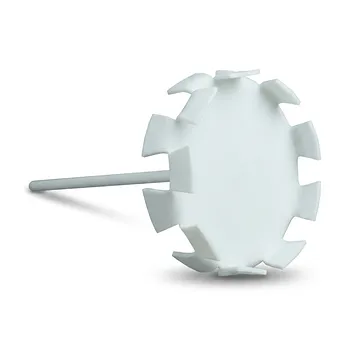
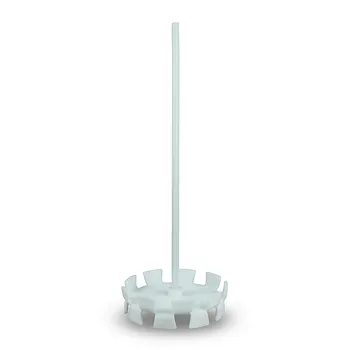
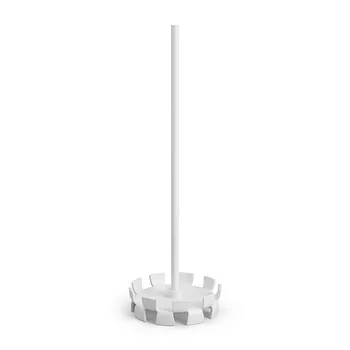
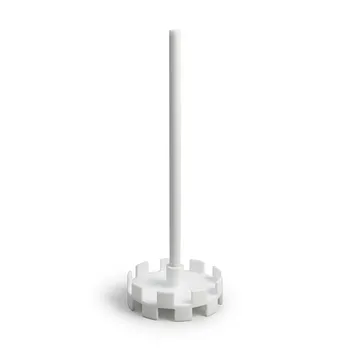
- High Purity PTFE Dispersion Disk for Food and Cosmetic Processing Non Stick Corrosion Resistant Large Stirring Paddle Customizable Fluoropolymer Impeller
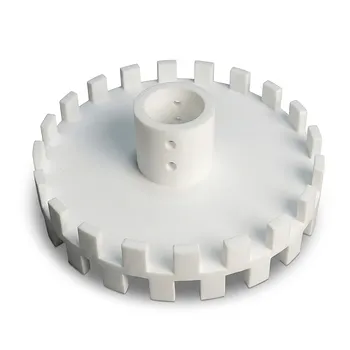
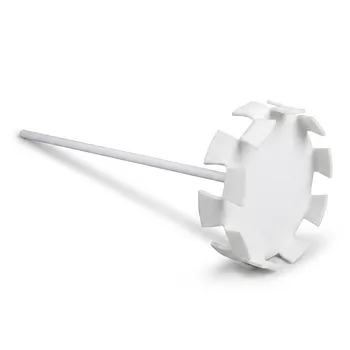
- Corrosion Resistant PTFE Turbine Stirring Disk and High Performance Fluoropolymer Dispersion Impeller for Industrial Chemical Mixing
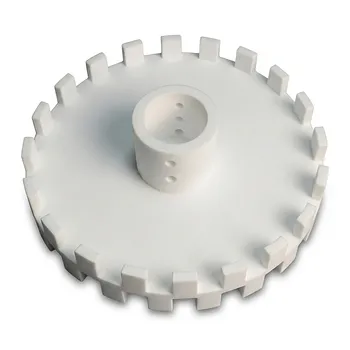
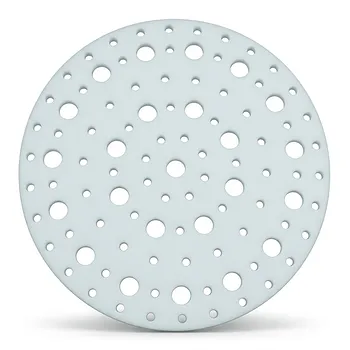
- Corrosion Resistant PTFE Stirring Disk Chemical Dispersion Plate 350mm Diameter Fluoropolymer Mixer Accessory
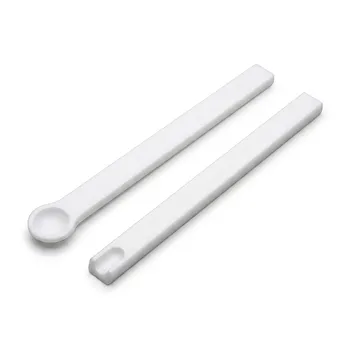
- Corrosion Resistant PTFE Sampling Spoon for High Purity Solid Powder Reagent Handling and Laboratory Chemical Transfer
- High Purity PFA Chromatography Column with Collection Bottle Corrosion Resistant Fluoropolymer Filtration System for Trace Analysis
People Also Ask
- How many variations of PTFE disks are available and what parameters do they differ in? Choose the Right Material for Your Application
- What is the chemical formula and material of PTFE Disk? Unlock the Power of C₂F₄ Polymer
- What are the tolerance specifications for the thickness of PTFE disks? Why ±20% is the Industry Standard
- What is Dispersion PTFE used for? Creating Thin, High-Performance Coatings and Films
- Why are simple short-chain perfluoroalkyl carboxylic acids (such as C4 perfluorobutanoate) inadequate direct replacements for long-chain surfactants in high-solid PTFE dispersion manufacturing?