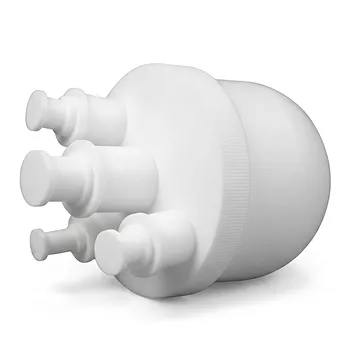
Temperature gradients function as the primary engine for material transport and deposition within a hydrothermal reactor. By maintaining a hotter lower zone and a cooler upper zone, the system creates a continuous cycle where nutrients dissolve at the base and crystallize at the top. This thermal imbalance drives the convective currents necessary to move saturated solutions toward a seed crystal for controlled growth.
The temperature gradient creates a solubility differential that forces a transition from dissolution to supersaturation. This mechanism allows for the growth of high-purity crystals from precursors that are typically insoluble under standard conditions.
The Mechanics of the Thermal Gradient
Establishing the Dissolution Zone
The process begins at the base of the reactor, which is maintained at a significantly higher temperature than the top. In this hotter lower zone, the nutrient material—the precursor for the crystal—undergoes dissolution into the solvent.
The Role of Mineralizers
To enhance this dissolution, chemical agents known as mineralizers (such as NaOH or KOH) are often added to the solution. These agents increase the solubility of the precursors, ensuring the fluid becomes sufficiently saturated to support the subsequent growth phase.
Creating the Solubility Differential
The fundamental principle at work is the relationship between solubility and temperature. Because the nutrient is more soluble in the hotter region, the fluid becomes a concentrated carrier that is ready to deposit its load once it encounters a cooler environment.
Fluid Dynamics and Nutrient Migration
Density-Driven Convection
The temperature gradient induces natural convection within the closed system of the reactor. The hotter, less dense fluid at the bottom rises toward the top, while the cooler, denser fluid sinks to be reheated.
Continuous Nutrient Transport
This convective loop acts as a "conveyor belt" for the dissolved material. It ensures a steady supply of saturated solution is moved from the nutrient source at the bottom to the growth site at the top without requiring mechanical stirring.
Maintaining System Equilibrium
Because the reactor is a closed-system environment, it can sustain high pressures alongside these temperature gradients. This internal pressure is critical for keeping the solvent in a liquid or supercritical state, which is necessary for efficient mass transfer.
Precipitation and Epitaxial Growth
Achieving Supersaturation
As the saturated solution enters the cooler upper zone, its temperature drops, causing the solubility of the nutrient to decrease. This leads to a state of supersaturation, where the fluid holds more dissolved material than it can support at that lower temperature.
Epitaxial Deposition on Seed Crystals
The excess material in the supersaturated solution precipitates out of the fluid. When a seed crystal is placed in this zone, the material undergoes epitaxial deposition, meaning it attaches to the seed in a highly ordered, crystalline structure.
Controlling Crystal Morphology
By precisely tuning the temperature gradient and reaction time, researchers can influence the final morphology of the material. This allows for the creation of specific structures such as nanowires, nanosheets, or high-purity bulk crystals.
Understanding the Trade-offs and Pitfalls
The Risk of Spontaneous Nucleation
If the temperature gradient is too steep, the level of supersaturation may become excessive. This can lead to spontaneous nucleation, where small crystals form randomly throughout the solution rather than growing exclusively on the intended seed crystal.
Pressure Management and Safety
Operating a hydrothermal reactor involves balancing high temperatures with extreme internal pressures. Inaccurate thermal monitoring can lead to pressure spikes that exceed the reactor's structural limits, posing a significant safety risk.
Growth Rate vs. Structural Purity
While a larger temperature gradient generally increases the growth rate, it can also introduce defects into the crystal lattice. Slower growth, driven by a more subtle gradient, typically results in higher structural perfection and purity.
How to Apply This to Your Synthesis Goals
Optimizing Your Hydrothermal Process
Successful crystal growth requires aligning your thermal parameters with your specific material requirements.
- If your primary focus is high structural purity: Maintain a smaller, more stable temperature gradient to ensure slow, orderly deposition on the seed crystal.
- If your primary focus is rapid nanoparticle production: Utilize a steeper gradient and mineralizers to maximize supersaturation and encourage quick precipitation.
- If your primary focus is specific morphology (e.g., nanowires): Fine-tune the pH and mineralizer concentration in conjunction with the gradient to favor growth along specific crystallographic axes.
Mastering the temperature gradient transforms a simple pressure vessel into a sophisticated tool for molecular architecture.
Summary Table:
| Reactor Zone | Temperature Level | Primary Process | Material State |
|---|---|---|---|
| Lower Zone | High (Hot) | Dissolution | Saturated Solution |
| Upper Zone | Low (Cool) | Crystallization | Supersaturated Solution |
| Fluid Path | Variable | Natural Convection | Continuous Nutrient Loop |
| Seed Site | Low (Cool) | Epitaxial Deposition | High-Purity Crystal Growth |
Elevate Your Synthesis with KINTEK’s High-Performance Labware
Precise crystal growth demands reliable equipment. KINTEK specializes in manufacturing a comprehensive range of laboratory supplies crafted from high-performance PTFE and PFA to ensure the chemical inertness and thermal stability your research requires.
From essential basic labware (beakers, crucibles, reagent bottles) and fluid transfer components (tubing, valves, fittings) to specialized hydrothermal synthesis liners and microwave digestion vessels, we provide the tools for success. Whether you need standard consumables like stirring bars and O-rings or bespoke laboratory setups and complex CNC-machined parts, our end-to-end fabrication capabilities meet your exact specifications.
Ready to optimize your hydrothermal processes? Contact us today to discuss how our fluoropolymer expertise can support your next breakthrough!
Related Products
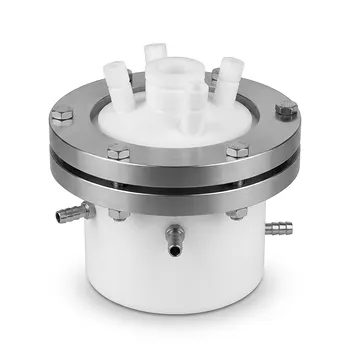
- High Temperature Corrosion Resistant Hydrothermal Synthesis Reactor with TFM Inner Liner and Straight Cylinder Design
- PTFE Lined High Pressure Digestion Vessel 50ml High Temperature Hydrothermal Synthesis Tank
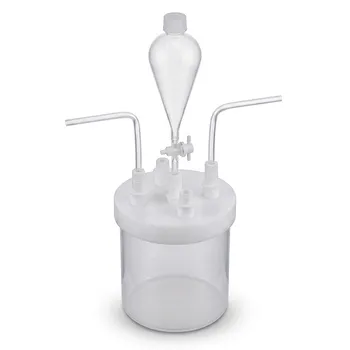
- Custom PTFE Reaction System with Hose Barb Fittings Corrosion Resistant High Sealing 2L 4L Lab Reactor with Separatory Funnel
- High Pressure Custom TFM Reactor Stainless Steel Outer Vessel PTFE Inner Cup for Corrosive Synthesis
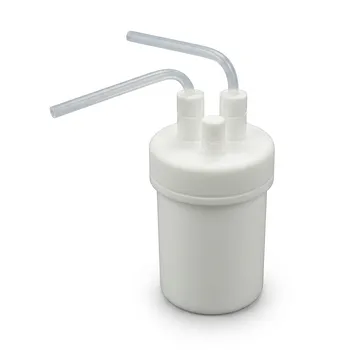
- High Purity PFA Reaction Vessel for Biopharmaceutical Synthesis and Corrosive Chemical Fluid Handling with Customizable Tube Fittings
People Also Ask
- What is the role of a corrosion-resistant reactor in the synthesis of lignin-based carbon dots? Ensure Maximum Purity
- What are the technical advantages of using hydrothermal synthesis reactors for advanced electronic & optical nanomaterials?
- How does a hydrothermal synthesis reactor facilitate the production of crystalline materials with tailored morphologies? Precision Crystal Growth
- Why is the sealing reliability of a hydrothermal synthesis reactor critical for 24-hour cycles? Ensure Nano-Precision
- What role do hydrothermal synthesis reactors play in CQD preparation? Achieve High-Purity Nanomaterial Synthesis