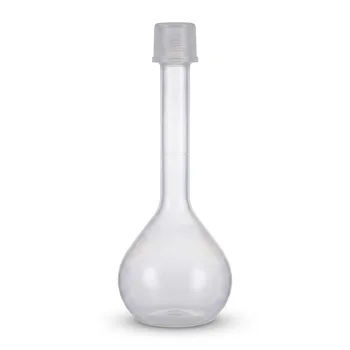
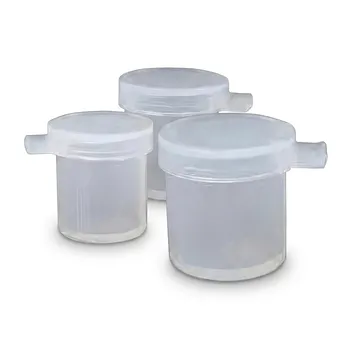
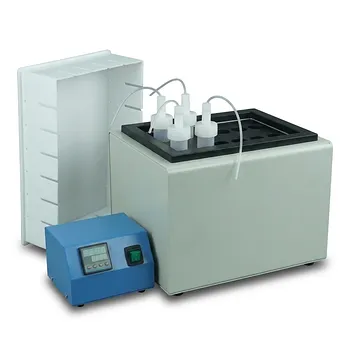
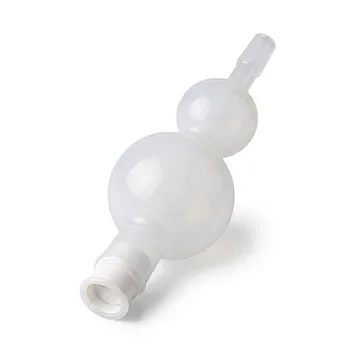
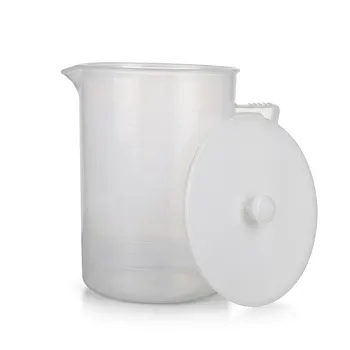
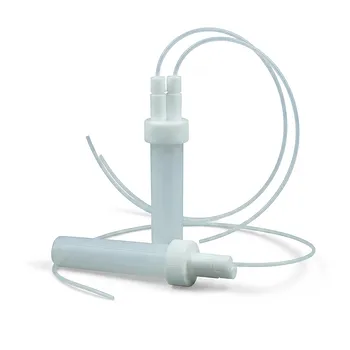
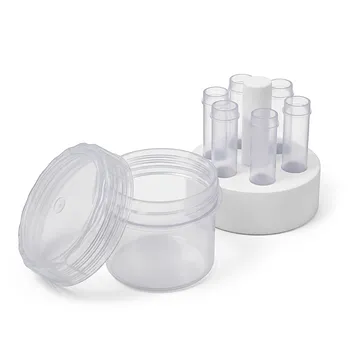
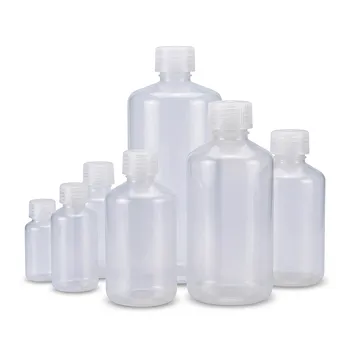
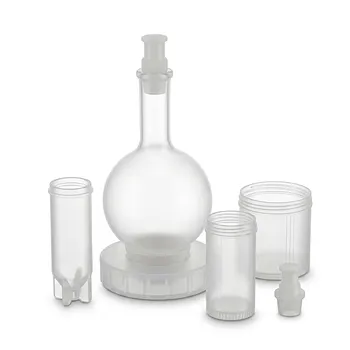
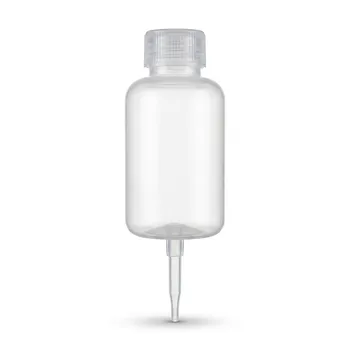
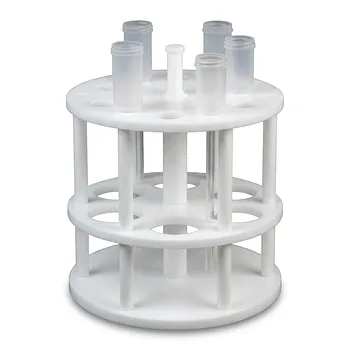
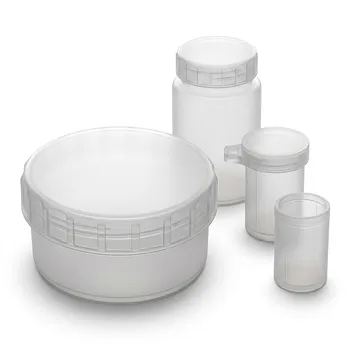
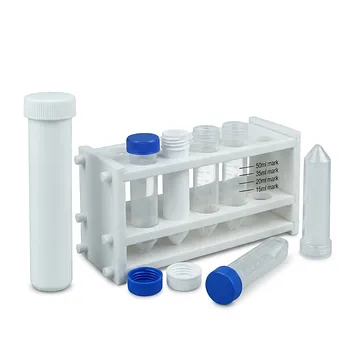
The standard for semiconductor-grade reliability. PFA (Perfluoroalkoxy) trace analysis labware is the industry benchmark because it provides a near-perfectly inert environment for handling the aggressive chemicals required in semiconductor processing. By eliminating surface imperfections and resisting the harshest oxidants, PFA ensures that trace-level measurements remain accurate and free from vessel-sourced contamination.
Core Takeaway: PFA labware solves the dual challenge of chemical aggression and ultra-trace sensitivity. It provides a non-reactive, non-leaching, and non-adsorptive surface that is essential for maintaining the integrity of parts-per-trillion (ppt) analytical data.
The Physics of Surface Integrity
Eliminating Micropores and Impurity Retention
Unlike standard polymers, PFA labware is manufactured using specialized processes that result in an extremely smooth surface finish. This eliminates the microscopic pits and crevices where contaminants typically hide. By removing these "trap sites," labs can achieve a level of cleanliness that is impossible with glass or lower-grade plastics.
Superior Anti-Adsorption Properties
In trace analysis, the loss of target analytes to the container walls is a primary source of error. PFA possesses superior anti-adsorption properties, ensuring that the atoms or molecules being measured stay in the solution rather than sticking to the vessel. This leads to significantly higher recovery rates and more reproducible experimental data.
Resilience in Aggressive Chemical Environments
Resistance to Strong Oxidants and Digestion Acids
Semiconductor process development often requires the digestion of materials using hydrofluoric (HF) and nitric acid mixtures. PFA is one of the few materials that can withstand these extremely strong oxidants without degrading. This makes it an indispensable tool for the elemental analysis of silicon wafers and other semiconductor components.
Achieving Ultra-Low Background Values
The primary threat to trace analysis is the "background noise" caused by the container itself. PFA is preferred because it has an extremely low metal ion leaching background, meaning it does not release impurities into the sample. This chemical inertness is critical for maintaining the ultra-high sensitivity required for advanced chemical research.
Understanding the Trade-offs
High Initial Cost and Resource Investment
The specialized manufacturing and high-purity raw materials make PFA significantly more expensive than traditional glassware or standard plastics. For high-volume labs, this represents a substantial capital investment that must be weighed against the cost of potential data errors.
Physical Limitations and Structural Rigidity
PFA is a fluoropolymer, meaning it is softer and more flexible than borosilicate glass or quartz. It can be prone to deformation under extreme mechanical stress or if subjected to temperatures exceeding its functional range (typically up to 260°C). Users must handle PFA vessels with care to avoid physical damage to the sealing surfaces.
Cleaning and Maintenance Protocols
While PFA is resistant to impurities, maintaining its "semiconductor-grade" status requires rigorous acid-leaching cleaning protocols. Simply rinsing the labware is insufficient; it often requires multi-day soaking in high-purity acids to ensure the background levels remain at the parts-per-trillion level.
How to Apply This to Your Project
Making the Right Choice for Your Goal
To ensure the highest data integrity in your semiconductor research, your choice of labware should align with your specific analytical sensitivity requirements.
- If your primary focus is parts-per-trillion (ppt) accuracy: Utilize PFA exclusively for all digestion, storage, and sample handling to prevent ion leaching and analyte loss.
- If your primary focus is handling hydrofluoric acid (HF): Implement PFA labware as your primary vessel material, as glass will be etched and contaminated by the acid.
- If your primary focus is long-term sample storage: Use PFA bottles to ensure that the chemical composition of your trace standards remains stable without losing ions to the container walls.
By integrating PFA labware into your workflow, you establish a foundation of purity that ensures your process development is limited only by your chemistry, not your containers.
Summary Table:
| Key Property | Technical Benefit | Impact on Semiconductor Analysis |
|---|---|---|
| Ultra-Smooth Surface | Eliminates microscopic trap sites for impurities | Prevents cross-contamination between samples |
| Superior Anti-Adsorption | Prevents analyte loss to container walls | Ensures high recovery and reproducible ppt data |
| Extreme Chemical Inertness | Resists aggressive HF and nitric acid mixtures | Ideal for wafer digestion and elemental analysis |
| Ultra-Low Ion Leaching | Minimal background metal ion noise | Maintains high sensitivity for trace measurements |
| High Thermal Stability | Operates safely up to 260°C | Suitable for high-temperature acid digestion |
Elevate Your Semiconductor Research with KINTEK’s High-Performance Fluoropolymers
To achieve reliable parts-per-trillion (ppt) accuracy, your laboratory environment must be as pure as your chemistry. KINTEK specializes in the manufacture of high-performance laboratory supplies crafted exclusively from PTFE and PFA, ensuring the chemical inertness and surface integrity required for the most demanding semiconductor-grade process developments.
Our comprehensive range includes:
- Everyday Basic Labware: Beakers, measuring cylinders, crucibles, dishes, reagent/wash bottles, and centrifuge/digestion tubes.
- Sample Prep & Fluid Transfer: Separatory funnels, burettes, filters, pipettes, high-purity tubing, fittings, and valves.
- Advanced Reaction Apparatus: Custom electrochemical cells, battery testing fixtures, hydrothermal synthesis liners, microwave digestion vessels, and microchannel reactors.
- General Consumables: Stirring bars, O-rings, gaskets, and high-purity seal tapes.
Backed by end-to-end custom CNC fabrication, KINTEK is equipped to deliver everything from complex, non-standard machined parts to high-volume bespoke laboratory setups. Eliminate contamination risks and stabilize your trace analysis workflow today.
Contact KINTEK to secure your high-purity PFA solutions!
References
- Abdul Shakoor, Shahid Atiq. Synergistic Improvements in Ionic Conductivity, Diffusion Dynamics, and Transference Numbers for LaNiO<sub>3</sub>/MXene Supercapacitor Electrodes. DOI: 10.1002/batt.202500014
This article is also based on technical information from Kintek Knowledge Base .
Related Products
- High Purity PFA Crucible and Corrosion Resistant PTFE Beaker for Trace Analysis and Custom Laboratory Applications
- High Purity PFA Volumetric Flask 1000ml 2000ml Constant Volume Bottle Acid Resistant Trace Analysis Custom Laboratory Labware
- High Purity PFA Sample Dissolution Cups Acid Resistant Chemical Digestion Vessels with Lids Trace Analysis Labware
- High Purity PFA Laboratory Rectangular Tank Corrosion Resistant Acid Cleaning Bath for Silicon Wafer Processing and Trace Analysis
- PFA Distillation Flask for Water Quality Alkylmercury Determination and Laboratory Trace Analysis Heating Applications
People Also Ask
- Why are high-purity vessels critical for BiFeO3 synthesis? Ensuring Phase Purity
- Why is the use of high-purity PFA or PTFE labware critical during TiO2 nanoparticle purification? Protect Sample Purity
- Why is high-purity PFA labware necessary for Znx@LS-2 zeolite ICP-OES analysis? Ensure Trace-Level Precision
- Why is high-purity PFA trace analysis labware used for MXene? Ensure Superior Material Integrity in Research
- What key material characteristics make PTFE and PFA suitable for high-purity laboratory labware, trace analysis containers, and medical microporous tubing? Discover the essential properties that ensure purity.