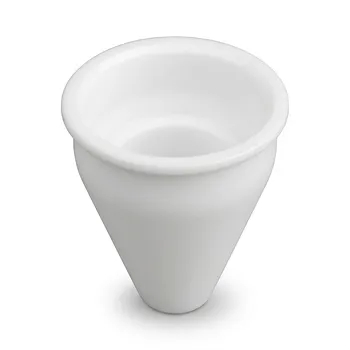
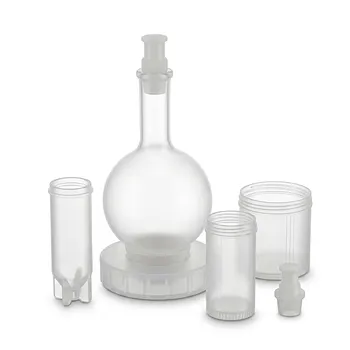
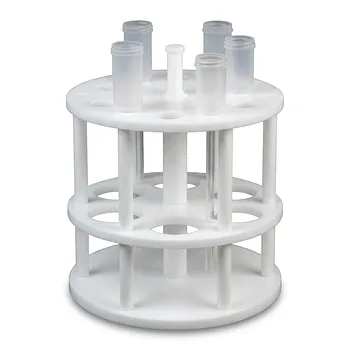
PFA labware is the gold standard for trace analysis because it offers an unparalleled combination of chemical inertness and a near-zero metallic background. Unlike traditional materials, PFA ensures that sensitive samples are neither contaminated by the container nor depleted by the vessel's surface.
Core Takeaway: PFA (Perfluoroalkoxy) is essential for trace analysis because it eliminates secondary contamination from ion leaching and prevents the loss of target elements through surface adsorption, ensuring the absolute integrity of high-precision chemical data.
Eliminating the Risk of Secondary Contamination
The Limitations of Traditional Glassware
Traditional glass containers often introduce unwanted impurities like silicon, sodium, or boron into a sample. These elements can leach from the glass matrix, significantly skewing results in experiments measuring parts-per-billion (ppb) or parts-per-trillion (ppt) levels.
The PFA Leaching Advantage
High-purity PFA is engineered to have an extremely low metallic background. This means it does not release metal ions into the solution, providing a "clean" environment for sample treatment, digestion, and long-term storage.
Maintaining Sample Purity
Because PFA is chemically inert, it does not react with aggressive reagents or solvents. This stability prevents the container from degrading and introducing particulate or ionic matter into high-purity chemical syntheses.
Preventing Analyte Loss Through Surface Interaction
The Danger of Sample Adsorption
In trace analysis, the target elements are present in such minute quantities that any loss to the container wall can lead to massive data deviations. Traditional materials often have active surface sites that "capture" or adsorb target elements.
Non-Stick Surface Characteristics
PFA surfaces are exceptionally smooth and non-reactive, which minimizes the adsorption of sample components. This ensures that the concentration of the analyte remains consistent from the moment it is collected to the moment it is analyzed.
Consistency and Reproducibility
By preventing both leaching and adsorption, PFA labware allows researchers to achieve high reproducibility. This is critical for advanced chemical research where conclusions depend on the detection of minute, precise changes in chemical composition.
Understanding the Trade-offs
The Cost of Performance
The primary drawback of PFA is its significantly higher cost compared to glass, PTFE, or high-density polyethylene (HDPE). While it provides superior purity, it requires a higher initial investment for laboratory inventory.
Material Softness and Heat
While PFA has excellent thermal stability, it is a softer material than glass and can be prone to scratching if cleaned with abrasive tools. Scratches can create micro-pockets that are difficult to clean, potentially leading to cross-contamination if the labware is reused across different projects.
Transparency vs. Visibility
Although PFA is translucent, it is not as clear as borosilicate glass. This can make it slightly more difficult to observe subtle color changes or verify the complete dissolution of solids during complex chemical reactions.
How to Apply This to Your Research
Selecting the right labware depends on the sensitivity of your analysis and the nature of your reagents.
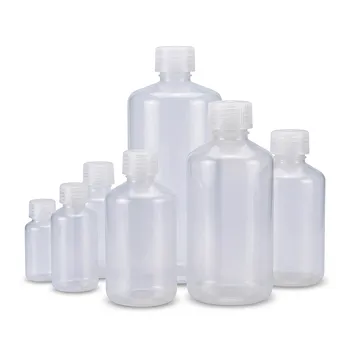
- If your primary focus is PPT-level trace metal analysis: Use high-purity PFA beakers and reagent bottles to eliminate the risk of leaching from the vessel walls.
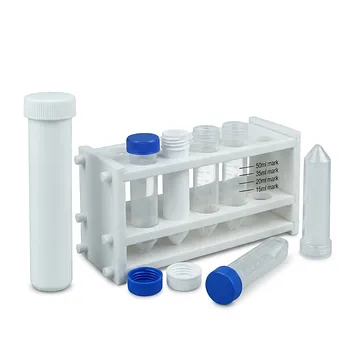
- If your primary focus is sample digestion with aggressive acids: Utilize PFA digestion tubes, as they can withstand harsh chemicals while maintaining an ultra-low impurity background.
- If your primary focus is long-term storage of standard solutions: Opt for PFA containers to ensure that the concentration of your standards does not change due to surface adsorption over time.
By utilizing PFA labware, you establish a foundation of cleanliness that is required to produce definitive, high-level analytical results.
Summary Table:
| Feature | PFA Advantage | Impact on Trace Analysis |
|---|---|---|
| Metallic Background | Extremely low / Near-zero | Prevents secondary contamination at ppb/ppt levels |
| Surface Interaction | Non-stick & non-reactive | Eliminates analyte loss via surface adsorption |
| Chemical Inertness | Resistant to aggressive acids | Ensures container stability during harsh digestions |
| Thermal Stability | High (up to 260°C) | Suitable for high-temperature sample preparation |
| Data Integrity | Exceptional reproducibility | Guarantees consistent and reliable analytical results |
Elevate Your Research Precision with KINTEK Fluoropolymer Solutions
Don't let container contamination compromise your high-precision data. KINTEK specializes in high-performance fluoropolymer manufacturing, offering an extensive range of PFA and PTFE supplies designed specifically for the most demanding trace analysis environments.
From everyday basic labware like beakers, measuring cylinders, and reagent bottles to specialized trace analysis instruments, digestion tubes, and filtration tools, we provide the purity your lab requires. Our capabilities extend to advanced reaction apparatus, including microwave digestion vessels, electrochemical cells, and custom-machined fluid transfer components.
Why choose KINTEK?
- Comprehensive Range: Everything from standard spatulas and stirring bars to complex reflux devices.
- Custom Fabrication: End-to-end CNC machining for bespoke, non-standard laboratory setups.
- Material Focus: An absolute focus on high-performance PTFE and PFA for maximum chemical inertness.
Ready to upgrade your laboratory setup with high-volume standard orders or custom-engineered parts? Contact KINTEK today to secure the integrity of your research!
References
- Abdul Shakoor, Shahid Atiq. Synergistic Improvements in Ionic Conductivity, Diffusion Dynamics, and Transference Numbers for LaNiO<sub>3</sub>/MXene Supercapacitor Electrodes. DOI: 10.1002/batt.202500014
This article is also based on technical information from Kintek Knowledge Base .
Related Products
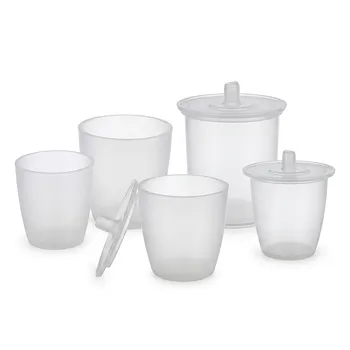
- High Purity PFA Crucible and Corrosion Resistant PTFE Beaker for Trace Analysis and Custom Laboratory Applications
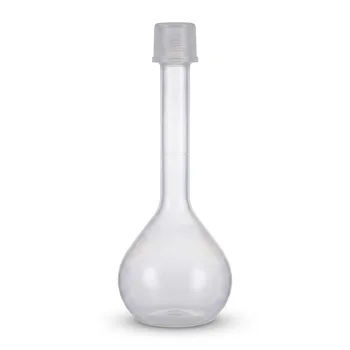
- High Purity PFA Volumetric Flask 1000ml 2000ml Constant Volume Bottle Acid Resistant Trace Analysis Custom Laboratory Labware
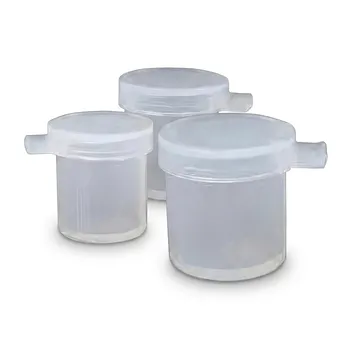
- High Purity PFA Sample Dissolution Cups Acid Resistant Chemical Digestion Vessels with Lids Trace Analysis Labware
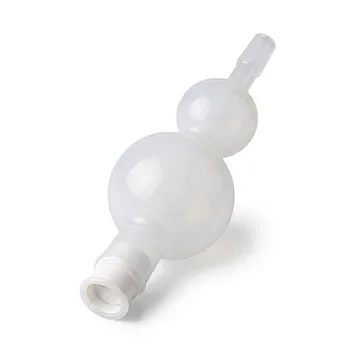
- High Purity PFA Chromatography Columns and Collection Bottles Corrosion Resistant Fluoropolymer Filtration Systems for Trace Analysis
- High Purity PFA Beakers with Handles and Cleaning Baskets for Trace Analysis and Industrial Chemical Processing
People Also Ask
- Why are high-purity vessels critical for BiFeO3 synthesis? Ensuring Phase Purity
- Why is the use of high-purity PFA or PTFE labware critical during TiO2 nanoparticle purification? Protect Sample Purity
- Why is high-purity PFA labware necessary for Znx@LS-2 zeolite ICP-OES analysis? Ensure Trace-Level Precision
- Why is high-purity PFA trace analysis labware used for MXene? Ensure Superior Material Integrity in Research
- What key material characteristics make PTFE and PFA suitable for high-purity laboratory labware, trace analysis containers, and medical microporous tubing? Discover the essential properties that ensure purity.