Knowledge PTFE(Teflon) Labware Why do pure PTFE laboratory vessels and fluid transfer components undergo clean thermal degradation without forming solid residues or cross-linked char? Explore the science.
Author avatar

Tech Team · Kintek

Updated 3 months ago

Why do pure PTFE laboratory vessels and fluid transfer components undergo clean thermal degradation without forming solid residues or cross-linked char? Explore the science.


Pure PTFE laboratory vessels and fluid-transfer components usually undergo clean thermal degradation because their fully fluorinated carbon backbone favors chain scission and volatilization rather than cross-linking and char formation. When exposed to sufficiently high temperatures, PTFE breaks down into low-molecular-weight fluorocarbon gases, including products formed through depolymerization and radical fragmentation. Because the polymer contains essentially no hydrogen and has no readily oxidizable organic side groups, it has little pathway to form the hydrogen-abstraction reactions and carbon-rich networks associated with solid residue.

The central reason is molecular composition: PTFE’s strong, fully fluorinated backbone tends to fragment into volatile fluorocarbon species instead of rearranging into a hydrogen-deficient, cross-linked carbon structure.

Why PTFE Breaks Down Differently

The Polymer Is Fully Fluorinated

PTFE consists of a carbon backbone in which the hydrogen atoms found in many polymers have been replaced by fluorine. Its repeating structure is commonly represented as –CF₂–CF₂–.

This leaves very little hydrogen available for the abstraction and condensation reactions that help convert polymers such as polyethylene into a cross-linked carbonaceous residue.

Strong C–F Bonds Stabilize the Fragments

The carbon–fluorine bond is exceptionally strong, and the fluorinated structure stabilizes the radical fragments produced during heating. Thermal energy can still cleave the carbon backbone, but the resulting fragments are strongly inclined to remain fluorinated rather than strip fluorine and form carbon-rich structures.

This suppresses the internal chemistry needed to build a persistent cross-linked network.

Backbone Scission Favors Volatile Products

At extreme temperatures, PTFE primarily undergoes C–C backbone scission and depolymerization. The resulting fluorinated fragments can undergo further beta-scission and rearrangement, producing volatile fluorocarbon molecules rather than a solid polymeric residue.

The exact product distribution depends on temperature, heating rate, atmosphere, residence time, and the presence of impurities, but the dominant behavior is loss of mass as gaseous species.

Why Cross-Linked Char Does Not Normally Form

Polyethylene Has a More Direct Char-Forming Path

Polyethylene contains a hydrogenated carbon backbone. Heating generates hydrocarbon radicals that can abstract hydrogen, recombine, branch, and form increasingly unsaturated structures.

Those reactions can produce cross-linked polymer networks and solid carbonaceous residues, particularly when volatile fragments cannot escape efficiently.

PTFE Lacks the Same Hydrogen-Rich Radical Chemistry

PTFE’s radical fragments are fluorinated and do not readily follow the hydrogen-transfer pathways that promote branching and carbonization in polyethylene. Fluorine remains associated with the fragments, while the carbon backbone is progressively divided into smaller molecules.

The result is closer to molecular fragmentation and volatilization than to the formation of a stable carbon skeleton.

Fluorocarbon Fragments Are More Likely to Leave the Vessel

Many PTFE decomposition products have sufficiently low molecular weight or vapor pressure to escape as gases under the conditions of thermal breakdown. This continuously removes fragments from the reaction zone.

That physical removal further reduces the opportunity for the fragments to recombine into a solid, cross-linked deposit inside a vessel or fluid channel.

Why This Matters for Laboratory Components

Low Contamination Potential During Normal Service

PTFE’s chemical inertness and resistance to solvents, strong acids, and bases make it useful for digestion vessels, crucibles, reagent bottles, valves, and transfer tubing. Under their intended operating conditions, these components generally preserve samples without readily leaching or reacting with aggressive reagents.

This is especially important in trace analysis, where small amounts of contamination can affect results.

Clean Thermal Loss Is Not the Same as Safe Heating

The absence of char does not mean that overheated PTFE is harmless. Thermal decomposition can release hazardous and corrosive fluorinated gases, and some products can be dangerous even when no visible residue remains.

Laboratory equipment must therefore be operated within the manufacturer’s temperature limits, with appropriate ventilation and process controls.

Purity Is an Important Qualification

The clean-degradation behavior applies most directly to pure PTFE. Fillers, pigments, lubricants, contaminants, trapped reagents, metal residues, and other polymer additives can introduce alternative decomposition pathways.

Such materials may leave inorganic ash, carbonaceous deposits, or reaction products even when unfilled PTFE would volatilize cleanly.

Understanding the Trade-offs

“No Char” Does Not Mean “No Byproducts”

PTFE can disappear from a heated component without leaving a visible solid residue, but it is converted into gaseous decomposition products. Those products may be toxic, corrosive, persistent, or reactive.

Residue analysis alone is therefore an incomplete measure of thermal safety.

The Primary Process Is Not Perfectly Simple

It is broadly accurate to describe PTFE breakdown as backbone scission followed by formation of volatile fluorocarbon species. However, the chemistry is not limited to one radical such as difluorocarbene, and the products are not identical under every heating condition.

A technically sound explanation should describe fluorinated radical fragmentation and depolymerization rather than imply a single universal reaction pathway.

Extreme Heating Can Change the Outcome

At unusually high temperatures, under oxygen-rich conditions, or in contact with reactive substances, secondary reactions can occur. Local hot spots, restricted gas flow, and contamination can also alter the decomposition profile.

The clean behavior of pure PTFE should therefore be treated as a material tendency, not as a guarantee under arbitrary conditions.

How to Apply This to Your Project

Material selection should distinguish chemical compatibility during normal operation from behavior during accidental or intentional overheating.

  • If your primary focus is low-contamination chemical handling: Use high-purity, unfilled PTFE components within their specified temperature and chemical limits, because their inertness minimizes interaction with aggressive reagents and samples.
  • If your primary focus is thermal safety: Treat PTFE as a source of hazardous decomposition gases at extreme temperatures, even though it generally does not form persistent char.
  • If your primary focus is residue-free fluid pathways: Prefer pure, additive-free PTFE and control contamination, since fillers and trapped process chemicals can create residues that the base polymer would not produce.
  • If your primary focus is explaining the chemistry: Describe the mechanism as fluorinated backbone scission and volatilization, with strong C–F bonding suppressing the cross-linking and carbonization pathways common to hydrogen-containing polymers.

Pure PTFE degrades cleanly because its fluorine-rich molecular structure directs thermal breakdown toward volatile fluorocarbon products rather than a solid cross-linked carbon network.

Summary Table:

Factor PTFE Polyethylene
Backbone –CF2–CF2– –CH2–CH2–
Hydrogen content None High
Dominant thermal process Chain scission & depolymerization Cross-linking & carbonization
Solid residue Minimal to none Char and coke
Key bonds Strong C–F Weaker C–H
Contamination potential Low (pure) Can leave residues

Ensure reliable and contamination-free lab operations with high-purity PTFE components. At KINTEK, we specialize in manufacturing laboratory supplies exclusively from PTFE and PFA, including digestion vessels, fluid transfer systems, and custom CNC-machined parts. Our end-to-end capabilities allow us to deliver high-quality, non-standard components for your specific needs. Contact us today to discuss your requirements and experience the KINTEK advantage: Get in touch!

Related Products

People Also Ask

Related Products

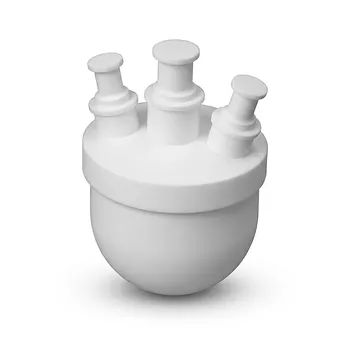
Custom PTFE Flask Large Volume 18L Corrosion Resistant Low Background High Purity Chemical Vessel

Custom PTFE Flask Large Volume 18L Corrosion Resistant Low Background High Purity Chemical Vessel

Optimize high-purity chemical processing with our custom 18L PTFE flasks. Engineered for extreme corrosion resistance and ultra-low trace element background, these large-volume vessels support demanding industrial laboratory applications with precision-machined reliability, bespoke design options, and unparalleled performance.

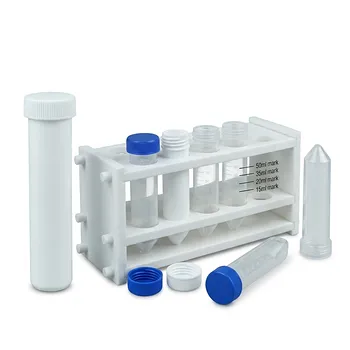
Custom PTFE Digestion Tubes and High Purity Polytetrafluoroethylene Centrifuge Vessels 60ml for Trace Analysis

Custom PTFE Digestion Tubes and High Purity Polytetrafluoroethylene Centrifuge Vessels 60ml for Trace Analysis

Precision-engineered custom PTFE digestion tubes for high-purity trace analysis. These 60ml centrifuge vessels offer unmatched chemical inertness and extreme acid resistance, ensuring zero contamination for demanding industrial laboratory processes, specialized sample preparation, and advanced reagent storage workflows in modern facilities.

High Purity PTFE Corrosion Resistant Reaction Vessel with Luer Fittings and Caps for Trace Analysis

High Purity PTFE Corrosion Resistant Reaction Vessel with Luer Fittings and Caps for Trace Analysis

High-purity PTFE reaction vessels with integrated Luer fittings and secure caps offer ultimate corrosion resistance and zero leaching. These customizable tanks provide a reliable, ultra-clean environment for trace analysis, aggressive chemical synthesis, and precision fluid transfer in demanding labs.

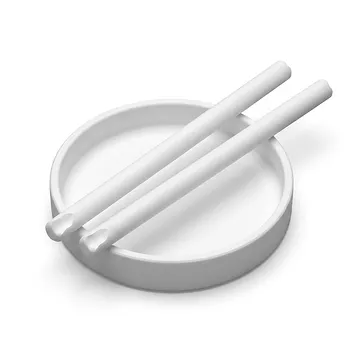
Custom PTFE Petri Dish 80mm Diameter Corrosion Resistant Low Background High Purity Laboratory Culture Vessel

Custom PTFE Petri Dish 80mm Diameter Corrosion Resistant Low Background High Purity Laboratory Culture Vessel

Discover high-purity custom PTFE petri dishes featuring 80mm diameters for demanding trace analysis. Our corrosion-resistant laboratory vessels ensure zero dissolution and ultra-low background levels, providing ultimate chemical inertness for sensitive pharmaceutical research and hazardous chemical processing industrial applications.

High Purity Virgin PTFE Square Tank Corrosion Resistant Acid Soaking Bath Custom Fluoropolymer Cleaning Vessel

High Purity Virgin PTFE Square Tank Corrosion Resistant Acid Soaking Bath Custom Fluoropolymer Cleaning Vessel

Procure high-purity virgin PTFE square tanks and acid soaking baths designed for extreme chemical resistance. Our custom-fabricated fluoropolymer vessels ensure zero contamination and superior thermal stability for demanding semiconductor and trace analysis laboratory applications. Request a bespoke quote.

High Purity PTFE Reaction Vessel with Electric Stirring System and Customizable 5L Tank including Buchner Funnel Filtration Assembly

High Purity PTFE Reaction Vessel with Electric Stirring System and Customizable 5L Tank including Buchner Funnel Filtration Assembly

Engineered for high-purity chemical processing, this customizable 5L PTFE reaction vessel features an integrated electric stirring system and Buchner funnel filtration, ensuring superior chemical resistance and scratch-proof performance for demanding laboratory research and industrial trace analysis applications.

High Purity Custom PTFE Laboratory Reaction Tank with Baffles for Low Background Trace Analysis

High Purity Custom PTFE Laboratory Reaction Tank with Baffles for Low Background Trace Analysis

Engineered for high-purity trace analysis, this custom PTFE reaction tank features a low background design and optional baffles. Precision CNC-machined for extreme chemical resistance and thermal stability, it delivers reliable performance in the most demanding laboratory and industrial applications.

Custom High Purity PTFE Microwave Digestion Vessels and Graphite Block Compatible Acid Evaporation Tanks for Trace Metal Analysis

Custom High Purity PTFE Microwave Digestion Vessels and Graphite Block Compatible Acid Evaporation Tanks for Trace Metal Analysis

Engineered for high-pressure microwave systems and graphite digestion blocks, these custom PTFE vessels ensure zero contamination during trace metal analysis. Benefit from superior chemical resistance and bespoke 44-position configurations for demanding acid evaporation and sample preparation workflows.

Custom High Purity PTFE Digestion Tubes and Centrifuge Tubes for Trace Metal Analysis

Custom High Purity PTFE Digestion Tubes and Centrifuge Tubes for Trace Metal Analysis

Premium high purity PTFE digestion and centrifuge tubes engineered for trace analysis and demanding chemical processing. Our custom fabricated fluoropolymer vessels ensure zero contamination and exceptional thermal stability for precise laboratory results across all industrial sectors. Request custom quotes.

High Purity Corrosion Resistant Teflon Crucible Low Background Laboratory PTFE Vessel for Trace Analysis and Acid Digestion

High Purity Corrosion Resistant Teflon Crucible Low Background Laboratory PTFE Vessel for Trace Analysis and Acid Digestion

Enhance your trace analysis with this high-purity, corrosion-resistant Teflon crucible. Featuring a low background and easy-to-clean surface, this customizable PTFE vessel ensures contamination-free processing for demanding industrial and scientific laboratory applications.

High Performance Customizable PTFE Reaction Vessel and Corrosion Resistant Polytetrafluoroethylene Flask for Chemical Laboratory Use

High Performance Customizable PTFE Reaction Vessel and Corrosion Resistant Polytetrafluoroethylene Flask for Chemical Laboratory Use

Discover high-performance customizable PTFE reaction vessels and corrosion-resistant flasks. Precision-engineered for extreme chemical environments, our bespoke laboratory solutions provide unmatched durability and safety for high-purity trace analysis, industrial processing, and demanding chemical synthesis applications.

Custom PFA Reaction Bottles High Purity PTFE Reaction Vessels Corrosion Resistant Petrochemical Containers

Custom PFA Reaction Bottles High Purity PTFE Reaction Vessels Corrosion Resistant Petrochemical Containers

Professional custom PFA reaction bottles and PTFE vessels for petrochemical analysis offer superior corrosion resistance and zero metal ion leaching. Engineered for low-pressure applications, these high-purity containers ensure absolute sample integrity in critical laboratory synthesis environments.

High Purity Opaque White PTFE Chemical Storage Barrels and Customizable Fluoropolymer Reaction Sampling Vessels

High Purity Opaque White PTFE Chemical Storage Barrels and Customizable Fluoropolymer Reaction Sampling Vessels

Discover premium high-purity PTFE reaction barrels and opaque storage vessels engineered for extreme chemical resistance and thermal stability. Our customizable industrial tanks ensure contamination-free sampling and fluid handling in demanding laboratory and pharmaceutical manufacturing environments.

Large Volume Custom PTFE Flask 10L Corrosion Resistant Low Background Trace Analysis Laboratory Vessel

Large Volume Custom PTFE Flask 10L Corrosion Resistant Low Background Trace Analysis Laboratory Vessel

Secure high-purity chemical processing with our custom 10L PTFE flasks. Engineered for extreme corrosion resistance and ultra-low background noise, these bespoke large-volume vessels ensure contamination-free results in the most demanding trace analysis and industrial laboratory environments.

Corrosion Resistant PTFE Evaporation Cell Electrophoresis Tank 400ml Flame Retardant Insulated Reaction Vessel Customizable

Corrosion Resistant PTFE Evaporation Cell Electrophoresis Tank 400ml Flame Retardant Insulated Reaction Vessel Customizable

This high-purity PTFE reaction vessel offers exceptional chemical resistance and thermal stability for demanding lab applications. Featuring a 400ml capacity and flame-retardant insulation, it provides a customizable, durable solution for precision evaporation and electrophoresis processes in industrial environments.

High Purity Custom PTFE Reaction Cell Electrolytic Tank for Semiconductor and Polysilicon Industrial Applications

High Purity Custom PTFE Reaction Cell Electrolytic Tank for Semiconductor and Polysilicon Industrial Applications

Discover custom PTFE reaction cells and electrolytic tanks designed for semiconductor and polysilicon manufacturing. These corrosion-resistant units ensure high purity in trace analysis and chemical processing, offering unmatched durability and thermal stability for demanding laboratory and industrial applications.

Corrosion Resistant PTFE Small Reagent Bottle Non Stick Biopharmaceutical Sample Storage Vessel Easy Clean Teflon Container

Corrosion Resistant PTFE Small Reagent Bottle Non Stick Biopharmaceutical Sample Storage Vessel Easy Clean Teflon Container

This high-purity PTFE reagent bottle offers exceptional chemical resistance and non-stick surfaces for biopharmaceutical storage. Engineered for leak-free performance and easy cleaning, it supports customizable dimensions for demanding laboratory and industrial fluid handling applications.

Large Capacity PTFE Reaction Flask 20L Custom Multi Neck Laboratory Boiling Flask Fluoropolymer Chemical Processing Vessel

Large Capacity PTFE Reaction Flask 20L Custom Multi Neck Laboratory Boiling Flask Fluoropolymer Chemical Processing Vessel

Optimized for extreme chemical resistance, this customizable 20L PTFE flask supports multi-neck configurations for complex laboratory reactions. Engineered for high-purity trace analysis and corrosive chemical processing, it ensures leak-free performance and exceptional durability in demanding industrial research environments.

Corrosion Resistant PTFE Electrochemical Cell for New Energy Research Inert Insulating Customizable Lab Reaction Vessel

Corrosion Resistant PTFE Electrochemical Cell for New Energy Research Inert Insulating Customizable Lab Reaction Vessel

Professional PTFE electrochemical cell designed for new energy research featuring exceptional chemical inertness and corrosion resistance. Available in 400ml and 1000ml capacities with full customization for advanced battery testing and high-purity trace analysis delivering reliable industrial performance and extreme durability.

Customizable PTFE Reaction Vessel with Electric Stirring Paddle and Buchner Funnel Vacuum Filtration System

Customizable PTFE Reaction Vessel with Electric Stirring Paddle and Buchner Funnel Vacuum Filtration System

High-performance customizable PTFE reaction vessel system featuring integrated electric stirring paddles and Buchner funnel vacuum filtration components designed for demanding laboratory environments requiring absolute chemical inertness, high-purity trace analysis, and bespoke engineering solutions for complex industrial applications.


Leave Your Message