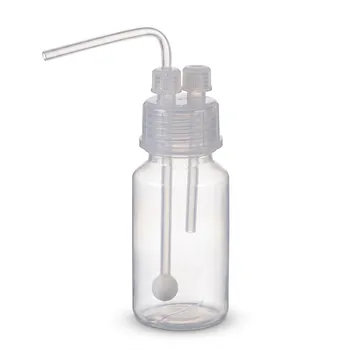
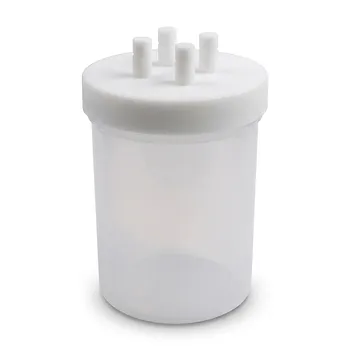
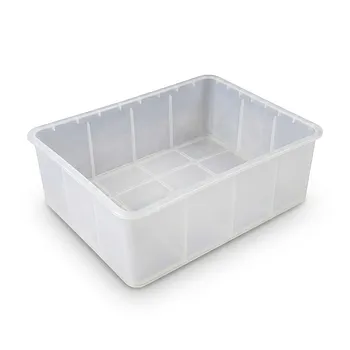
The use of high-purity PFA containers in sol-gel synthesis is a non-negotiable requirement for maintaining chemical integrity. These specialized containers prevent the introduction of trace impurities and ensure the uniform distribution of metal ions, such as strontium, iron, and aluminum, at a molecular level. This precision is fundamental for the formation of structurally uniform SrFe12-xAlxO19 nuclei during subsequent heat treatment.
High-purity PFA and corrosion-resistant containers provide the chemical inertness and non-adhesive surfaces necessary to prevent leaching and ion-adhesion. This ensures the stoichiometric accuracy of the precursor sol, which is critical for achieving high-performance magnetic materials.
Preventing Chemical Contamination and Leaching
Eliminating Trace Metal Interference
Standard laboratory glassware can leach elements like sodium, boron, or silicon into the solution, especially during the prolonged constant-temperature stirring required for sol-gel processes. High-purity Perfluoroalkoxy (PFA) is chemically inert and does not release these metallic impurity ions, which would otherwise disrupt the crystalline lattice of the hexagonal ferrite.
Safeguarding the Precursor Environment
The synthesis of strontium hexagonal ferrite requires an environment free from "background noise" to ensure that the small-dose substitutions, such as aluminum, remain at precise concentrations. Utilizing materials with exceptionally low leaching levels prevents external contaminants from acting as unintentional dopants that could degrade the final magnetic properties.
Resistance to Aggressive Reagents
Sol-gel precursors often involve the dissolution of metal salts in acidic or alkaline media. PFA and related fluoropolymers offer superior resistance to these aggressive chemical environments, ensuring that the container does not erode or react with the precursor components over time.
Ensuring Molecular Uniformity through Surface Properties
Preventing Ion Sequestration
PFA and PTFE (Polytetrafluoroethylene) possess extremely low surface energy, which creates a non-adhesive environment. This prevents reactive metal ions from adhering to the container walls, ensuring that the full concentration of the precursor remains in the sol rather than being lost to the surface of the vessel.
Facilitating Uniform Gelation
The non-stick nature of these containers allows for a more consistent distribution of metal ions (Sr, Fe, Al) throughout the gel matrix. This molecular-level homogeneity is essential for the precursor to transform into a uniform phase during the high-temperature calcination and sintering stages.
Maintaining Precise Concentrations
When dealing with complex chemical formulas like SrFe12-xAlxO19, even minor losses of component ions to container walls can shift the stoichiometry. High-performance fluoropolymers ensure that the precise concentration of each reactant is maintained from the initial mixing through to the final gelation.
Understanding the Trade-offs
Cost and Material Investment
High-purity PFA labware is significantly more expensive than standard borosilicate glass or polypropylene alternatives. For large-scale industrial applications or basic educational labs, the high initial investment must be weighed against the necessity of the purity requirements.
Thermal and Mechanical Limitations
While PFA is chemically robust, it is a softer material than glass and can be prone to scratching if cleaned with abrasive tools. Additionally, while it handles the temperatures required for sol-gel stirring (typically below 100°C), it cannot be used for the high-temperature furnace stages where ceramic or platinum crucibles are required.
Complexity of Cleaning
Maintaining the "high-purity" status of these containers requires rigorous acid-leaching cleaning protocols between uses. If the cleaning process is insufficient, the non-adhesive benefits can be compromised by residual films from previous experiments.
How to Apply This to Your Project
Depending on your specific research goals or production scale, the choice of container material will vary:
- If your primary focus is high-performance magnetic properties: Use high-purity PFA exclusively to ensure zero contamination and perfect stoichiometric control of the Sr, Fe, and Al ions.
- If your primary focus is cost-effective initial screening: Use PTFE (Teflon) as a secondary option, as it offers similar chemical resistance and non-stick properties at a lower price point, though with slightly higher potential for trace leaching.
- If your primary focus is large-scale industrial throughput: Invest in PFA-lined mixing tanks to balance the structural strength of traditional materials with the chemical inertness required for sol-gel stability.
The integrity of your final strontium hexagonal ferrite depends entirely on the molecular purity established during the initial sol-gel phase.
Summary Table:
| Feature | PFA/Fluoropolymer Advantage | Impact on Ferrite Synthesis |
|---|---|---|
| Chemical Inertness | Zero leaching of trace metals (Na, B, Si) | Prevents crystalline lattice defects |
| Surface Energy | Extremely low/Non-adhesive | Ensures accurate ion concentrations |
| Corrosion Resistance | Resists aggressive acids & alkalis | Maintains vessel integrity during mixing |
| Molecular Purity | Ultra-low trace impurity levels | Guarantees high-performance magnetism |
Optimize Your Material Synthesis with KINTEK
Ensure the absolute chemical integrity of your strontium hexagonal ferrite precursors with KINTEK’s premium fluoropolymer solutions. From everyday basic labware like PFA beakers, reagent bottles, and centrifuge tubes to high-purity trace analysis instruments and cleaning tanks, we provide the tools necessary to eliminate contamination.
Our expertise extends to comprehensive fluid transfer components (tubing, fittings, valves) and advanced reaction apparatus, including custom-machined electrochemical cells and microwave digestion vessels. Backed by end-to-end custom CNC fabrication, KINTEK delivers everything from standard consumables (stirring bars, O-rings) to bespoke laboratory setups designed for high-performance research.
Ready to elevate your lab's precision? Contact our fluoropolymer experts today!
References
- Matilde Saura‐Múzquiz, Mogens Christensen. Synthesis, Crystal Structure, Site Occupancy, and Magnetic Properties of Aluminum-Substituted M-Type Sr Hexaferrite SrFe<sub>12-x</sub>Al<sub><i>x</i></sub>O<sub>19</sub> Nanoparticles. DOI: 10.1021/acs.chemmater.4c02205
This article is also based on technical information from Kintek Knowledge Base .
Related Products
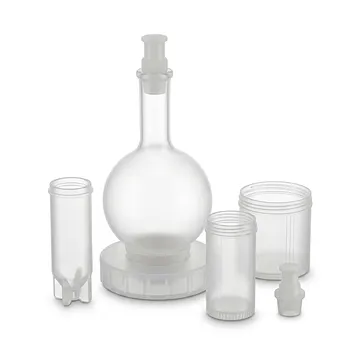
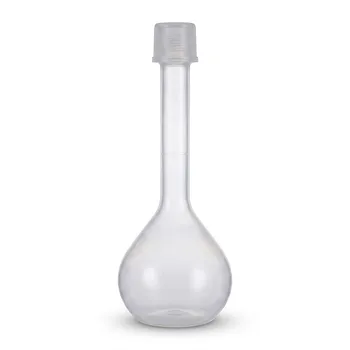
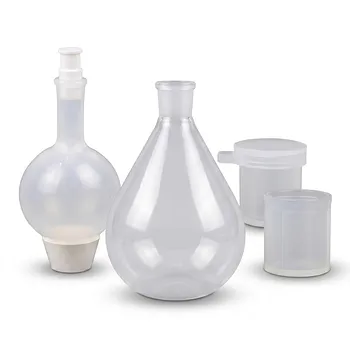
- Custom PFA Pear Shaped Flask High Purity Corrosion Resistant Labware Custom Molded Fluoropolymer Flask Glass Replacement Solution
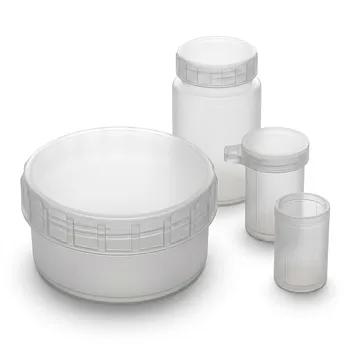
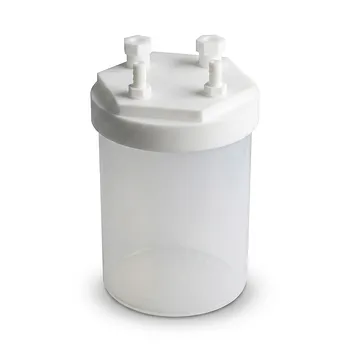
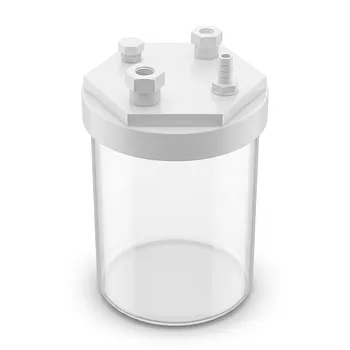
- PFA Reaction Jar Corrosion Resistant Wide Mouth PTFE Lab Bottle High Purity Chemical Vessel
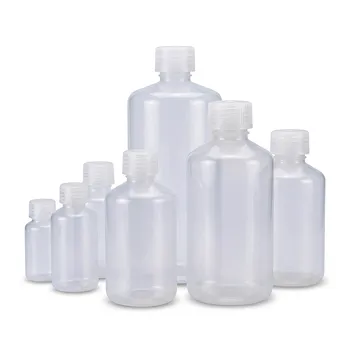
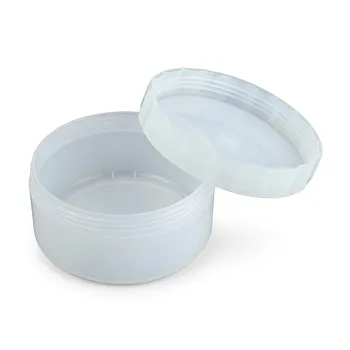
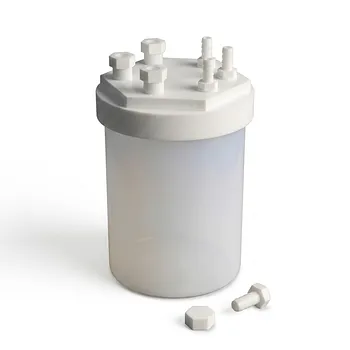
- Custom PFA Reaction Bottles High Purity PTFE Reaction Vessels Corrosion Resistant Petrochemical Containers
- Semiconductor Electronic Grade PFA Sampling Bottle for Ultrapure Reagent Storage and Trace Analysis
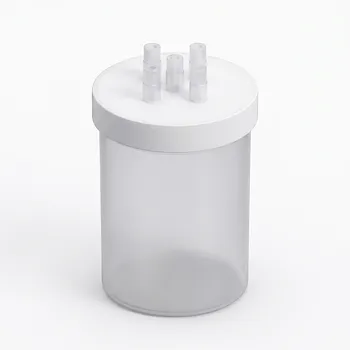
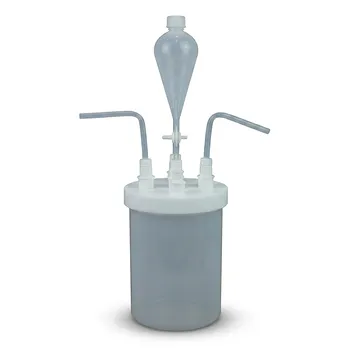
- High Purity 4L PFA Reaction Tank for Proton Exchange Membrane Electrolysis Water Oxygen Separation Systems
People Also Ask
- What are the chemical compatibility boundaries of PFA fluoropolymer labware, and how can PFA surfaces be treated for adhesive bonding? Learn safe usage and bonding methods.
- How does end-group stabilization during PFA polymer synthesis influence purity? Achieve Ultra-High Purity & Reliability in Lab Components.
- Why Use PFA Labware for MnFe2O4/rGO Precursors? Ensure Stoichiometric Precision and Purity
- What are the primary properties of PFA for high-performance labware? Achieve ultra-trace purity & thermal stability.
- How does PFA labware enhance the accuracy of ultra-trace element analysis? Achieving PPT Precision with Zero Leaching