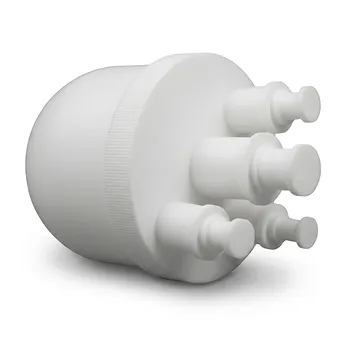
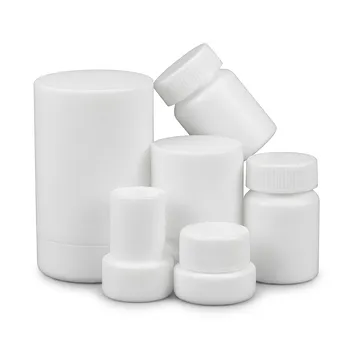
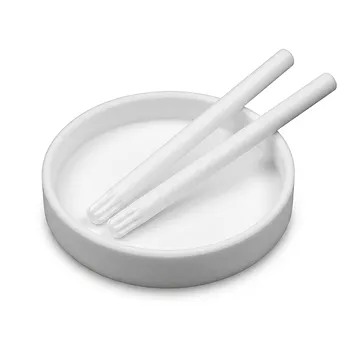
Fully fluorinated perfluoropolymers are preferred because they combine exceptional chemical resistance, thermal stability, and low contamination risk. Materials such as PTFE and PFA tolerate concentrated acids, oxidizing reagents, bases, and many organic solvents with minimal degradation. Their very low trace-metal background and low surface adsorption help preserve analyte concentrations, while their temperature resistance makes them suitable for aggressive microwave digestion conditions.
For ultra-trace analysis, labware must remain chemically stable without adding or removing analytes. PTFE and PFA provide a more reliable barrier against corrosion, leaching, adsorption, and heat-related degradation than partially fluorinated polymers.
Why Fluorination Determines Performance
Strong carbon-fluorine protection
Fully fluorinated polymers have carbon backbones shielded by fluorine atoms. The resulting carbon-fluorine bonds are exceptionally strong, making the material highly resistant to chemical attack.
PTFE is composed primarily of fully fluorinated carbon chains, while PFA includes perfluoroalkoxy linkages. Both retain the chemical resistance expected from a perfluorinated structure.
No hydrogen substitution
Partially fluorinated polymers such as PVDF, ETFE, and ECTFE retain hydrogen or, in some cases, chlorine within their polymer structures. These atoms create more chemically accessible sites and can increase polarity.
That difference generally makes partially fluorinated materials more vulnerable to swelling, solvent interaction, or degradation under severe chemical and thermal conditions.
Broad resistance across aggressive reagents
PTFE and PFA resist concentrated mineral acids, strong bases, oxidizing mixtures, and many organic solvents. This is especially important for digestion methods involving reagents such as nitric acid and hydrogen peroxide.
The key benefit is not merely that the vessel survives. It must also avoid releasing degradation products or trace contaminants into the sample.
Why Purity Matters in Trace Analysis
Low elemental background
At trace concentrations, even a small amount of metal contamination can distort the result. High-purity PTFE and PFA labware are manufactured to have extremely low trace-metal backgrounds, reducing the risk of introducing elements such as cadmium, lead, or zinc.
No polymer should be described as absolutely incapable of contributing impurities under every condition. The practical advantage of high-purity perfluoropolymers is their very low and well-controlled contribution when properly selected and cleaned.
Minimal analyte adsorption
Surface adsorption can reduce the measured concentration of an analyte, particularly when metals are present at very low levels. PTFE and PFA have low surface energy and are relatively non-wetting, which limits adhesion and retention on vessel walls.
This helps maintain sample recovery and improves consistency between preparation vessels and analytical measurements.
Reduced solvent absorption
Because fully fluorinated materials are highly non-polar and chemically inert, they absorb or interact with many solvents only minimally. That reduces the possibility that a vessel will retain one sample and transfer it into another.
This property is valuable for reagent bottles, transfer components, digestion tubes, and other labware used in repeated high-purity workflows.
Why Microwave Digestion Requires Perfluoropolymers
Resistance to hot acid mixtures
Microwave digestion combines aggressive chemistry with elevated temperature. Strong acid mixtures can rapidly attack materials that are adequate at room temperature but unsuitable during heated digestion.
PTFE and PFA maintain their chemical integrity under these conditions better than partially fluorinated alternatives, helping prevent vessel corrosion and sample contamination.
Stability under pressure
Closed microwave digestion vessels can develop substantial internal pressure as reagents heat and volatile species form. The vessel material must retain its integrity while exposed to both chemical attack and thermal stress.
Perfluoropolymer components are therefore used where chemical compatibility and high-temperature performance are central design requirements. The complete vessel system must still be operated within the manufacturer’s specified temperature, pressure, and reagent limits.
Protection of digestion blanks
A digestion vessel can affect analytical quality even when it does not visibly fail. Material degradation, extractable impurities, or retained residues can raise blank values and compromise detection limits.
The low background and low adsorption characteristics of high-purity PTFE and PFA help preserve clean blanks and reliable recovery during trace-element analysis.
Why Partially Fluorinated Polymers Are Less Suitable
Higher strength does not resolve contamination risk
ETFE, ECTFE, and PVDF can offer greater mechanical strength, stiffness, or dimensional stability than PTFE and PFA. Those properties may be useful for structural components or less aggressive laboratory applications.
However, mechanical strength alone does not determine suitability for ultra-pure digestion. Chemical resistance, extractables, adsorption, and trace-element background are equally important.
Lower thermal and chemical margins
Partially fluorinated polymers generally have lower continuous-use temperature limits and narrower chemical-resistance margins than fully fluorinated materials. ETFE, for example, is commonly associated with continuous service temperatures around 150°C, depending on grade and design.
At elevated temperatures, some partially fluorinated materials may swell or interact with polar organic solvents. Their performance depends more heavily on the specific reagent, concentration, temperature, exposure time, and mechanical load.
Greater dependence on application conditions
A partially fluorinated polymer may be acceptable for a particular reagent or operating temperature. That does not make it a general substitute for PTFE or PFA in severe digestion or ultra-trace workflows.
The closer the process is to the material’s chemical or thermal limits, the greater the risk of contamination, dimensional change, or premature failure.
Understanding the Trade-offs
PTFE and PFA are not interchangeable in every design
PTFE provides outstanding chemical resistance but is relatively soft and can deform under sustained mechanical load. PFA is also highly chemically resistant and is often selected when melt-processability, transparency, or more consistent fabricated shapes are useful.
The appropriate choice depends on the vessel design, pressure rating, temperature profile, fabrication method, and required cleanliness.
High temperature does not remove all operating limits
Perfluoropolymers have excellent thermal resistance, but their performance is not unlimited. Temperature, pressure, acid composition, exposure duration, and mechanical stress must remain within the equipment manufacturer’s specifications.
Microwave digestion safety depends on the entire vessel assembly, including seals, liners, fittings, and pressure-control features, not only the polymer itself.
Cleanliness remains essential
Using PTFE or PFA does not eliminate the need for rigorous cleaning and blank control. Residues from previous samples, reagents, handling, or manufacturing can still affect trace measurements.
Proper acid cleaning, storage, handling, and validation with procedural blanks are necessary to realize the material’s purity advantages.
Making the Right Choice for Your Goal
Select the material according to the analytical risk and operating severity of the application.
- If your primary focus is ultra-trace analytical accuracy: Choose high-purity PTFE or PFA with a documented low trace-metal background, and validate it through cleaning procedures and reagent blanks.
- If your primary focus is microwave digestion: Use a PTFE- or PFA-based vessel system rated for the planned temperature, pressure, and acid mixture.
- If your primary focus is mechanical strength or dimensional rigidity: Consider partially fluorinated polymers only after confirming their specific chemical compatibility, temperature limit, extractables, and contamination profile.
- If your primary focus is minimizing analyte loss: Favor perfluoropolymer surfaces because their low surface energy and low adsorption help preserve trace-element recovery.
For high-purity trace analysis and severe microwave digestion, fully fluorinated PTFE and PFA provide the widest practical margin against chemical attack, thermal degradation, analyte loss, and contamination.
Summary Table:
| Feature | Fully Fluorinated (PTFE/PFA) | Partially Fluorinated (PVDF/ETFE/ECTFE) |
|---|---|---|
| Chemical Resistance | Exceptional, broad | Moderate, depends on conditions |
| Thermal Stability | Excellent, withstands high temps | Lower continuous-use temps |
| Trace-Metal Background | Extremely low | Higher potential for leaching |
| Analyte Adsorption | Low surface energy, minimal | Higher adsorption risk |
| Solvent Absorption | Minimal | Can swell or interact |
| Suitability for Microwave Digestion | Ideal, withstands hot acid mixtures | Limited by temp and chemical margins |
| Mechanical Strength | Softer, less rigid | Stronger, stiffer |
| General Purpose | Ultra-trace analysis, severe digestion | Structural components, less severe applications |
Elevate your trace analysis and digestion accuracy with KINTEK's premium PTFE and PFA labware, exclusively dedicated to high-performance fluoropolymers. Our products, from beakers and digestion vessels to custom CNC-machined parts, offer unmatched purity and chemical resistance. For OEM/ODM support and reliable supply, contact us today at #ContactForm to discuss your specific needs and discover how we can enhance your lab's performance.
Related Products
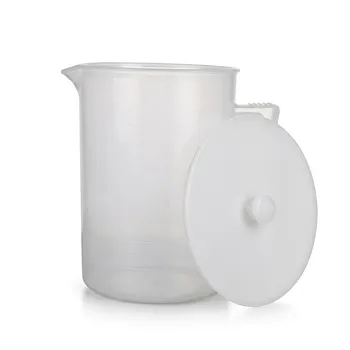
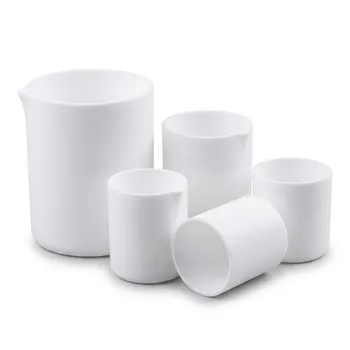
- High Purity PFA Crucible and Corrosion Resistant PTFE Beaker for Trace Analysis and Custom Laboratory Applications
- High Purity PFA Beaker with Handle and Large Capacity Washable Soak Basket Multi Spec Teflon Laboratory Labware
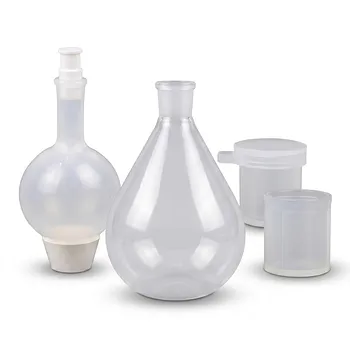
- Custom PFA Pear Shaped Flask High Purity Corrosion Resistant Labware Custom Molded Fluoropolymer Flask Glass Replacement Solution
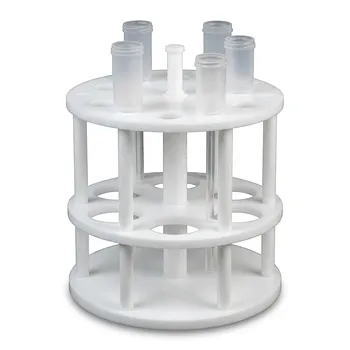
- Custom PFA Microcolumn Racks and PTFE Machined Low Background Corrosion Resistant Laboratory Fixtures
- Large Scale PTFE Beakers and Flasks for High Temperature Corrosion Resistant Laboratory Applications with Custom CNC Fabrication
People Also Ask
- Why are high-purity vessels critical for BiFeO3 synthesis? Ensuring Phase Purity
- Why is the use of high-purity PFA or PTFE labware critical during TiO2 nanoparticle purification? Protect Sample Purity
- Why is high-purity PFA trace analysis labware used for MXene? Ensure Superior Material Integrity in Research
- Why is high-purity PFA trace analysis labware recommended for trace element detection? Achieve Gold Standard PPT Accuracy
- Why is high-purity PFA labware necessary for Znx@LS-2 zeolite ICP-OES analysis? Ensure Trace-Level Precision