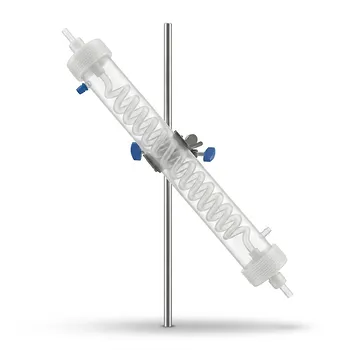
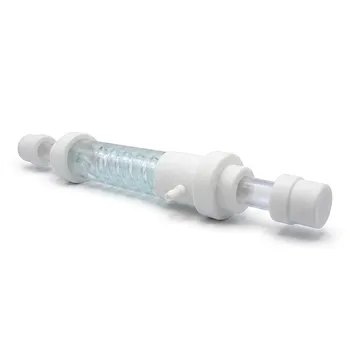
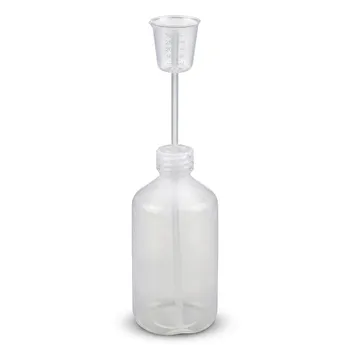
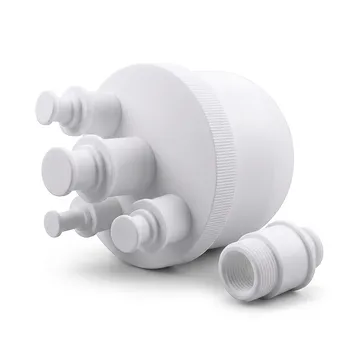
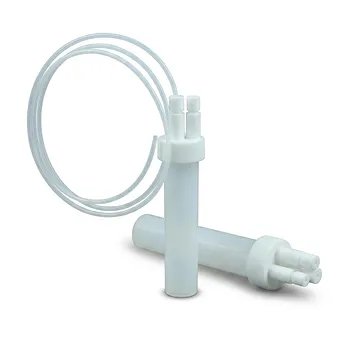
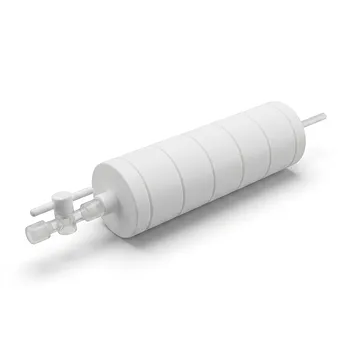
Fluoropolymers are essential because they combine chemical inertness, thermal stability, and exceptionally low surface energy in one material. PTFE and PFA resist aggressive acids, solvents, and corrosive reagents while minimizing wetting, adhesion, moisture uptake, and contaminant release. These properties protect sample purity and preserve component performance in laboratory vessels, tubing, valves, fittings, and reaction equipment exposed to demanding conditions.
The core advantage of PTFE and PFA is their ability to remain stable where ordinary plastics, metals, or elastomers may corrode, contaminate samples, absorb chemicals, or degrade. Their value comes from the combination of chemical resistance, broad thermal capability, non-stick behavior, low friction, and electrical insulation.
Why Fluoropolymers Perform in Demanding Environments
Strong carbon–fluorine chemistry
The performance of fluoropolymers is rooted in their molecular structure, particularly the strong bonds between carbon and fluorine atoms.
This structure makes materials such as PTFE and PFA highly resistant to chemical attack, biological degradation, and many aggressive solvents, acids, and reagents.
Exceptional chemical inertness
PTFE and PFA offer near-universal chemical resistance across a wide range of laboratory chemicals and corrosive media.
This is especially important for digestion vessels, reagent containers, tubing, valves, and fittings that must handle reactive materials without corrosion, swelling, or premature failure.
Thermal stability
Fluoropolymers maintain useful performance across broad operating-temperature conditions and resist thermal degradation better than many conventional polymers.
That stability supports applications involving heated reactions, chemical digestion, thermal cycling, and fluid transfer near elevated temperatures.
Low surface energy
Their extremely low surface energy gives fluoropolymer surfaces non-wetting and non-stick characteristics.
Liquids and residues are less likely to adhere to the surface, which reduces fluid retention, simplifies cleaning, and helps prevent carryover between samples.
How These Properties Protect Laboratory Work
Reducing sample contamination
High-purity analytical work can be compromised by trace quantities of extractables, residues, or particles from equipment.
PTFE and PFA help reduce this risk because they resist chemical degradation and have low moisture absorption and low surface adhesion. This makes them valuable for trace-analysis vessels, crucibles, digestion containers, and reagent-handling components.
Preventing chemical degradation
A component that reacts with the process fluid can introduce impurities, lose mechanical integrity, or alter the chemistry of an experiment.
Fluoropolymers provide a chemically stable barrier between the fluid and the equipment, helping preserve both the sample and the component.
Supporting easier cleaning
Non-stick surfaces retain less material than many conventional materials.
This is useful when equipment must be cleaned between highly sensitive analyses or when residual reagents could affect subsequent reactions.
Why They Suit Fluid Handling Components
Reliable tubing and fittings
Tubing, valves, and fittings may experience continuous contact with acids, solvents, oxidizers, or other aggressive fluids.
PTFE and PFA resist chemical attack and maintain low surface adhesion, making them suitable for fluid transfer systems where purity, durability, and low retention are important.
Low friction and wear resistance
PTFE is known for very low friction and self-lubricating behavior.
This can reduce sliding resistance and wear in moving or sealing interfaces, although the final suitability still depends on load, temperature, pressure, design, and the specific grade of material.
Electrical insulation
Fluoropolymers also provide strong dielectric performance.
This benefits laboratory and industrial systems that require electrical isolation, chemical resistance, and stable performance in the same component or assembly.
Flame resistance
Fluoropolymers provide a high level of flame resistance compared with many ordinary plastics.
This adds a safety advantage in equipment exposed to heat or potentially flammable laboratory environments, but it does not eliminate the need for appropriate system-level fire controls.
PTFE and PFA: Similar Chemistry, Different Manufacturing Advantages
PTFE for machined and heavy-duty components
PTFE is highly chemically inert and thermally stable, but it is not conventionally melt-processible like many thermoplastics.
It is commonly formed into stock shapes and then machined into custom components such as reaction vessels, electrochemical cell bodies, and specialized digestion equipment.
PFA for molded and extruded designs
PFA is a melt-processible perfluorinated resin.
It can be conventionally molded or extruded into complex parts, including flexible tubing, specialized fittings, valves, and seamless vessels. This makes it advantageous when a design requires intricate geometry, continuous tubing, or production through standard thermoplastic processing.
Selecting between the materials
The choice is not simply a matter of which material is “more resistant.” Both provide excellent chemical and thermal performance, but manufacturing method, geometry, flexibility, mechanical demands, purity requirements, and operating conditions should determine the selection.
Understanding the Trade-offs
Chemical resistance does not guarantee universal suitability
“Near-universal” chemical resistance is not the same as resistance to every chemical under every condition.
Temperature, concentration, exposure time, pressure, mechanical stress, and permeation requirements can change performance. Compatibility should therefore be checked for the actual process conditions.
Mechanical performance must be evaluated separately
Chemical inertness does not automatically mean high stiffness, strength, or dimensional stability.
PTFE, in particular, can exhibit creep or deformation under sustained load. Sealing design, reinforcement, pressure, and temperature must be considered when using it in valves, fittings, or pressurized systems.
Low adhesion is not the same as zero retention
Fluoropolymer surfaces minimize wetting and sticking, but no material eliminates all fluid retention in a poorly designed system.
Dead legs, roughness, geometry, trapped volumes, and cleaning procedures can still affect contamination and carryover.
Processing affects component performance
A material’s properties alone do not determine the performance of a finished component.
Manufacturing quality, surface finish, joining methods, dimensional control, and cleanliness are equally important in high-purity laboratory and fluid-handling applications.
Making the Right Choice for Your Goal
Fluoropolymers are most valuable when the equipment must protect both the process fluid and the equipment itself.
- If your primary focus is chemical compatibility: Choose PTFE or PFA after verifying resistance against the specific chemicals, concentrations, temperatures, and exposure times involved.
- If your primary focus is high-purity analysis: Prioritize low extractables, low moisture absorption, low surface adhesion, clean manufacturing, and designs that minimize trapped fluid.
- If your primary focus is complex tubing or molded components: Consider PFA because its melt-processibility supports extrusion and conventional molding of intricate geometries.
- If your primary focus is custom-machined or heavy-duty laboratory apparatus: Consider PTFE for machined vessels, cell bodies, digestion components, and other custom stock-shape designs.
- If your primary focus is long service life: Evaluate chemical resistance together with creep, pressure, temperature, wear, sealing, and mechanical loading.
When chemical purity and durability are non-negotiable, PTFE and PFA provide a rare combination of stability, cleanliness, and design flexibility that conventional materials struggle to match.
Summary Table:
| Property | Benefit |
|---|---|
| Chemical inertness | Resists acids, solvents, and reagents; prevents corrosion and contamination. |
| Thermal stability | Withstands broad temperature ranges and thermal cycling. |
| Low surface energy | Non-stick, low adhesion; reduces sample retention and facilitates cleaning. |
| Low friction | Self-lubricating; minimizes wear in moving parts. |
| Electrical insulation | Provides dielectric properties for electrical isolation. |
| Flame resistance | Adds safety in heat-exposed environments. |
| Manufacturing versatility | PTFE for machined parts, PFA for molded/extruded components. |
Elevate Your Lab with High-Performance Fluoropolymers
At KINTEK, we specialize in precision PTFE and PFA components designed to meet the most demanding laboratory applications. From custom-machined electrochemical cells to high-purity tubing and fittings, our products ensure chemical resistance, purity, and long-term reliability.
- For Laboratory Researchers: Achieve contamination-free results with our low-extractable, high-purity labware.
- For Equipment Manufacturers: Access custom OEM/ODM solutions with consistent quality and supply reliability.
- For Distributors: Benefit from competitive margins and comprehensive support.
Contact us today to discuss your specific requirements and see how KINTEK can enhance your operations.
Related Products
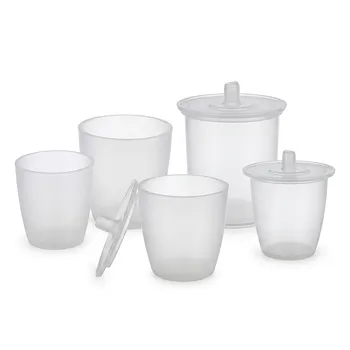
- High Purity PFA Crucible and Corrosion Resistant PTFE Beaker for Trace Analysis and Custom Laboratory Applications
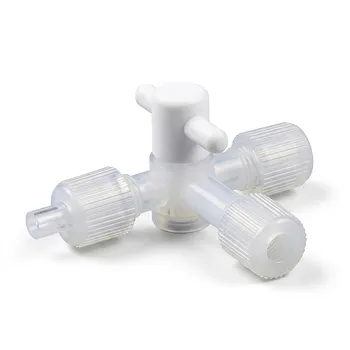
- Corrosion Resistant High Purity PFA Valve and Weldable Transparent Tubing for Semiconductor Fluid Transfer
- PTFE PFA Vacuum Filtration System Corrosion Resistant Customizable Shatterproof Laboratory Device
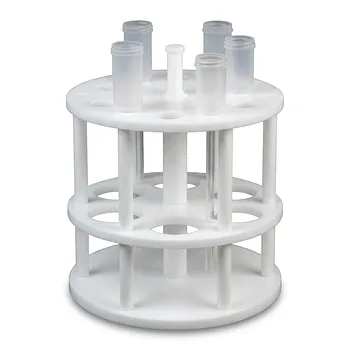
- Custom PFA Microcolumn Racks and PTFE Machined Low Background Corrosion Resistant Laboratory Fixtures
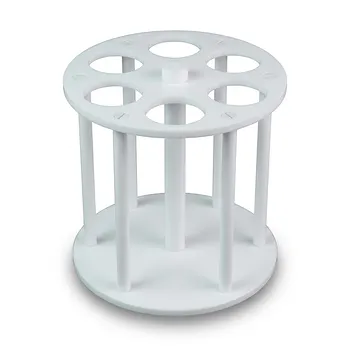
- Custom PFA Separatory Funnel Rack PTFE Machined Laboratory Support Stand Corrosion Resistant Low Background Fluoropolymer Fixture
People Also Ask
- Why are high-purity vessels critical for BiFeO3 synthesis? Ensuring Phase Purity
- Why is the use of high-purity PFA or PTFE labware critical during TiO2 nanoparticle purification? Protect Sample Purity
- Why is high-purity PFA labware necessary for Znx@LS-2 zeolite ICP-OES analysis? Ensure Trace-Level Precision
- Why is high-purity PFA trace analysis labware used for MXene? Ensure Superior Material Integrity in Research
- What key material characteristics make PTFE and PFA suitable for high-purity laboratory labware, trace analysis containers, and medical microporous tubing? Discover the essential properties that ensure purity.