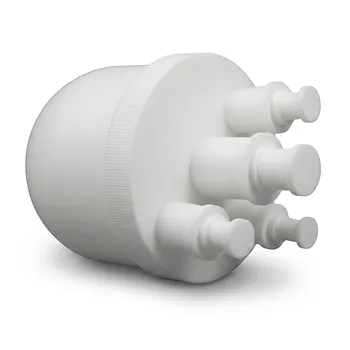
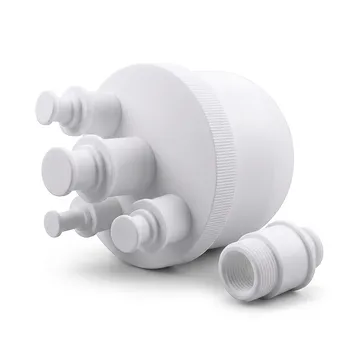
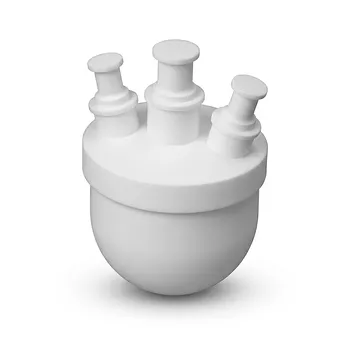
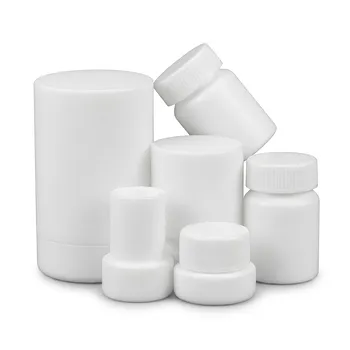
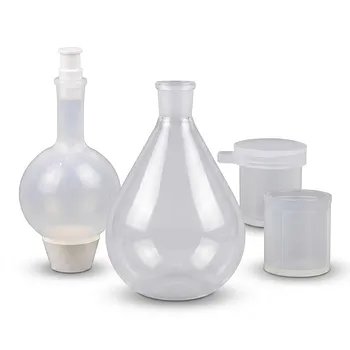
Fluorinated polymer films and fibers are modified by selectively changing their surface chemistry while preserving the chemically resistant bulk material. Key techniques include plasma etching, strong-base treatment, chemical or ozone pretreatment, graft polymerization, vapor-deposited coatings, and controlled fluorination. Longer-chain fluoroalkoxy groups and blended fluoropolymer coatings can further improve resistance to organic liquids and aggressive solvents, while high-purity PTFE and PFA labware keeps these treatments controlled and contamination-free.
Surface modification solves the tension between fluoropolymers’ excellent chemical resistance and their naturally low surface energy, which makes them difficult to bond, wet, or functionalize. Fluoropolymer labware provides chemically inert processing surfaces that protect samples and preserve repeatability during harsh chemical treatments.
Why Fluoropolymer Surfaces Require Modification
Chemical resistance and low surface energy
PTFE, PFA, and related fluoropolymers resist many acids, bases, solvents, and corrosive reagents. However, their low surface energy also produces non-stick, non-wetting behavior that limits adhesion, coating formation, and biological immobilization.
Surface treatments therefore target only the outermost material. The objective is to introduce reactive or wettable regions without sacrificing the bulk polymer’s mechanical and chemical performance.
Localized surface functionality
A modified surface can provide hydrophilic areas on an otherwise hydrophobic film or fiber. This is useful for microfluidics, printing, selective binding, analytical devices, and components that require controlled liquid movement.
The same principle allows biological molecules, adhesives, or protective coatings to attach to fluoropolymer substrates that would otherwise resist bonding.
Techniques Used to Modify Fluorinated Polymer Surfaces
Environmental plasma etching
Environmental plasma etching changes the surface chemistry and morphology through controlled exposure to a plasma environment. It can create patterned hydrophobic and hydrophilic motifs across a fluoropolymer surface.
These patterns support localized wetting control in microfluidic devices, printing systems, and analytical components. Plasma treatment can also raise surface energy, improving the ability of adhesives and topcoats to form durable bonds.
Strong-base treatment
Treatment with strong bases can replace or alter surface fluorinated groups and introduce surface hydroxyl groups. These hydroxyl groups provide reactive sites for covalently immobilizing biological molecules.
This method is particularly relevant to bio-analytical components and specialized cardiovascular apparatus. The process must be performed in vessels that tolerate concentrated alkaline reagents without leaching or degradation.
Chemical etching
Chemical etching removes or transforms fluorinated surface groups to increase surface reactivity and surface energy. It is commonly used when PTFE or another fluoropolymer must bond to metals, structural plastics, composites, adhesives, or protective coatings.
The treatment can improve interfacial adhesion, but it is a surface-specific modification. The underlying fluoropolymer remains responsible for much of the component’s chemical resistance.
Flame, corona, and electric-discharge treatment
Flame treatment, corona treatment, and related electric-discharge methods activate the surface by introducing polar or reactive chemical groups. This improves wettability and promotes adhesion to conventional coatings or adhesives.
These techniques are useful when a fluoropolymer film or fiber needs to be integrated into a multilayer structure. Process control is important because excessive treatment can damage the surface or produce inconsistent results.
Ozone pretreatment
Ozone exposure can generate reactive oxygen species at the fluoropolymer surface. These sites may improve wettability or provide starting points for subsequent chemical grafting.
Ozone pretreatment is therefore often part of a broader functionalization sequence rather than a complete solution by itself. It is useful when a controlled increase in surface reactivity is needed without changing the bulk substrate.
Graft copolymerization
Graft copolymerization attaches functional polymer chains to the fluoropolymer surface. Free-radical and controlled radical polymerization methods can introduce hydrophilic regions, selective binding sites, or other tailored functions.
This approach provides more design flexibility than a simple activation treatment. The grafted layer can be selected to control contact angle, molecular binding, or compatibility with another material.
Initiated chemical vapor deposition
Initiated chemical vapor deposition, or iCVD, deposits functional polymer films directly onto the fluoropolymer surface. It can create thin, conformal layers with controlled chemical properties.
Because the deposited layer is localized at the surface, the process can add functionality while preserving the structural integrity and underlying chemical resistance of a PTFE or PFA component.
Controlled fluorination and fluoroalkoxy replacement
Direct chemical fluorination can increase surface inertness, barrier performance, and chemical resistance. Because elemental fluorine is highly aggressive and difficult to control, fluorination in perfluorinated solvent systems offers a milder and more manageable route.
Another strategy replaces shorter fluoroalkoxy surface groups with longer-chain fluoroalkoxy groups. This significantly improves resistance to organic liquids and harsh solvents while retaining the fluorinated character of the surface.
Fluoropolymer blending
Coatings can be strengthened by combining fluoropolymers such as PTFE, FEP, and PFA. The resulting formulation can provide improved protection and service life in demanding chemical environments.
Blending is most relevant to coatings and protective layers rather than to localized biological or wettability functionalization. Its primary purpose is to improve durability and chemical protection.
How Fluoropolymer Labware Supports These Processes
Resistance to strong alkaline treatments
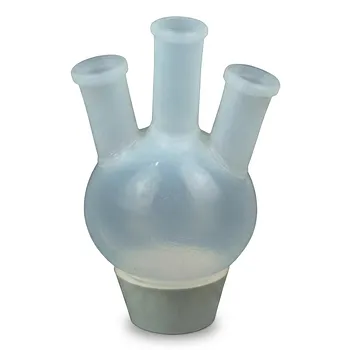
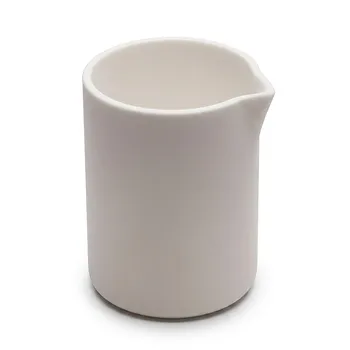
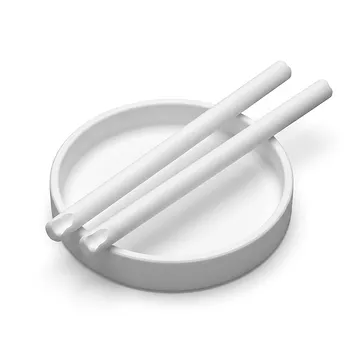
Strong-base functionalization can attack conventional glass or low-grade plastics, depending on the reagent, temperature, exposure time, and vessel composition. High-purity PTFE and PFA reaction dishes, etching tanks, and vessels provide a more reliable contact surface for these procedures.
Their chemical resistance reduces the risk of vessel degradation, extractables, and contamination of the treated film, fiber, or solution.
Compatibility with aggressive organic solvents
Surface fluorination, fluoroalkoxy modification, grafting, and coating processes may involve aggressive organic liquids. PTFE and PFA labware can contain these reagents without the swelling, dissolution, or chemical attack associated with less-resistant materials.
This compatibility helps maintain the intended reagent concentration and prevents the processing vessel from becoming an uncontrolled source of impurities.
Reliable fluid handling
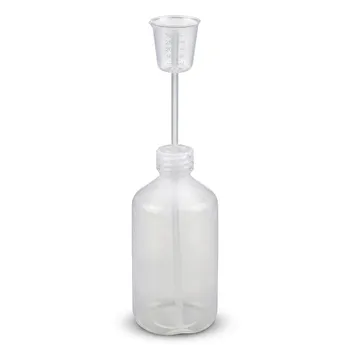
Fluoropolymer fluid-delivery components, including transfer lines, tubing, wash bottles, and related fittings, help move treatment solutions without introducing reactive contaminants. PFA components are especially useful where transparency, purity, or clean fluid observation is important.
FEP laboratory supplies also provide non-wetting surfaces. Low liquid retention improves sample recovery, simplifies cleaning, and reduces cross-contamination during trace analysis.
Support for high-temperature and high-pressure work
Some functionalization and post-treatment workflows require severe thermal or chemical conditions. High-performance fluoropolymer products such as digestion vessels, crucibles, microwave vessels, and high-pressure reaction tubes are designed to maintain structural integrity under demanding laboratory conditions.
The exact operating limits still depend on the polymer grade, temperature, pressure, reagent, and exposure time. Chemical resistance should be verified against the complete process rather than assumed from the material name alone.
Preserving repeatability
A chemically inert vessel helps ensure that the treatment environment is defined primarily by the intended reagents and process parameters. This improves repeatability between batches and reduces uncertainty caused by vessel contamination or degradation.
For surface treatments, that control matters because small changes in reagent purity, exposure, or surface contamination can change wettability, adhesion, and grafting results.
Understanding the Trade-offs
Functionality can reduce local inertness
Treatments that add hydroxyl groups, polar groups, grafted chains, or deposited coatings intentionally make the surface more reactive. That may improve adhesion or biological binding, but the modified region may not have the same chemical resistance as the original fluoropolymer surface.
The correct design is often a localized or thin modification that provides the required function while leaving most of the polymer chemically protected.
Over-treatment can damage the surface
Plasma, corona, flame, ozone, and chemical etching must be controlled carefully. Excessive energy or exposure can roughen, embrittle, discolor, or otherwise damage a film or fiber.
Treatment conditions should be matched to the polymer type, thickness, geometry, and required surface performance.
Adhesion improvements may not be permanent
Activated fluoropolymer surfaces can change over time through surface reorientation, contamination, or aging. Adhesion and wettability may decline if the treated material is stored for too long before bonding or coating.
A practical workflow generally minimizes the delay between surface activation and the next processing step.
Labware is resistant, not universally indestructible
PTFE and PFA offer broad chemical resistance, but no material is appropriate for every reagent and operating condition. Temperature, pressure, mechanical stress, permeation, and the specific chemical mixture must all be considered.
High-purity fluoropolymer labware reduces contamination and compatibility risks; it does not eliminate the need for process-specific validation.
How to Apply This to Your Project
Select the surface treatment according to the property that must change and use fluoropolymer labware to control the chemical environment.
- If your primary focus is chemical resistance: Consider longer-chain fluoroalkoxy modification, controlled fluorination, or PTFE/FEP/PFA coating combinations, and process them in high-purity PTFE or PFA vessels compatible with the solvent system.
- If your primary focus is wettability or patterned fluid flow: Use plasma etching to create defined hydrophilic and hydrophobic regions for microfluidic, printing, or analytical applications.
- If your primary focus is biological immobilization: Use strong-base treatment to introduce surface hydroxyl groups, followed by a validated coupling procedure in chemically resistant reaction vessels.
- If your primary focus is bonding or coating adhesion: Evaluate chemical etching, ozone, flame, corona, plasma, or graft polymerization to increase surface energy before applying the adhesive or topcoat.
- If your primary focus is sample purity and recovery: Use PTFE, PFA, or FEP fluid-handling components to minimize extractables, liquid retention, and cross-contamination during treatment and analysis.
The most reliable solution combines a targeted surface modification with chemically compatible, high-purity fluoropolymer labware that preserves process control.
Summary Table:
| Technique | Purpose | Key Benefit |
|---|---|---|
| Plasma etching | Create hydrophobic/hydrophilic patterns | Enables microfluidic and printing applications |
| Strong-base treatment | Introduce hydroxyl groups | Facilitates biological molecule immobilization |
| Chemical etching | Increase surface energy | Improves adhesion to other materials |
| Graft copolymerization | Attach functional polymer chains | Tailors surface properties for specific uses |
| iCVD deposition | Deposit thin functional films | Adds functionality while preserving bulk properties |
| Controlled fluorination | Enhance surface inertness | Improves barrier and chemical resistance |
| Fluoropolymer blending | Combine PTFE/FEP/PFA | Enhances coating durability and protection |
Elevate your surface modification processes with KINTEK's high-purity PTFE and PFA labware. Our chemically inert vessels, fluid handling components, and custom-machined parts ensure contamination-free treatment and repeatable results. From plasma etching to controlled fluorination, trust our expertise to support your advanced research and production. Contact us today to discuss your requirements and discover how our solutions can enhance your workflow. Get in touch now!
Related Products
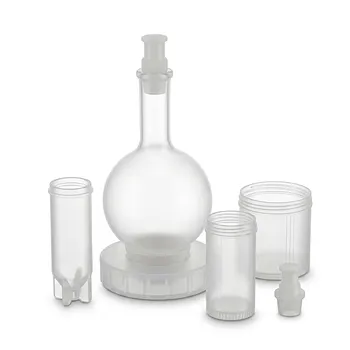
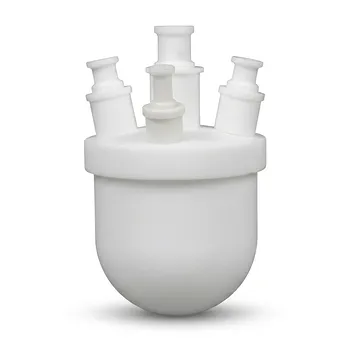
- Custom PFA Pear Shaped Flask High Purity Corrosion Resistant Labware Custom Molded Fluoropolymer Flask Glass Replacement Solution
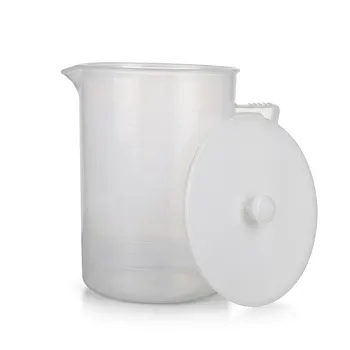
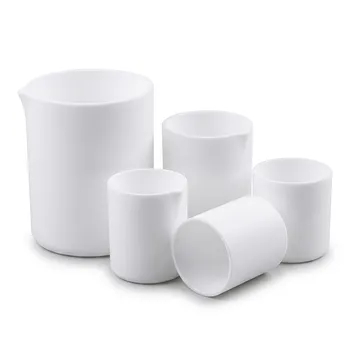
- High Purity PFA Beaker with Handle and Large Capacity Washable Soak Basket Multi Spec Teflon Laboratory Labware
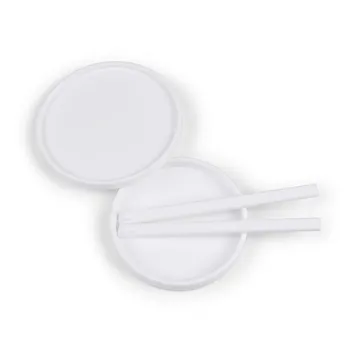
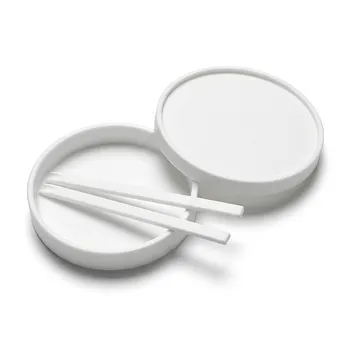
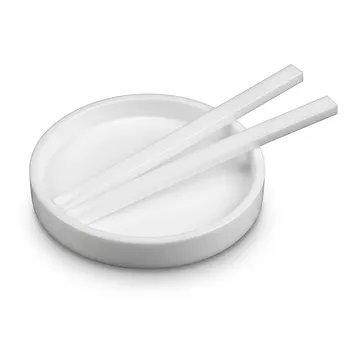
- Custom PTFE Petri Dish 30mm Corrosion Resistant Low Background Non Leaching Laboratory Ware
- Custom Polytetrafluoroethylene PTFE Petri Dishes 60mm Corrosion Resistant Low Background Labware
- Custom PTFE Petri Dish 120mm Diameter Corrosion Resistant Low Background High Purity Labware
People Also Ask
- Why Use PFA Labware for MnFe2O4/rGO Precursors? Ensure Stoichiometric Precision and Purity
- What are the primary properties of PFA for high-performance labware? Achieve ultra-trace purity & thermal stability.
- Why is PFA labware recommended for CuBi2O4? Protect high-purity precursors and ensure semiconductor bandgap accuracy.
- How does PFA labware enhance the accuracy of ultra-trace element analysis? Achieving PPT Precision with Zero Leaching
- What role does PFA labware play in semiconductor manufacturing? Ensuring Ultra-Pure Yields and Zero Contamination