Autoignition during fluoropolymer coating bake cycles can cause a fire or explosion when solvent vapors accumulate inside a hot, oxygen-containing oven. Fluoropolymer curing temperatures commonly range from 300°C to 550°C (572°F to 1,022°F), overlapping the autoignition temperatures of many ketones, hydrocarbons, and glycol ethers. If vapor concentration reaches the flammable range and contacts a heater element or oven hotspot, ignition can occur without a spark or open flame.
The primary control is preventing solvent vapor concentrations from reaching the flammable range. Properly designed exhaust ventilation, validated solvent data, controlled oven loading, and temperature monitoring are essential; heat-resistant fluoropolymer equipment alone cannot make a solvent-based bake process safe.
How Autoignition Creates the Hazard
Solvent vapors can ignite without an external spark
Autoignition is the spontaneous ignition of a vapor-air mixture when it reaches a sufficiently high temperature. The ignition source may be an exposed heater, a hot oven wall, or another surface that is above the solvent's autoignition temperature.
The flammable range is the critical condition
Solvent vapors become dangerous when their concentration in air rises above the lower explosive limit (LEL) but remains below the upper explosive limit (UEL). An overloaded oven can release vapor faster than its exhaust system removes it, allowing the mixture to enter this range.
Confinement can turn ignition into an explosion
Ignition of a flammable vapor cloud inside an oven can produce rapid pressure rise. The resulting event may damage the oven, eject hot material, rupture ductwork, or spread fire to connected equipment.
The presence of an external spark is not required. A system can therefore remain hazardous even when conventional ignition sources appear to be controlled.
Why Fluoropolymer Baking Requires Particular Care
Cure temperatures overlap solvent ignition thresholds
Bake cycles between 300°C and 550°C can exceed the autoignition temperatures of common coating solvents. This creates a narrow margin for error when solvent loading, airflow, or temperature control is inadequate.
Coating thickness and loading affect vapor release
Thick coatings, closely packed parts, and large batch sizes can release solvent rapidly during the initial heating stage. The oven must be evaluated for the actual mass and formulation being processed, not merely its nominal chamber volume.
Hotspots may be hotter than the setpoint
The displayed oven temperature may not represent the temperature of heater elements, racks, walls, or poorly ventilated zones. Localized surfaces can exceed the solvent's autoignition temperature even when the average chamber temperature appears controlled.
Fluoropolymer decomposition adds a separate hazard
At sufficiently high temperatures, fluoropolymers can thermally degrade and release hazardous gases and particulates. Potential byproducts include hydrogen fluoride, carbon monoxide, carbonyl fluoride, and fluorocarbon or monomer traces.
This decomposition risk is distinct from solvent autoignition, but both hazards can occur in the same operation. A process that prevents fire may still require dedicated exhaust and exposure controls for decomposition products.
Controls That Minimize Autoignition Risk
Use an oven designed for solvent service
A general-purpose laboratory oven should not automatically be treated as suitable for solvent-containing coatings. The oven should be specifically evaluated or designed for flammable vapor service, including appropriate airflow, electrical classification, temperature controls, interlocks, and pressure-relief provisions.
Heater elements and other internal surfaces should not provide uncontrolled ignition points. The equipment design should also prevent vapor accumulation in dead zones and connected exhaust passages.
Maintain effective exhaust ventilation
Exhaust must remove solvent vapors at the rate they are generated. Ventilation should be verified under actual operating conditions, including the intended batch size, loading pattern, cure profile, and exhaust configuration.
Local exhaust should capture emissions at the oven discharge or other release points. Exhaust systems must be compatible with the solvents and arranged so that vapors are not recirculated into occupied spaces.
Keep vapor concentration well below the LEL
The practical objective is not merely to remain below the LEL by a small margin. Normal operation should maintain a substantial safety margin below the LEL, accounting for uneven airflow, sensor uncertainty, solvent release peaks, and changes in coating formulation.
Where appropriate, continuous or appropriately located vapor monitoring can provide an additional safeguard. Monitoring does not replace adequate ventilation or proper oven design.
Control oven loading and solvent inventory
Batch size, part spacing, coating thickness, and solvent content should be limited according to a documented engineering assessment. Operators should not assume that an oven is safe simply because the same formulation was previously baked in smaller quantities.
The initial heat-up stage often produces the highest solvent release. Cure recipes should account for this stage with controlled ramping, sufficient purge airflow, and validated dwell times.
Characterize the actual formulation
Flammability properties should be determined for the formulation being used, including its solvent mixture where relevant. Important data include the LEL, UEL, autoignition temperature, flash point, vapor generation rate, and decomposition behavior.
Standardized testing, such as ASTM E659-14 for autoignition temperature, can support the assessment. Published data for an individual solvent may not accurately represent a blended coating formulation.
Prevent temperature excursions
Independent over-temperature protection, calibrated sensors, and alarms should be used to detect control failures. Temperature sensors should represent the locations most likely to develop hazardous conditions, rather than relying solely on a single chamber sensor.
Maintenance should include inspection of heaters, airflow controls, exhaust paths, interlocks, and alarms. A failed fan or blocked duct should prevent or interrupt heating when continued operation could allow vapor accumulation.
Use compatible preparation and transfer equipment
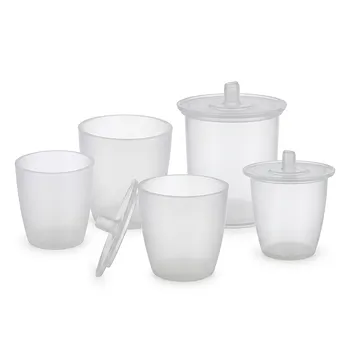
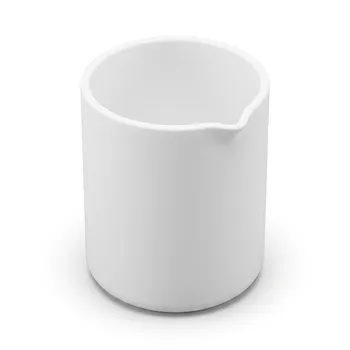
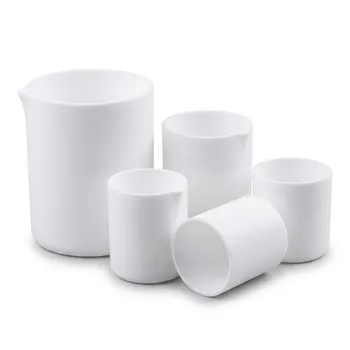
High-purity, heat-resistant fluoropolymer components such as suitable PFA or PTFE vessels may help with chemical compatibility during formulation preparation and fluid handling. They do not eliminate the need for solvent controls inside the curing oven.
Equipment must also remain within its rated temperature and chemical limits. Fluoropolymer labware that is appropriate for ambient-temperature solvent handling may not be suitable for exposure to a 300°C to 550°C bake environment.
Capture toxic process emissions
Dedicated local exhaust should be provided near curing ovens and other high-temperature equipment to capture solvent vapors and any decomposition products before they enter the work area. Exhaust treatment may also be required depending on the formulation, emissions, and applicable regulations.
Personnel should not rely on odor as an indication of safety. Some hazardous decomposition products can be toxic or corrosive at concentrations below those that would be obvious by smell.
Understanding the Trade-offs
Ventilation reduces concentration but does not eliminate ignition risk
Exhaust airflow lowers vapor concentration, but inadequate distribution, fan failure, blocked ducts, or an overloaded batch can still create localized flammable mixtures. Ventilation must therefore be engineered, monitored, and maintained.
Lowering the oven temperature may affect coating performance
Reducing the temperature can lower ignition risk, but it may prevent proper curing or alter coating quality. Any change to the bake schedule should be validated for both coating performance and emissions behavior.
Solid fluoropolymer equipment is not a universal substitute
Using solid fluoropolymer vessels may avoid a particular flammable carrier system in some laboratory processes. However, fluoropolymers themselves can degrade at elevated temperatures, and supplementary data indicate that significant degradation and hazardous gas release become important around and above 300°C to 400°C, depending on material and conditions.
More controls increase operational complexity
Vapor detectors, interlocks, staged heating, purge cycles, and exhaust monitoring improve protection but require calibration, testing, and operator training. A safeguard that is not maintained or routinely tested should not be credited as reliable risk reduction.
Fire and toxicity require separate assessments
Preventing autoignition does not address all hazards. Thermal decomposition, corrosive gases, polymer fume exposure, pressure, contaminated dust, and incompatible materials require their own controls.
Fluoropolymer dust can also react violently with fine metal powders at elevated temperatures. Metallic contamination should therefore be prevented where fluoropolymer components or residues are exposed to heat, friction, or grinding.
How to Apply This to Your Process
Begin with a documented process hazard assessment covering the formulation, oven, batch size, temperature profile, ventilation, and credible equipment failures.
-
If your primary focus is fire and explosion prevention: Use a solvent-rated oven, validate exhaust performance, keep vapor concentrations substantially below the LEL, and provide independent temperature and airflow interlocks.
-
If your primary focus is formulation selection: Obtain flammability and autoignition data for the complete solvent blend, and assess vapor generation during the highest-release portion of the bake cycle.
-
If your primary focus is worker exposure: Provide dedicated local exhaust, evaluate decomposition emissions at the maximum credible temperature, and use appropriate industrial hygiene monitoring and respiratory protection programs where required.
-
If your primary focus is laboratory handling: Use chemically compatible, heat-resistant vessels within their rated limits, minimize volatile solvent inventory, and keep solvent preparation separate from high-temperature equipment.
-
If your primary focus is process reliability: Control loading and ramp rates, test alarms and interlocks, inspect exhaust paths, and document operating limits that operators can verify before every batch.
A safe fluoropolymer bake process controls both flammable solvent vapor accumulation and high-temperature decomposition emissions through validated equipment, ventilation, formulation data, and disciplined operating limits.
Summary Table:
| Risk Factor | Control Measure |
|---|---|
| Solvent vapor ignition | Use oven designed for solvent service with controlled ventilation |
| Flammable range | Keep vapor concentration well below LEL with continuous monitoring |
| Hotspots above setpoint | Prevent temperature excursions with calibrated sensors and interlocks |
| Thermal decomposition | Dedicated local exhaust to capture toxic gases and particulates |
| Operator exposure | Use appropriate PPE and industrial hygiene monitoring |
Ensure your fluoropolymer baking process is safe and compliant. Contact KINTEK today to explore our range of high-purity PTFE and PFA labware, custom CNC-machined components, and specialized equipment designed for high-temperature applications. Our experts can help you select the right products for your process hazard assessment and operational needs. Get in touch with us now to discuss your requirements.
Related Products
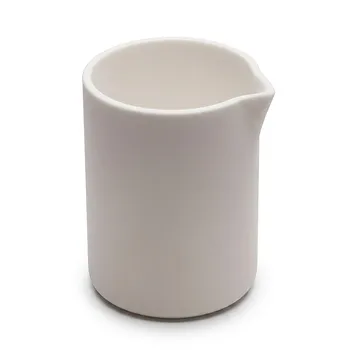
- High Purity PFA Crucible and Corrosion Resistant PTFE Beaker for Trace Analysis and Custom Laboratory Applications
- High Purity PTFE PFA Plastic Crucible for Corrosion Resistant Acid Digestion and Trace Analysis
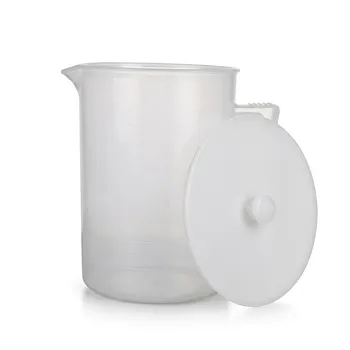
- High Purity Custom PTFE Beaker 5000ml With Lid Hot Plate Heating Compatible High Temperature Chemical Labware
- High Temperature Resistant Thickened PTFE Beaker 2000ml for Chemical Processing and Laboratory Trace Analysis
- Custom PTFE Beaker Thickened Design for Hot Plate Heating 200C Heat Resistant Anti Deformation Laboratory Glassware Alternative
People Also Ask
- Why are high-purity vessels critical for BiFeO3 synthesis? Ensuring Phase Purity
- Why is the use of high-purity PFA or PTFE labware critical during TiO2 nanoparticle purification? Protect Sample Purity
- Why is high-purity PFA trace analysis labware used for MXene? Ensure Superior Material Integrity in Research
- Why is high-purity PFA trace analysis labware recommended for trace element detection? Achieve Gold Standard PPT Accuracy
- Why is high-purity PFA labware necessary for Znx@LS-2 zeolite ICP-OES analysis? Ensure Trace-Level Precision