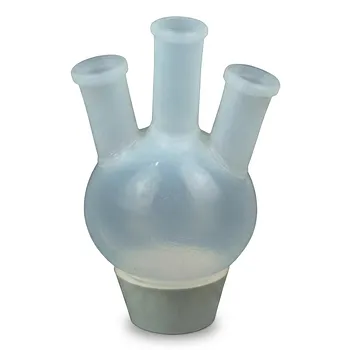
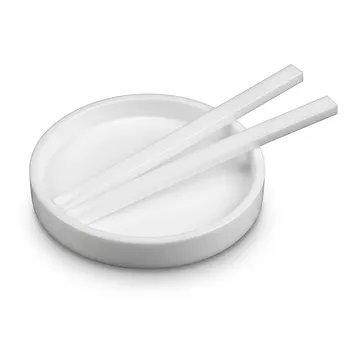
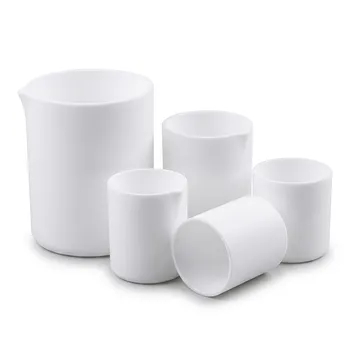
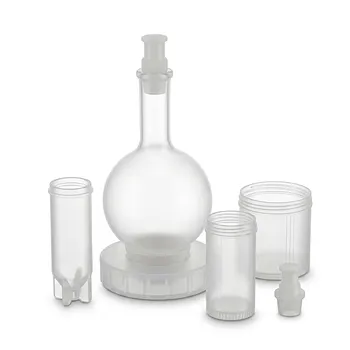
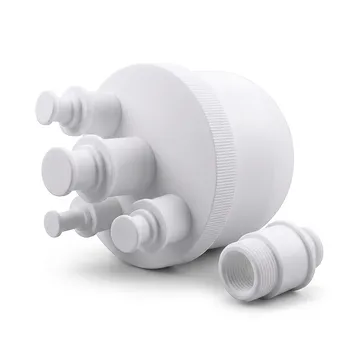
PTFE and PFA are essential because they combine chemical inertness, ultra-high purity, thermal stability, and non-wetting surfaces in one material system. This combination prevents labware from corroding, leaching contaminants, adsorbing trace analytes, or breaking down during aggressive chemical and high-temperature processes. As a result, PTFE and PFA help preserve sample integrity in ultra-trace analysis and process cleanliness in semiconductor manufacturing.
The central advantage of PTFE and PFA is contamination control under severe conditions: they resist aggressive chemicals and elevated temperatures while contributing exceptionally low levels of extractables, leachables, and surface retention.
Why Material Selection Matters
Ultra-trace analysis has almost no contamination margin
In ultra-trace analysis, impurities from a vessel can become indistinguishable from the analyte being measured. A chemically resistant container is therefore not enough; the material must also contribute minimal ionic, elemental, and organic background.
PTFE and PFA are valued for their highly fluorinated polymer structure, which minimizes chemical interaction and helps reduce extractables and leachables. This makes them suitable for digestion tubes, reagent bottles, beakers, and other vessels used with sensitive samples.
Semiconductor processes demand sustained cleanliness
Semiconductor fabrication uses high-purity chemicals and aggressive cleaning or etching processes. Even small amounts of contamination can affect process control, device performance, or yield.
PTFE and PFA labware, tanks, tubing, valves, and fittings help maintain cleanliness because they resist chemical attack while minimizing contamination from the equipment itself.
The Properties That Protect Sample and Process Integrity
Near-universal chemical resistance
PTFE and PFA withstand strong acids, bases, and many aggressive organic solvents that can corrode conventional plastics or damage other materials. Their resistance is particularly important in chemical digestion, reagent handling, cleaning, and etching workflows.
This chemical inertness reduces the risk that a vessel will react with its contents, degrade during use, or release unwanted species into a sample or process stream.
Extremely low extractables and leachables
High-purity labware must not become an unrecognized source of contamination. PTFE and PFA are selected because they can provide exceptionally low levels of extractables and leachables when properly manufactured and handled.
This property is critical when measuring trace metals, ions, organics, or other analytes at very low concentrations. It also supports the stringent contamination-control requirements of semiconductor chemical handling.
Broad thermal stability
PTFE and PFA retain useful chemical and physical performance across wide temperature ranges, including demanding heating and, where appropriate, low-temperature applications. This supports workflows such as acid digestion, heated reagent handling, and high-purity cleaning operations.
Thermal stability also reduces the risk of softening, chemical breakdown, or outgassing when the equipment is exposed to severe process conditions. Actual temperature limits still depend on the product design and manufacturer’s specifications.
Low surface energy and non-wetting behavior
PTFE and PFA have exceptionally low surface energy. Liquids are less likely to spread across, wet, or strongly adhere to these surfaces.
For trace analysis, this can reduce sample retention on the vessel walls and improve sample recovery during transfers, rinsing, and digestion. It also helps minimize liquid holdup in tubing and other fluid-transfer components.
Minimal analyte adsorption
A trace analyte that adheres to a container may be lost before measurement. The non-stick character of PTFE and PFA reduces surface adhesion compared with many conventional materials.
This is especially valuable when working with small sample volumes or low analyte concentrations, where even modest surface losses can affect accuracy and reproducibility.
Hydrophobicity and low moisture absorption
Fluoropolymer surfaces are hydrophobic and absorb very little moisture. These characteristics help limit water-related contamination, liquid retention, and uncontrolled interactions between the material and the process fluid.
In high-purity systems, this supports more predictable cleaning, drying, storage, and fluid transfer behavior.
Electrical insulation for semiconductor applications
PTFE and PFA also provide excellent electrical insulation. This is an additional advantage in semiconductor environments, where chemical cleanliness must coexist with controlled electrical and process conditions.
Their combination of insulation, chemical resistance, and purity makes them useful beyond static labware, including tubing, valves, fittings, and other fluid-handling components.
Why PTFE and PFA Outperform Conventional Materials
Compared with ordinary plastics
Many conventional plastics offer lower cost or easier processing, but they may soften, degrade, absorb chemicals, or release contaminants when exposed to aggressive reagents.
PTFE and PFA provide a much stronger combination of chemical resistance, purity, thermal capability, and low surface adhesion for demanding applications.
Compared with glassware
Glass can be useful in many laboratory workflows, but aggressive chemicals and high-purity requirements can make material interaction, corrosion, breakage, or surface contamination important concerns.
Fluoropolymers provide a lightweight, non-brittle alternative with strong resistance to aggressive acids, bases, and solvents. The correct choice still depends on the specific chemical, temperature, mechanical, and cleanliness requirements.
PTFE and PFA serve overlapping but distinct roles
Both materials are highly chemically resistant and suitable for high-purity applications. PFA is particularly useful where a fluoropolymer must be melt-processable or formed into complex, high-purity components, while PTFE is widely used where maximum chemical inertness and non-stick behavior are priorities.
The appropriate material should be selected by evaluating the complete application rather than relying on the material name alone.
Understanding the Trade-offs
Chemical resistance does not mean unlimited service life
PTFE and PFA are not immune to every possible combination of chemical exposure, temperature, pressure, and mechanical stress. Long-term integrity depends on operating within the manufacturer’s specified limits.
Compatibility should be assessed for the actual reagent, concentration, temperature, exposure time, and component geometry.
Thermal capability is application-dependent
A material’s broad temperature capability does not guarantee that every vessel or assembly can be used at the same limit. Seals, fittings, supports, pressure conditions, and repeated thermal cycling may impose lower limits than the polymer itself.
For heated digestion or cleaning processes, the complete system must be evaluated.
Clean material can still be mishandled
High-purity PTFE or PFA labware can be compromised by poor cleaning, unsuitable storage, particulate exposure, or contact with contaminated tools. Material selection reduces a major contamination source, but it does not replace disciplined handling and validated cleaning procedures.
Surface non-wetting has practical limits
Low surface energy reduces liquid retention and adhesion, but it cannot eliminate them entirely. Sample properties, geometry, agitation, drying conditions, and cleaning method still influence recovery and cleanliness.
How to Apply This to Your Project
The right choice depends on whether the dominant risk is chemical attack, contamination, analyte loss, temperature, or process integration.
- If your primary focus is ultra-trace analytical accuracy: Choose high-purity PTFE or PFA vessels with very low extractables and leachables, and validate cleaning and sample-recovery procedures.
- If your primary focus is semiconductor process cleanliness: Use qualified PTFE or PFA tanks, tubing, valves, and fittings that combine chemical resistance, low contamination contribution, thermal stability, and electrical insulation.
- If your primary focus is aggressive acid or solvent handling: Verify compatibility for the exact chemical and operating conditions, even when the component is made from PTFE or PFA.
- If your primary focus is maximum sample recovery: Favor the low-surface-energy properties of PTFE or PFA, while controlling liquid retention through vessel geometry, rinsing, and transfer practices.
- If your primary focus is long-term equipment reliability: Keep the complete assembly within manufacturer-specified chemical, thermal, pressure, and mechanical limits.
When purity, chemical resistance, thermal stability, and low surface interaction must coexist, PTFE and PFA provide one of the most reliable material platforms for protecting both analytical results and semiconductor process integrity.
Summary Table:
| Property | Benefit for Ultra-Trace Analysis | Benefit for Semiconductor Applications |
|---|---|---|
| Chemical Resistance | Prevents corrosion and contamination from aggressive acids/bases | Maintains purity in etching, cleaning, and chemical handling |
| Low Extractables/Leachables | Minimizes background interference in trace measurements | Reduces risk of equipment-derived contamination in processes |
| Thermal Stability | Supports acid digestion and heated reagent handling | Withstands high-temperature cleaning and processing steps |
| Non-Wetting Surface | Improves sample recovery and reduces carryover | Minimizes liquid holdup in tubing and components |
| Low Adsorption | Prevents analyte loss on vessel walls | Avoids cross-contamination in fluid systems |
| Hydrophobicity | Limits water-related contamination and retention | Ensures predictable cleaning and drying |
| Electrical Insulation | Not critical for analysis | Provides insulation and process compatibility in semiconductor tools |
Ensure your lab or fab achieves the highest purity and reliability with KINTEK's premium PTFE and PFA labware. Our products—from beakers and digestion vessels to tubing and custom machined parts—are engineered for ultra-trace analysis and semiconductor integrity. Backed by end-to-end custom CNC machining, we deliver tailored solutions, from prototypes to high-volume orders. Contact us today to discuss your requirements and elevate your contamination control. Get in touch now!
Related Products
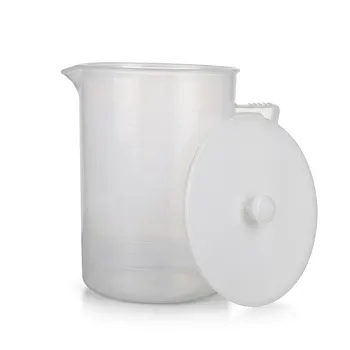
- High Purity PFA Crucible and Corrosion Resistant PTFE Beaker for Trace Analysis and Custom Laboratory Applications
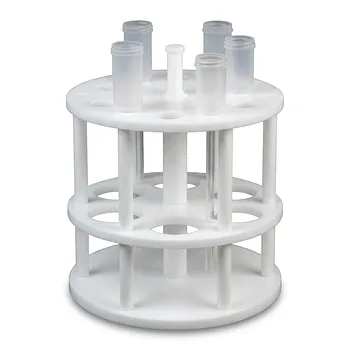
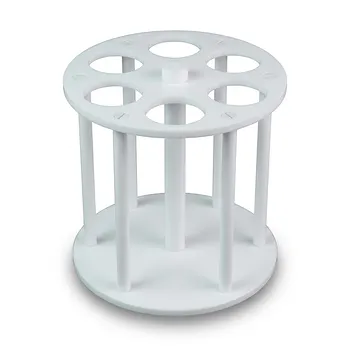
- Custom PFA Microcolumn Racks and PTFE Machined Low Background Corrosion Resistant Laboratory Fixtures
- Custom PFA Separatory Funnel Rack PTFE Machined Laboratory Support Stand Corrosion Resistant Low Background Fluoropolymer Fixture
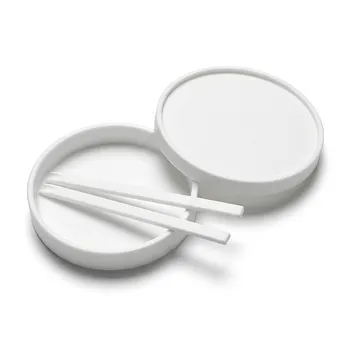
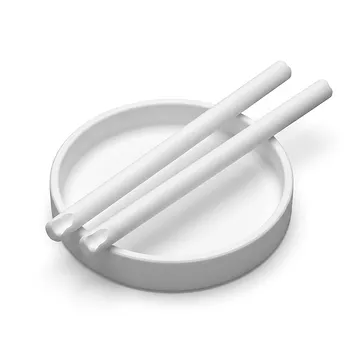
- Custom Polytetrafluoroethylene PTFE Petri Dishes 60mm Corrosion Resistant Low Background Labware
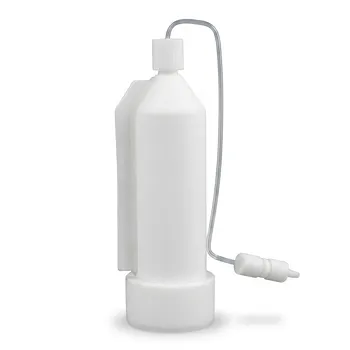
- PTFE PFA Vacuum Filtration System Corrosion Resistant Customizable Shatterproof Laboratory Device
People Also Ask
- Why are high-purity vessels critical for BiFeO3 synthesis? Ensuring Phase Purity
- Why is the use of high-purity PFA or PTFE labware critical during TiO2 nanoparticle purification? Protect Sample Purity
- Why is high-purity PFA trace analysis labware used for MXene? Ensure Superior Material Integrity in Research
- Why is high-purity PFA labware necessary for Znx@LS-2 zeolite ICP-OES analysis? Ensure Trace-Level Precision
- Why is high-purity PFA trace analysis labware used for sample processing when preparing Mo2CTx@MoS2? Ensure Material Purity