Ammonium carbonate is added during PTFE dispersion coagulation to increase the medium’s ionic strength and promote controlled particle agglomeration. This destabilizes the aqueous dispersion enough for PTFE particles to come together rapidly and gently, without relying on intense mechanical agitation. The objective is to preserve the shape and structure of the primary PTFE particles, which are typically about 0.1–0.5 µm in diameter.
The central purpose of ammonium carbonate is controlled coagulation: it encourages gentle PTFE agglomeration while minimizing particle deformation, helping maintain consistent downstream processing and product performance.
How Ammonium Carbonate Changes the Coagulation Process
Increasing Ionic Strength
PTFE particles in an aqueous dispersion remain separated because electrostatic and related colloidal forces help stabilize the suspension. Adding ammonium carbonate increases the concentration of ions in the liquid phase, reducing that stabilization.
As a result, the particles can approach and attach to one another more readily.
Promoting Gentle Agglomeration
The increased ionic strength allows coagulation to occur with less mechanical energy. The PTFE particles form agglomerates through chemical destabilization of the dispersion rather than depending primarily on vigorous mixing.
This is important because the goal is to produce larger, manageable agglomerates without damaging the original particle structure.
Reducing Mechanical Damage
Excessive agitation can physically deform the delicate primary PTFE particles or alter the structure of the resulting agglomerates. Ammonium carbonate helps reduce the need for that harsh agitation during coagulation.
Preserving particle morphology gives the material more predictable behavior during subsequent processing.
Why Primary Particle Structure Matters
Supporting Predictable Extrusion
The structure created during coagulation affects how the PTFE powder responds during extrusion. Consistent agglomerate morphology helps produce more predictable extrusion pressures.
Uncontrolled deformation or inconsistent coagulation can make processing behavior less uniform.
Maintaining Lubricant Absorption
Coagulated PTFE powder must absorb lubricant consistently for downstream forming processes. Preserving the primary particle structure helps maintain predictable lubricant uptake.
Variation in absorption can change the material’s processing response and increase batch-to-batch differences.
Enabling High Stretchability
For ePTFE production, the powder’s morphology influences its ability to stretch during expansion. Gentle coagulation and low-temperature drying help retain the structure needed for high stretchability.
The same principle supports consistent performance in high-purity laboratory container manufacturing.
The Role of Drying After Coagulation
Avoiding Structural Collapse
Coagulation alone does not determine the final powder properties. Drying conditions also matter because excessive heat or aggressive handling can change the structure formed during agglomeration.
Low-temperature drying helps preserve the morphology established during gentle coagulation.
Connecting Processing to Final Performance
The sequence is therefore important: ammonium carbonate promotes controlled agglomeration, and low-temperature drying preserves the resulting structure. Together, these steps support consistent extrusion, lubricant absorption, and stretching behavior.
The additive is not simply being used to make particles larger; it is being used to control how that enlargement occurs.
Understanding the Trade-offs
Coagulation Must Be Controlled
Increasing ionic strength facilitates coagulation, but the process still needs to be controlled. Coagulation that is too rapid or poorly managed may produce inconsistent agglomerate structure.
The practical objective is rapid, gentle agglomeration rather than uncontrolled precipitation.
Mechanical Agitation Is Not Irrelevant
Ammonium carbonate reduces the need for harsh agitation, but it does not eliminate the need to manage mixing and process conditions. Agitation still affects how uniformly the dispersion coagulates.
The best result comes from combining chemical destabilization with appropriately controlled handling.
Drying Can Undo Good Coagulation
Even well-controlled coagulation can be compromised by unsuitable drying. High temperatures or excessive physical stress may deform or alter the PTFE structure that the coagulation step was intended to preserve.
Coagulation and drying should therefore be treated as linked parts of the powder-production process.
How to Apply This to Your Project
The correct use of ammonium carbonate depends on the performance requirements of the final PTFE powder and the downstream forming process.
- If your primary focus is controlled coagulation: Use ammonium carbonate to increase ionic strength and promote rapid, gentle PTFE agglomeration.
- If your primary focus is particle integrity: Minimize harsh mechanical agitation and preserve the 0.1–0.5 µm primary particle structure.
- If your primary focus is ePTFE stretchability: Pair gentle coagulation with low-temperature drying to retain the morphology needed for expansion.
- If your primary focus is process consistency: Control coagulation and drying together to support predictable extrusion pressures and lubricant absorption.
Ammonium carbonate is valuable because it shifts PTFE coagulation from mechanically forced agglomeration toward controlled, lower-stress particle assembly.
Summary Table:
| Key Purpose | Description |
|---|---|
| Increase ionic strength | Reduces colloidal stability, allowing particles to agglomerate. |
| Promote gentle agglomeration | Enables controlled coagulation with less mechanical agitation. |
| Preserve particle morphology | Minimizes deformation of primary particles (0.1–0.5 µm). |
| Improve extrusion consistency | Maintains uniform agglomerates for predictable processing. |
| Enhance ePTFE stretchability | Supports high expansion ratios when paired with low-temperature drying. |
Optimize Your PTFE Processing with KINTEK
At KINTEK, we specialize in high-performance fluoropolymers. Our PTFE and PFA labware, fluid handling components, and custom-machined parts are designed to meet the rigorous demands of PTFE processing and analysis. Whether you need specialized coagulation equipment or high-purity sample preparation tools, our experts can help you achieve consistent results. Contact us today at [helloworld] to discuss your requirements and explore how our products can enhance your lab's efficiency and reliability.
Related Products
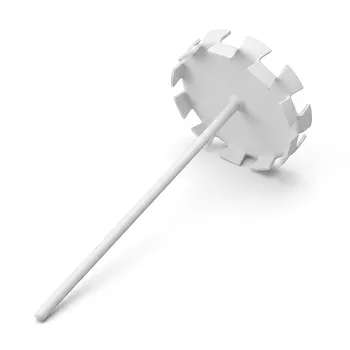
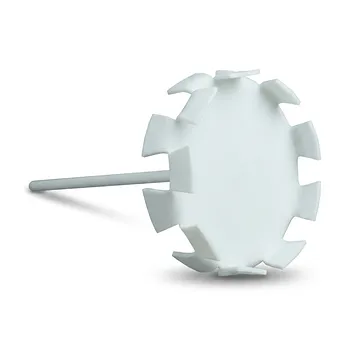
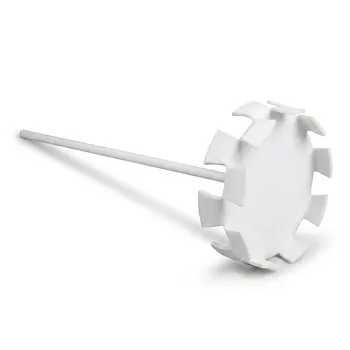
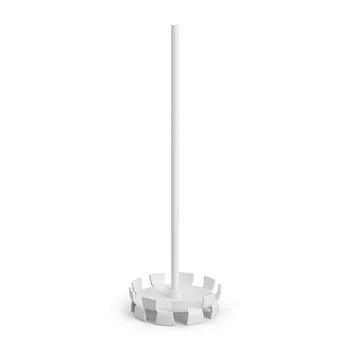
- High Purity Corrosion Resistant PTFE Dispersion Disk and Inert Stirring Paddle for Food Pharmaceutical and Cosmetic Mixing
- High Purity PTFE Dispersion Disk for Food and Cosmetic Processing Non Stick Corrosion Resistant Large Stirring Paddle Customizable Fluoropolymer Impeller
- PTFE Dispersion Disk Food Cosmetic Grade Non Stick Corrosion Resistant Large Stirring Paddle Customizable Impeller
- Custom PTFE Dispersing Disc and Stirring Rod for Chemical Processing and Laboratory Mixing
- Corrosion Resistant PTFE Stirring Impeller and Customizable Polytetrafluoroethylene Dispersion Disk
People Also Ask
- What is Dispersion PTFE used for? Creating Thin, High-Performance Coatings and Films
- How many variations of PTFE disks are available and what parameters do they differ in? Choose the Right Material for Your Application
- What key properties are measured under ASTM D4441 to classify and evaluate PTFE dispersions?
- What is PTFE dispersion, and how is it used? A Guide to Non-Stick Coatings & Chemical Resistance
- What is the dispersion method of producing PTFE and what are its products? Ideal for Thin Coatings and Films