High-purity copper foil functions as the essential backbone of the electrode, serving as both a mechanical support and a high-efficiency electron conduit. It ensures that electrons generated during electrochemical reactions are rapidly moved to the external circuit while physically anchoring active materials during cycling. This dual role is critical for obtaining accurate data during hydrogen storage tests and other electrochemical evaluations.
High-purity copper foil acts as a low-resistance interface that bridges the gap between chemical reactions and electronic measurement. By providing mechanical stability and superior conductivity, it ensures that the resulting data reflects the true performance of the active material rather than the limitations of the testing setup.
Enhancing Electronic Efficiency
Minimizing Internal Resistance
The high electrical conductivity of copper is its most vital attribute in an electrochemical cell. By using high-purity foil, researchers can significantly reduce the internal resistance of the electrode, preventing energy loss as heat.
Rapid Electron Transfer
During charge-discharge cycles, electrons must move from the active material—such as a NiFe2O4/Fe2O3/g-C3N4 composite—to the external circuit. The copper foil facilitates this rapid transfer, allowing for high-rate performance testing without electronic bottlenecks.
Ensuring Ohmic Contact
For accurate testing, the interface between the active material and the collector must maintain high-quality ohmic contact. High-purity copper provides a clean surface that minimizes contact resistance, ensuring that the measured voltage accurately represents the material's potential.
Structural Integrity and Stability
Serving as a Physical Carrier
The copper foil acts as a robust mechanical framework that supports the weight and structure of the active materials. This allows researchers to apply consistent coatings of pastes or slurries, which is necessary for reproducible experimental results.
Resilience Against Volume Expansion
During hydrogen absorption and desorption cycles, many active materials undergo significant volume expansion and contraction. The mechanical stability of the copper foil helps maintain electrical contact even as the material shifts, preventing the electrode from crumbling or delaminating.
Stability in Alkaline Environments
High-purity copper foil is chosen for its electrochemical stability within specific potential windows, particularly in alkaline electrolytes. This chemical resistance ensures that the foil itself does not participate in unwanted side reactions that could skew the test data.
Understanding Potential Limitations and Pitfalls
Potential Window Constraints
While copper is excellent for negative electrodes, it has a limited potential window compared to other materials like aluminum. If the voltage exceeds certain limits, the copper may undergo dissolution or oxidation, leading to contaminated results.
Surface Oxidation Risks
Even high-purity copper can develop a thin oxide layer if exposed to air or moisture before use. This layer acts as an insulator, increasing resistance and potentially leading to poor adhesion of the active material.
Weight and Cost Factors
In large-scale applications, the density and cost of copper are significant considerations. For laboratory testing, these are less critical, but they must be accounted for when transitioning from experimental electrodes to commercial-grade battery or storage systems.
How to Optimize Current Collector Selection
Before beginning your electrode preparation, consider how the current collector aligns with your specific testing environment and material properties.
- If your primary focus is high-rate performance: Utilize high-purity copper to minimize resistive losses and ensure that electron transport does not limit your material’s perceived power density.
- If your primary focus is long-term cycling stability: Ensure the copper surface is properly cleaned or treated to maximize adhesion, preventing delamination during the volume changes associated with hydrogen storage.
- If your primary focus is high-voltage testing: Verify that your operating potential does not exceed the stability limit of copper; if it does, you may need to switch to aluminum or another specialized collector.
By treating the copper foil as a precision component rather than a simple substrate, you ensure the integrity and reproducibility of your electrochemical findings.
Summary Table:
| Key Function | Primary Benefit | Impact on Electrochemical Results |
|---|---|---|
| Electronic Conduit | Minimizes internal resistance | Enables high-rate performance and rapid electron transfer. |
| Mechanical Support | Robust physical framework | Prevents electrode delamination during volume expansion cycles. |
| Ohmic Contact | Low-resistance interface | Ensures measured voltage accurately reflects material potential. |
| Chemical Stability | Alkaline resilience | Maintains integrity in specific electrolytes to avoid data skewing. |
Achieve unparalleled precision in your research with KINTEK’s high-performance laboratory supplies. From basic essentials like beakers, crucibles, and centrifuge tubes to high-purity trace analysis instruments and comprehensive fluid transfer components (tubing, fittings, valves), we provide the essential backbone for your experiments. KINTEK specializes in PTFE and PFA-crafted solutions, including sample prep tools, advanced electrochemical cells, and custom CNC-machined parts tailored to your specific testing requirements. Whether you need high-volume consumables or bespoke reaction apparatus like hydrothermal synthesis liners, microwave digestion vessels, and battery testing fixtures, our end-to-end fabrication ensures absolute quality and material purity. Contact us today to discover how our specialized fluoropolymer expertise and custom engineering can optimize your laboratory’s testing performance!
References
- Fatemeh Sadat Razavi, Masoud Salavati‐Niasari. Synthesis and hydrogen storage application of innovated ternary-based NiFe2O4/Fe2O3/g-C3N4 nanocomposites by facile Pechini sol–gel method. DOI: 10.1007/s13201-025-02483-5
This article is also based on technical information from Kintek Knowledge Base .
Related Products
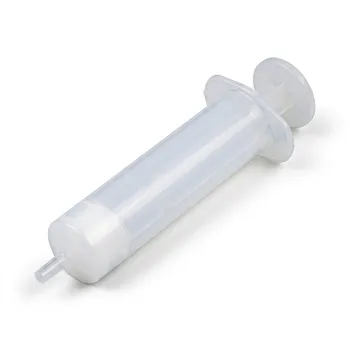
- High Purity PFA Syringe 10ml Corrosion Resistant Translucent Fluoropolymer Sampling Unit for Trace Analysis
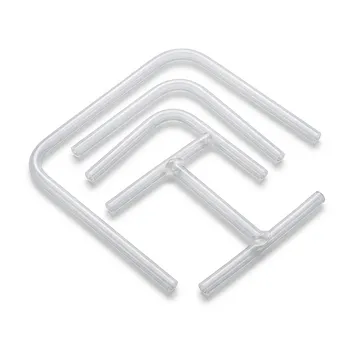
- High Purity PFA Coiled Tubing Custom PTFE Machining PFA Welding and Precision Bending Solutions
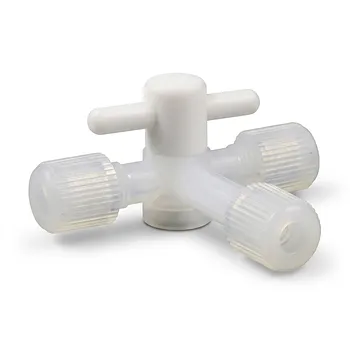
- High Purity PFA Valves and Weldable Corrosion Resistant Transparent Tubing for Semiconductor Sensor Manufacturing Fluid Transfer
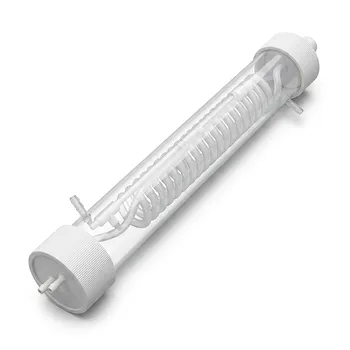
- High Purity PFA Condenser Serpentine Straight HF Resistant Reaction Apparatus Custom Circulation Column
- Corrosion Resistant High Purity PFA Valve and Weldable Transparent Tubing for Semiconductor Fluid Transfer
People Also Ask
- Why is high-purity PFA trace analysis labware used for sample processing when preparing Mo2CTx@MoS2? Ensure Material Purity
- Why is high-purity PFA trace analysis labware used for MXene? Ensure Superior Material Integrity in Research
- Why is high-purity PFA labware necessary for Znx@LS-2 zeolite ICP-OES analysis? Ensure Trace-Level Precision
- Why is the use of high-purity PFA sampling bottles necessary for trace element analysis? Ensure PPT Accuracy
- Why use high-purity PFA bottles for Carbon Quantum Dots? Ensure Ink Stability and Prevent Fluorescence Quenching