PTFE fluoropolymers are ideal for extreme laboratory conditions because they combine exceptional chemical inertness, broad thermal stability, and very low surface energy. Their fluorine-rich molecular structure strongly shields the carbon backbone, allowing PTFE labware to resist aggressive acids, bases, organic solvents, and many corrosive reagents without significant chemical degradation. This protects both the equipment and the sample from reaction, contamination, and leaching.
Core takeaway: PTFE is not merely chemically resistant; its combination of strong carbon–fluorine bonding, thermal stability, low surface energy, and high purity makes it a reliable containment material when ordinary plastics would react, soften, contaminate, or fail.
Why PTFE Resists Aggressive Chemicals
The carbon–fluorine structure provides chemical protection
PTFE is produced by replacing hydrogen atoms in a carbon-chain polymer with fluorine atoms. The resulting strong carbon–fluorine bonds and dense fluorine coverage create a protective sheath around the carbon backbone.
This structure makes the polymer highly resistant to chemical attack. Reagents have difficulty breaking through the fluorine-rich surface to react with the underlying polymer chain.
PTFE is broadly chemically inert
PTFE resists many strong acids, strong bases, oxidizing agents, and organic solvents that can attack conventional hydrocarbon-based plastics. This makes it suitable for digestion vessels, reagent bottles, trace-analysis containers, tubing, and fittings.
The resistance is especially valuable when the labware must contain corrosive media for extended periods or under elevated temperature.
It minimizes unwanted reactions with samples
A containment material should not participate in the process it is controlling. PTFE’s chemical inertness helps prevent the vessel or fluid-contact component from reacting with reagents or altering the sample composition.
That is critical in trace analysis, where even small amounts of leached material or cross-contamination can compromise results.
Why PTFE Performs at Extreme Temperatures
PTFE has broad thermal stability
PTFE remains functional across a wide temperature range, including very low temperatures and elevated laboratory-processing temperatures. This allows it to support applications involving heating, cooling, chemical digestion, and thermal cycling.
The exact usable range depends on the design, load, exposure time, pressure, and whether the material is PTFE or another fluoropolymer such as PFA.
Thermal stability helps preserve structural integrity
Under severe thermal conditions, ordinary plastics may soften, warp, become brittle, or release degradation products. PTFE is significantly more resistant to these failure modes, helping vessels and components retain their intended function during demanding procedures.
However, thermal resistance is not unlimited. PTFE components can deform under mechanical load at high temperature, and maximum service temperatures must be established for the specific geometry and operating conditions.
It tolerates combined chemical and thermal stress
Many laboratory procedures are challenging because they combine corrosive chemicals with heat. Chemical digestion is a typical example: the container must resist reagent attack while maintaining dimensional and material stability at elevated temperature.
PTFE’s value comes from handling these stresses together, rather than merely resisting chemicals or heat in isolation.
Why Surface Properties Matter in Labware
Low surface energy reduces adhesion
PTFE has extremely low surface energy, giving it hydrophobic and oleophobic behavior. Many liquids do not readily wet or adhere to its surface.
This can make PTFE vessels easier to empty and clean, while reducing the retention of residues between procedures.
Low adhesion supports sample integrity
When samples and reagents do not strongly adhere to the vessel walls, less material is left behind after transfer or cleaning. That is useful where recovery, reproducibility, and low carryover are important.
Low surface energy does not eliminate contamination risk by itself. Proper cleaning, handling, and material selection remain essential.
Low friction benefits fluid handling
PTFE also has low-friction, self-lubricating behavior. In tubing, valves, fittings, and other fluid-management components, this can support smooth flow and reduce mechanical wear or sticking.
These properties complement chemical resistance but do not replace the need to verify pressure, temperature, and compatibility limits for the complete assembly.
How These Properties Support High-Purity Applications
PTFE limits leaching and extractables
Because PTFE is highly inert, it is less likely than reactive materials to release substances into an aggressive reagent or sample. This is particularly important for high-purity and trace-level work.
The actual cleanliness of a component still depends on manufacturing, additives, fillers, surface condition, packaging, and cleaning procedures. “PTFE” alone does not guarantee suitability for every analytical application.
PTFE supports demanding vessel designs
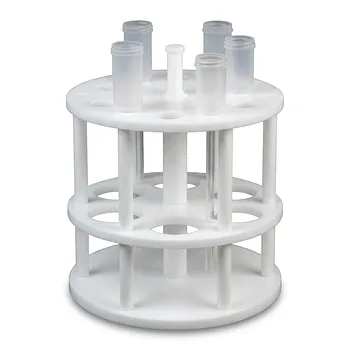
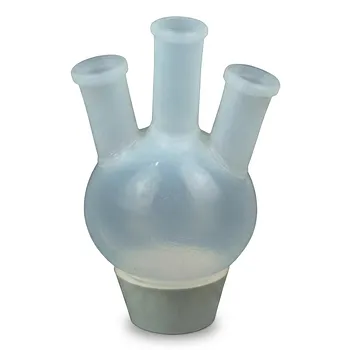
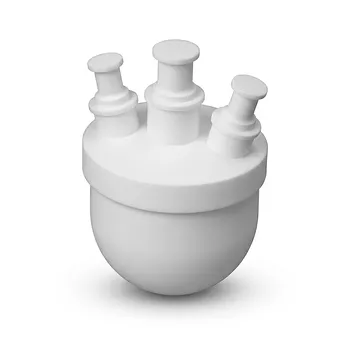
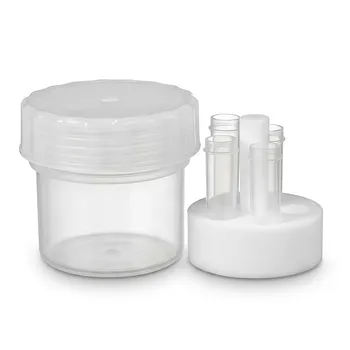
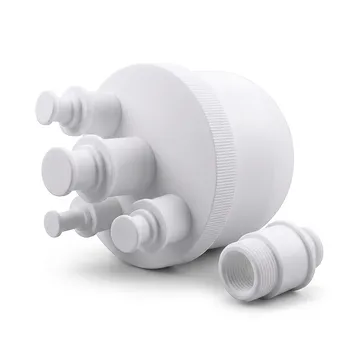
PTFE can be used for digestion tubes, reaction vessels, crucibles, wash bottles, reagent containers, and custom-machined components. These products benefit from the same core combination: chemical resistance, thermal stability, low contamination potential, and easy cleaning.
PFA may be selected for some applications requiring greater transparency or different fabrication characteristics, but the appropriate fluoropolymer depends on the operating requirements.
Understanding the Trade-offs
Mechanical strength can limit high-temperature use
PTFE’s chemical performance is exceptional, but it is not the stiffest engineering plastic. It can exhibit creep, meaning gradual deformation under sustained mechanical load, particularly at elevated temperature.
Designers must therefore consider wall thickness, pressure, support, sealing forces, and duration of exposure—not only chemical compatibility.
Permeation and diffusion may still matter
Chemical resistance does not mean that every substance is completely unable to pass through the material. Some chemicals can permeate or diffuse through polymers over time, especially under pressure or elevated temperature.
For long-term storage, volatile solvents, or demanding fluid-transfer systems, permeability should be evaluated separately from chemical attack.
PTFE is not universally compatible under every condition
PTFE resists most laboratory chemicals, but exceptional conditions and specific reactive species can create compatibility concerns. Temperature, concentration, exposure duration, mechanical stress, and surface damage can all change performance.
A compatibility chart is a starting point, not a substitute for application-specific validation.
Thermal stability requires controlled processing
PTFE labware should not be treated as indestructible cookware. Excessive heating, open-flame exposure, or use beyond the product’s rated conditions can damage the material or create safety hazards.
Always follow the manufacturer’s temperature, pressure, cleaning, and handling specifications.
How to Apply This to Your Project
PTFE is most valuable when the labware must protect both sample integrity and equipment reliability under severe conditions.
- If your primary focus is chemical resistance: Choose PTFE for containment or fluid-contact surfaces exposed to aggressive acids, bases, solvents, or corrosive reagents, subject to application-specific compatibility verification.
- If your primary focus is high-temperature digestion or reaction work: Select a fluoropolymer component with a validated temperature rating and account for creep, pressure, load, and exposure duration.
- If your primary focus is trace analysis and purity: Prioritize high-purity, low-extractable components and validate cleaning and handling procedures in addition to selecting PTFE.
- If your primary focus is fluid transfer: Use PTFE tubing, fittings, or valves where chemical inertness and low friction are important, while separately checking pressure, permeability, and seal compatibility.
- If your primary focus is easy cleaning and low carryover: Take advantage of PTFE’s low surface energy, but confirm that the component’s geometry and cleaning process prevent residue retention.
The right PTFE labware choice is one that matches its chemical inertness and thermal capability to the complete operating environment—not just to the reagent name.
Summary Table:
| Material Property | Why It Matters | Benefit for Labware |
|---|---|---|
| Chemical Inertness | Resists acids, bases, solvents | Protects samples, prevents contamination |
| Thermal Stability | Withstands extreme temperatures | Safe for digestion, heating, cooling |
| Low Surface Energy | Hydrophobic, non-stick | Easy cleaning, low carryover |
| High Purity | Low extractables | Ideal for trace analysis |
Ready to upgrade your lab with PTFE labware that withstands the toughest conditions? At KINTEK, we specialize in high-performance PTFE and PFA products, from beakers and digestion vessels to custom-machined parts. Our expert team ensures you get the right solution for your application, backed by certifications and reliable supply. Contact us today to discuss your requirements and experience the KINTEK difference!
Related Products
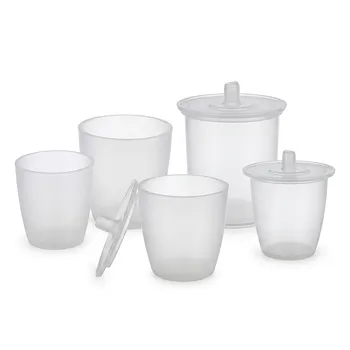
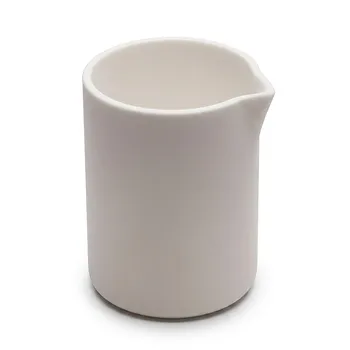
- High Purity PFA Crucible and Corrosion Resistant PTFE Beaker for Trace Analysis and Custom Laboratory Applications
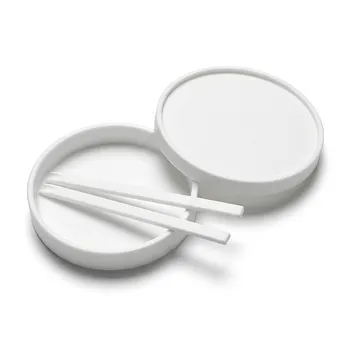
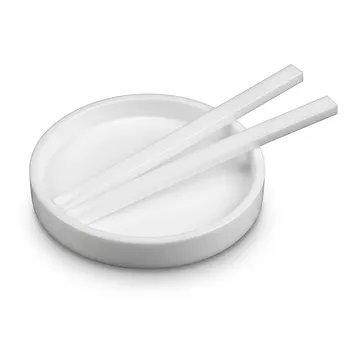
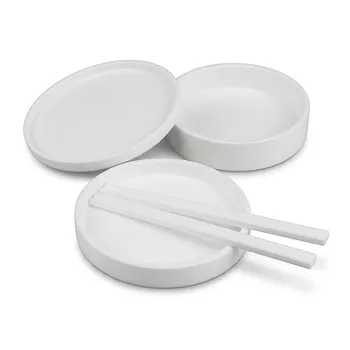
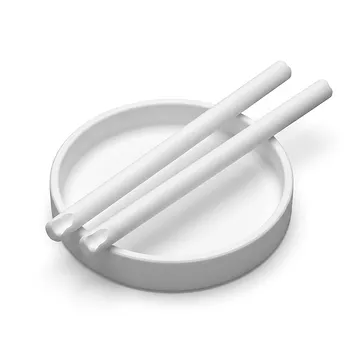
- Custom Polytetrafluoroethylene PTFE Petri Dishes 60mm Corrosion Resistant Low Background Labware
- Custom PTFE Petri Dish 30mm Corrosion Resistant Low Background Non Leaching Laboratory Ware
- Custom PTFE Petri Dish 120mm Diameter Corrosion Resistant Low Background High Purity Labware
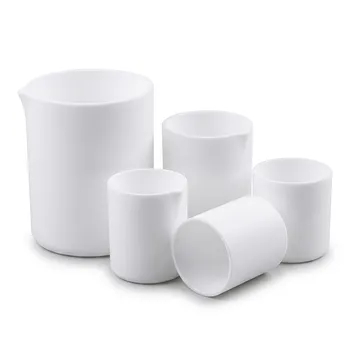
- Large Scale PTFE Beakers and Flasks for High Temperature Corrosion Resistant Laboratory Applications with Custom CNC Fabrication
People Also Ask
- Why are high-purity vessels critical for BiFeO3 synthesis? Ensuring Phase Purity
- Why is the use of high-purity PFA or PTFE labware critical during TiO2 nanoparticle purification? Protect Sample Purity
- Why is high-purity PFA trace analysis labware used for MXene? Ensure Superior Material Integrity in Research
- Why is high-purity PFA labware necessary for Znx@LS-2 zeolite ICP-OES analysis? Ensure Trace-Level Precision
- What key material characteristics make PTFE and PFA suitable for high-purity laboratory labware, trace analysis containers, and medical microporous tubing? Discover the essential properties that ensure purity.