The fundamental mechanism is the strength and protective effect of the carbon-fluorine (C-F) bond. Fluorine is highly electronegative, so it forms exceptionally strong bonds with carbon throughout the PTFE and PFA polymer chains. These fluorinated structures shield the carbon backbone from chemical attack, making the materials highly resistant to acids, bases, solvents, and oxidizing or reducing agents. As a result, they can handle aggressive chemicals while minimizing degradation, corrosion, and contamination in trace analysis equipment.
PTFE and PFA are chemically reliable because their fully fluorinated carbon backbones are difficult for reactive chemicals to break apart or penetrate. That molecular stability preserves both the equipment and the purity of the sample.
Why the Molecular Structure Resists Chemical Attack
Strong Carbon-Fluorine Bonds
Fluorine’s high electronegativity produces a very strong C-F bond. In PTFE and PFA, these bonds form a dense fluorinated structure that is substantially less reactive than hydrocarbon-based polymers.
A useful analogy is protective armor: the fluorine atoms surround and shield the carbon backbone, limiting access by acids, bases, solvents, and other reactive chemicals.
Complete Fluorination of the Backbone
PTFE and PFA are perfluorinated fluoropolymers, meaning that hydrogen atoms in the polymer structure are essentially replaced by fluorine. This full fluorination provides a higher degree of chemical inertness than partially fluorinated materials.
The result is a polymer that generally does not dissolve, swell significantly, or react when exposed to the aggressive reagents used in laboratory and industrial processes.
Low Surface Energy
Fluorination also gives PTFE and PFA very low surface energy. Their surfaces are both hydrophobic and oleophobic, so water-based and oil-based substances tend to adhere weakly.
This reduces chemical absorption, sample carryover, and residue retention. It also makes the components easier to clean between analytical runs.
Why This Matters for Aggressive Chemical Handling
Resistance to Acids, Bases, and Solvents
PTFE and PFA withstand exposure to a broad range of concentrated acids, strong bases, organic solvents, and oxidizing or reducing agents. This makes them suitable for tubing, valves, fittings, liners, containers, gaskets, and digestion vessels.
Their chemical resistance remains useful across a wide operating temperature range, although actual limits depend on temperature, pressure, chemical concentration, and exposure time.
Protection Against Corrosion
Unlike many metals, PTFE and PFA do not readily corrode when exposed to aggressive reagents. Unlike glass, they are not vulnerable to many forms of chemical attack that can damage conventional laboratory vessels.
This allows fluoropolymer components to maintain their intended function in fluid-transfer systems and sample-preparation equipment.
Stability During Thermal Processing
PTFE and PFA retain useful chemical stability during demanding procedures such as digestion and heated reagent handling. PTFE does not behave like a typical thermoplastic when heated to its melting range; it forms a stiff, clear gel rather than a free-flowing melt.
PFA is melt-processable, which makes it easier to manufacture into complex high-purity tubing and fittings while retaining the chemical resistance associated with full fluorination.
Why Fluoropolymers Are Valuable in Trace Analysis
Low Risk of Sample Contamination
Trace analysis can be undermined by extremely small amounts of contamination. PTFE and PFA are valuable because they resist degradation and generally do not release significant quantities of metallic, ionic, or organic impurities into the sample under appropriate operating conditions.
This is particularly important for ultra-trace elemental analysis, semiconductor chemical handling, and high-purity reagent systems.
Reduced Sample Adsorption
The low-energy surfaces of PTFE and PFA reduce the tendency of sample components to stick to the equipment. This helps limit analyte loss, memory effects, and cross-contamination between samples.
The benefit is not absolute: adsorption can still occur depending on the analyte, surface condition, concentration, and process history. However, fluoropolymer surfaces generally provide a strong combination of chemical resistance and cleanability.
Reliable Digestion and Fluid Transfer
Fluoropolymer vessels and liners can contain aggressive digestion mixtures without introducing corrosion products or reacting with the reagents. PFA and PTFE tubing and fittings similarly support controlled transfer of high-purity acids, solvents, and other process fluids.
This combination of containment, purity, and cleanability is why they are common in trace analysis instruments and sample-preparation workflows.
Understanding the Trade-offs
Chemical Inertness Is Not Unlimited
PTFE and PFA resist virtually all common laboratory chemicals, but no material is universally immune. Extreme conditions involving molten alkali metals, elemental fluorine at elevated temperatures or pressures, chlorine trifluoride, and certain specialized fluorinating environments can attack fluoropolymers.
Chemical compatibility must therefore be checked against the specific reagent, concentration, temperature, pressure, and exposure duration.
Thermal and Mechanical Limits Still Apply
Chemical resistance does not eliminate mechanical constraints. High temperature, pressure, creep, permeation, and dimensional stability can determine whether a fluoropolymer component is suitable for a particular system.
The material may remain chemically intact while becoming mechanically unsuitable for the application.
PTFE and PFA Serve Different Manufacturing Needs
PTFE offers exceptional chemical and thermal performance but is difficult to melt-process into conventional shapes. PFA provides similar high-purity chemical resistance while being melt-processable, making it advantageous for transparent tubing, complex fittings, and molded components.
The choice is therefore influenced not only by chemical compatibility, but also by geometry, flexibility, transparency, fabrication method, and operating conditions.
How to Apply This to Your Project
The right choice depends on whether the priority is chemical protection, analytical purity, fabrication flexibility, or long-term system reliability.
- If your primary focus is aggressive chemical resistance: Select PTFE or PFA based on the specific chemicals, temperatures, pressures, and exposure times involved, while checking for exceptional reagent conditions.
- If your primary focus is trace analytical purity: Use high-purity PTFE or PFA components to reduce leaching, adsorption, corrosion products, and sample carryover.
- If your primary focus is complex tubing or fittings: Consider PFA when melt-processability, transparency, or intricate molded geometry is important.
- If your primary focus is digestion vessels or liners: Consider PTFE where dimensional design and fabrication requirements support its processing characteristics and the application stays within its thermal limits.
The core principle is simple: strong, fully fluorinated C-F structures protect both the equipment and the chemical integrity of the sample.
Summary Table:
| Mechanism | Description | Benefit |
|---|---|---|
| Strong C-F Bonds | Strong carbon-fluorine bonds create a stable, protective structure. | Resists chemical attack, preventing degradation and contamination. |
| Complete Fluorination | Hydrogen atoms are replaced by fluorine, resulting in a fully fluorinated backbone. | Enhances chemical inertness against acids, bases, and solvents. |
| Low Surface Energy | Surfaces are hydrophobic and oleophobic, minimizing adhesion. | Reduces sample adsorption, carryover, and contamination, aiding trace analysis. |
Enhance Your Lab's Chemical Handling with KINTEK's High-Performance PTFE/PFA Solutions
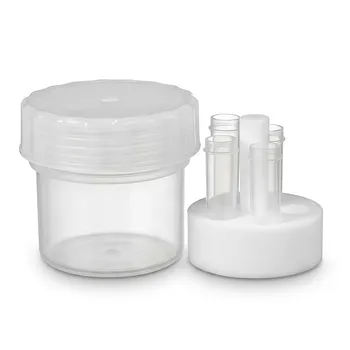
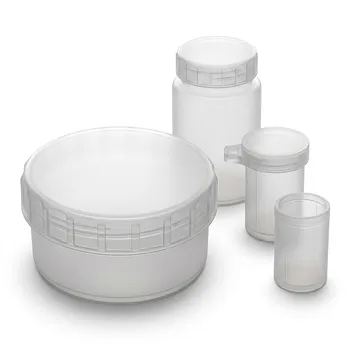
At KINTEK, we specialize in manufacturing premium PTFE and PFA labware and components, from basic beakers and digestion vessels to complex custom-machined parts. Our materials deliver exceptional chemical resistance and purity, ensuring reliable trace analysis and aggressive chemical processing. Whether you need high-purity tubing, corrosion-resistant valves, or bespoke fluoropolymer equipment, our end-to-end CNC machining capabilities can bring your specifications to life.
Ready to optimize your lab's performance? Contact us today to discuss your requirements and discover how our fluoropolymer solutions can improve your workflows. Our experts are ready to assist you with tailored recommendations for your specific applications.
Related Products
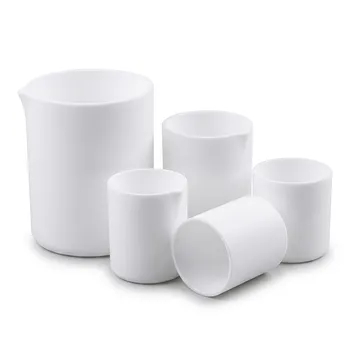
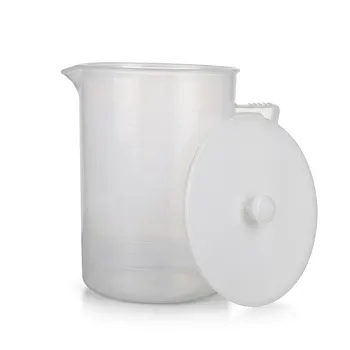
- High Purity PFA Crucible and Corrosion Resistant PTFE Beaker for Trace Analysis and Custom Laboratory Applications
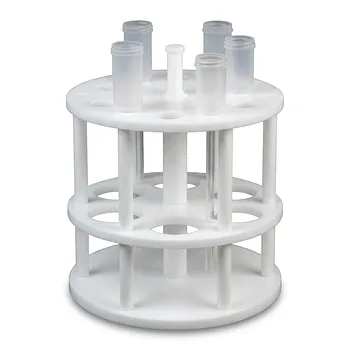
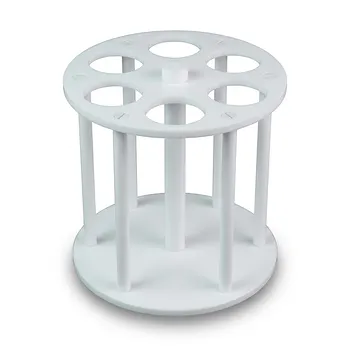
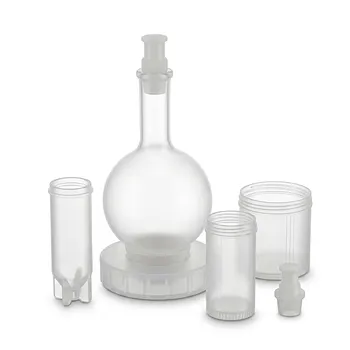
- Custom PFA Microcolumn Racks and PTFE Machined Low Background Corrosion Resistant Laboratory Fixtures
- Custom PFA Separatory Funnel Rack PTFE Machined Laboratory Support Stand Corrosion Resistant Low Background Fluoropolymer Fixture
- PTFE PFA Vacuum Filtration System Corrosion Resistant Customizable Shatterproof Laboratory Device
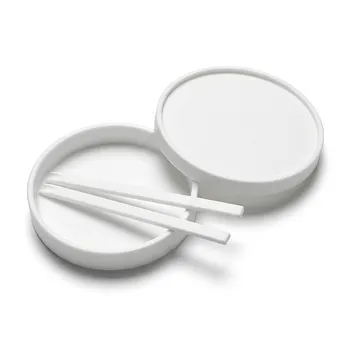
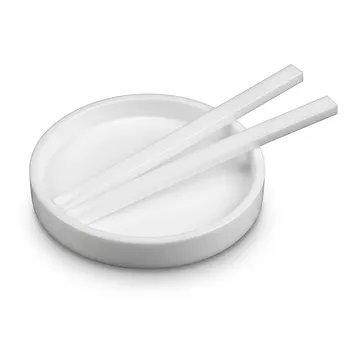
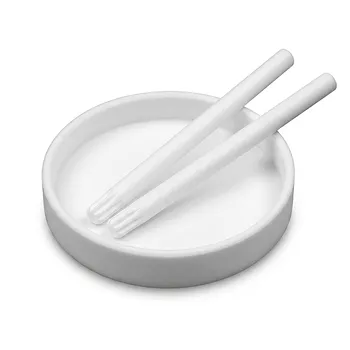
- Custom Polytetrafluoroethylene PTFE Petri Dishes 60mm Corrosion Resistant Low Background Labware
People Also Ask
- Why are high-purity vessels critical for BiFeO3 synthesis? Ensuring Phase Purity
- Why is the use of high-purity PFA or PTFE labware critical during TiO2 nanoparticle purification? Protect Sample Purity
- Why is high-purity PFA trace analysis labware used for MXene? Ensure Superior Material Integrity in Research
- Why is high-purity PFA labware necessary for Znx@LS-2 zeolite ICP-OES analysis? Ensure Trace-Level Precision
- Why is high-purity PFA trace analysis labware used for sample processing when preparing Mo2CTx@MoS2? Ensure Material Purity