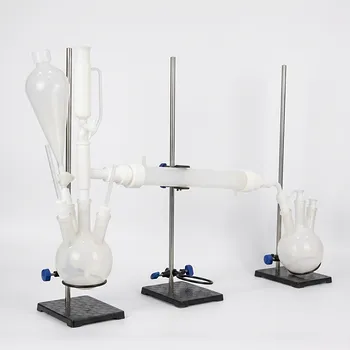
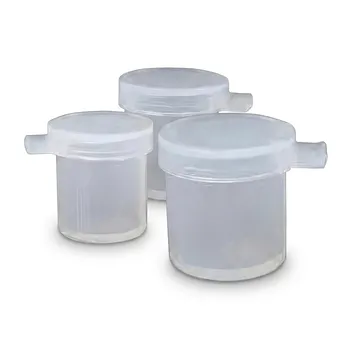
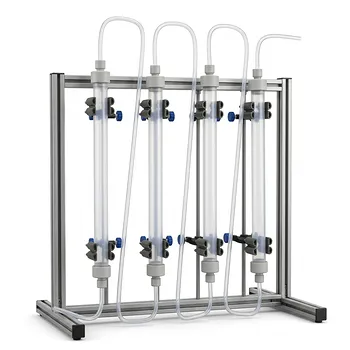
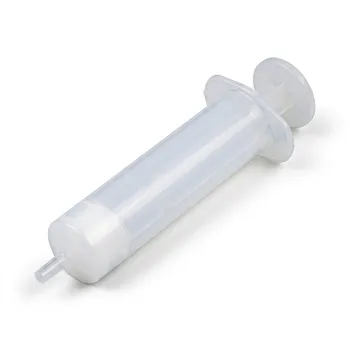
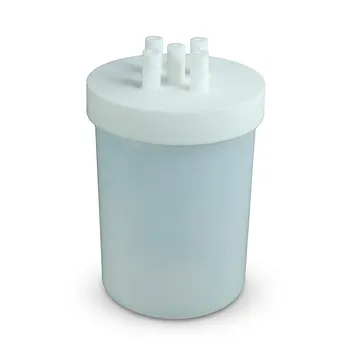
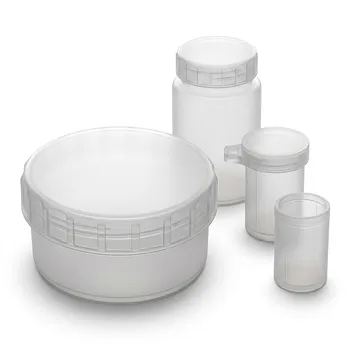
The use of high-purity PFA laboratory ware is essential for maintaining the chemical integrity of Manganese Dioxide ($MnO_2$) throughout its preparation and pretreatment cycles. PFA’s primary technical advantages include near-zero metal ion leaching rates and exceptional chemical inertness, which prevent environmental contaminants from compromising the material. These properties ensure that trace components are precisely controlled during critical phases such as precursor preparation, washing, and filtration.
High-purity PFA labware serves as a critical foundation for high-sensitivity synthesis by providing a non-reactive, ultra-clean environment. It effectively eliminates secondary contamination and sample loss, ensuring the accuracy and reproducibility of experimental data.
Mitigation of Trace Element Interference
Minimizing Metal Ion Leaching
High-purity PFA is engineered to have extremely low metal ion leaching rates, making it far superior to standard plastics or glassware. This is vital when preparing high-purity precursor solutions, as it prevents the introduction of background interference that could alter the electrochemical properties of the $MnO_2$.
Avoiding Glass-Based Contaminants
Traditional glassware often leaches alkali metal impurities or silicate-like substances, especially when exposed to the corrosive reagents used in $MnO_2$ synthesis. PFA eliminates this risk entirely, ensuring that the original concentration and purity of the sample remain intact during long-term storage or heating.
Reducing Background Values
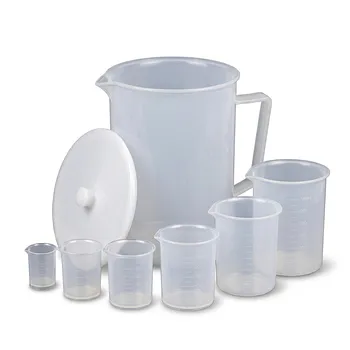
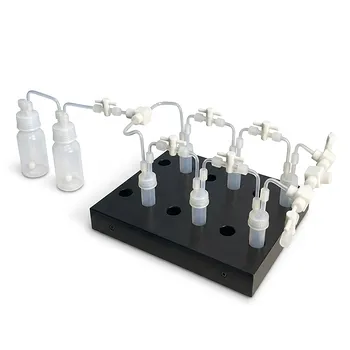
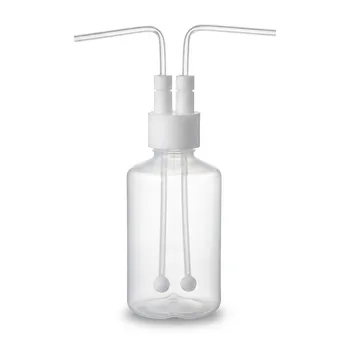
In trace analysis and high-purity material science, the "background value" of the environment can skew results. Using PFA beakers and wash bottles reduces environmental background noise, allowing researchers to achieve precise control over the trace elements within the Manganese Dioxide structure.
Enhancing Sample Recovery and Precision
Surface Anti-Adsorption Properties
PFA materials possess superior surface anti-adsorption properties, which prevent target analytes and metal ions from sticking to the container walls. This ensures that the stoichiometry of the precursor solution remains consistent and that no critical components are "lost" to the vessel.
Optimizing Powder Yield and Consistency
The low surface energy and non-stick nature of PFA are particularly beneficial during the washing and filtration of $MnO_2$ precipitates. This prevents Manganese Dioxide particles, especially nanopowders, from adhering to the vessel surfaces, resulting in higher sample recovery rates and a more uniform particle size distribution.
Chemical Inertness in Harsh Conditions
Manganese Dioxide pretreatment often involves strong acids, bases, or oxidizing agents. PFA's exceptional chemical stability ensures it can withstand these aggressive reagents without degrading or leaching impurities, maintaining a stable reaction environment.
Understanding the Trade-offs
Cost and Thermal Considerations
While PFA offers unmatched purity, it is a high-cost material compared to PTFE or borosilicate glass. Additionally, while PFA has excellent thermal stability, it cannot withstand the extreme temperatures of a muffle furnace, where specialized ceramic crucibles are still required for calcination.
Physical Rigidity
PFA is more flexible than glass, which may require different handling techniques during heavy-duty stirring or vacuum filtration. Users must ensure that PFA vessels are properly supported when subjected to physical stress or high-pressure environments to maintain structural integrity.
Applying PFA to Your Manganese Dioxide Workflow
Recommendations Based on Project Goals
- If your primary focus is Trace Element Analysis: Utilize PFA beakers and reagent bottles for all liquid-handling steps to ensure the lowest possible background interference and maximum accuracy.
- If your primary focus is Nanoparticle Yield: Leverage PFA’s non-stick properties during the washing and collection phases to minimize sample loss and ensure a more uniform $MnO_2$ product.
- If your primary focus is Corrosive Pretreatment: Employ PFA containers when handling strong mineral acids (like $HNO_3$ or $HCl$) to prevent the etching and leaching associated with traditional glassware.
By integrating high-purity PFA into your laboratory workflow, you establish a controlled, ultra-clean environment that is essential for the reproducible synthesis of high-performance Manganese Dioxide.
Summary Table:
| Feature | Advantage in MnO2 Pretreatment | Impact on Experimental Results |
|---|---|---|
| Ultra-Low Leaching | Minimal metal ion and alkali interference | Ensures high-accuracy trace analysis |
| Anti-Adsorption | Prevents nanoparticle sticking to walls | Maximizes sample yield and recovery |
| Chemical Inertness | Resistance to strong acids and oxidizers | Maintains a stable, contamination-free environment |
| Low Surface Energy | Non-stick surface for easier filtration | Improves particle size distribution consistency |
Elevate Your Manganese Dioxide Synthesis with KINTEK
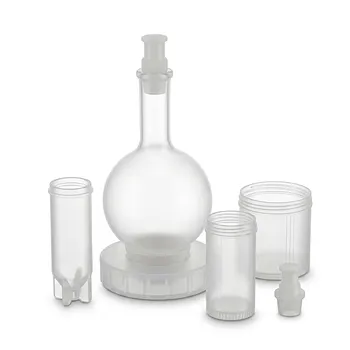
Precision in material science starts with a contamination-free environment. KINTEK specializes in high-performance fluoropolymer solutions tailored for the most demanding laboratory workflows. From everyday basics like PFA beakers, wash bottles, and centrifuge tubes to high-purity trace analysis instruments and filtration tools, we ensure your samples remain untainted.
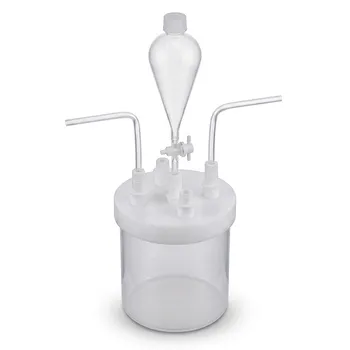
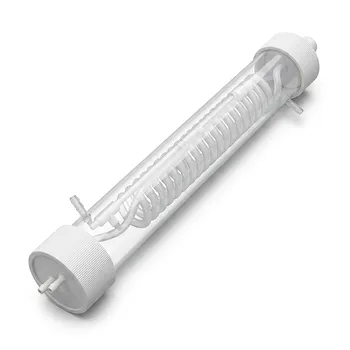
Our expertise extends to comprehensive fluid transfer components (tubing, valves, fittings) and advanced reaction apparatus, including custom electrochemical cells and microwave digestion vessels. Whether you require standard consumables like stirring bars and gaskets or bespoke CNC-machined PFA parts designed for unique experimental setups, KINTEK delivers end-to-end excellence.
Ready to optimize your lab's efficiency and accuracy? Contact us today to discuss your custom requirements and discover the KINTEK advantage in high-purity fluoropolymer manufacturing.
References
- Zi Chen, Yuezhou Wei. One-pot hydrothermal synthesis of MnO<sub>2</sub>/zeolite composite and its efficacy in Sr<sup>2+</sup> removal. DOI: 10.25259/ajc_59_2025
This article is also based on technical information from Kintek Knowledge Base .
Related Products
- High Purity PFA Constant Pressure Condensation Reaction System Acid Resistant High Temperature Customizable Teflon Labware
- High Purity PFA Crucible and Corrosion Resistant PTFE Beaker for Trace Analysis and Custom Laboratory Applications
- High Purity PFA Laboratory Rectangular Tank Corrosion Resistant Acid Cleaning Bath for Silicon Wafer Processing and Trace Analysis
- High Purity PFA Sample Dissolution Cups Acid Resistant Chemical Digestion Vessels with Lids Trace Analysis Labware
- High Purity PFA Chromatography Columns Series Filtration Resin Ion Exchange System with Sieve Plate Rack Customizable Corrosion Resistant Laboratory Fluid Handling
People Also Ask
- Why is high-purity PFA labware preferred when preparing mixed solutions? Prevent Trace-Metal Leaching & Contamination
- What are the core advantages of high-purity PFA labware? Achieve Unmatched Precision in Trace Analysis
- Why Is High-Purity PFA Preferred for Trace Analysis and Synthesis? Achieve Unmatched Analytical Precision
- Why use PFA labware for LiFePO4 precursor preparation? Ensure Trace Metal Purity & Superior Battery Performance.
- What technical advantages does high-purity PFA labware provide in trace fluorescence detection? Ensure Peak Sensitivity