The high-purity platinum electrode and the Ag/AgCl electrode serve as the essential supporting cast that allows the FL-MoS2@rGO working electrode to be measured in isolation. In this three-electrode setup, the platinum electrode completes the electrical circuit to facilitate current flow, while the Ag/AgCl electrode provides a stable, fixed potential reference to ensure the accuracy of the voltage readings.
Core Takeaway: This configuration isolates the working electrode’s performance by separating the tasks of passing current and measuring potential. This ensures that the redox behavior and capacitance of the FL-MoS2@rGO are recorded without interference from the system’s internal resistance or the counter electrode's own chemical reactions.
The Role of the Platinum (Pt) Counter Electrode
Completing the Current Loop
The primary function of the platinum counter electrode is to serve as an auxiliary path to complete the electrical circuit with the working electrode. Because it is highly conductive, it ensures efficient current transmission throughout the electrolyte during testing.
Minimizing Polarization and Ensuring Uniformity
A high-purity platinum electrode, often in the form of a sheet or mesh, provides a large surface area compared to the working electrode. This design minimizes polarization at the counter electrode, ensuring that the current distribution remains uniform and does not become a bottleneck for the reaction.
Maintaining Chemical Inertness and Stability
Platinum is chosen for its catalytic activity and extreme chemical stability, particularly in harsh environments like 1 M or 3 M KOH electrolytes. It resists corrosion and prevents the dissolution of metal impurities into the electrolyte, which would otherwise contaminate the FL-MoS2@rGO and skew the results.
The Role of the Ag/AgCl Reference Electrode
Providing a Constant Potential Baseline
The Ag/AgCl reference electrode acts as a reliable "ruler" or benchmark for potential. It maintains a constant, known potential regardless of the current flowing through the rest of the cell, allowing researchers to accurately monitor the specific voltage window (e.g., -0.9V to -0.3V) of the active material.
Eliminating Ohmic Interference
In a two-electrode system, the potential measurement is often distorted by the voltage drop across the cell's internal resistance (IR drop). The three-electrode setup uses the Ag/AgCl electrode to measure potential at a point where virtually no current flows, effectively eliminating these interference-driven errors.
Enabling Precise Analytical Measurements
This stability is critical for identifying the exact positions of redox peaks in Cyclic Voltammetry (CV) and calculating specific capacitance in Galvanostatic Charge-Discharge (GCD) tests. Without a stable reference, the observed performance of the FL-MoS2@rGO could shift unpredictably, making comparative analysis impossible.
Understanding the Trade-offs and Limitations
Reference Electrode Sensitivity
While Ag/AgCl is a standard reference, it must be properly maintained; if the internal filling solution leaks or becomes contaminated, the potential baseline will drift. This drift can lead to incorrect calculations of the energy density and power density of the MoS2 composite.
The Cost of High-Purity Platinum
Using high-purity platinum is expensive but necessary for research-grade accuracy. Substituting it with lower-grade materials can introduce faradaic interference, where the counter electrode itself undergoes redox reactions that are mistakenly recorded as part of the working electrode's performance.
How to Apply This to Your Project
Optimizing Your Experimental Setup
When evaluating advanced materials like FL-MoS2@rGO, your choice of electrode maintenance determines the quality of your data.
- If your primary focus is precise redox characterization: Ensure your Ag/AgCl electrode is calibrated and the ceramic frit is clean to prevent potential drift during long CV cycles.
- If your primary focus is high-current cycling (GCD): Use a platinum sheet with a surface area significantly larger than your working electrode to prevent the counter electrode from limiting the rate performance.
- If your primary focus is material purity: Always use high-purity (99.99%) platinum to avoid the leaching of transition metals into your alkaline electrolyte, which could artificially enhance the catalytic appearance of the MoS2.
A properly configured three-electrode system ensures that the electrochemical signatures you observe are a true reflection of the FL-MoS2@rGO material itself.
Summary Table:
| Electrode Type | Primary Function | Key Advantage in Testing |
|---|---|---|
| Platinum (Counter) | Completes the electrical circuit | Minimizes polarization and prevents electrolyte contamination. |
| Ag/AgCl (Reference) | Provides constant potential baseline | Eliminates Ohmic interference (IR drop) for accurate voltage readings. |
| FL-MoS2@rGO (Working) | The active material under study | Isolated for precise measurement of redox peaks and capacitance. |
Elevate Your Electrochemical Research with KINTEK
Precise characterization of materials like FL-MoS2@rGO requires high-performance testing environments. KINTEK manufactures virtually all imaginable laboratory supplies crafted from PTFE and PFA, ensuring extreme chemical resistance and zero contamination for your most sensitive measurements.
From everyday basic labware (beakers, measuring cylinders, crucibles) and sample prep tools (filters, pipettes) to advanced reaction apparatus such as standard or custom electrochemical cells, battery testing fixtures, and electrode accessories, we provide the infrastructure for excellence. Backed by end-to-end custom CNC fabrication, we deliver everything from complex non-standard machined parts to high-volume orders with an absolute focus on high-performance fluoropolymer materials.
Ready to optimize your lab setup? Contact us today to discuss your custom requirements!
References
- Yi Zhang, Yongxing Zhang. Engineering few-layer MoS2 and rGO heterostructure composites for high-performance supercapacitors. DOI: 10.1007/s42114-024-01159-z
This article is also based on technical information from Kintek Knowledge Base .
Related Products
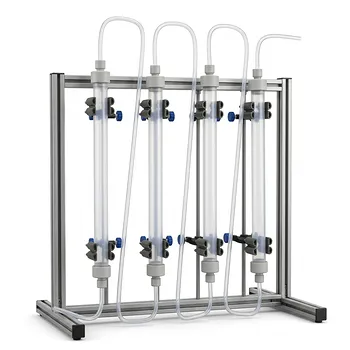
- Translucent PFA Ion Exchange Column with Sieve Plate for Corrosive Chemical Processing and High Purity Trace Analysis
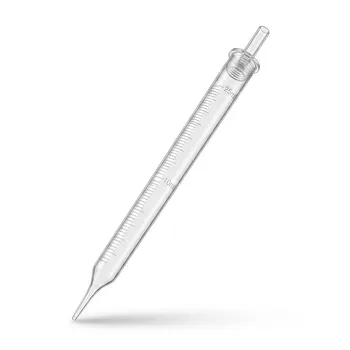
- High Purity PFA Syringe 10ml Corrosion Resistant Translucent Fluoropolymer Sampling Unit for Trace Analysis
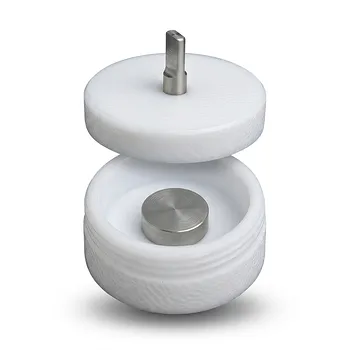
- High Purity PFA Reaction Tank for Proton Exchange Membrane Electrolysis and Water Oxygen Separation Custom Labware
- High Purity PFA Chromatography Column with Collection Bottle Corrosion Resistant Fluoropolymer Filtration System for Trace Analysis
- High Purity PTFE PFA Plastic Crucible for Corrosion Resistant Acid Digestion and Trace Analysis
People Also Ask
- How does the use of custom CNC-fabricated PFA components support specialized laboratory prototypes for chemical research?
- What is the benefit of implementing customized PFA manifolds and tubing? Optimize Flow and Purity in Precision Systems
- Why use high-purity KOH and PTFE/PFA cells for OER? Prevent impurity leaching for accurate catalytic data.
- What role does an anion exchange membrane play between catalyst layers? Key functions for efficient electrolysis cells.
- What are the key properties of PTFE that make it suitable for chromatography septums? Ensure Sample Integrity and Reliable Results