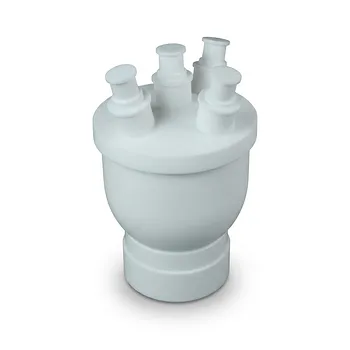
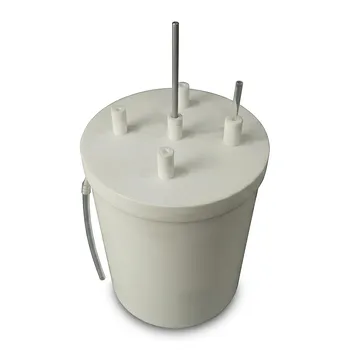
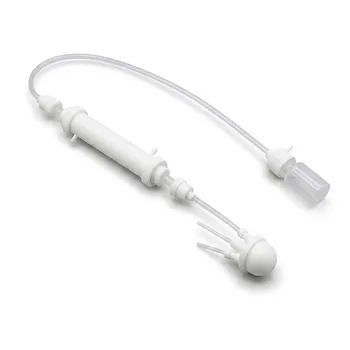
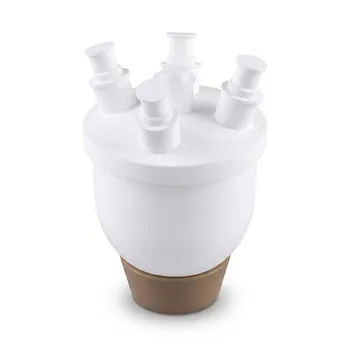
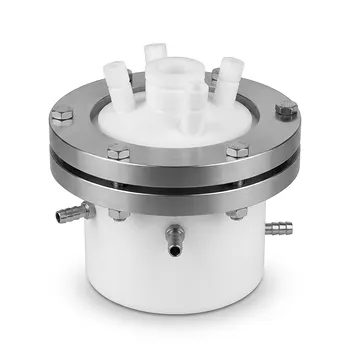
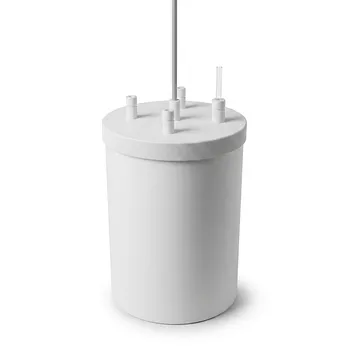
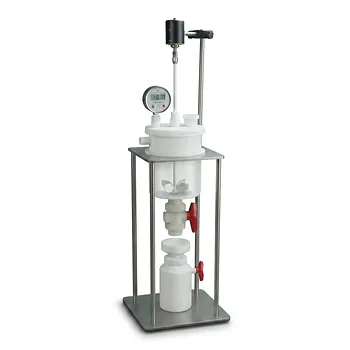
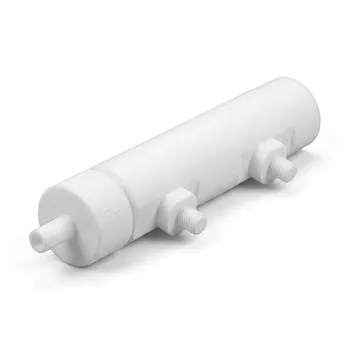
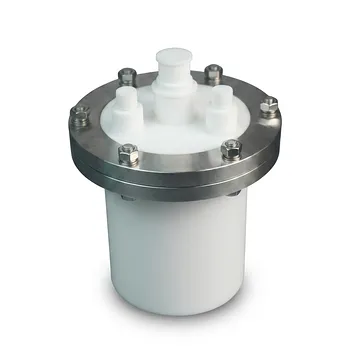
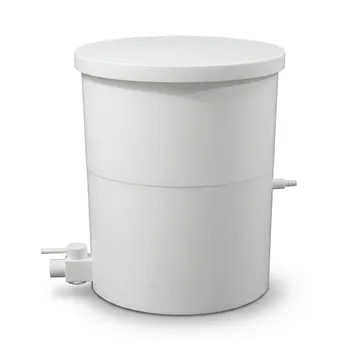
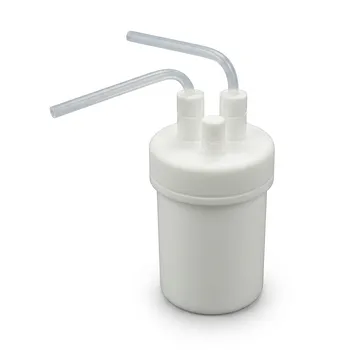
Teflon (PTFE) microchannel reactors transform hazardous chemistry safety by minimizing reactive inventory and maximizing heat dissipation. These reactors utilize extremely low hold-up volumes—ranging from microliters to milliliters—to ensure that potential runaway reactions are inherently self-limiting. By combining the exceptional chemical inertness of PTFE with massive surface-area-to-volume ratios, they allow for the safe handling of highly corrosive halogens and strong acids that would typically cause catastrophic equipment failure in metal or glass systems.
The primary safety advantage of Teflon microchannel reactors lies in their ability to provide precise thermal control and material integrity in environments where conventional reactors fail. By confining hazardous reagents to microscopic scales, the risk of large-scale explosive energy release is effectively engineered out of the process.
Minimizing the Scale of Potential Incidents
Low Hold-up Volumes and Inventory Control
The most critical safety feature is the extremely small internal volume, which limits the total amount of reactive or explosive material present at any single moment. Because the inventory is restricted to microliters or milliliters, the energy potential of a process excursion is significantly reduced compared to batch reactors.
Self-Limiting Reaction Kinetics
In the event of an unintended reaction, the small scale ensures the process is self-limiting. This design allows for rapid quenching or dilution of the stream, preventing a localized issue from escalating into a facility-wide hazard.
Elimination of Glovebox Requirements
The inherent containment of microchannel systems allows for the safe handling of air-sensitive intermediates and aggressive reagents. This reduces the need for external safety infrastructure, such as inert-atmosphere gloveboxes, while maintaining a high level of operator protection.
Superior Thermal and Fluid Management
Massive Surface-Area-to-Volume Ratios
Teflon microreactors feature surface-area-to-volume ratios ranging from 10,000 to 100,000 m²/m³. This geometry allows for exceptional heat-transfer coefficients, enabling the system to remove heat nearly instantaneously as it is generated.
Elimination of Hot Spots
Precise temperature control prevents the formation of hot spots, which are common triggers for thermal runaway in exothermic reactions. The high efficiency of these systems ensures near-instantaneous cooling, maintaining the reaction within a safe, narrow temperature window.
Predictable Laminar Flow
Operating at low Reynolds numbers (typically below 100), these reactors maintain a strictly laminar flow regime. This predictability ensures consistent mixing via molecular diffusion and prevents the erratic pressure spikes or fluctuations often found in larger, turbulent systems.
Exceptional Material Compatibility
Resistance to Corrosive Failures
PTFE is virtually inert to the most aggressive reagents, including halogens, strong acids, and oxidizers. While these substances might cause stress-corrosion cracking or thinning in stainless steel or glass, Teflon maintains its structural integrity.
Reduced Maintenance and Clogging
The non-stick surface and low coefficient of friction prevent the buildup of solids and reduce the risk of channel blockages. This minimizes the need for high-pressure cleaning or manual intervention, both of which present safety risks to technicians.
Durability Against Environmental Degradation
Teflon is naturally resistant to UV rays, oxidation, and water absorption. This ensures that the reactor components do not degrade over time due to environmental exposure, maintaining a reliable safety barrier throughout the equipment's lifecycle.
Understanding the Trade-offs
Mechanical and Pressure Limitations
While PTFE is chemically superior, it lacks the structural rigidity of metals. It is prone to "creep" or deformation under high pressures and temperatures, which can lead to leaks if the reactor is not properly supported or encased.
Temperature Constraints
Teflon has a lower maximum operating temperature compared to specialized alloys or ceramics. Exceeding its thermal limits can cause the material to soften, potentially compromising the integrity of the microchannels and leading to process failure.
Heat Transfer Conductivity
Although the surface area is high, the thermal conductivity of PTFE itself is lower than that of metals. Designers must compensate for this by using very thin channel walls or specialized heat exchange configurations to ensure heat reaches the cooling medium effectively.
Applying Teflon Reactors to Your Process
How to Apply This to Your Project
When integrating Teflon microchannel reactors into your workflow, your choice should be driven by the specific chemical hazards and environmental conditions of your synthesis.
- If your primary focus is handling highly corrosive acids or halogens: Utilize PTFE reactors as your primary containment strategy to prevent the equipment corrosion and leaks common with metallic systems.
- If your primary focus is managing highly exothermic reactions: Leverage the high surface-area-to-volume ratio to ensure rapid heat removal and eliminate the risk of thermal runaway.
- If your primary focus is process intensification and waste reduction: Implement these reactors to minimize solvent usage and improve product purity through precise residence-time control.
By prioritizing intrinsic safety through scale and material science, Teflon microchannel reactors provide a definitive solution for high-risk chemical manufacturing.
Summary Table:
| Feature | Benefit | Safety Impact |
|---|---|---|
| Low Hold-up Volume | Minimal reactive inventory | Inherently self-limiting runaway risks |
| High Surface Area | Rapid heat dissipation | Eliminates hot spots and thermal runaway |
| PTFE Inertness | Universal chemical resistance | Prevents corrosive equipment failure |
| Laminar Flow | Predictable fluid dynamics | Prevents erratic pressure spikes |
| Non-stick Surface | Reduced solids buildup | Minimizes maintenance-related hazards |
Elevate Your Lab Safety with KINTEK's High-Performance PTFE Solutions
Ready to transform your hazardous chemistry workflows? KINTEK specializes in high-performance fluoropolymer materials, manufacturing virtually everything from everyday basic labware (beakers, measuring cylinders, and reagent bottles) to advanced reaction apparatus like custom microchannel reactors, microwave digestion vessels, and electrochemical cells.
Whether you require high-purity trace analysis instruments, fluid transfer components, or complex non-standard machined parts, our end-to-end custom CNC fabrication ensures absolute precision and durability. Contact us today to discuss your bespoke laboratory setups and experience the safety and reliability that only KINTEK’s exclusive focus on PTFE and PFA can provide. From high-volume orders to unique engineered solutions, we deliver the high-performance components your research demands.
Related Products
- Customizable Polytetrafluoroethylene PTFE Reactor and Corrosion Resistant Teflon Flask
- PTFE 10L Reaction Vessel with Stirring Paddle Customizable Corrosion Resistant High Temperature Reactor for Biopharmaceutical and Chemical Processing
- Custom PTFE Multilayer Reaction Apparatus High Temperature Corrosion Resistant Threaded Modular Sieve System
- Custom PTFE Volatile Matter Condensation Reflux Reaction Device Corrosion Resistant Pressure Resistant
- High Performance Customizable PTFE Reaction Vessel and Corrosion Resistant Polytetrafluoroethylene Flask for Chemical Laboratory Use
People Also Ask
- Why are PP or PTFE reactors preferred over glass in tribocatalysis? Maximize Charge Separation & Catalytic Efficiency
- What functional advantages do PTFE reactors provide over glass? Achieve Superior Purity and Safety in Synthesis
- What are the primary fabrication methods for capillary-based and monolithic PTFE reactors? Expert Production Insights
- Why are PTFE or PFA reaction vessels required for the selective etching process of MXene using hydrofluoric acid (HF)?
- Why is a Teflon-lined (PTFE) reactor vessel required for the hydrothermal synthesis of V2O5 and SnO2 nanomaterials?