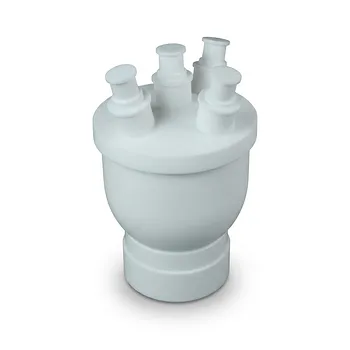
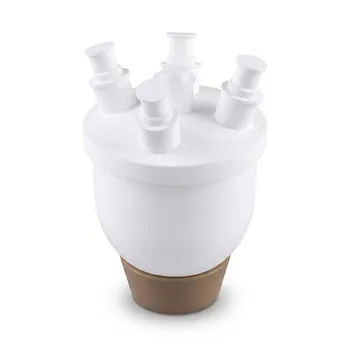
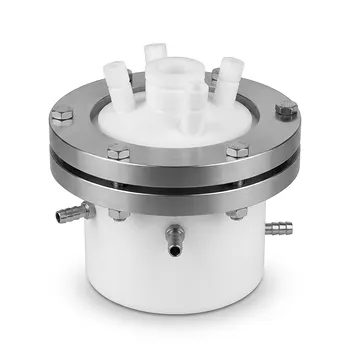
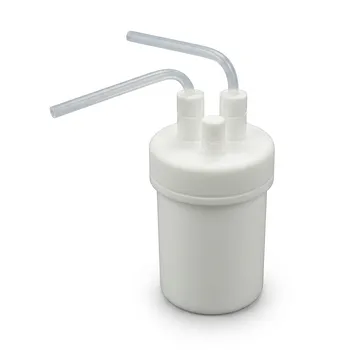
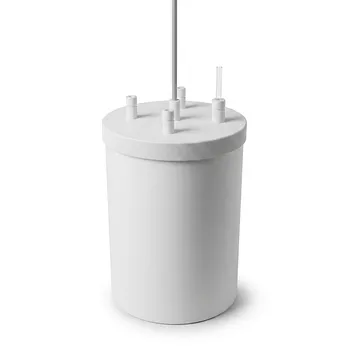
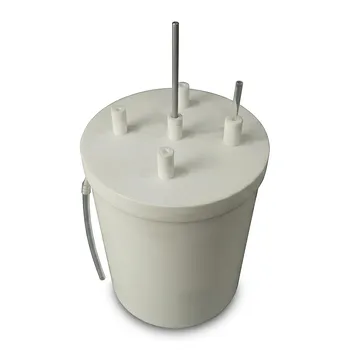
Hydrothermal synthesis reactor linings are specialized internal chambers designed to enable chemical reactions under extreme thermal and barometric conditions. They are primarily composed of Polytetrafluoroethylene (PTFE) or Polyphenylene Polymer (PPL), which serve as chemically inert barriers within a stainless steel autoclave. Their fundamental purpose is to isolate corrosive reaction media from the metal vessel, ensuring both the structural integrity of the reactor and the high purity of the synthesized materials.
The reactor lining acts as a critical physical and chemical interface that facilitates synthesis in high-temperature aqueous solutions while preventing metal contamination. By selecting the appropriate material based on temperature requirements, researchers can maintain a controlled, non-reactive environment for nanomaterial synthesis and crystal growth.
Primary Material Compositions
Polytetrafluoroethylene (PTFE): The Standard Choice
PTFE is the most common lining material due to its exceptional chemical resistance and non-stick properties. It is effectively inert to almost all chemical reagents, making it ideal for general laboratory synthesis.
Standard PTFE liners are typically rated for safe operation at temperatures up to 200°C to 220°C. Beyond these temperatures, the material begins to lose structural integrity and may deform under pressure.
Polyphenylene Polymer (PPL): For Elevated Temperatures
PPL liners are engineered for applications that exceed the thermal limits of standard PTFE. They offer higher thermal stability while maintaining the necessary chemical inertness for hydrothermal processes.
A PPL lining extends the safe operating range of a reactor to approximately 240°C to 280°C. This makes it the preferred choice for synthesizing specialized bimetallic catalysts or complex oxides that require higher activation energies.
Specialized Niche Materials
In specific industrial or high-precision research contexts, liners may be constructed from alternative materials like PFA (Perfluoroalkoxy). For extremely aggressive media or ultra-high-temperature requirements, researchers may utilize liners made of quartz glass, gold, platinum, or titanium.
The Critical Functions of Reactor Liners
Corrosion Prevention and Structural Protection
The primary role of the lining is to act as a corrosion barrier between the reactive fluid and the stainless steel autoclave body. At high temperatures and pressures, aqueous solutions become highly reactive and can cause oxidation or stress-corrosion cracking in metal shells.
By isolating these corrosive fluids, the liner ensures the longevity and safety of the pressure vessel. This prevents the thinning of the metal walls, which could otherwise lead to catastrophic vessel failure under pressure.
Maintaining Chemical Purity
Reactor linings prevent the leaching of metal ions, such as iron, chromium, or nickel, from the stainless steel walls into the reaction mixture. This is essential for the synthesis of nanomaterials and catalysts where even trace impurities can alter the final product's properties.
This isolation ensures that the functional groups on the surface of synthesized materials remain uncontaminated. High-purity liners are therefore non-negotiable for applications involving sensitive bimetallic catalysts or electronic-grade crystals.
Facilitating Product Recovery and Cleaning
The non-stick nature of fluoropolymer linings like PTFE and PFA significantly simplifies the recovery of synthesized crystals and powders. Because the product does not adhere to the walls, researchers can achieve higher yields.
Furthermore, these properties make the liners easier to clean and decontaminate between experiments. This minimizes the risk of cross-contamination between different batches of materials.
Understanding the Trade-offs
Temperature vs. Pressure Limits
While liners provide chemical protection, they are the "weak link" in terms of thermal stability compared to the outer steel shell. Exceeding the rated temperature of a PTFE or PPL liner can cause it to melt or deform, potentially sealing the reactor shut or causing a leak.
Thermal Expansion Disparity
Liners and stainless steel shells have different coefficients of thermal expansion. If a reactor is heated or cooled too rapidly, the liner may expand or contract at a different rate than the metal housing, leading to mechanical stress or permanent deformation of the lining.
Pressure Limitations of the Liner
The liner itself is not designed to hold pressure; it relies on the structural support of the stainless steel autoclave. If the liner does not fit perfectly within the vessel, the internal pressure can cause the liner to burst or "balloon" into any gaps, leading to failure.
How to Apply This to Your Project
When selecting or operating a hydrothermal synthesis reactor, your choice of lining should be dictated by your specific experimental parameters.
- If your primary focus is general synthesis below 200°C: A standard PTFE liner provides the best balance of chemical inertness and cost-effectiveness.
- If your primary focus is high-temperature crystal growth (up to 280°C): Utilize a PPL liner to ensure the vessel remains stable and safe at elevated thermal levels.
- If your primary focus is preventing trace metal contamination: Ensure you use a high-purity PTFE or PFA liner and inspect it regularly for surface degradation or embedded particles.
- If your primary focus is ease of recovery for "sticky" products: Prioritize PTFE or PFA for their superior non-stick characteristics compared to metallic or quartz alternatives.
Selecting the correct lining material is the most effective way to ensure both the purity of your chemical yield and the safety of your laboratory environment.
Summary Table:
| Material | Safe Operating Temperature | Key Properties | Primary Application |
|---|---|---|---|
| PTFE | Up to 200°C - 220°C | Non-stick, exceptional chemical inertness | General lab synthesis & nanomaterials |
| PPL | Up to 240°C - 280°C | Enhanced thermal stability, chemical resistance | High-temp catalysts & complex oxides |
| PFA | Up to 260°C | Ultra-high purity, translucent, chemical inertness | Trace analysis & aggressive media |
| Quartz/Metal | Varies (Ultra-high) | Extreme heat resistance, specific inertness | Specialized industrial research |
Elevate Your Research with KINTEK’s Fluoropolymer Expertise
Ensure the integrity of your most sensitive chemical reactions with high-performance materials from KINTEK. From essential labware like beakers, crucibles, and reagent bottles to specialized components like our premium PTFE and PPL hydrothermal synthesis liners, we provide the ultimate protection against corrosion and contamination.
Our expertise extends across a massive range of high-purity laboratory supplies, including:
- Fluid Transfer & Filtration: Tubing, fittings, valves, and separatory funnels.
- Sample Prep: Digestion tubes, filters, pipettes, and tweezers.
- Advanced Apparatus: Standard and custom electrochemical cells, battery testing fixtures, and microwave digestion vessels.
Backed by end-to-end custom CNC fabrication, KINTEK is equipped to deliver everything from high-volume standard consumables to complex, non-standard machined parts tailored to your exact specifications. Maintain an absolute focus on performance—contact KINTEK today to discuss your project needs!
Related Products
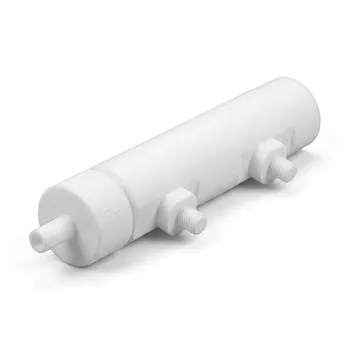
- Customizable Polytetrafluoroethylene PTFE Reactor and Corrosion Resistant Teflon Flask
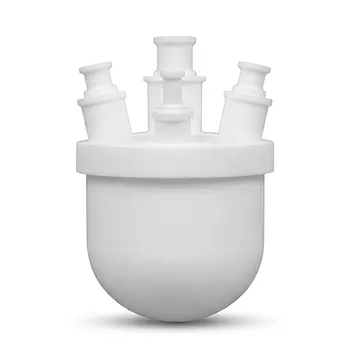
- High Performance Customizable PTFE Reaction Vessel and Corrosion Resistant Polytetrafluoroethylene Flask for Chemical Laboratory Use
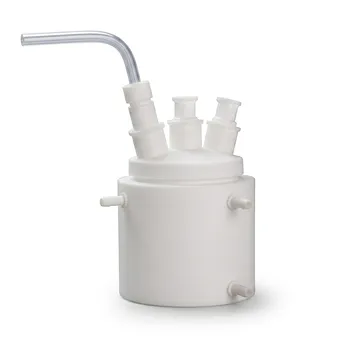
- Custom PTFE Reaction System with Hose Barb Fittings Corrosion Resistant High Sealing 2L 4L Lab Reactor with Separatory Funnel
- PTFE Lined High Pressure Digestion Vessel 50ml High Temperature Hydrothermal Synthesis Tank
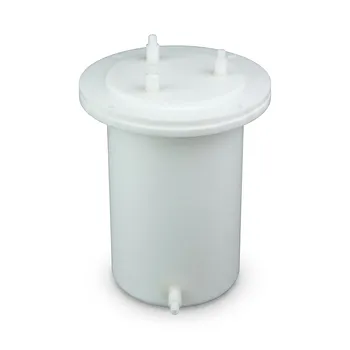
- High Temperature Corrosion Resistant Hydrothermal Synthesis Reactor with TFM Inner Liner and Straight Cylinder Design
People Also Ask
- Why are PP or PTFE reactors preferred over glass in tribocatalysis? Maximize Charge Separation & Catalytic Efficiency
- What functional advantages do PTFE reactors provide over glass? Achieve Superior Purity and Safety in Synthesis
- What are the primary fabrication methods for capillary-based and monolithic PTFE reactors? Expert Production Insights
- Why are PTFE or PFA reaction vessels required for the selective etching process of MXene using hydrofluoric acid (HF)?
- Why is a Teflon-lined (PTFE) reactor vessel required for the hydrothermal synthesis of V2O5 and SnO2 nanomaterials?