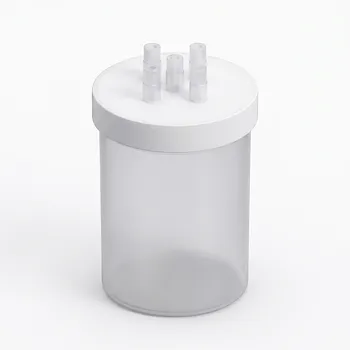
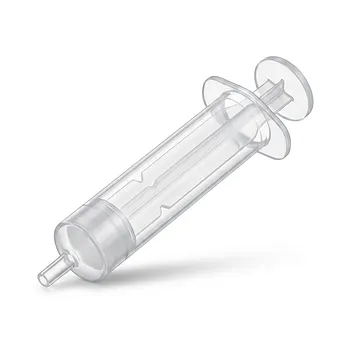
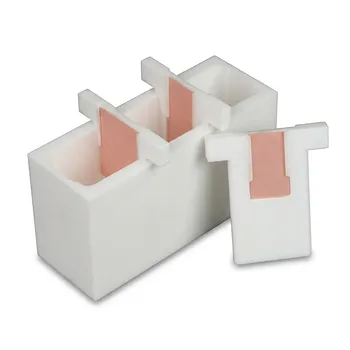
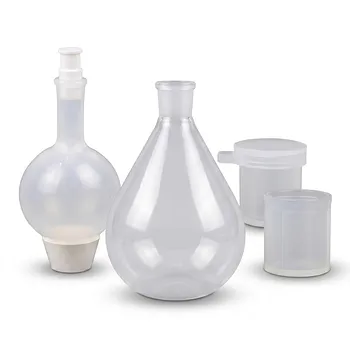
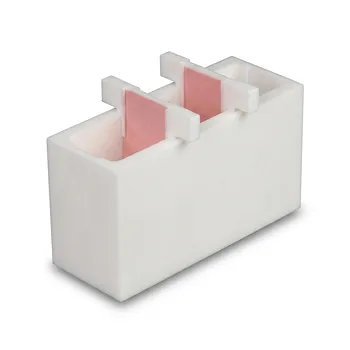
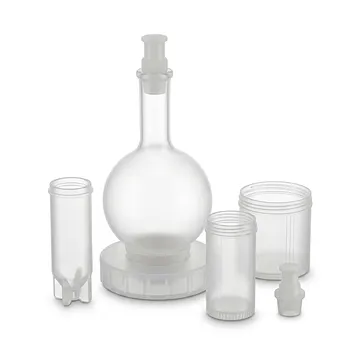
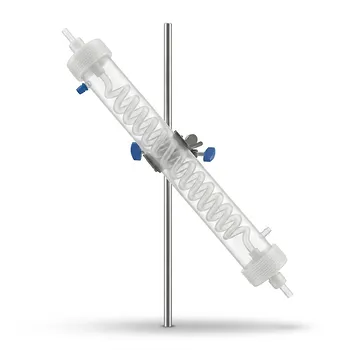
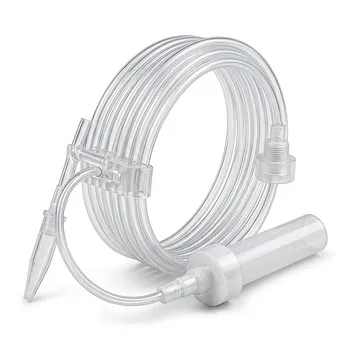
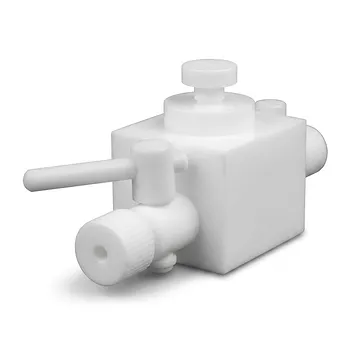
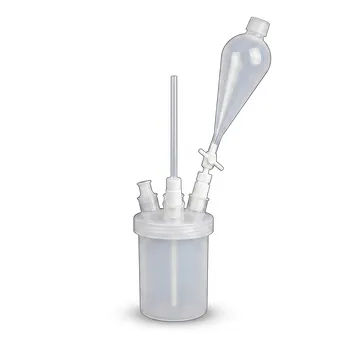
The most effective architectural change is to combine bulky fluorinated groups with rigid cardo structures. Introducing trifluoromethyl groups such as -CF3 or -C(CF3)2 into a fluorinated poly(arylene ether) backbone, together with rigid fluorene or phthalimidine moieties, increases fractional free volume while restricting polymer-chain motion. This combination raises gas permeability without sacrificing size-selective transport, while preserving the polymer’s thermal, hydrolytic, and oxidative stability. Fluoropolymer laboratory vessels are required because the synthesis uses aggressive acids and organic solvents that can attack conventional labware or introduce trace contaminants.
Bulky fluorinated groups create additional molecular free volume, while cardo units prevent excessive chain mobility and collapse. High-purity PTFE and PFA vessels protect this carefully controlled polymer architecture during synthesis by resisting chemical attack and minimizing ionic or extractable contamination.
Why the Polymer Architecture Controls Gas Separation
Gas transport follows the solution-diffusion model
Dense polymer membranes transport gases according to the relationship:
[ P = D \times S ]
Here, permeability P depends on the gas diffusion coefficient D and the sorption or solubility coefficient S.
Selectivity between two gases can therefore arise from differences in diffusivity, solubility, or both:
[ \alpha_{A/B} = \frac{P_A}{P_B} = \frac{D_A}{D_B} \times \frac{S_A}{S_B} ]
For many gas pairs, particularly those with different molecular sizes, diffusivity selectivity is central because the polymer’s microcavities determine how readily each molecule moves through the membrane.
Bulky -CF3 groups increase fractional free volume
Trifluoromethyl and hexafluoroisopropylidene-type groups occupy substantial molecular space and introduce steric hindrance into the polymer structure. They act as molecular spacers, preventing adjacent chains from packing tightly.
The resulting increase in fractional free volume, or FFV, creates more transient pathways for gas molecules. This generally increases permeability for gases such as carbon dioxide, hydrogen, oxygen, nitrogen, and methane.
Fluorinated groups also restrict chain packing
The same steric bulk that disrupts packing limits internal rotation and reduces the ability of chains to reorganize into dense, ordered arrangements. Fluorinated groups can also reduce favorable interchain interactions, including hydrogen-bond-driven association where such interactions are present.
This helps preserve free volume after membrane formation and reduces the risk that the polymer will relax into a less permeable morphology.
Why Rigid Cardo Moieties Improve the Design
Fluorene and phthalimidine units stiffen the backbone
Rigid cardo structures, including fluorene and phthalimidine moieties, introduce nonplanar, mechanically constrained segments into the poly(arylene ether) chain. These units limit backbone flexibility and make chain collapse more difficult.
Their role complements that of the bulky fluorinated groups: the fluorinated groups open up the molecular architecture, while the cardo units help keep that architecture rigid and stable.
The combination addresses the permeability-selectivity tradeoff
Increasing free volume alone can improve permeability but may also create an overly loose or poorly controlled morphology, reducing permselectivity. Increasing rigidity alone can preserve discrimination but may limit gas throughput.
Combining high FFV with backbone rigidity provides a more balanced structure. Gas molecules can move through the membrane more efficiently, while the constrained molecular network retains size-selective discrimination.
Stability remains part of the architectural objective
The modified backbone is designed to improve transport without making the membrane chemically fragile. Fluorinated segments and robust aromatic ether structures contribute to resistance against thermal, hydrolytic, and oxidative degradation.
This matters because a membrane that initially has high permeability but loses free volume or mechanical integrity during operation will not provide reliable separation.
Why Fluoropolymer Vessels Are Required During Synthesis
The reaction environment is chemically aggressive
Fluorinated poly(arylene ether)s are commonly prepared through nucleophilic aromatic substitution, or SNAr, followed by additional functionalization steps. These procedures can involve strong acid reagents, polar aprotic solvents, and other organic chemicals that may swell, degrade, or extract components from ordinary plastics.
PTFE and PFA provide broad chemical resistance across this combination of reagents and processing conditions.
Conventional labware can contaminate the polymer
Trace ionic species, plasticizers, degradation products, or other extractable compounds can enter the reaction mixture from unsuitable vessels. Even very small amounts may influence molecular weight, reaction conversion, polymer morphology, or the final membrane’s gas-transport behavior.
High-purity fluoropolymer vessels reduce this source of variability by minimizing ionic leachables and extractable contaminants.
The vessels preserve the intended membrane morphology
Gas separation performance depends on nanoscale free volume and chain packing. Contamination from reaction vessels can alter precipitation, washing, dissolution, casting, or phase organization, producing membranes whose morphology no longer reflects the intended polymer design.
Using PTFE reaction vessels, PFA digestion or dissolution tubes, and compatible wash bottles helps maintain chemical purity from synthesis through membrane preparation.
Fluoropolymers provide practical laboratory durability
PTFE and PFA labware resist attack while remaining suitable for reaction vessels, digestion tubes, wash bottles, and fluid-transfer components. This is especially important when the polymer is dissolved or processed in aggressive polar solvents such as DMSO or NMP.
The objective is not that fluoropolymer labware improves gas transport directly. Its function is to prevent uncontrolled chemical and ionic inputs that could compromise the transport properties engineered into the polymer.
Understanding the Trade-offs
More free volume does not automatically mean better selectivity
A highly open morphology can increase permeability while reducing the membrane’s ability to discriminate between similarly sized gases. The useful design target is therefore controlled free volume, not maximum free volume.
Rigid cardo units help limit excessive chain mobility and support a more stable microcavity structure.
High rigidity can reduce processability
Rigid aromatic and cardo-containing backbones may be more difficult to dissolve, process, or cast than more flexible polymers. Solvent compatibility and membrane-forming conditions must be selected carefully to avoid incomplete dissolution or defects.
Fluorinated groups can improve solubility in some systems, but the complete polymer structure still determines practical processability.
Contamination control does not replace process control
Fluoropolymer vessels reduce leaching and chemical attack, but they cannot correct incorrect stoichiometry, inadequate mixing, poor temperature control, or unsuitable washing and drying procedures. Vessel material is one part of a broader purity and reproducibility strategy.
Laboratory performance may not represent long-term operation
Initial permeability and permselectivity can change if the polymer chains relax, sorbed gases or contaminants plasticize the material, or the free-volume distribution evolves over time. Long-term stability testing remains necessary even when the backbone has strong thermal and chemical resistance.
How to Apply This to Your Project
The appropriate design depends on whether the main constraint is throughput, discrimination, durability, or synthesis reproducibility.
- If your primary focus is high gas permeability: Increase FFV with bulky
-CF3or-C(CF3)2groups that disrupt tight chain packing and create additional diffusion pathways. - If your primary focus is permselectivity: Pair the bulky fluorinated groups with rigid fluorene or phthalimidine cardo units to retain a constrained, size-selective microcavity structure.
- If your primary focus is long-term membrane stability: Use a rigid, fluorinated aromatic backbone that maintains free volume while providing thermal, hydrolytic, and oxidative resistance.
- If your primary focus is synthesis purity and reproducibility: Use high-purity PTFE and PFA reaction and handling vessels to resist strong reagents, organic solvents, and trace ionic leaching.
The reliable strategy is to engineer free volume and rigidity together, then protect that molecular design with chemically inert, low-leach laboratory equipment.
Summary Table:
| Modification | Effect on Gas Separation | Why It Works |
|---|---|---|
| Introduce bulky -CF3 or -C(CF3)2 groups | Increases permeability | Creates more fractional free volume, allowing faster gas diffusion |
| Add rigid cardo units (fluorene, phthalimidine) | Maintains selectivity | Restricts chain mobility, preserving size-selective transport |
| Combine both (bulky + rigid) | Balanced performance | High FFV with controlled chain rigidity, avoiding the tradeoff |
| Use PTFE/PFA labware during synthesis | Ensures reproducibility | Chemical resistance and low leachables prevent contamination that can alter membrane properties |
Achieve superior gas separation membrane performance with high-purity PTFE and PFA labware from KINTEK. Our fluoropolymer vessels resist aggressive acids and solvents, preventing contamination that can compromise your polymer synthesis. From reaction vessels to digestion tubes, our products are crafted for demanding applications like yours. Contact us today to ensure your lab's purity and reproducibility—get in touch now!
Related Products
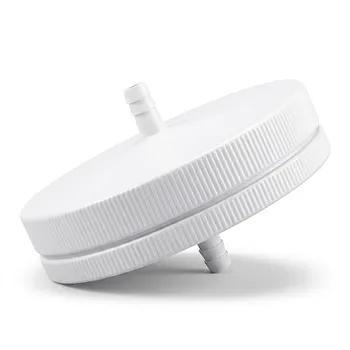
- PTFE Filter Membrane Holder for Hydrogen Chloride and Water Filtration 90mm Environmental Sampling Clamp Customizable
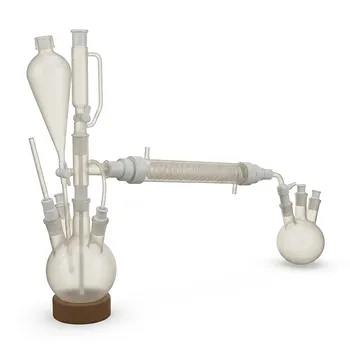
- PTFE Distillation Condensation Apparatus High Temperature Hydrofluoric Acid Resistant Fluorination Reaction Flask
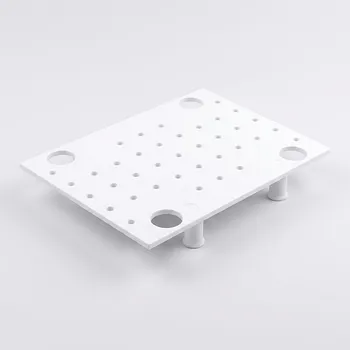
- High Temperature Resistant PTFE Thermal Insulation Board Corrosion Resistant Metal Free Fluoropolymer Stand for Ultra Clean Laboratories
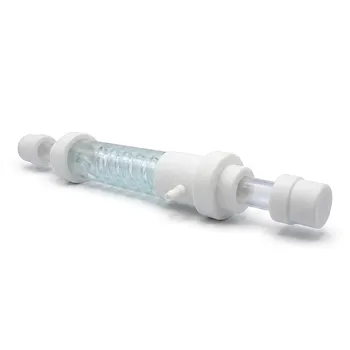
- Custom PTFE Condenser Tube 100ml Serpentine and Straight Fluoropolymer Laboratory Heat Exchanger with Flask Adapters
- High Temperature Resistant Insulating TFM Separator and Ultra Clean Laboratory PTFE Baffle Plate with Customizable Pore Size and Hole Configuration
People Also Ask
- What are the structural characteristics and manufacturing principles of Polytetrafluoroethylene (PTFE) filter membranes?
- What is the thermal stability range for PTFE filter membranes? Master Extremes from -200°C to +260°C
- What is the chemical composition and temperature resistance of PTFE filter membranes? Essential Specs for Labs
- What are the performance advantages of PTFE filter membranes vs depth filters? Boosting Lab Purity and Efficiency
- How does the inherent hydrophobicity of PTFE filter membranes affect liquid and gas separation? Optimize Performance