Perfluoroalkyl iodides (RF-I) generally provide the most useful combination of chain-end control and structural fidelity in photomediated VDF polymerization. They act as efficient chain transfer agents, producing fluoropolymers with iodine-functional chain ends while suppressing head-to-head propagation and hydrogen-transfer termination to below 1%. Conventional alkyl iodides and chlorinated initiators are less effective: they may require stoichiometric catalyst activation, fail to transfer efficiently, or leave chain ends that are poorly suited to further controlled synthesis.
The practical distinction is chain-end utility: RF-I enables functional, iodine-terminated fluoropolymer chains with fewer regio- and termination-related defects, whereas conventional initiators can produce less reactive or unreactive termini and a less well-defined polymer structure.
Why Chain-End Chemistry Matters
RF-I Functions as Both Initiator and Chain Transfer Agent
Perfluoroalkyl iodides participate efficiently in radical generation and chain transfer. The resulting polymer chains retain iodine end groups, giving the product a defined chemical handle for reactivation, block-copolymer formation, or post-polymerization derivatization.
This is especially important when the first polymer block must be extended in a later reaction. A chain end that remains chemically addressable can be deliberately reactivated; an unreactive end cannot reliably participate in subsequent growth.
Conventional Initiators Can Lack Transfer Functionality
Conventional alkyl iodides or chlorinated initiators do not necessarily provide the same efficient chain-transfer pathway. Some require stoichiometric catalyst activation but do not translate that activation into effective control over the growing fluoropolymer chains.
Other systems can produce chain ends that are effectively inactive for further polymerization. In practice, this limits their usefulness for precise block-copolymer synthesis and increases the likelihood of ill-defined homopolymer mixtures.
How RF-I Reduces Structural Defects
Head-to-Head Propagation Is Suppressed
VDF polymerization can generate head-to-head (HH) propagation defects, which disturb the regular arrangement of the fluoropolymer backbone. RF-I-mediated control suppresses these defects to below 1% under the referenced conditions.
Improved regioregularity supports more consistent chain packing, crystallization, and thermal behavior. This matters because fluoropolymer performance depends not only on molecular weight, but also on the frequency and distribution of backbone irregularities.
Hydrogen-Transfer Termination Is Limited
Hydrogen-transfer termination creates chains that no longer carry the intended reactive functionality. RF-I reduces this termination pathway to below 1%, preserving a larger population of iodine-terminated chains.
The result is a polymer sample with a more uniform capacity for subsequent chain extension or chemical modification.
Regio-Defective Ends Can Become Less Reactive
Regioselective errors, including 2,1-additions, can generate less reactive termini such as -CF2-CH2-I. These chain ends may accumulate as conversion increases if they are not quantitatively reactivated.
RF-I improves the overall chain-end situation, but it does not eliminate the need to account for all chain-end populations. Complete activation remains essential when preparing well-defined fluoropolymer blocks.
Why Defects Affect Material Performance
Regio-Defects Disrupt Crystal Packing
Regio-defects alter how PVDF chains pack into crystalline domains. In the alpha phase, approximately 10% regio-defects can reduce the infinite-thickness melting point from about 699 K to 566 K.
This substantial decrease shows why a low defect concentration is a structural requirement rather than merely a synthetic preference.
Different Phases Respond Differently
The beta phase is less sensitive to the same defect level, with its melting point decreasing from approximately 640 K to 619 K. At higher defect concentrations, the modified alpha phase can have a lower melting temperature than the beta phase.
Therefore, defect control must be evaluated alongside the intended crystalline phase and operating temperature. A polymer that appears acceptable from a conversion or molecular-weight perspective may still have compromised phase stability.
Understanding the Trade-offs
RF-I Does Not Solve Every Source of Chain Transfer
The initiator or CTA is only one contributor to chain-end fidelity. Common polar solvents for PVDF processing, including DMF, DMAc, and NMP, can strongly transfer to growing chains and reduce the number-average molecular weight to roughly 500-1,000 g/mol.
Acetonitrile, by contrast, tends to promote heterogeneous precipitation polymerization with minimal chain transfer, allowing molecular weights above 17,000 g/mol under the referenced conditions. Solvent selection can therefore dominate molecular-weight control even when RF-I is used.
Unreactivated Ends Still Broaden the Product
RF-I can generate useful iodine termini, but some regio-defective iodine ends may be less reactive than the desired chain-end population. If all populations are not reactivated, the product can develop broader dispersity and contain chains that fail to participate in block formation.
A controlled chain-transfer mechanism must therefore be paired with quantitative chain-end activation and appropriate characterization.
Chlorinated Systems May Offer Activation Without Functionality
Chlorinated initiators can support radical generation or catalyst activation, but an activated radical source is not equivalent to a useful polymer chain-transfer system. If the final chain ends are unreactive or chemically unsuitable, the process may produce polymer without providing a reliable route to chain extension.
The relevant comparison is therefore not simply initiator efficiency. It is the combined outcome of radical generation, transfer efficiency, terminal-group identity, and defect suppression.
Reaction Cleanliness Is Part of the Control Strategy
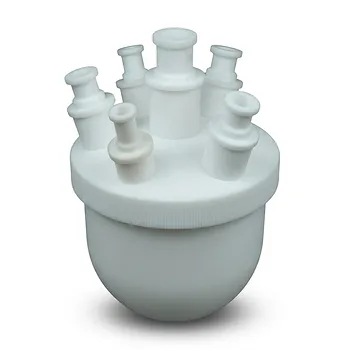
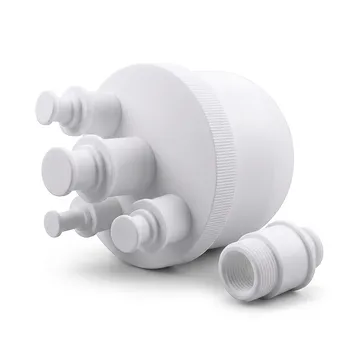
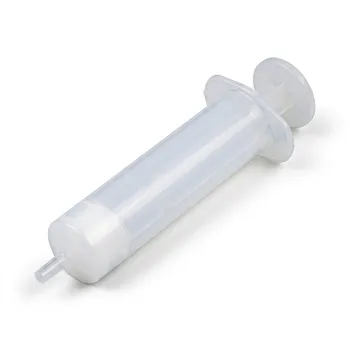
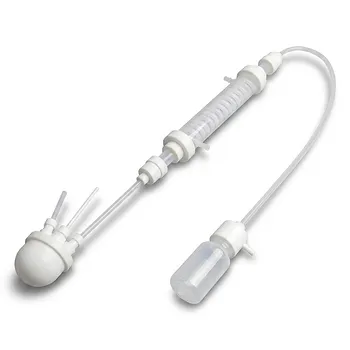
Aggressive polar solvents and volatile fluorinated monomers can make contamination, leaching, or catalyst deactivation consequential. High-purity PTFE or PFA vessels and fluid-handling components help avoid material interactions that could alter chain-transfer kinetics or product purity.
This equipment choice does not replace chemical control, but it reduces uncontrolled variables in a process where small changes in chain transfer can affect molecular weight and end-group fidelity.
Making the Right Choice for Your Goal
The choice should be based on the required downstream chemistry and the defect tolerance of the final fluoropolymer.
- If your primary focus is block-copolymer synthesis: Use RF-I-based control and verify quantitative reactivation of all relevant iodine-terminated chain populations.
- If your primary focus is low structural-defect fluoropolymer: Favor RF-I because it suppresses HH propagation and hydrogen-transfer termination to below 1% under the referenced conditions.
- If your primary focus is high molecular weight: Control solvent-mediated chain transfer carefully, since DMF, DMAc, and NMP can sharply reduce molecular weight even with an effective RF-I system.
- If your primary focus is thermal and phase stability: Minimize regio-defects and characterize their concentration because they can substantially depress melting behavior, particularly in the alpha phase.
For precise VDF fluoropolymer synthesis, RF-I is valuable because it controls not only how chains start, but also whether they end with useful functionality and retain structural integrity.
Summary Table:
| Initiator Type | Chain-End Functionality | Structural Defects (HH, H-transfer) | Suitability for Block Copolymers |
|---|---|---|---|
| Perfluoroalkyl iodides (RF-I) | Iodine-terminated, reactive | Below 1% | Excellent |
| Conventional alkyl iodides | Variable, often unreactive | Higher | Limited |
| Chlorinated initiators | Often unreactive | Higher | Poor |
Ready to achieve precise, low-defect fluoropolymers for advanced applications? At KINTEK, we provide high-purity PTFE and PFA labware and custom components designed for demanding polymerization processes. Our products minimize contamination and ensure consistent results. Contact our specialists today to discuss your specific needs and discover how we can support your research and production goals – get in touch.
Related Products
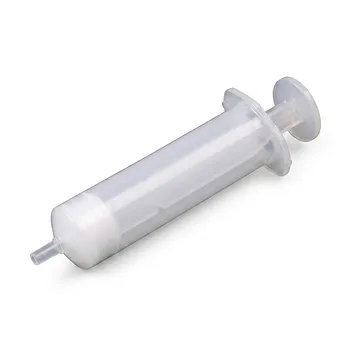
- Corrosion Resistant High Purity PFA Syringe Translucent Chemical Sampling Tool
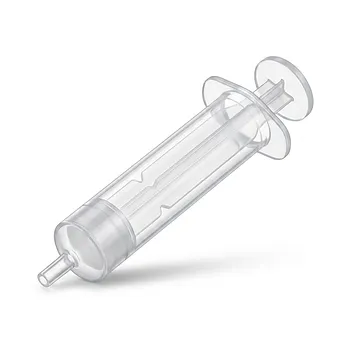
- Corrosion Resistant PFA Syringe Translucent Visual Fluoropolymer Labware 10ml Chemical Handling Tool
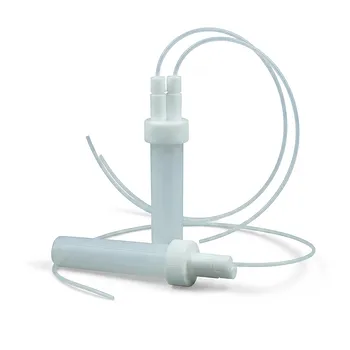
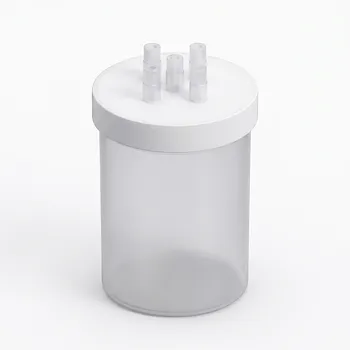
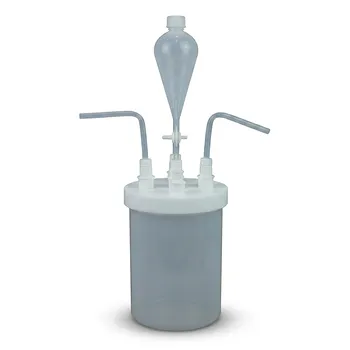
- High Purity PFA Reaction Bottle with Tubing Connection for Corrosive Chemical Synthesis and Trace Analysis
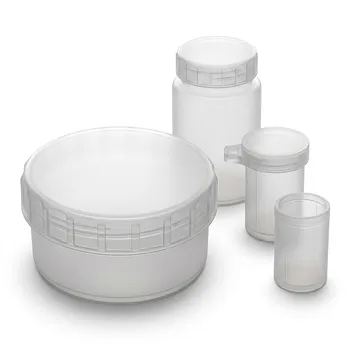
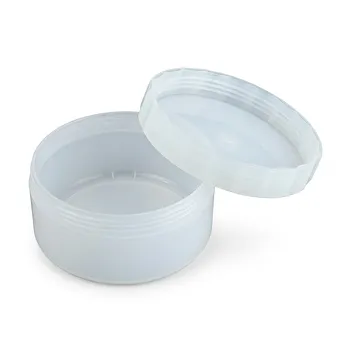
- PFA Reaction Jar Corrosion Resistant Wide Mouth PTFE Lab Bottle High Purity Chemical Vessel
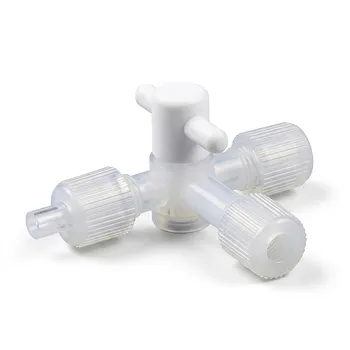
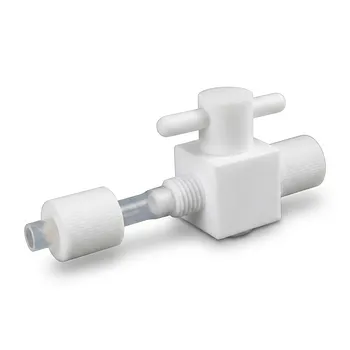
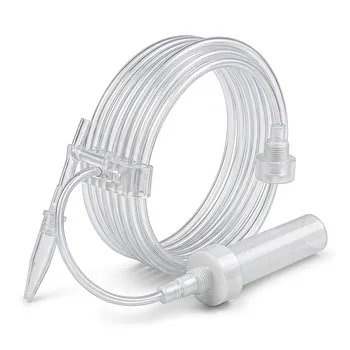
- Corrosion Resistant High Purity PFA Valve and Weldable Transparent Tubing for Semiconductor Fluid Transfer
People Also Ask
- What are the primary functional and temperature differences between PFA and FEP when selecting melt-processible fluoropolymers for custom laboratory apparatus?
- Why is Perfluoroalkoxy alkane (PFA) preferred over glass or stainless steel in pharmaceutical process development? Pure Yield
- How does PFA compare to FEP in terms of heat resistance and environmental effects? Choose the Right Fluoropolymer
- Why is the chemical stability of polymer endgroups critical when selecting melt-processible fluoropolymers like PFA for high-purity laboratory apparatus? Choose Stable Endgroups for Reliable Performance
- Why is PFA often selected over traditional PTFE for manufacturing complex fluoropolymer fluid components, custom fittings, and sealed laboratory digestion vessels? Discover the key advantages for your lab.