Higher sulfonation generally reduces oxidative stability. In fluorinated poly(arylene ether) proton-exchange membranes, increasing the degree of sulfonation (DS) raises the ion-exchange capacity (IEC) but also introduces more hydrophilic sulfonic acid groups. These groups increase water uptake and create more favorable pathways for Fenton-generated radicals to attack vulnerable aromatic and ether-containing regions of the polymer.
The trade-off is direct: higher DS improves proton-conducting functionality but typically shortens Fenton-test lifetime. High-purity PTFE or PFA labware is essential because it minimizes trace-metal contamination that could change radical-generation kinetics and make membrane degradation results unreliable.
Why Higher Sulfonation Accelerates Oxidative Degradation
DS and IEC increase together
The degree of sulfonation describes how many sulfonic acid groups are attached to the polymer structure. As DS increases, the membrane’s ion-exchange capacity generally increases as well.
This is beneficial for proton transport, but it also makes the membrane more polar and hydrophilic.
Hydrophilic domains increase oxidant access
Additional sulfonic acid groups attract water and promote hydration within the membrane. The resulting water-rich regions can allow hydrogen peroxide, dissolved iron species, and reactive radicals to penetrate more readily into the polymer.
This increases the probability that oxidative species will reach chemically vulnerable sites rather than remaining primarily in the surrounding solution.
The aromatic and ether structure remains vulnerable
Fluorinated segments improve chemical resistance, but fluorination does not make every part of the polymer equally resistant. The aryl ether backbone and sulfonated aromatic regions can still be attacked by highly reactive oxygen species.
The sulfonic acid groups are often associated with electron-deficient aromatic rings, which can further influence their susceptibility to radical-driven degradation. Thus, the fluorinated portion provides protection, while the hydrated, sulfonated portions can become the dominant degradation pathways.
What Fenton Testing Reveals
Fenton’s reagent creates an aggressive radical environment
A typical test uses ferrous sulfate and hydrogen peroxide at elevated temperature, such as 2 ppm FeSO₄ in 3% H₂O₂ at 80 °C. Iron catalyzes peroxide decomposition and generates highly reactive oxygen-centered radicals.
This environment is intended to accelerate oxidative damage and simulate the type of chemically aggressive conditions that membranes may encounter in fuel-cell operation.
Higher-IEC membranes degrade faster
The reported results illustrate the DS–stability trade-off:
- BPAQSH-20, with lower IEC, remained oxidatively stable for up to approximately 29.6 hours.
- BPAQSH-60, with higher IEC, showed stability for approximately 3.8 hours.
The exact lifetime depends on test conditions and the polymer architecture, but the trend is clear: increasing IEC can substantially reduce the time required for oxidative failure.
Stability must be interpreted alongside conductivity
A lower DS may improve oxidative lifetime but reduce the number of proton-conducting sites. Conversely, a higher DS may improve hydration and proton transport while increasing swelling and oxidative vulnerability.
The practical objective is therefore not simply maximum DS. It is an optimized balance among conductivity, water uptake, dimensional stability, and radical resistance.
Why PTFE or PFA Labware Matters
Fenton chemistry is highly contamination-sensitive
Fenton reactions depend on iron availability and peroxide decomposition kinetics. Even small quantities of unintended metal ions can alter the rate at which reactive radicals are produced.
If a vessel releases iron, chromium, nickel, or other contaminants, the measured membrane lifetime may reflect the container’s contribution to the reaction rather than the intrinsic stability of the membrane.
Conventional materials can introduce artifacts
Glass is often chemically resistant, but it is not automatically free of trace extractable species. Metallic vessels are especially unsuitable because corrosion or surface leaching can directly introduce catalytic metal ions.
Lower-grade plastics may also swell, oxidize, release organic residues, or become structurally unstable at elevated temperature.
PTFE and PFA provide chemical and thermal resistance
High-purity PTFE and PFA are selected because their highly fluorinated structures resist attack by strong oxidants, acids, and bases. They also remain stable during heated exposure to aqueous peroxide systems.
PFA is often useful for vessels requiring transparency, flexibility, or melt-fabricated construction, while PTFE is widely used for chemically inert vessels, liners, fittings, and custom-machined components.
Inert labware protects the measurement
The purpose is not merely to prevent the vessel from visibly corroding. It is to ensure that the reaction environment remains controlled and that measured changes—such as mass loss, fluoride release, mechanical failure, or membrane lifetime—are attributable to the membrane.
High-purity fluoropolymer labware therefore supports validity, repeatability, and comparability between samples.
Understanding the Trade-offs
Higher DS is not inherently undesirable
High DS can provide greater proton-site density and improved hydration. Its disadvantage is that excessive hydration and swelling may facilitate radical transport and weaken the membrane’s effective barrier against oxidative attack.
The correct DS depends on the intended balance of electrochemical performance and durability.
PTFE and PFA reduce, but do not eliminate, experimental variables
Fluoropolymer labware minimizes contamination; it does not replace experimental controls. Vessel cleanliness, peroxide age, iron concentration, temperature uniformity, sample dimensions, and solution volume can all influence the apparent degradation rate.
Tests should therefore use consistent preparation procedures, reagent concentrations, exposure times, and endpoint definitions.
“Chemically inert” does not mean contamination-proof
Even suitable PTFE or PFA components can carry residues from manufacturing, machining, handling, or prior experiments. Cleaning and conditioning are important, particularly when testing trace-metal-sensitive systems.
Blank experiments and, where appropriate, elemental analysis of the test solution can help confirm that the vessel is not materially changing the chemistry.
Comparing membranes requires consistent conditions
A membrane with a longer lifetime in one Fenton protocol cannot automatically be ranked higher under another protocol. Hydrogen peroxide concentration, iron concentration, temperature, agitation, and the selected failure criterion must remain consistent for meaningful comparisons.
How to Apply This to Membrane Testing
The most reliable approach is to treat DS, oxidative stability, and vessel purity as parts of one controlled measurement system.
- If your primary focus is proton conductivity: Use DS and IEC high enough to achieve the required proton transport, but verify that swelling and Fenton lifetime remain acceptable.
- If your primary focus is oxidative durability: Favor a lower or intermediate DS when possible, and evaluate whether reduced hydrophilicity improves radical resistance without making conductivity inadequate.
- If your primary focus is accurate Fenton comparisons: Use thoroughly cleaned, high-purity PTFE or PFA vessels and maintain identical reagent, temperature, and exposure conditions for every membrane.
- If your primary focus is diagnosing degradation mechanisms: Measure more than exposure time alone; combine mass change, mechanical integrity, fluoride loss, and chemical characterization to distinguish backbone attack from physical swelling or dissolution.
A sound membrane design balances the conductivity gained from sulfonation against the oxidative vulnerability created by greater hydration and radical access.
Summary Table:
| Degree of Sulfonation (DS) | Ion-Exchange Capacity (IEC) | Oxidative Stability (Fenton Test) | Trade-off |
|---|---|---|---|
| Lower (e.g., BPAQSH-20) | Lower | Higher (up to ~29.6 hours) | Reduced proton conductivity |
| Higher (e.g., BPAQSH-60) | Higher | Lower (~3.8 hours) | Improved conductivity but faster degradation |
| Material for Labware | Key Benefits in Fenton Testing |
|---|---|
| High-purity PTFE | Inert to oxidants, acids, bases; minimal trace-metal contamination |
| High-purity PFA | Similar inertness plus transparency and melt-fabrication ease |
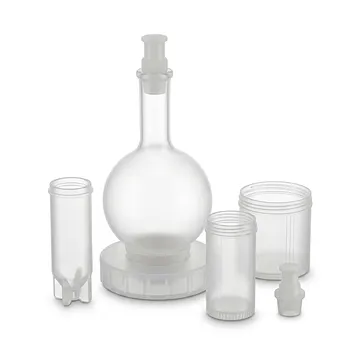
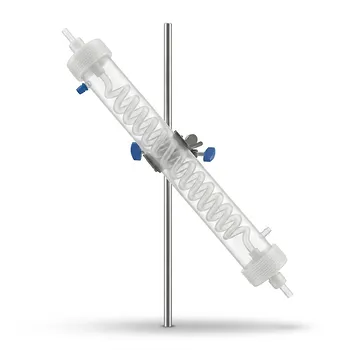
For reliable Fenton testing and membrane research, trust KINTEK's high-purity PTFE and PFA labware. Our products are engineered to minimize contamination, ensuring your oxidative stability results reflect true membrane performance. From beakers and vessels to custom-machined components, we provide the inert, durable tools you need for precise experiments. Contact us today to discuss your requirements and elevate your research accuracy!
Related Products
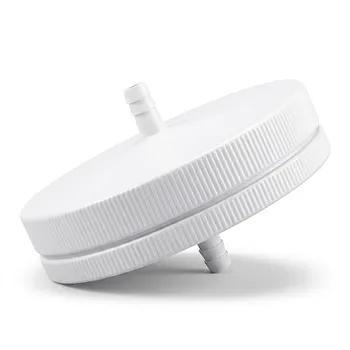
- PTFE Filter Membrane Holder for Hydrogen Chloride and Water Filtration 90mm Environmental Sampling Clamp Customizable
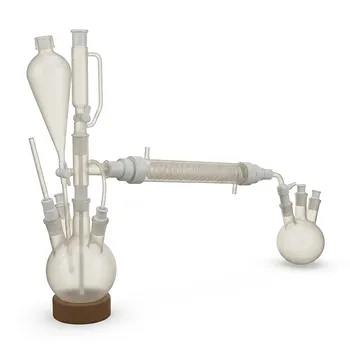
- PTFE Distillation Condensation Apparatus High Temperature Hydrofluoric Acid Resistant Fluorination Reaction Flask
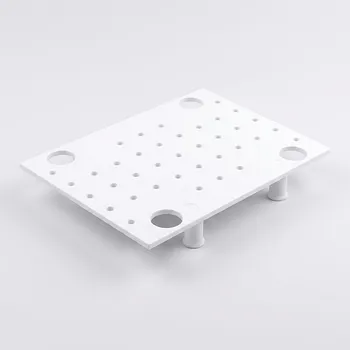
- High Temperature Resistant PTFE Thermal Insulation Board Corrosion Resistant Metal Free Fluoropolymer Stand for Ultra Clean Laboratories
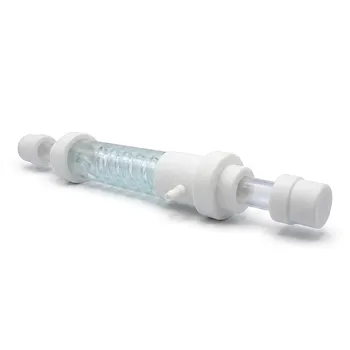
- Custom PTFE Condenser Tube 100ml Serpentine and Straight Fluoropolymer Laboratory Heat Exchanger with Flask Adapters
- High Temperature Resistant Insulating TFM Separator and Ultra Clean Laboratory PTFE Baffle Plate with Customizable Pore Size and Hole Configuration
People Also Ask
- What are the structural characteristics and manufacturing principles of Polytetrafluoroethylene (PTFE) filter membranes?
- What is the thermal stability range for PTFE filter membranes? Master Extremes from -200°C to +260°C
- What is the chemical composition and temperature resistance of PTFE filter membranes? Essential Specs for Labs
- What are the performance advantages of PTFE filter membranes vs depth filters? Boosting Lab Purity and Efficiency
- How does the inherent hydrophobicity of PTFE filter membranes affect liquid and gas separation? Optimize Performance