Surface segregation lowers the labware surface energy by concentrating fluorinated segments at the outermost interface. Because these segments have exceptionally low surface energy, they preferentially migrate toward the air or liquid interface during processing and use. The resulting fluorine-rich surface reduces liquid spreading, increases water and oil repellency, minimizes sample adhesion, and supports the chemical inertness associated with PTFE, PFA, and related fluoropolymers.
The key effect is interfacial enrichment: fluorinated segments reduce the solid surface energy where the liquid makes contact, so droplets spread less, adsorb less strongly, and release more completely. Bulk fluorine content alone is therefore less important than how effectively fluorinated segments occupy and remain at the working surface.
Why Fluorinated Segments Segregate to the Surface
Low surface energy creates the driving force
Fluorinated molecular groups interact weakly with many surrounding materials and possess very low surface energy. The system therefore reduces its overall interfacial free energy by placing those groups at the vapor or liquid boundary.
This is commonly called surface segregation, surface enrichment, or blooming. It can occur during film formation, molding, curing, annealing, or other processing steps.
Surface composition can differ from bulk composition
The outermost region of a fluoropolymer component can become substantially richer in fluorine than the underlying polymer. This means a relatively modest fluorinated fraction may dominate the surface behavior while the bulk material retains the mechanical and processing characteristics of the host polymer.
The practical result is a fluorine-rich boundary layer rather than a uniform distribution of fluorinated chemistry throughout the component.
Block length and temperature affect segregation
Longer fluorinated blocks generally increase phase separation between fluorinated and non-fluorinated domains. They can also increase the concentration of fluorine at the interface and sharpen the transition between surface-rich and bulk regions.
Higher operating or processing temperatures can enhance segmental mobility, allowing fluorinated domains to reach the interface more readily. Temperature can therefore improve surface enrichment, although prolonged exposure may also increase the possibility of structural rearrangement.
How Surface Segregation Changes Wetting
It lowers the solid surface energy
For labware, the most relevant quantity is usually the solid surface energy of the component, not the liquid-vapor surface tension of the handled fluid. Surface segregation lowers the solid-vapor and solid-liquid interfacial energies by presenting fluorine-rich groups to the liquid.
Reported fluoropolymer surface energies can be in the low tens of millinewtons per meter, with particular fluorinated chemistries reaching still lower values. The exact value depends on the polymer structure, surface condition, processing history, and measurement method.
It reduces liquid spreading
A liquid wets a surface when the energetic benefit of contacting that surface is sufficient to overcome the cost of spreading. A fluorine-rich interface makes that contact less favorable for many aqueous and organic liquids.
Droplets consequently retain a more compact shape, reflected by higher contact angles and lower spreading. This is the physical basis of the non-wetting and non-stick behavior observed in fluoropolymer components.
It supports hydrophobicity and oleophobicity
Fluorinated surfaces can repel water and, depending on the chemistry and morphology, resist wetting by oils and other organic liquids. Longer fluorinated side chains or highly fluorinated groups generally strengthen this low-energy surface character.
However, no fluoropolymer surface repels every liquid equally. A solvent with sufficiently low surface tension, or one with favorable chemical interactions with the surface, may still wet it.
Why Non-Wetting Matters in Labware
Less sample retention
When the liquid-solid interaction is weak, less material remains as a film or droplets on container walls, tubing interiors, valves, and fittings. This improves fluid release and can increase recovery during trace analysis.
The benefit is especially important when the residual volume would represent a significant fraction of the analyte being measured.
Lower adsorption and carryover
Reduced wetting generally decreases the area and persistence of liquid contact. This can limit sample adsorption and make rinsing more effective, helping reduce cross-contamination between successive samples.
Surface energy is not the only factor controlling adsorption. Analyte polarity, ionic character, concentration, surface roughness, and specific chemical interactions must also be considered.
Easier cleaning and lower staining
A low-energy fluoropolymer surface gives many contaminants less opportunity to spread and adhere strongly. Reagent bottles, digestion vessels, beakers, tubing, and transfer fittings can therefore be easier to drain and clean.
This does not eliminate contamination risks. Particles, precipitates, roughened surfaces, and strongly interacting compounds can still remain after use.
How Segregation Supports Chemical Non-Wetting
The fluorine-rich boundary is chemically unreactive
The surface layer presents highly fluorinated groups that are resistant to many chemical interactions. This contributes to the familiar resistance of PTFE and PFA components to aggressive reagents.
The chemical resistance comes from the fluoropolymer's molecular structure and strong carbon-fluorine bonding; surface segregation mainly ensures that the chemically resistant, low-energy chemistry is concentrated where contact occurs.
Weak interactions limit adhesion
Many liquids and dissolved species have difficulty forming strong interactions with a fluorine-rich interface. Lower adhesion reduces the tendency of reagents, samples, and contaminants to remain attached after draining.
This is particularly valuable in fluid paths, where retained liquid can alter concentration, create memory effects, or contaminate a subsequent process step.
Surface texture can reinforce the effect
Segregated fluorinated domains may form micro- or nanoscale surface features. When the chemistry and texture work together, the apparent contact angle can increase and liquid contact may occur over a reduced effective area.
Texture is not automatically beneficial. Surface defects, wear, deposits, and uncontrolled phase separation can instead create sites that trap liquid or particles.
Understanding the Trade-offs
Surface enrichment may change over time
Fluorinated segments can reorganize when the component is exposed to heat, solvents, mechanical stress, or aqueous environments. If the surface morphology changes, wetting and adsorption behavior may drift during service.
Long-term performance therefore depends on the stability of the segregated layer, not merely its initial contact angle or surface-energy measurement.
Surface energy does not guarantee universal repellency
A low surface energy improves resistance to wetting, but it does not make every fluid non-wetting. Liquid surface tension, solvent composition, temperature, pressure, and contact time all influence the outcome.
Performance should be evaluated with the actual reagents and cleaning conditions used in the application.
Extremely low adsorption can complicate handling
Low adhesion is usually desirable for recovery and cleaning, but it can reduce the ability of a component to retain a priming liquid or maintain a stable liquid film. In some fluidic systems, that can affect filling, metering, or bubble management.
Component geometry and operating procedure must be designed around the intended wetting behavior.
Processing choices affect surface consistency
Molding conditions, annealing, cooling rate, additives, and surface finishing can change the distribution of fluorinated domains. Two components with similar nominal bulk compositions may therefore show different surface behavior.
Quality control should assess the finished working surface when trace-level recovery or contamination control is critical.
Making the Right Choice for Your Goal
The most reliable selection considers both the fluoropolymer chemistry and the actual fluids, temperatures, and cleaning procedures involved.
- If your primary focus is trace-sample recovery: Select a stable, low-surface-energy fluoropolymer surface and validate residual volume, adsorption, and rinse recovery with the target analytes.
- If your primary focus is chemical handling: Choose PTFE, PFA, or another fluoropolymer whose bulk chemical resistance matches the reagents, then confirm that temperature and exposure time remain within the component's limits.
- If your primary focus is oil and water repellency: Evaluate the specific solvent set rather than relying on water contact angle alone, because non-wetting performance varies with liquid surface tension and chemical affinity.
- If your primary focus is long-term consistency: Characterize the finished component after realistic thermal, solvent, aqueous, and cleaning exposures to detect surface reorganization or loss of fluorine enrichment.
Surface segregation is valuable because it places low-energy, chemically resistant fluorinated chemistry exactly where liquid contact occurs, converting molecular organization at the interface into measurable gains in non-wetting, release, and contamination control.
Summary Table:
| Factor | Influence on Surface Segregation | Effect on Non-Wetting |
|---|---|---|
| Low surface energy of fluorinated segments | Drives migration to surface | Reduces spreading, increases contact angle |
| Block length & temperature | Longer blocks and higher temperature enhance segregation | Improved fluorine enrichment at surface |
| Surface chemistry vs bulk | Surface becomes richer in fluorine | Lower solid surface energy, better repellency |
| Chemical inertness | Fluorinated boundary is unreactive | Minimizes adhesion and contamination |
| Surface texture | Micro/nano-features can reinforce effect | Increases apparent contact angle |
Optimize your labware performance with KINTEK's precision PTFE/PFA components. Our specialized fluoropolymer products leverage surface segregation to deliver superior non-wetting, low sample retention, and chemical resistance. From custom machined parts to comprehensive labware, we provide tailored solutions for your high-purity applications. Contact us today to discuss your requirements and elevate your lab's efficiency!
Related Products
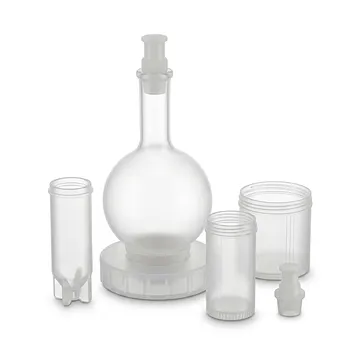
- Custom PFA Pear Shaped Flask High Purity Corrosion Resistant Labware Custom Molded Fluoropolymer Flask Glass Replacement Solution
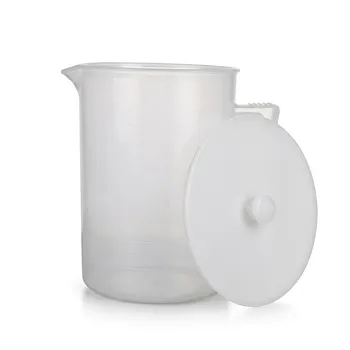
- High Purity PFA Beaker with Handle and Large Capacity Washable Soak Basket Multi Spec Teflon Laboratory Labware
- Custom PTFE Petri Dish 30mm Corrosion Resistant Low Background Non Leaching Laboratory Ware
- Custom Polytetrafluoroethylene PTFE Petri Dishes 60mm Corrosion Resistant Low Background Labware
- Custom PTFE Petri Dish 120mm Diameter Corrosion Resistant Low Background High Purity Labware
People Also Ask
- What are the chemical compatibility boundaries of PFA fluoropolymer labware, and how can PFA surfaces be treated for adhesive bonding? Learn safe usage and bonding methods.
- How does end-group stabilization during PFA polymer synthesis influence purity? Achieve Ultra-High Purity & Reliability in Lab Components.
- Why Use PFA Labware for MnFe2O4/rGO Precursors? Ensure Stoichiometric Precision and Purity
- How does PFA labware enhance the accuracy of ultra-trace element analysis? Achieving PPT Precision with Zero Leaching
- What are the primary properties of PFA for high-performance labware? Achieve ultra-trace purity & thermal stability.