Side-chain grafting enhances proton conductivity and dimensional stability by creating a controlled hydrophilic–hydrophobic nanostructure within the fluoropolymer membrane. Sulfonic acid-containing side chains, such as sulfoalkyl or sulfophenyl groups, assemble into hydrated ionic domains that form connected pathways for proton transport. At the same time, the fluorinated backbone confines these domains and limits excessive water uptake, reducing swelling and preserving the membrane’s dimensions during hydration cycles.
The central mechanism is phase separation: sulfonic acid groups concentrate water and protons into interconnected ionic channels, while the hydrophobic fluoropolymer backbone provides mechanical restraint and chemical stability.
How Side-Chain Grafting Changes Membrane Structure
Sulfonic acid groups create hydrophilic domains
Sulfonic acid groups are strongly hydrophilic and attract water molecules and mobile protons. When attached as pendant side chains, they tend to cluster into discrete ionic regions rather than distributing uniformly throughout the fluoropolymer backbone.
The fluorinated backbone remains comparatively hydrophobic. This chemical contrast drives nanophase separation between water-rich ionic domains and mechanically robust fluorinated domains.
Flexible side chains improve domain connectivity
Sulfoalkyl and sulfophenyl side chains provide molecular flexibility that helps the sulfonated groups organize into ionic clusters. These clusters can connect into continuous proton-conduction pathways through the membrane.
The resulting morphology resembles a network of narrow, water-containing channels embedded in a strong polymer framework. Reported ionic cluster sizes range from approximately 2–5 nm to 60–100 nm, depending on composition and processing.
Why Proton Conductivity Increases
Protons move through connected ionic channels
Within the hydrated sulfonic acid domains, protons can move through water-assisted transport mechanisms. Transport occurs through both movement of hydrated proton species and proton hopping between neighboring acid groups and water molecules.
Because the domains are interconnected, protons do not need to cross large hydrophobic regions repeatedly. This lowers the effective resistance to through-membrane transport.
Higher conductivity results from organized hydration
The important factor is not simply the total amount of water absorbed. Where the water resides and whether the hydrated regions are connected determine how effectively protons move.
The phase-separated morphology concentrates hydration in the sulfonated domains, where it contributes directly to ion transport. Under suitable temperature and hydration conditions, conductivities can exceed 100 mS/cm and reach more than 300 mS/cm at 80 °C.
The fluoropolymer backbone supports high-temperature operation
Fluoropolymer backbones provide strong thermal, chemical, and oxidative resistance. This allows the membrane to retain its morphology under demanding electrochemical conditions where less stable polymer matrices may soften, degrade, or lose mechanical strength.
For operation at low relative humidity and elevated temperatures, sulfonic acid transport may become less effective as water is lost. In such cases, nitrogen-containing heterocycles such as imidazole or triazole derivatives can provide additional proton-hopping pathways, although their reported conductivities under dry conditions are lower, around 7–14 mS/cm.
Why Dimensional Stability Improves
Water is confined to isolated hydrophilic regions
The sulfonic acid domains absorb water, but the hydrophobic fluoropolymer regions resist expansion. This confines much of the absorbed water within the ionic channels instead of allowing the entire membrane matrix to swell uniformly.
As a result, the membrane can remain hydrated without undergoing the large bulk expansion associated with an uncontrolled, uniformly hydrophilic polymer structure.
The backbone restrains swelling in both directions
Dimensional stability must be maintained both in-plane and through-plane. The fluorinated backbone acts as a continuous structural scaffold that limits expansion in each direction.
The side-chain architecture therefore separates the two functions: the sulfonated domains support hydration and proton conduction, while the fluoropolymer phase supplies dimensional restraint.
Controlled water uptake reduces deformation
The reference structure typically keeps water uptake between approximately 10% and 32% at 80 °C. This controlled uptake helps reduce deformation, leakage, and loss of electrode contact during repeated hydration and dehydration.
For custom electrochemical cells, this stability supports more consistent separator thickness, electrode spacing, pressure distribution, and measured cell performance.
Why the Combination Is More Effective Than Either Function Alone
Conductivity without structural control can cause swelling
Increasing sulfonic acid content generally increases the number of proton-conducting sites. However, excessive ionic content can also increase water uptake, swelling, mechanical softening, and dimensional changes.
Side-chain grafting addresses this conflict by organizing the acid groups into domains while retaining a hydrophobic structural phase.
Structural rigidity without ionic domains limits transport
A highly fluorinated, chemically stable membrane may resist swelling and degradation but conduct few protons if it lacks a connected population of acid groups.
Grafting introduces the required proton-conducting functionality without replacing the entire mechanically stable fluoropolymer framework.
Morphology provides the balance
The performance advantage comes from the co-continuous or well-connected phase-separated morphology. Hydrophilic domains provide transport, and the surrounding fluorinated matrix preserves shape and integrity.
This balance is why the membrane can maintain high conductivity while remaining dimensionally tight during hydration cycles.
Understanding the Trade-offs
Higher ion-exchange capacity can increase swelling
Adding more sulfonated groups can increase the concentration of available proton-conducting sites. However, it may also increase water uptake and reduce mechanical strength if the fluoropolymer phase can no longer sufficiently constrain the ionic domains.
The graft density and side-chain length therefore require optimization rather than simple maximization.
Conductivity remains hydration-dependent
The highest conductivity values generally depend on sufficient water availability and temperature. Under low relative humidity, the hydrated channels can become less continuous, reducing proton mobility.
Additional heterocyclic proton carriers or alternative grafted chains may help under dry, high-temperature conditions, but they introduce different transport mechanisms and performance trade-offs.
Cross-linking can improve stability but restrict transport
Minor amounts of cross-linking monomers can reinforce membranes with high ion-exchange capacity and reduce dimensional changes. Excessive cross-linking, however, may restrict side-chain motion, reduce water-channel connectivity, and lower proton conductivity.
Cross-linking must therefore reinforce the matrix without blocking the ionic network.
Processing controls the final morphology
Grafting chemistry alone does not determine performance. Side-chain distribution, domain size, membrane thickness, thermal history, and hydration conditions all affect channel connectivity and swelling.
Poorly controlled processing can produce isolated ionic clusters that absorb water but do not provide efficient long-range proton transport.
How to Apply This to Your Project
Side-chain grafting is most useful when membrane design treats proton transport and mechanical stability as a coupled morphology problem.
- If your primary focus is maximum proton conductivity: Optimize sulfonic acid graft density, side-chain flexibility, and ionic-domain connectivity while maintaining sufficient hydration.
- If your primary focus is dimensional stability: Preserve a continuous, hydrophobic fluoropolymer scaffold and limit excessive ion-exchange capacity or water uptake.
- If your primary focus is high-temperature, low-humidity operation: Consider adding proton-hopping functionality such as imidazole or triazole derivatives, then evaluate conductivity without relying solely on absorbed water.
- If your primary focus is reliable cell measurements: Characterize in-plane and through-plane swelling, water uptake, conductivity, and thickness retention over repeated hydration cycles.
The most reliable membrane design is one that confines water and sulfonic acid groups into connected ionic channels while using the fluoropolymer backbone to preserve the membrane’s shape, strength, and chemical integrity.
Summary Table:
| Aspect | Effect of Side-Chain Grafting |
|---|---|
| Nanostructure | Forms interconnected ionic domains within hydrophobic fluoropolymer backbone |
| Proton Conductivity | Enables continuous pathways for proton transport; conductivities exceed 100 mS/cm |
| Dimensional Stability | Confines water to ionic domains, reducing swelling; controlled water uptake |
| Thermal/Chemical Stability | Fluoropolymer backbone provides robustness for demanding conditions |
| Trade-offs | Higher IEC increases conductivity but may increase swelling; cross-linking stabilizes but can hinder transport |
Optimize your membrane's performance with KINTEK's custom PTFE/PFA components. Our precision-machined parts and electrochemical cells support advanced membrane research, ensuring reliable results. Contact us today to discuss your application and benefit from our high-purity fluoropolymer expertise.
Related Products
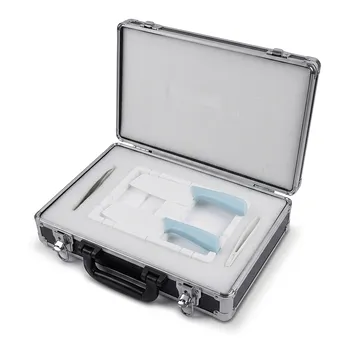
- High Purity PTFE Square Membrane Cutter Equipartition Device for Trace Analysis and Disease Control Centers Clean Non Stick No Leaching
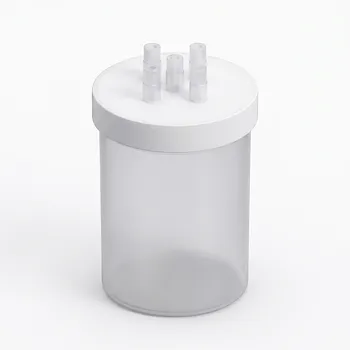
- High Purity 4L PFA Reaction Tank for Proton Exchange Membrane Electrolysis Water Oxygen Separation Systems
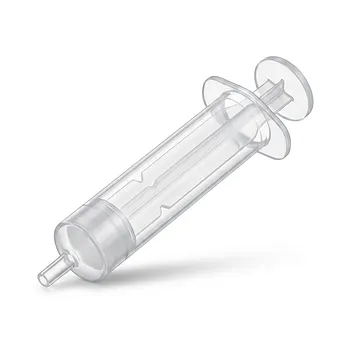
- Corrosion Resistant PFA Syringe Translucent Visual Fluoropolymer Labware 10ml Chemical Handling Tool
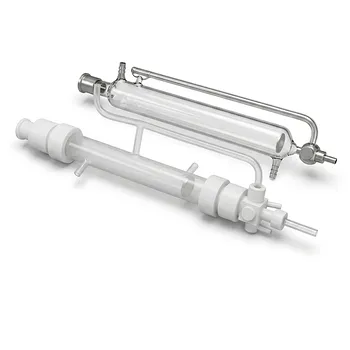
- High Purity PFA Chromatography Column Double Layer Constant Pressure Filter Column with Sieve Plate Acid Resistant Fluoropolymer Filtration System
- High Purity PFA Chromatography Column with Collection Bottle Corrosion Resistant Fluoropolymer Filtration System for Trace Analysis
People Also Ask
- How is the pore size and permeability of a PTFE membrane controlled during the stretching process? Expert Control Guide
- How does the hydrophobicity of Polytetrafluoroethylene (PTFE) membranes improve the performance of air and gas filtration?
- How do Teflon membranes enhance chemical resistance in laboratory equipment? Maximize Purity and Durability
- What industries extensively use PTFE membrane? The Critical Material for Safety & Purity
- How do Polytetrafluoroethylene (PTFE) membranes facilitate membrane distillation? Key Benefits for Water Treatment