A precision dosing system is the cornerstone of accurate Zeta potential analysis. It ensures the absolute accuracy of analyte volumes added to nitrogen and sulfur-doped carbon dots (N,S-CDs). This precision allows researchers to observe repeatable shifts in potential equilibrium points across specific concentration gradients, which is essential for defining how these dots interact with pollutants.
The integrity of Zeta potential analysis for N,S-CDs depends on the precise control of analyte volumes to reveal the electrostatic quenching mechanisms between the dots and pollutants. Without high-precision dosing, subtle changes in surface charge equilibrium are masked by volumetric error, rendering the data unreliable for mechanistic studies.
The Influence of Volumetric Accuracy on Surface Charge
Defining the Potential Equilibrium Point
In Zeta potential analysis, the potential equilibrium point represents the state where the surface charges of N,S-CDs are stabilized by the surrounding medium. Precision dosing systems, including high-precision micropipettes, allow for the exact titration required to identify this point. Small deviations in volume can lead to significant shifts in measured potential, obscuring the true electrical double-layer characteristics.
Mapping Concentration Gradients
Evaluating the stability of N,S-CDs requires testing across a range of concentration gradients. Accurate pipetting ensures that each increment of a pollutant—such as 4-nitrophenol—is consistent across multiple experimental trials. This consistency is what makes the relationship between concentration and electrostatic response statistically significant.
Ensuring Linear Data Integrity
Much like antioxidant assays where IC50 values depend on linear relationships, Zeta potential analysis relies on the predictable response of surface charges to added analytes. Precision fluid transfer prevents the "noise" that occurs when inconsistent volumes create non-linear artifacts in the data. This allows for a clear mathematical interpretation of how the carbon dots behave in the presence of contaminants.
Decoding Electrostatic Quenching Mechanisms
Interactions with Specific Pollutants
N,S-CDs are often used to detect pollutants like 4-nitrophenol or Congo Red through electrostatic quenching. A precision dosing system allows for the controlled introduction of these pollutants to observe how they neutralize or alter the charge of the carbon dots. This controlled environment is the only way to confirm that the quenching is indeed electrostatic in nature.
Verifying Quenching Pathways
When the volume of the added analyte is precisely known, researchers can calculate the stoichiometric interaction between the pollutant and the carbon dot surface. This level of detail helps distinguish between simple physical adsorption and deep electrostatic quenching. Precision components, such as corrosion-resistant valves and specialized tubing, further protect the sample from contamination during this process.
Mitigating Concentration Deviations
In many liquid-phase analyses, evaporation and adsorption to the walls of the tubing can alter the effective concentration of the sample. High-quality precision dosing systems use materials designed to minimize these effects. By maintaining the intended concentration, the system ensures that the observed Zeta potential reflects the true state of the N,S-CD/pollutant mixture.
Understanding the Trade-offs
The Risk of Manual Pipetting Errors
Even with high-precision equipment, manual pipetting introduces human variability that can undermine Zeta potential results. Slight changes in the angle of the pipette or the depth of the tip can lead to micro-volume discrepancies. In sensitive electrostatic studies, these tiny errors can lead to a misinterpretation of the quenching mechanism.
Equipment and Tip Compatibility
Using non-compatible or low-quality tips with precision micropipettes can cause capillary retention, where a small amount of liquid remains in the tip. This effectively changes the concentration of the analyte being added to the N,S-CDs. For the highest accuracy, the entire dosing chain—from the valve to the tip—must be calibrated as a single system.
Environmental Sensitivities
Precision dosing systems are sensitive to temperature and atmospheric pressure, which can influence the density of the fluid being moved. While these systems provide "absolute accuracy" in controlled settings, failure to account for environmental factors can still introduce subtle errors in the concentration of carbon dot solutions.
How to Apply This to Your Research
Effective Zeta potential analysis requires a rigorous approach to fluid handling to ensure the stability and reactivity of N,S-CDs are accurately mapped.
- If your primary focus is revealing quenching mechanisms: Use a automated precision dosing system to eliminate human error and ensure that every micro-liter of pollutant added is accounted for in your electrostatic model.
- If your primary focus is comparing different carbon dot formulations: Prioritize the use of compatible, low-retention tips to ensure that volumetric consistency is maintained across all different batches of N,S-CDs.
- If your primary focus is kinetic stability over time: Utilize corrosion-resistant fluid components and specialized tubing to prevent concentration drift caused by material adsorption or solvent evaporation.
Reliable data in carbon dot analysis is not merely a product of the sensor, but a direct result of the precision with which the sample is prepared and handled.
Summary Table:
| Feature | Influence on Zeta Potential | Benefit for N,S-CD Research |
|---|---|---|
| Volumetric Accuracy | Identifies the exact potential equilibrium point | Prevents masking of subtle surface charge shifts |
| Concentration Mapping | Ensures consistent titration gradients | Validates statistical significance of pollutant interactions |
| Linear Data Integrity | Minimizes volumetric "noise" and artifacts | Allows for clear mathematical modeling of quenching |
| Material Compatibility | Reduces adsorption and contamination | Maintains sample purity for sensitive electrostatic studies |
| Automated Control | Eliminates manual pipetting variability | Ensures repeatable results across multiple experiment trials |
Precision Fluid Handling for Reliable Carbon Dot Analysis
To unlock the full potential of your nitrogen and sulfur-doped carbon dots (N,S-CDs) research, the integrity of your fluid handling system is non-negotiable. KINTEK offers an exhaustive range of high-performance laboratory supplies crafted exclusively from PTFE and PFA to ensure your Zeta potential analysis remains free from contamination and volumetric error.
From everyday basic labware (beakers, measuring cylinders, crucibles, and reagent bottles) to comprehensive fluid transfer components (tubing, fittings, and valves), our products are designed for the most demanding analytical environments. We support your entire workflow with:
- Sample Prep & Filtration: Separatory funnels, filters, pipettes, and spatulas.
- General Consumables: Stirring bars, O-rings, gaskets, and seal tapes.
- Advanced Apparatus: Standard or custom electrochemical cells, battery testing fixtures, and microwave digestion vessels.
Whether you require high-volume orders of standard consumables or complex, non-standard machined parts via our end-to-end custom CNC fabrication, KINTEK delivers the absolute precision your research deserves.
Ready to enhance your lab's efficiency and data accuracy? Contact us today to discuss your custom setup!
References
- S. Swain, Ashis Kumar Jena. Green Synthesis of N,S-Doped Carbon Dots from the Giloy Stem for Fluorimetry Detection of 4-Nitrophenol, Triple-Mode Detection of Congo Red, and Antioxidant Applications. DOI: 10.1021/acsomega.4c09748
This article is also based on technical information from Kintek Knowledge Base .
Related Products
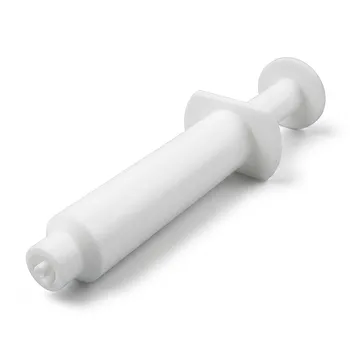
- Virgin PTFE Precision Syringe for Chemical Dispensing and Syringe Pump Integration with FEP Tubing Compatibility
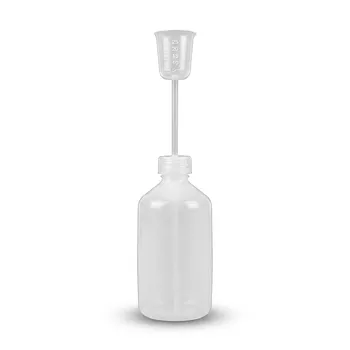
- Corrosion Resistant PFA Bottle Top Dispenser Translucent Squeeze Liquid Extraction System for Ultra Pure Chemical Handling
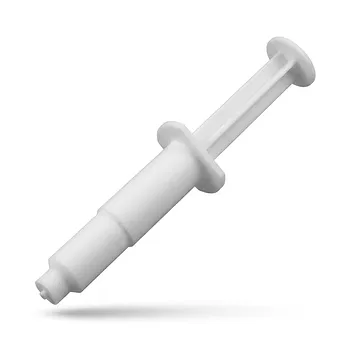
- Customizable High Purity PTFE Syringe Integrated Molding Fluoropolymer Injector with PTFE Needle for Precision Chemical Sampling
People Also Ask
- In what medical devices is PTFE commonly used? Essential Components for Safety and Reliability
- What are the common applications of PTFE in aggressive chemical environments? Ensure Reliability and Safety
- Why are simple short-chain perfluoroalkyl carboxylic acids (such as C4 perfluorobutanoate) inadequate direct replacements for long-chain surfactants in high-solid PTFE dispersion manufacturing?
- What key properties are measured under ASTM D4441 to classify and evaluate PTFE dispersions?
- Why is pH control critical in aqueous fluoropolymer dispersions? Maintain stability with persistent pH control