Fully fluorinated polymers such as PTFE and PFA are generally the safer choice for the most demanding laboratory environments. Their carbon backbones are completely shielded by fluorine, with no hydrogen atoms available for many degradation reactions. This structure gives them exceptional chemical inertness, continuous-use temperatures of up to approximately 260°C, low friction, and high elongation, while hydrogen-containing fluoropolymers such as ETFE and PVDF provide greater strength and stiffness at more moderate temperatures.
The structural trade-off is clear: removing hydrogen improves thermal and chemical stability, while retaining hydrogen generally improves mechanical rigidity and tensile strength. Choose PTFE or PFA for aggressive reagents, elevated temperatures, and contamination-sensitive work; choose ETFE or PVDF when mechanical load, stiffness, or abrasion resistance is more important than maximum chemical and thermal resistance.
Why Fluorination Determines Chemical Stability
The Protective Role of the C-F Structure
Fully fluorinated polymers contain backbones in which carbon atoms are surrounded by fluorine atoms. The strong C-F bonds, with bond energies of approximately 116 kcal/mol, create a highly stable and chemically shielded structure.
This fluorine-rich surface also produces low surface energy, strong hydrophobicity, non-stick behavior, and very low friction. Those properties reduce wetting, adhesion, and chemical interaction with laboratory fluids.
How Hydrogen Changes the Degradation Pathway
Hydrogen-containing fluoropolymers retain hydrogen alongside carbon and fluorine in the molecular chain. Under sufficiently severe conditions, particularly elevated temperatures or exposure to strong bases and organic amines, they can undergo dehydrofluorination.
Dehydrofluorination removes hydrogen fluoride from the chain and creates carbon-carbon double bonds. These unsaturated sites are more vulnerable to chemical attack, which can initiate discoloration, embrittlement, loss of strength, or broader polymer degradation.
Why This Matters in Laboratory Processing
Hot alkaline digestion, aggressive acid treatment, strong organic solvents, and repeated thermal cycles can expose the limitations of partially fluorinated materials. Fully fluorinated PTFE and PFA avoid hydrogen-related degradation mechanisms and therefore provide a wider margin of chemical stability.
This is especially important when failure could contaminate a sample, interrupt a digestion, or expose personnel to a hazardous reagent.
How Structure Affects High-Temperature Performance
PTFE and PFA Maintain Stability at Higher Temperatures
PTFE and PFA are commonly selected for continuous service up to approximately 260°C, depending on grade, mechanical loading, geometry, and exposure conditions. Their melting or processing temperatures are higher still, with PFA melting in roughly the 300°C to 320°C range.
High-temperature performance is not only a matter of melting point. The material must also retain chemical resistance, dimensional integrity, and acceptable mechanical behavior during sustained exposure.
Hydrogen-Containing Materials Have Narrower Thermal Limits
ETFE, PVDF, and related materials generally have lower maximum service temperatures than PTFE and PFA. The exact limit varies substantially by polymer and grade: ETFE applications may fall in the approximate 120°C to 150°C range, while some PVDF grades can operate at higher temperatures, commonly around 200°C to 215°C under appropriate conditions.
These values are application-dependent rather than universal material constants. Temperature, chemical environment, stress, exposure time, and pressure must all be considered together.
Thermal Cycles Increase the Design Challenge
Repeated heating and cooling can create dimensional changes, residual stress, and fatigue even when the nominal temperature remains below the material rating. PTFE and PFA are better suited to demanding thermal cycles because their fully fluorinated structures resist the chemical degradation mechanisms associated with hydrogen-containing chains.
PFA can be particularly useful when the apparatus must combine high-temperature resistance with smooth, inspectable, or welded construction.
How the Same Structure Affects Mechanical Behavior
Hydrogen-Containing Fluoropolymers Are Stronger and Stiffer
Hydrogen-containing fluoroplastics commonly provide approximately 1.5 times the mechanical strength and about twice the stiffness of fully fluorinated polymers. Representative tensile strengths may be around 40 to 50 MPa for some ETFE and PVDF grades, compared with approximately 20 to 28 MPa for PTFE and PFA.
Their higher flexural modulus and cut-through resistance make them useful for mechanically demanding components exposed to moderate temperatures.
PTFE and PFA Provide Greater Elongation
Fully fluorinated polymers generally sacrifice stiffness for flexibility and elongation. PTFE and PFA can exhibit elongation values in the range of approximately 300% to 400%, depending on grade and test conditions.
This flexibility helps tubing, seals, linings, and other components tolerate deformation without immediate fracture. It does not mean that PTFE or PFA will retain high rigidity under load at elevated temperatures.
Mechanical Strength Falls as Temperature Rises
The strength and stiffness advantage of ETFE or PVDF is most meaningful within their usable temperature range. As temperature approaches a polymer's service limit, creep, deformation, and chemical degradation become increasingly important.
For hot laboratory equipment, a stronger material at room temperature may be less reliable than a less rigid material that retains chemical and dimensional stability during processing.
PTFE Versus PFA in Laboratory Equipment
PTFE Is Well Suited to Machined and Pressed Components
PTFE has extremely high melt viscosity and cannot normally be processed using standard melt-molding methods. It is typically compression-molded and sintered, then machined when precise shapes or custom fittings are required.
That makes PTFE practical for gaskets, seals, machined liquid-transfer components, linings, membranes, and simple vessels where its low friction and chemical resistance are the primary requirements.
PFA Enables More Complex and Transparent Designs
PFA is a melt-processible copolymer of tetrafluoroethylene and perfluoroalkyl vinyl ethers. It can be injection-molded or melt-extruded into complex geometries, smooth-walled tubing, fittings, containers, and customized reaction vessels.
Compared with PTFE, PFA is often preferred when the design requires low micro-porosity, translucency, weldability, or intricate molded features. It retains chemical and thermal performance broadly comparable to PTFE for many laboratory applications.
Processing Method Can Affect Purity and Usability
The choice between PTFE and PFA is therefore not based solely on chemical resistance. PFA may simplify production of integrated or complex high-purity fluid paths, while PTFE may be more practical for custom-machined parts and components requiring its particular friction or flexibility characteristics.
For trace analysis, digestion vessels, and high-purity fluid handling, surface quality and manufacturability can be as important as the polymer's nominal temperature rating.
Where Each Material Fits in the Laboratory
Aggressive Chemical Digestion
PTFE and PFA are appropriate for digestion vessels, crucibles, liners, and fittings exposed to aggressive acids, strong solvents, and elevated temperatures. Their chemical inertness helps reduce both equipment degradation and extractable contamination.
PFA is advantageous when the vessel or fluid path requires complex molding, visibility of the contents, or welded connections.
Hot Alkali and Reactive Reagents
Hydrogen-containing polymers require careful evaluation for hot sodium hydroxide, potassium hydroxide, and organic amine exposure. These environments can promote dehydrofluorination in susceptible materials.
Fully fluorinated polymers are generally the more defensible choice when hot alkaline chemistry is central to the process.
Mechanically Loaded Components
ETFE or PVDF may be preferable for brackets, guards, structural parts, wear components, or other laboratory hardware where stiffness, tensile strength, and cut-through resistance dominate.
They remain viable when temperatures and reagents are within the specific grade's validated operating envelope.
Understanding the Trade-offs
Chemical Resistance Is Not Identical Across All Reagents
“Fluoropolymer” is not a sufficient material specification. Fully fluorinated and hydrogen-containing grades can differ significantly in resistance to particular bases, solvents, radiation environments, permeants, and temperature-pressure combinations.
The final selection should be checked against the exact reagent concentration, temperature, exposure duration, stress level, and required service life.
Temperature Ratings Do Not Guarantee Dimensional Stability
A continuous-use temperature rating indicates a usable thermal range under defined conditions. It does not guarantee that a component will remain rigid, resist creep, or maintain a tight seal while carrying a load at that temperature.
PTFE and PFA still require attention to creep, thermal expansion, wall thickness, pressure, and support geometry.
Greater Rigidity Can Create a Different Failure Mode
ETFE and PVDF can withstand higher mechanical loads and resist abrasion better than PTFE and PFA. However, their greater rigidity may reduce tolerance for deformation, and their hydrogen-containing structures can be more vulnerable to specific chemical and thermal degradation pathways.
A material that appears mechanically superior in a datasheet may be the wrong choice if chemical attack is the dominant failure risk.
Manufacturing Constraints Affect the Whole Apparatus
PTFE's processing requirements can limit geometry and increase the importance of machining quality. PFA offers broader molding and joining options, but the design must still account for thermal expansion, weld quality, and long-term deformation.
Material selection should therefore include fabrication method, inspection requirements, cleaning procedure, and contamination controls.
Making the Right Choice for Your Goal
The correct choice depends on which failure mode the application can least tolerate.
- If your primary focus is maximum chemical inertness and high-temperature digestion: Use PTFE or PFA, with PFA favored when complex molded geometry, translucency, or weldability is required.
- If your primary focus is high-purity fluid handling and low contamination risk: Prefer PTFE or PFA, particularly PFA for smooth, low-porosity molded tubing, fittings, and vessels.
- If your primary focus is mechanical strength and rigidity at moderate temperatures: Evaluate ETFE or PVDF, provided the specific reagent and temperature exposure are within the grade's validated limits.
- If your primary focus is flexibility, elongation, and low friction: Choose PTFE or PFA, while designing for creep and reduced stiffness under sustained load.
- If your primary focus is hot alkaline or chemically aggressive service: Select a fully fluorinated material unless testing demonstrates that the hydrogen-containing alternative is suitable for the exact conditions.
The most reliable material choice matches the polymer's molecular structure to the application's dominant thermal, chemical, mechanical, and purity demands.
Summary Table:
| Property | Fully Fluorinated (PTFE/PFA) | Hydrogen-Containing (ETFE/PVDF) |
|---|---|---|
| Chemical Resistance | Excellent, inert to most chemicals | Good, but susceptible to dehydrofluorination at high temps/bases |
| Max Continuous Use Temp | ~260°C (PTFE/PFA) | ~150-215°C (ETFE/PVDF) |
| Mechanical Strength | Lower (tensile ~20-28 MPa) | Higher (tensile ~40-50 MPa) |
| Stiffness | Lower (flexible) | Higher (rigid) |
| Elongation | Higher (~300-400%) | Lower |
| Processing | PTFE: compression molding & machining; PFA: melt-processible | Melt-processible |
| Best For | Aggressive chemicals, high temps, high purity | Mechanical load, moderate temps |
Ready to upgrade your lab with high-performance PTFE/PFA solutions?
At KINTEK, we specialize in precision-machined and custom-fabricated fluoropolymer components. Our full range of PTFE/PFA labware—from digestion vessels and crucibles to fluid handling systems—is engineered to withstand the most aggressive chemicals and temperatures. Backed by expert CNC machining, we can deliver tailored solutions for your most demanding applications.
Contact us today to discuss your requirements and get a quote!
Related Products
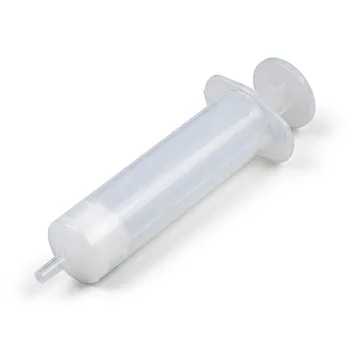
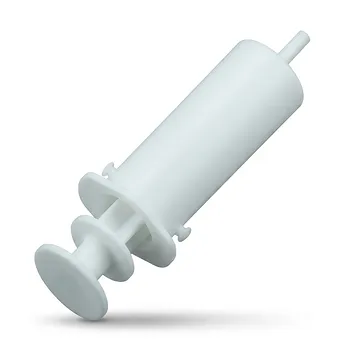
- High Purity PFA Syringe 10ml Corrosion Resistant Translucent Fluoropolymer Sampling Unit for Trace Analysis
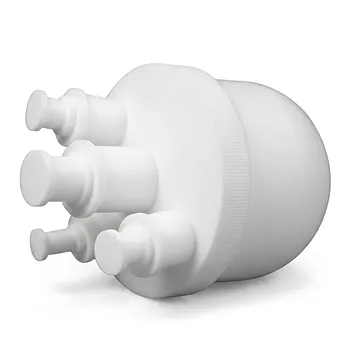
- Custom PTFE Flask 250ml High Purity Fluoropolymer Laboratory Vessel for Chemical Research
- High Purity PFA Chromatography Column with Collection Bottle Corrosion Resistant Fluoropolymer Filtration System for Trace Analysis
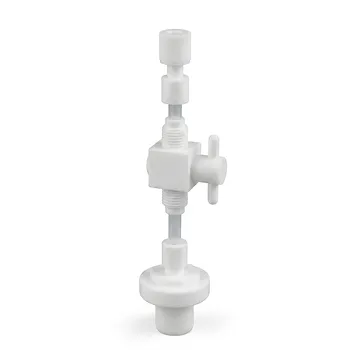
- High Purity PFA PTFE Flare Stop Valves Customizable 2-Way 3-Way Reducing Fluoropolymer Fluid Control Solutions
- PFA Eggplant Flask Custom Molded Pear Shaped Laboratory Flask Corrosion Resistant Glass Alternative
People Also Ask
- How does high-purity PFA tubing maintain reagent purity? Achieve Ultra-Smooth, Zero-Contamination Fluid Transfer
- Why is high-purity PFA trace analysis labware used for sample processing when preparing Mo2CTx@MoS2? Ensure Material Purity
- Why is high-purity PFA trace analysis labware used for MXene? Ensure Superior Material Integrity in Research
- Why is high-purity PFA labware necessary for Znx@LS-2 zeolite ICP-OES analysis? Ensure Trace-Level Precision
- Why is high-purity PFA trace analysis labware recommended for trace element detection? Achieve Gold Standard PPT Accuracy