Ammonium persulfate (APS) generally reduces metallic ionic contamination in TFE-derived fluoropolymers. Unlike sodium or potassium persulfate, APS does not introduce Na⁺ or K⁺ counter-ions that can remain as inorganic residues in the resin or become extractable during use. However, APS does not by itself guarantee zero ionic leaching: residual sulfate species, processing contamination, molding conditions, cleaning, and lot-specific extractables must also be controlled.
The initiator determines which inorganic residues can enter the polymer process. APS is preferred for high-purity PTFE and related fluoropolymer labware because it avoids alkali-metal contamination, but the finished product must still be qualified by extraction and ionic analysis.
Why the Initiator Affects Labware Purity
Persulfates generate the polymerizing radicals
TFE is polymerized through a free-radical process. Persulfate initiators decompose to form sulfate-derived radicals, which start the chain-growth reaction that produces the fluoropolymer.
The initiator therefore does more than control polymerization rate. Its counter-ion and decomposition products can influence the impurity profile of the resulting resin.
Sodium and potassium persulfate introduce metal ions
Sodium persulfate contains Na⁺, while potassium persulfate contains K⁺. These ions are not part of the desired fluoropolymer structure, but they may remain in aqueous process residues, become associated with particle surfaces, or be retained in trace amounts within the resin.
If those residues are extractable, they can contribute to ionic background in laboratory vessels. This matters when the labware contacts samples for elemental analysis, digestion, electrochemistry, or ultra-clean reagent preparation.
APS avoids alkali-metal counter-ions
Ammonium persulfate contains NH₄⁺ rather than an alkali-metal ion. Under the aqueous polymerization conditions, ammonium-derived species are more compatible with a low-metal-contamination process than sodium- or potassium-derived species.
This is the central reason APS is often selected for high-purity fluoropolymer production: it reduces the risk of introducing persistent Na⁺ or K⁺ residues at the initiation stage.
What This Means for Fluoropolymer Labware
Lower risk of ionic leaching
Labware manufactured from resin produced with APS can have a lower potential contribution from metallic ionic leachables, assuming comparable resin purification and fabrication controls.
This is particularly important for vessels used in trace-element workflows, where even very small contaminant contributions can affect blanks, detection limits, or apparent sample concentrations.
Better control of analytical blanks
A vessel can be chemically resistant yet still unsuitable for trace analysis if it releases measurable contaminants. Choosing a low-metal initiator helps reduce one source of blank variability before the resin is converted into finished labware.
The benefit is greatest when combined with controlled raw materials, clean manufacturing, appropriate post-treatment, and documented extractables testing.
Relevance to electrochemical applications
In electrochemical cells, ionic contamination can alter background current, solution conductivity, electrode interfaces, or the apparent behavior of low-concentration species.
Avoiding alkali-metal residues is therefore useful when the fluoropolymer is used near sensitive electrochemical measurements, although the entire cell design—not just the polymer resin—must be evaluated.
Relevance to digestion vessels
Acid digestion vessels are exposed to aggressive reagents and elevated temperatures. These conditions can extract or mobilize trace residues that might remain insignificant under ordinary use.
A resin selected for low ionic contamination provides a stronger starting point for digestion vessels, but acid-extractable ion testing under representative conditions remains necessary.
What APS Does—and Does Not—Remove
APS does not mean “no ions are possible”
The claim that APS produces zero ionic leaching is too absolute. APS reduces a specific contamination pathway—persistent alkali-metal counter-ions—but it cannot eliminate contamination introduced by water, reactor surfaces, additives, pigments, fillers, tooling, handling, or inadequate cleaning.
Finished labware should be described using measured extractables data rather than the initiator choice alone.
Sulfur-containing species require separate consideration
Persulfate initiation produces sulfate-derived species, and some initiator-related end groups or inorganic residues may remain during processing. Their final concentration depends on polymerization conditions, resin workup, washing, thermal history, and conversion efficiency.
Accordingly, APS should not automatically be treated as proof of zero sulfur or zero sulfate-related extractables. Sulfur and sulfate should be measured when they are relevant to the application.
Polymer chemistry is only part of the contamination profile
The polymerization recipe establishes the potential impurity profile, but fabrication can add new contaminants. Compression molding, machining, sintering, storage, packaging, and cleaning can all affect the final ionic background.
For critical labware, resin selection and finished-part qualification are separate decisions.
Understanding the Trade-offs
APS improves metal purity but is not a complete specification
Selecting APS is a sound way to avoid deliberately adding sodium or potassium counter-ions. It is not a substitute for a complete purity specification covering ionic extractables, metals, particles, and organic residues.
A supplier should be able to identify the initiator system and provide relevant resin or finished-part testing.
Different initiators may affect processing behavior
Changing initiators can influence polymerization kinetics, particle characteristics, molecular weight distribution, and resin morphology. These processing effects can indirectly affect washing, sintering, mechanical properties, and extractability.
The cleanest initiator is therefore not evaluated in isolation; it must be compatible with the required material performance and manufacturing process.
Testing must match the intended use
A generic water extract may not represent exposure to concentrated acids, bases, oxidants, solvents, or high-temperature digestion conditions. Testing should use contact conditions that reflect the actual application.
For trace work, test blanks and extraction controls are especially important because contamination may come from the test system itself.
How to Apply This to Your Project
Use the initiator choice as an early contamination-control decision, then verify the finished labware under realistic conditions.
- If your primary focus is minimizing metal contamination: Prefer fluoropolymer resin made with APS or another process that avoids persistent alkali-metal counter-ions, and confirm low Na⁺ and K⁺ extractables analytically.
- If your primary focus is trace-element accuracy: Qualify finished vessels using application-relevant blanks and extraction tests rather than relying solely on the resin’s stated initiator.
- If your primary focus is sulfur or sulfate control: Request data on sulfur-containing residues and test the final labware for relevant sulfur or sulfate extractables.
- If your primary focus is digestion or high-temperature use: Evaluate ionic leaching under the actual acid, temperature, time, and cleaning conditions used in the workflow.
- If your primary focus is electrochemical performance: Assess the complete cell assembly, because electrodes, seals, solutions, and handling can contribute ions independently of the fluoropolymer.
Choosing APS reduces a preventable source of ionic contamination, while disciplined resin purification and finished-part testing determine whether the labware is truly suitable for high-purity analytical work.
Summary Table:
| Initiator | Counter-ion | Impact on Ionic Contamination | Suitability for High-Purity Labware |
|---|---|---|---|
| Ammonium persulfate (APS) | NH4+ | No alkali metal residue; reduces Na+ and K+ contamination | Preferred for low-metal labware, but still requires testing |
| Sodium persulfate | Na+ | Adds Na+ residues | Not ideal for high-purity applications |
| Potassium persulfate | K+ | Adds K+ residues | Not ideal for high-purity applications |
Ensure your labware meets the strictest purity standards. At KINTEK, we manufacture PTFE and PFA labware using APS-based polymerization to minimize ionic contamination. Our exclusive high-performance fluoropolymers are ideal for trace analysis, digestion, and electrochemical applications. Contact us today for custom solutions and reliable supply. Get in touch now!
Related Products
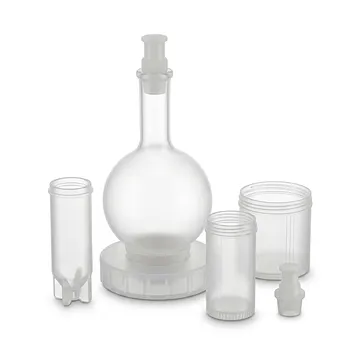
- Custom PFA Pear Shaped Flask High Purity Corrosion Resistant Labware Custom Molded Fluoropolymer Flask Glass Replacement Solution
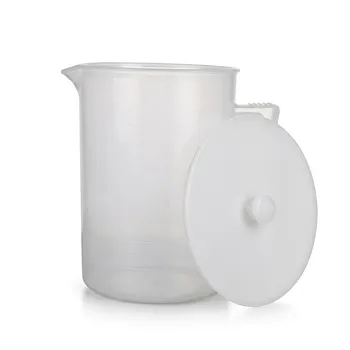
- High Purity PFA Beaker with Handle and Large Capacity Washable Soak Basket Multi Spec Teflon Laboratory Labware
- Custom PTFE Petri Dish 30mm Corrosion Resistant Low Background Non Leaching Laboratory Ware
- Custom Polytetrafluoroethylene PTFE Petri Dishes 60mm Corrosion Resistant Low Background Labware
- Custom PTFE Petri Dish 120mm Diameter Corrosion Resistant Low Background High Purity Labware
People Also Ask
- What are the chemical compatibility boundaries of PFA fluoropolymer labware, and how can PFA surfaces be treated for adhesive bonding? Learn safe usage and bonding methods.
- How does end-group stabilization during PFA polymer synthesis influence purity? Achieve Ultra-High Purity & Reliability in Lab Components.
- Why Use PFA Labware for MnFe2O4/rGO Precursors? Ensure Stoichiometric Precision and Purity
- Why is PFA labware recommended for CuBi2O4? Protect high-purity precursors and ensure semiconductor bandgap accuracy.
- How does PFA labware enhance the accuracy of ultra-trace element analysis? Achieving PPT Precision with Zero Leaching