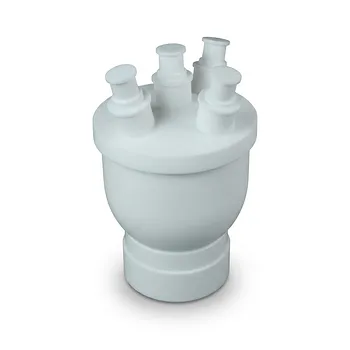
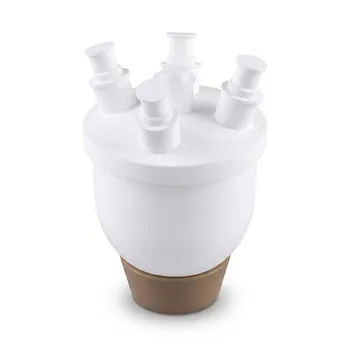
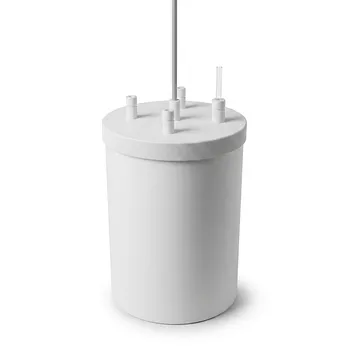
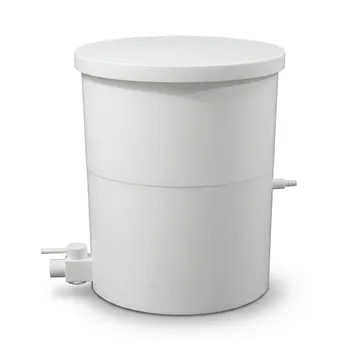
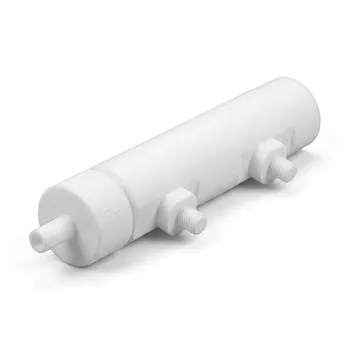
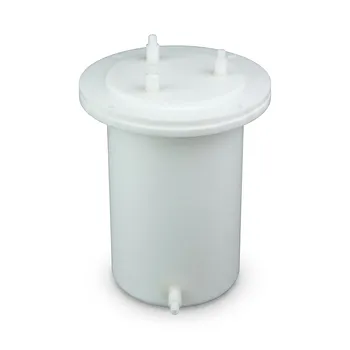
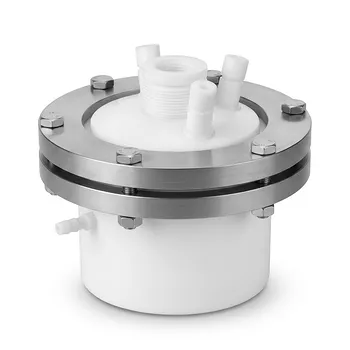
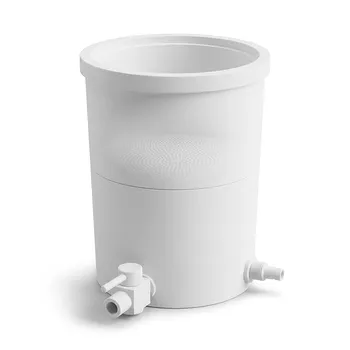
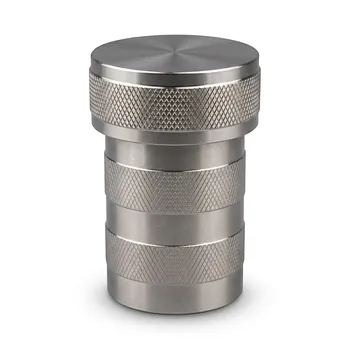
Hydrothermal synthesis reactor linings ensure nanoparticle purity by acting as an absolute chemical and physical barrier between the reactive medium and the reactor’s metal shell. These linings, typically made of polytetrafluoroethylene (PTFE) or para-polyphenylene (PPL), prevent the leaching of metal ions from the stainless steel autoclave into the reaction mixture. By providing an ultra-high state of chemical inertness, the lining ensures that the synthesized materials—such as battery cathodes or photocatalysts—remain free from external contaminants even under extreme pressure and temperature.
The core function of a reactor lining is to provide a "clean-room" environment within a high-pressure vessel, isolating aggressive reagents from the structural metal to prevent ion migration and ensure the integrity of the nanoparticle's crystal structure.
The Barrier Mechanism: Physical and Chemical Isolation
Eliminating Metal Ion Migration
The primary threat to nanoparticle purity in hydrothermal synthesis is the leaching of iron, chromium, and nickel from the stainless steel outer jacket. High-purity linings like PTFE or PFA completely encapsulate the sample, ensuring that the corrosive reaction fluids never make contact with the metal walls.
This isolation is critical because even trace amounts of metal impurities can disrupt the electronic properties or catalytic activity of the resulting nanoparticles. For sensitive applications like ZnO or TiO2 synthesis, this barrier ensures the final product meets strict purity standards.
Resisting Aggressive Chemical Environments
Hydrothermal processes often require strong acids, bases (like 3 M NaOH), or organic solvents to act as mineralizers. These chemicals become significantly more aggressive at elevated temperatures and pressures, where they can easily dissolve standard laboratory glass or corrode metal.
Polymer linings are chosen for their exceptional chemical inertia, meaning they do not react with these "super-solvents." This stability ensures that no byproducts from the liner itself enter the reaction, maintaining a stable physicochemical environment for crystal growth.
Creating a High-Purity Synthesis Environment
Enhancing Solubility and Reactivity
Under hydrothermal conditions, water and solvents reach states near their critical points, which drastically increases the solubility of precursor materials. The lining must withstand these conditions without degrading or releasing polymer fragments into the solution.
Because the lining remains stable, researchers can precisely control the precursor concentration. This level of control is necessary for achieving specific nanoparticle morphologies, such as nanowires, nanosheets, or nanotubes.
Protecting Crystal Growth Direction
The presence of unintended impurity ions can act as "dopants" that change how a crystal grows. By excluding these ions, the reactor lining allows the nanoparticles to follow their natural crystal growth orientation.
For materials like ZnNixMnxCo2-2xO4, maintaining this purity is the only way to ensure the stoichiometric accuracy of the final complex oxide. Without the lining, the structural integrity of the material would be compromised at the atomic level.
Understanding the Trade-offs and Limitations
Temperature Constraints of Polymer Linings
While polymer linings provide excellent purity, they have specific thermal thresholds that cannot be exceeded without risking deformation or "creep." PTFE is generally limited to 200–230°C, while PPL can extend that range to approximately 280°C.
Exceeding these temperatures can cause the liner to lose its seal or, in extreme cases, release fluorinated vapors that could contaminate the sample. Choosing the wrong liner material for a high-temperature reaction is a frequent cause of synthesis failure.
Pressure and Seal Integrity
The lining is not just a cup; it is part of a sealing system that must maintain high pressure to keep solvents in a liquid or supercritical state. If the liner is improperly seated or damaged, the "tight seal" is lost, leading to solvent evaporation and potential damage to the external stainless steel autoclave.
How to Apply This to Your Project
Choosing the Right Liner for Your Goals
- If your primary focus is standard nanoparticle synthesis (<200°C): Use a high-purity PTFE liner for its cost-effectiveness and universal chemical resistance.
- If your primary focus is high-temperature reactions (200°C–280°C): Opt for a PPL (para-polyphenylene) liner to maintain structural integrity and purity at elevated thermal loads.
- If your primary focus is extreme chemical purity for semiconductors: Ensure the use of virgin, high-purity PFA or PTFE that has been pre-cleaned with acid to remove any manufacturing residues.
By selecting the correct lining material and respecting its physical limits, you ensure that the only chemistry occurring inside your reactor is the chemistry you intended.
Summary Table:
| Feature | PTFE Lining | PPL Lining |
|---|---|---|
| Temperature Limit | Up to 230°C | Up to 280°C |
| Chemical Resistance | High (Acids, Bases, Solvents) | High (Acids, Bases, Solvents) |
| Primary Application | Standard Nanoparticle Synthesis | High-Temperature Reactions |
| Core Benefit | Prevents Metal Ion Leaching | Structural Integrity at High Heat |
Elevate your material synthesis with KINTEK’s high-performance fluoropolymer expertise. From everyday labware like beakers, crucibles, and reagent bottles to high-purity fluid transfer components (tubing, valves, fittings) and sample prep tools (filters, pipettes, spatulas), we provide the ultimate barrier against contamination. KINTEK manufactures virtually all imaginable laboratory supplies crafted from PTFE and PFA, including advanced reaction apparatus like hydrothermal synthesis liners, electrochemical cells, and microwave digestion vessels. Backed by end-to-end custom CNC fabrication, we deliver everything from high-volume consumables (stirring bars, O-rings) to complex, non-standard bespoke setups. Contact KINTEK today to ensure your nanoparticles maintain the highest stoichiometric accuracy and structural integrity.
Related Products
- Customizable Polytetrafluoroethylene PTFE Reactor and Corrosion Resistant Teflon Flask
- High Performance Customizable PTFE Reaction Vessel and Corrosion Resistant Polytetrafluoroethylene Flask for Chemical Laboratory Use
- PTFE Lined High Pressure Digestion Vessel 50ml High Temperature Hydrothermal Synthesis Tank
- High Pressure Custom TFM Reactor Stainless Steel Outer Vessel PTFE Inner Cup for Corrosive Synthesis
- High Purity PTFE Reaction Vessel Polyfluortetraethylene Cylindrical Tank Petrochemical Reaction Container
People Also Ask
- Why are PP or PTFE reactors preferred over glass in tribocatalysis? Maximize Charge Separation & Catalytic Efficiency
- What functional advantages do PTFE reactors provide over glass? Achieve Superior Purity and Safety in Synthesis
- What are the primary fabrication methods for capillary-based and monolithic PTFE reactors? Expert Production Insights
- Why are PTFE or PFA reaction vessels required for the selective etching process of MXene using hydrofluoric acid (HF)?
- Why is a Teflon-lined (PTFE) reactor vessel required for the hydrothermal synthesis of V2O5 and SnO2 nanomaterials?