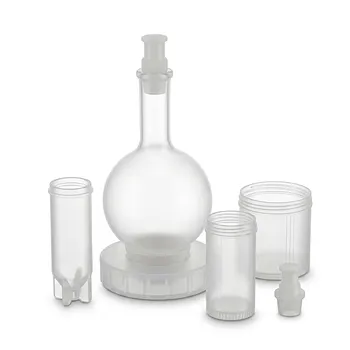
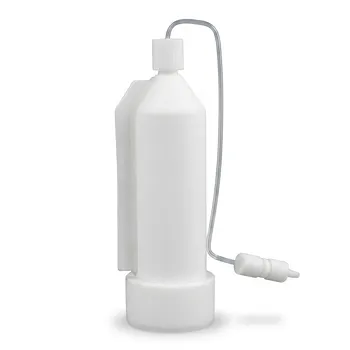
The use of specialized labware in MXene freeze-drying is a technical necessity to preserve structural integrity and chemical purity. Freeze-drying (lyophilization) prevents the collapse of the material's delicate 3D porous framework by bypassing liquid surface tension through sublimation. Specialized materials like PTFE and PFA are required because they resist the corrosive acids used in MXene synthesis and prevent trace metal contamination that would otherwise degrade electronic and electrochemical performance.
Specialized labware ensures that MXene-based hybrids maintain their high active surface area and structural architecture while protecting the material from chemical leaching and surface damage during the sublimation process.
Maintaining Structural Architecture
Avoiding Layer Restacking
Conventional thermal drying relies on liquid evaporation, which creates high surface tension as the solvent leaves the material. This tension often causes the nanosheets to collapse or "restack," significantly reducing the available surface area.
Freeze-drying utilizes sublimation—turning ice directly into vapor—which eliminates the liquid phase and the destructive forces associated with it.
Preserving 3D Porous Frameworks
The use of appropriate molds and containers during freeze-drying helps retain the material’s original three-dimensional framework.
This porous structure is critical for lithium-ion batteries, as it allows for rapid ion transport. Maintaining this architecture is the primary driver for achieving high rate performance during high-current charging and discharging cycles.
Chemical Compatibility and Purity
Resistance to Corrosive Etchants
MXene synthesis often involves the selective etching of aluminum layers using hydrofluoric acid (HF) or fluoride-containing hydrochloric acid.
Because HF is extremely corrosive to glass, PTFE (polytetrafluoroethylene) labware is essential. PTFE remains chemically inert in these extreme environments, ensuring the container does not degrade or react with the sample.
Preventing Trace Metal Contamination
In high-precision applications like semiconductor research, even minute amounts of impurities can alter a material's electronic properties.
PFA (Perfluoroalkoxy) labware is used for trace analysis because it has ultra-low metal ion leaching characteristics. Using PFA ensures that the handling process does not introduce contaminants that could jeopardize the material's electrochemical activity.
Surface Integrity and Material Recovery
Low Surface Energy and Release Properties
PTFE molds possess extremely low surface energy, which provides excellent non-stick properties.
This allows researchers to peel off composite films of uniform thickness completely and without damage after the drying process is complete.
Eliminating Surface Defects
Using specialized plastics prevents the common issues of scratches, sticking, or residues that occur with standard labware.
Protecting the surface integrity is vital for ensuring the accuracy of subsequent experiments, particularly in photocatalysis and thin-film electronics.
Understanding the Trade-offs
While specialized fluoropolymer labware (PTFE/PFA) is superior for chemical resistance, it possesses lower thermal conductivity than metal or glass. This can result in longer freezing times or uneven temperature distribution if not carefully managed during the lyophilization cycle.
Additionally, these materials are softer than glass and can be prone to mechanical deformation if subjected to extreme physical stress or improper cleaning. Researchers must balance the need for chemical purity with the practicalities of thermal transfer and equipment longevity.
Implementing Specialized Labware for Your Research Goals
Choosing the right material depends on the specific performance metrics required for your MXene hybrid material.
- If your primary focus is high-rate battery performance: Use specialized molds that prioritize the preservation of the 3D porous framework to maximize active surface area.
- If your primary focus is semiconductor or electronic purity: Utilize PFA trace-analysis labware to eliminate the risk of metal ion leaching and preserve electronic activity.
- If your primary focus is thin-film uniformity: Employ PTFE molds with low surface energy to ensure damage-free peeling and consistent film thickness.
Selecting the appropriate specialized labware is the difference between a collapsed, contaminated sample and a high-performance, structurally sound MXene hybrid material.
Summary Table:
| Key Requirement | Solution Provided by Specialized Labware | Recommended Material |
|---|---|---|
| Structural Integrity | Prevents nanosheet restacking by eliminating liquid surface tension during sublimation. | PTFE Molds |
| Chemical Purity | High resistance to corrosive HF and fluoride etchants used in MXene synthesis. | PTFE / PFA |
| Trace Analysis | Ultra-low metal ion leaching to preserve electronic and electrochemical activity. | PFA Containers |
| Sample Recovery | Low surface energy enables damage-free peeling of thin-film composites. | PTFE Labware |
Elevate Your MXene Research with KINTEK Precision Fluoropolymers
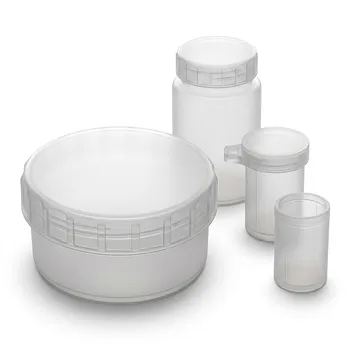
Don't let structural collapse or trace contamination compromise your advanced materials. KINTEK specializes in high-performance fluoropolymer solutions designed for the most demanding laboratory environments. From everyday basic labware like beakers, measuring cylinders, crucibles, and centrifuge tubes to high-purity PFA trace analysis instruments and comprehensive fluid transfer components (tubing, fittings, valves), we provide the tools necessary for scientific excellence.
Our expertise extends to specialized sample prep tools, including separatory funnels, filters, and pipettes, as well as advanced reaction apparatus like hydrothermal synthesis liners, microwave digestion vessels, and custom electrochemical cells. Backed by end-to-end custom CNC fabrication, KINTEK can deliver everything from high-volume consumables to bespoke, non-standard machined parts tailored to your unique 3D framework requirements.
Ready to optimize your freeze-drying process and protect your material integrity?
Contact KINTEK Today to Discuss Your Custom Requirements
References
- Umme Kalsoom, Malik Maaza. MXene-based hybrid composites for lithium-ion batteries: advances in synthesis strategies and electrochemical performance. DOI: 10.1007/s11581-025-06628-z
This article is also based on technical information from Kintek Knowledge Base .
Related Products
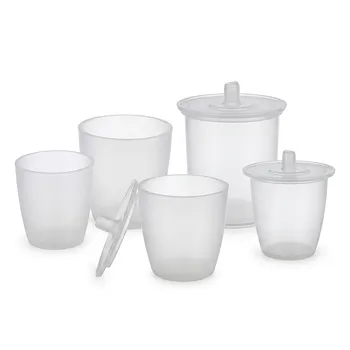
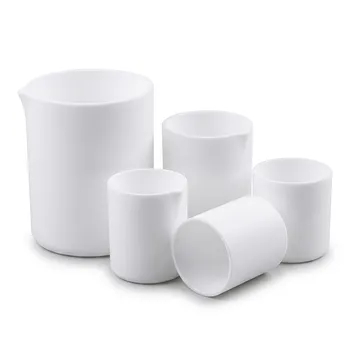
- High Purity PFA Crucible and Corrosion Resistant PTFE Beaker for Trace Analysis and Custom Laboratory Applications
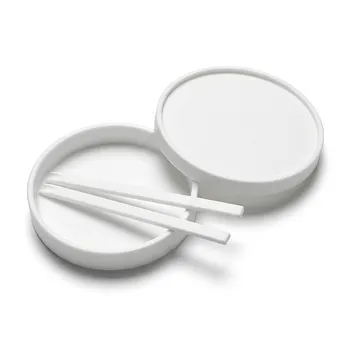
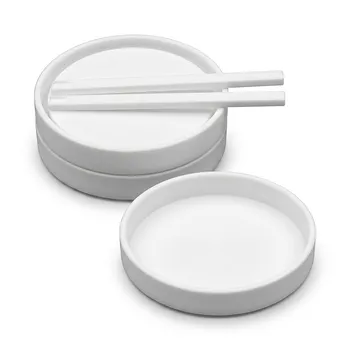
- Custom Polytetrafluoroethylene PTFE Petri Dishes 60mm Corrosion Resistant Low Background Labware
- PTFE PFA Vacuum Filtration System Corrosion Resistant Customizable Shatterproof Laboratory Device
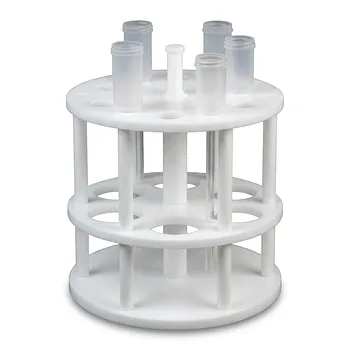
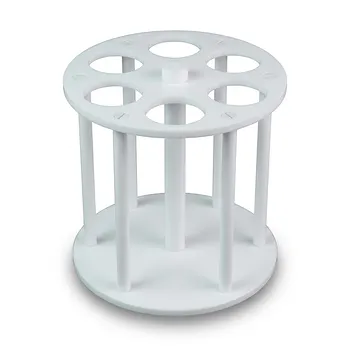
- Custom PFA Microcolumn Racks and PTFE Machined Low Background Corrosion Resistant Laboratory Fixtures
- Custom PTFE Petri Dish 30mm Corrosion Resistant Low Background Non Leaching Laboratory Ware
People Also Ask
- Why are high-purity vessels critical for BiFeO3 synthesis? Ensuring Phase Purity
- Why is the use of high-purity PFA or PTFE labware critical during TiO2 nanoparticle purification? Protect Sample Purity
- Why is high-purity PFA labware necessary for Znx@LS-2 zeolite ICP-OES analysis? Ensure Trace-Level Precision
- Why is high-purity PFA trace analysis labware used for MXene? Ensure Superior Material Integrity in Research
- Why is high-purity PFA trace analysis labware used for sample processing when preparing Mo2CTx@MoS2? Ensure Material Purity