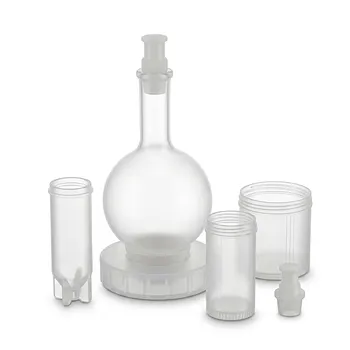
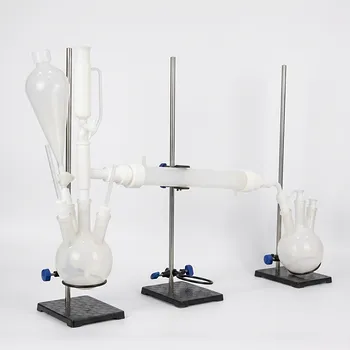
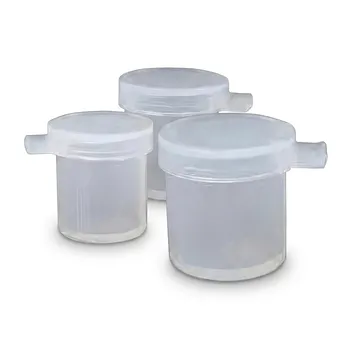
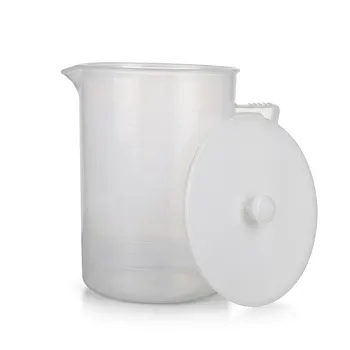
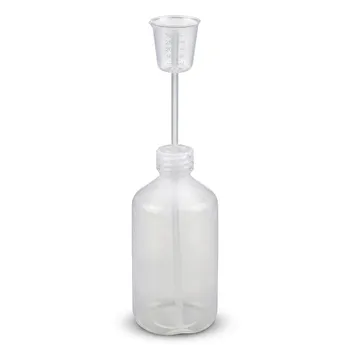
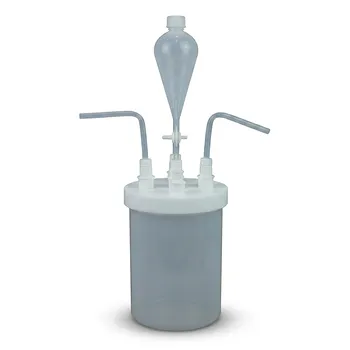
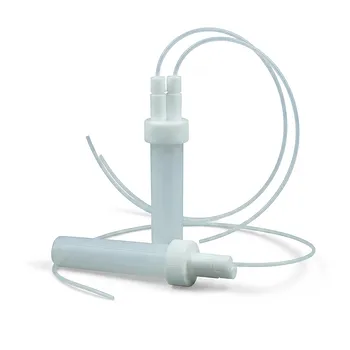
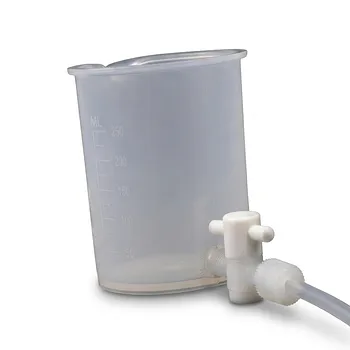
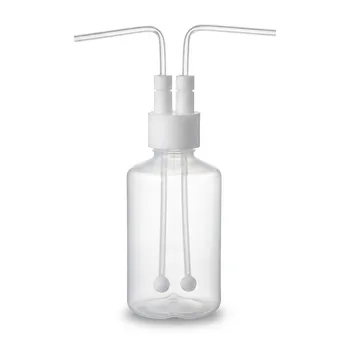
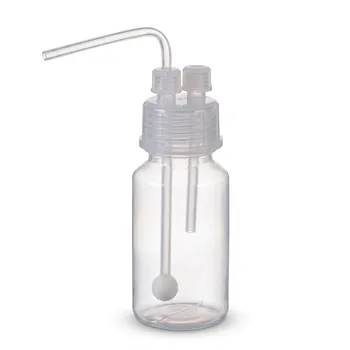
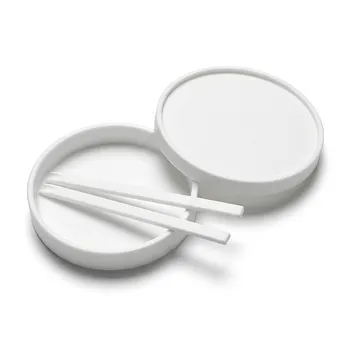
PFA (Perfluoroalkoxy) labware is the industry standard for high-purity applications because it provides a near-zero contamination environment. It is specifically recommended due to its exceptional chemical inertness and an extremely low metal ion leaching background, which prevents the introduction of impurities into sensitive samples. By eliminating the interference typical of glass or lower-grade plastics, PFA ensures the precision, accuracy, and reproducibility required for trace-level analytical research.
Core Takeaway: PFA labware serves as a critical safeguard against secondary contamination, ensuring that experimental data reflects the sample itself rather than the container. Its unique molecular structure prevents both the leaching of metallic impurities and the loss of analytes through surface adsorption.
The Foundation of Chemical Inertness
Resistance to Aggressive Reagents
PFA is virtually non-reactive with almost all chemicals, including the concentrated mineral acids often used in sample digestion. Unlike glass, which can leach silica or boron when exposed to certain reagents, PFA remains stable and intact.
Thermal Stability in Synthesis
Beyond its chemical resistance, PFA can withstand a wide range of temperatures. This stability allows for high-purity synthesis to occur under varying thermal conditions without the risk of the container degrading or releasing volatile organic compounds.
Structural Longevity
The durability of PFA ensures that it does not develop micro-fissures or surface degradation over time. This structural integrity is vital for maintaining a consistent environment across long-term studies or repeated high-sensitivity experiments.
Eliminating Trace Contamination
Preventing Metal Ion Leaching
In trace analysis, even parts-per-trillion (ppt) levels of contamination can invalidate results. PFA is manufactured to be ultra-clean, ensuring that metal ions do not migrate from the container walls into the sample solution.
Minimizing Surface Adsorption
A common pitfall in trace analysis is the "loss" of target elements as they stick to the container walls. PFA’s smooth, non-polar surface minimizes this adsorption, ensuring that the full concentration of the analyte remains in the solution for measurement.
Maintaining Low Background Levels
Using PFA reduces the "analytical blank" or the background noise in sensitive instruments like ICP-MS. By keeping the background level near zero, researchers can achieve much lower detection limits and higher confidence in their data.
Understanding the Trade-offs
High Initial Cost
The most significant drawback of PFA labware is its high price point compared to borosilicate glass or standard polypropylene. However, this cost is generally justified by the reduction in failed experiments and the longevity of the equipment.
Physical Rigidity and Transparency
PFA is a fluoropolymer, meaning it is more flexible and less rigid than glass, which may require different handling techniques. While it is translucent, it lacks the crystal-clear transparency of glass, making it slightly more difficult to observe subtle color changes or precipitates.
Specialized Cleaning Requirements
To maintain its high-purity status, PFA requires rigorous, specialized cleaning protocols, often involving hot acid baths. Failure to follow these protocols can lead to cross-contamination, negating the material's inherent benefits.
How to Apply This to Your Project
When deciding whether to transition to PFA labware, consider the sensitivity requirements of your specific application.
- If your primary focus is trace element analysis (ppb/ppt levels): You should use PFA for all sample preparation, digestion, and storage to ensure background interference remains negligible.
- If your primary focus is high-purity chemical synthesis: Utilize PFA reactors and storage bottles to prevent the leaching of metal catalysts or impurities that could compromise the final product's integrity.
- If your primary focus is routine laboratory work or teaching: Stick with standard borosilicate glass or polypropylene, as the high cost of PFA is unnecessary for applications where trace contamination is not a factor.
By matching the material properties of PFA to the sensitivity of your research, you ensure the highest possible standard of data integrity and experimental success.
Summary Table:
| Feature | Benefit for Trace Analysis | Benefit for Chemical Synthesis |
|---|---|---|
| Chemical Inertness | Prevents reagent-container reactions | Ensures product purity and integrity |
| Ultra-Low Leaching | Minimizes background noise (ICP-MS) | Prevents metal ion contamination |
| Non-Polar Surface | Reduces analyte loss from adsorption | High recovery rates and easy cleaning |
| Thermal Stability | Consistent results across temperatures | Safe for high-temp digestion/reactions |
| Structural Durability | Prevents micro-fissures and leaks | Long-term reliability in harsh conditions |
Elevate Your Research with High-Performance Fluoropolymer Solutions
Precision in trace analysis and high-purity synthesis demands the highest quality materials. KINTEK is your dedicated partner, manufacturing an exhaustive range of laboratory supplies crafted exclusively from PTFE and PFA.
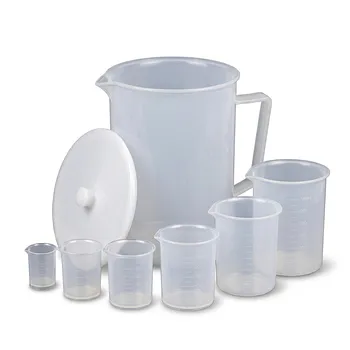
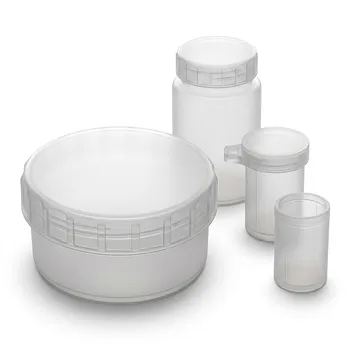
From everyday essentials like beakers, crucibles, and reagent bottles to specialized tools like high-purity trace analysis instruments and fluid transfer components (tubing, fittings, valves), we ensure a near-zero contamination environment for your most sensitive work. Our expertise extends to advanced apparatus, including hydrothermal synthesis liners, microwave digestion vessels, and custom electrochemical cells.
Why choose KINTEK?
- Comprehensive Range: Everything from O-rings and stirring bars to complex filtration tools and reactors.
- Bespoke Engineering: Backed by end-to-end custom CNC fabrication, we deliver non-standard machined parts and bespoke laboratory setups tailored to your exact specifications.
- Absolute Focus: We specialize exclusively in high-performance fluoropolymers to guarantee maximum chemical resistance and longevity.
Don't let container interference compromise your data. Contact KINTEK today to discuss your custom labware needs or high-volume orders!
References
- Jusheng Bao, You Liu. Hydrothermal Synthesis of Single‐Crystal Europium Tungstate Hydroxide Nanobelts for Enhanced Humidity Sensing. DOI: 10.1002/asia.202401933
This article is also based on technical information from Kintek Knowledge Base .
Related Products
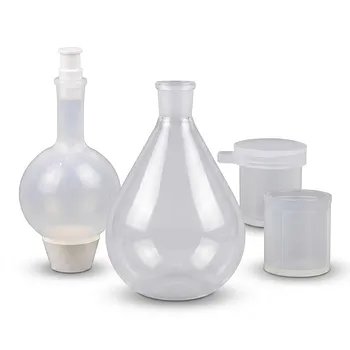
- Custom PFA Pear Shaped Flask High Purity Corrosion Resistant Labware Custom Molded Fluoropolymer Flask Glass Replacement Solution
- High Purity PFA Crucible and Corrosion Resistant PTFE Beaker for Trace Analysis and Custom Laboratory Applications
- High Purity PFA Constant Pressure Condensation Reaction System Acid Resistant High Temperature Customizable Teflon Labware
- High Purity PFA Sample Dissolution Cups Acid Resistant Chemical Digestion Vessels with Lids Trace Analysis Labware
- High Purity PFA Beaker with Handle and Large Capacity Washable Soak Basket Multi Spec Teflon Laboratory Labware
People Also Ask
- Why Use PFA Labware for MnFe2O4/rGO Precursors? Ensure Stoichiometric Precision and Purity
- How does PFA labware enhance the accuracy of ultra-trace element analysis? Achieving PPT Precision with Zero Leaching
- What are the primary properties of PFA for high-performance labware? Achieve ultra-trace purity & thermal stability.
- Why is PFA labware recommended for CuBi2O4? Protect high-purity precursors and ensure semiconductor bandgap accuracy.
- What role does PFA labware play in semiconductor manufacturing? Ensuring Ultra-Pure Yields and Zero Contamination