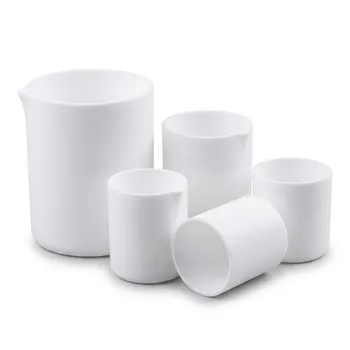
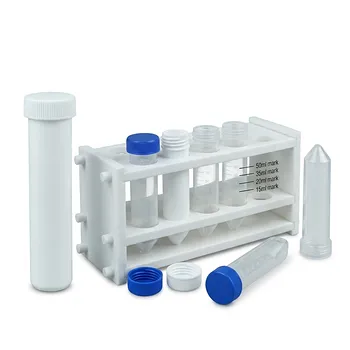
High-purity PFA or PTFE labware is essential for iron-doped BiVO4 synthesis because it provides near-total chemical inertness against the aggressive acids and bases used in the precursor preparation. Standard laboratory glassware can leach metal ions when exposed to the 1.5 M nitric acid ($HNO_3$) and 1.5 M sodium hydroxide (NaOH) required for this process. By utilizing fluoropolymers, researchers prevent these background impurities from interfering with the precise, low-dose iron doping levels (typically 0.5% to 3.0%), ensuring the experimental integrity of the final material.
Core Takeaway: The use of PFA and PTFE labware is a critical control measure to prevent container-source contamination. In high-sensitivity semiconductor synthesis, these materials ensure that the intended dopant concentration is accurate and that the material's electronic properties are not compromised by leached trace elements.
Resistance to Aggressive Chemical Environments
Stability Against Extreme pH
The synthesis of BiVO4 precursors requires alternating between highly acidic environments (1.5 M $HNO_3$) and strongly alkaline solutions (1.5 M NaOH). PFA and PTFE are virtually non-reactive to these conditions, whereas conventional borosilicate glass can undergo surface erosion and ion exchange.
Prevention of Container Corrosion
Strongly reducing precursor solutions, such as those involving vanadium compounds, can be highly corrosive to standard materials. Fluoropolymers resist this corrosion, ensuring that the structural integrity of the vessel remains intact throughout the dissolution and mixing phases.
Handling Polar and Halide-Rich Solvents
In advanced synthesis, precursor solutions often contain polar solvents or halide salts that are notoriously aggressive toward glass. High-performance fluoropolymers provide a universal barrier that protects the solution from the container and vice versa.
Protecting the Precision of Low-Dose Doping
Minimizing Metal Ion Leaching
When working with dopant levels as low as 0.5%, even microscopic amounts of leached ions from glass (such as aluminum, boron, or sodium) can significantly alter the results. PFA labware is specifically manufactured to have exceptionally low metal ion background values, making it the gold standard for trace analysis.
Ensuring Accurate Bandgap and Energy Levels
For photocatalytic materials like iron-doped BiVO4, the doping energy levels dictate performance. Unintended impurities can introduce "trap states" or shift the bandgap, leading to inaccurate testing results and poor reproducibility in photocatalytic applications.
Maintaining Stoichiometric Integrity
Precise concentration control is vital for the coordination environment during structural assembly. Using inert labware ensures that the precursor components remain at their intended concentrations, preventing the loss of reactants to container wall adhesion or dilution via leaching.
Enhancing Material Purity and Order
Prevention of Foreign Cation Interference
The introduction of foreign cations can disrupt the long-range order of synthesized materials, such as MOFs or doped oxides. PFA consumables ensure a consistent coordination environment, which is necessary for achieving high phase purity in nanoparticles.
Non-Stick Properties and Recovery
Fluoropolymers possess extremely low surface energy, which prevents reactive agents or synthesized particles from adhering to the container walls. This superior anti-adhesion property ensures maximum recovery of the precursor solution and prevents the "carry-over" of impurities between experiments.
Understanding the Trade-offs
Cost and Accessibility
High-purity fluoropolymer labware is significantly more expensive than standard glass or disposable plastic. This higher initial investment is often a barrier for general-purpose labs, though it is mandatory for high-precision trace metal work.
Temperature and Pressure Limitations
While PTFE and PFA have high thermal stability compared to other plastics, they cannot be used with open flames and have lower maximum service temperatures than quartz or specialized glass. Researchers must ensure that the reaction temperature does not exceed the material's limits (typically around 250°C to 260°C).
Mechanical Rigidity
PFA is translucent and somewhat flexible, which may not be suitable for applications requiring absolute vacuum-tight rigidity or visual clarity equivalent to glass. PTFE is opaque, which can make it difficult to monitor color changes or precipitation during the reaction without opening the vessel.
How to Apply This to Your Project
- If your primary focus is precise trace doping (0.5% - 3.0%): Use high-purity PFA beakers and volumetric flasks to eliminate background metal interference.
- If your primary focus is working with strong 1.5 M NaOH or $HNO_3$: Choose PTFE or PFA to prevent container etching and ensure the longevity of your labware.
- If your primary focus is high-temperature synthesis above 260°C: Avoid fluoropolymers and consider high-purity quartz vessels, bearing in mind the increased risk of ion leaching.
- If your primary focus is routine synthesis where trace purity is not critical: Standard borosilicate glass may be used, provided it is properly acid-washed to minimize surface-level contaminants.
Selecting the appropriate fluoropolymer labware is the most effective way to guarantee that your experimental results reflect the chemistry of your precursors rather than the contamination from your containers.
Summary Table:
| Feature | PFA/PTFE Performance | Benefit for BiVO4 Synthesis |
|---|---|---|
| Chemical Inertness | Resists 1.5M $HNO_3$ & NaOH | Prevents container erosion and chemical interference |
| Leaching Profile | Ultra-low metal ion background | Protects precise low-dose (0.5%-3%) iron doping |
| Surface Energy | Extremely low / Non-stick | Ensures maximum recovery and prevents carry-over |
| Thermal Range | Stable up to 250°C - 260°C | Ideal for aggressive liquid-phase precursor prep |
Elevate Your Synthesis Precision with KINTEK Fluoropolymers
Don't let container-source contamination compromise your semiconductor research. KINTEK specializes in high-performance fluoropolymer solutions designed specifically for high-sensitivity trace analysis and aggressive chemical environments.
Our extensive range includes:
- Everyday Essentials: Beakers, measuring cylinders, crucibles, reagent bottles, and centrifuge tubes.
- Fluid & Sample Handling: Tubing, fittings, valves, separatory funnels, pipettes, and filters.
- General Consumables: Stirring bars, O-rings, gaskets, and high-purity seal tapes.
- Advanced Apparatus: Custom electrochemical cells, battery testing fixtures, and microwave digestion vessels.
Whether you need standard labware or bespoke, non-standard parts via our end-to-end custom CNC fabrication, KINTEK delivers the chemical inertness your project demands.
Contact KINTEK Today to secure the ultra-pure PTFE and PFA tools required for your next breakthrough.
References
- M. Maran, Yoshito Andou. Assessing the Photocatalytic Performance of Hydrothermally Synthesized Fe-Doped BiVO4 Under Low-Intensity UV Irradiation. DOI: 10.1007/s13369-025-10278-8
This article is also based on technical information from Kintek Knowledge Base .
Related Products
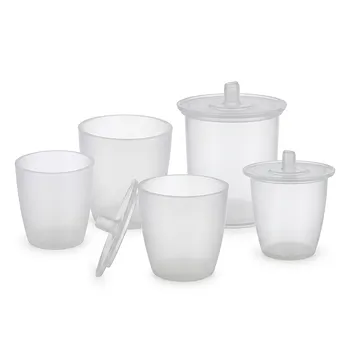
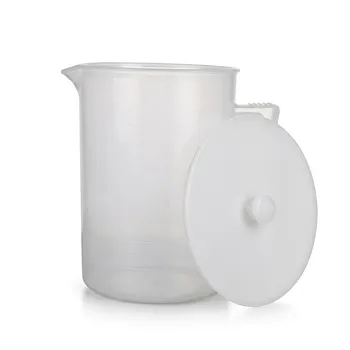
- High Purity PFA Crucible and Corrosion Resistant PTFE Beaker for Trace Analysis and Custom Laboratory Applications
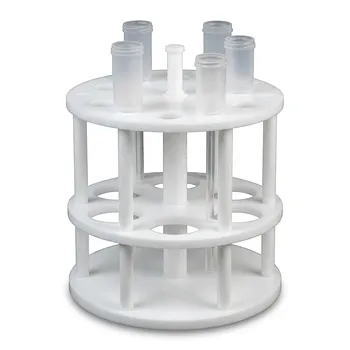
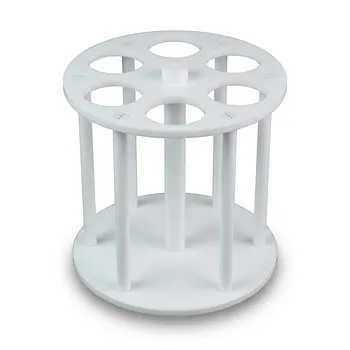
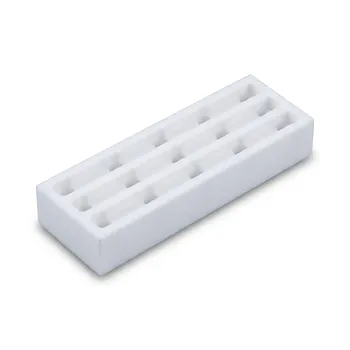
- Custom PFA Microcolumn Racks and PTFE Machined Low Background Corrosion Resistant Laboratory Fixtures
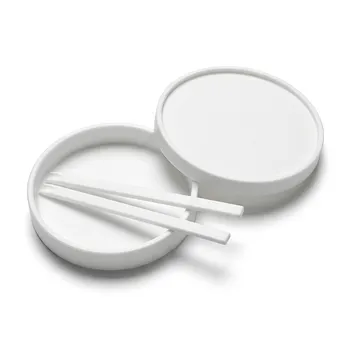
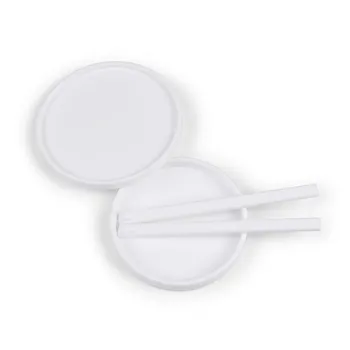
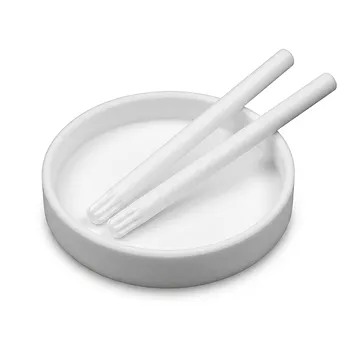
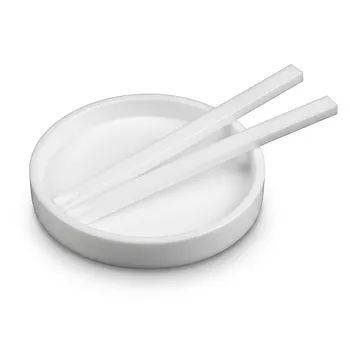
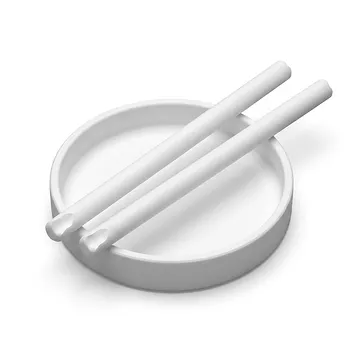
- Custom Polytetrafluoroethylene PTFE Petri Dishes 60mm Corrosion Resistant Low Background Labware
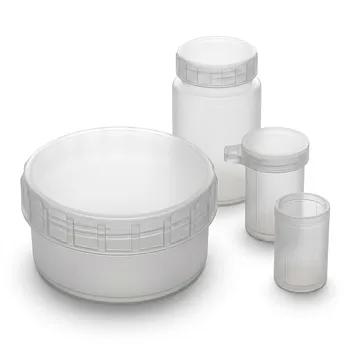
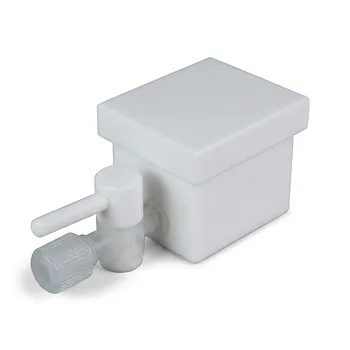
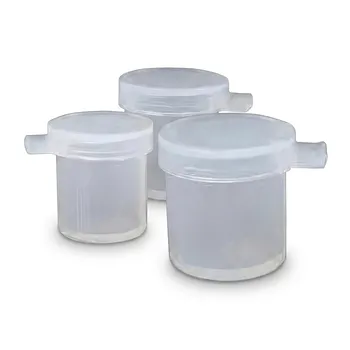
- PFA Reaction Jar Corrosion Resistant Wide Mouth PTFE Lab Bottle High Purity Chemical Vessel
- Custom PTFE Petri Dish 30mm Corrosion Resistant Low Background Non Leaching Laboratory Ware
People Also Ask
- Why are high-purity vessels critical for BiFeO3 synthesis? Ensuring Phase Purity
- Why is the use of high-purity PFA or PTFE labware critical during TiO2 nanoparticle purification? Protect Sample Purity
- Why is high-purity PFA trace analysis labware used for MXene? Ensure Superior Material Integrity in Research
- Why is high-purity PFA labware necessary for Znx@LS-2 zeolite ICP-OES analysis? Ensure Trace-Level Precision
- Why is high-purity PFA trace analysis labware recommended for trace element detection? Achieve Gold Standard PPT Accuracy