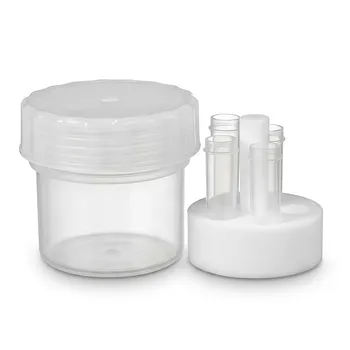
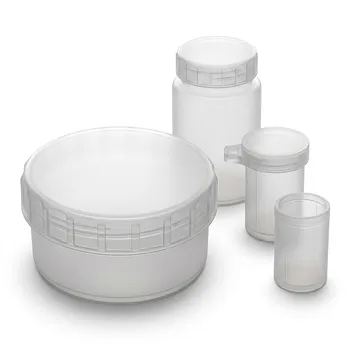
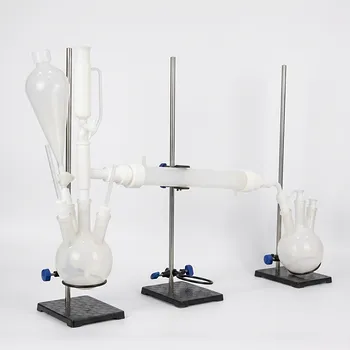
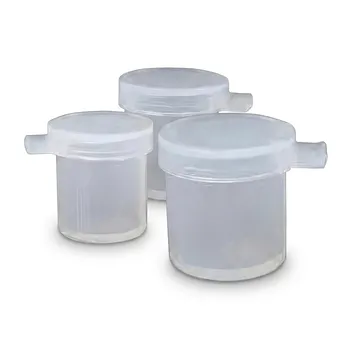
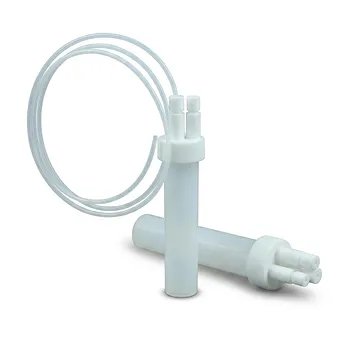
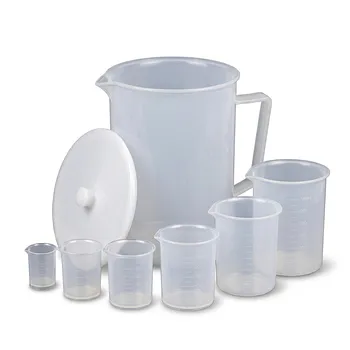
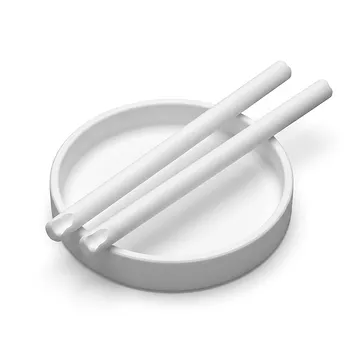
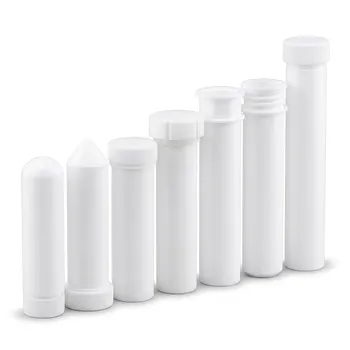
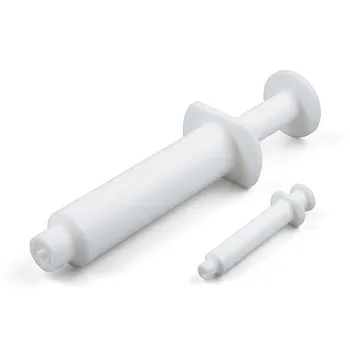
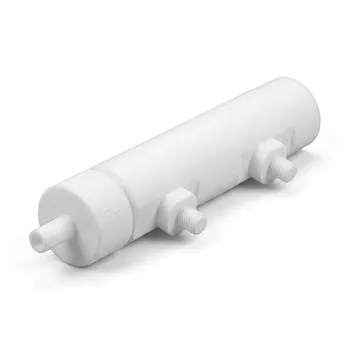
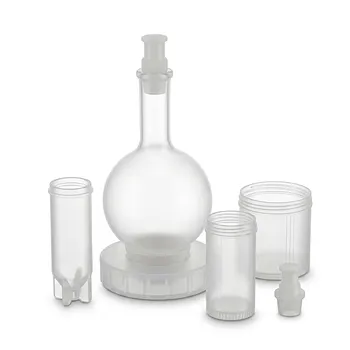
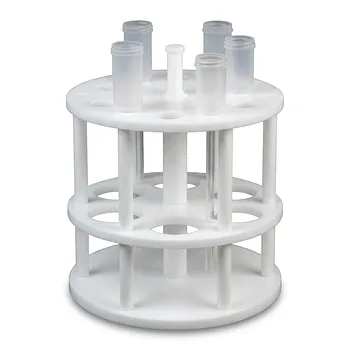
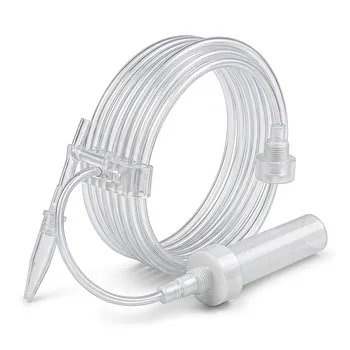
High-purity PFA and PTFE are the gold standard for trace analysis. These fluoropolymers are preferred because they offer near-absolute chemical inertness and an extremely low metal ion leaching background. By eliminating secondary contamination and preventing sample adsorption, these materials ensure the accuracy, sensitivity, and repeatability required for high-purity material synthesis and electrochemical testing.
The primary value of high-purity PFA and PTFE lies in their ability to maintain the chemical integrity of a sample by neither adding impurities through leaching nor removing target elements through surface adsorption. This makes them indispensable for research where even parts-per-billion (ppb) level contamination can invalidate results.
Eliminating Contamination Pathways
The Critical Role of Low Metal Ion Leaching
Unlike standard laboratory glassware, which can leach metal ions into a solution, high-purity PFA and PTFE provide a clean background. This is essential for trace analysis, where the introduction of even minute quantities of environmental impurities can skew data.
Preventing Target Element Adsorption
In many trace-level experiments, target elements tend to "stick" or adsorb onto the walls of traditional containers. PFA labware prevents this surface adsorption, ensuring that the concentration of the sample remains consistent throughout treatment, digestion, and storage.
Superior Chemical Inertness
These materials exhibit near-universal resistance to aggressive reagents, including the strong acids used in sample digestion. Because the containers do not react with the contents, they prevent the introduction of reaction byproducts into the sensitive experimental environment.
Impact on Material Synthesis and Performance
Purity in Photo-Electrocatalytic Synthesis
When synthesizing impurity-sensitive materials, such as NiMoO4@alpha-MnO2, the use of fluoropolymer reaction liners and beakers is vital. Even trace levels of foreign ions can significantly alter the lattice structure or surface chemistry of the resulting catalyst.
Ensuring Data Accuracy and Repeatability
The electrochemical performance of high-purity materials is highly dependent on the precision of the synthesis environment. By using PFA/PTFE, researchers minimize cross-contamination, leading to experimental data that is both rigorous and reproducible across different trials.
Resilience in High-Sensitivity Workflows
From centrifuge tubes to reagent bottles, these materials maintain their integrity in extreme cleanliness environments. Their ability to withstand both chemical stress and thermal variations makes them the preferred choice for complex analytical workflows.
Understanding the Trade-offs
The Factor of High Procurement Costs
High-purity fluoropolymers are significantly more expensive than standard borosilicate glass or disposable plastics. While the initial investment is higher, the cost is justified by the prevention of failed experiments and the ability to achieve high-level academic standards.
Mechanical and Structural Limitations
While PTFE and PFA are thermally stable, they are softer than glass and can be prone to deformation under extreme mechanical stress or vacuum at high temperatures. Users must ensure that the specific vessel geometry and wall thickness are appropriate for their specific pressure and temperature requirements.
Cleaning and Maintenance Requirements
To maintain their "high-purity" status, these containers require specialized cleaning protocols, often involving long-duration acid baths. Failure to follow these protocols can lead to carry-over contamination, negating the material's inherent benefits.
Selecting the Right Labware for Your Workflow
When deciding between materials for your laboratory, consider the specific sensitivity requirements of your project and the nature of your reagents.
- If your primary focus is trace element analysis (ppb levels): Use PFA bottles and beakers to ensure the lowest possible metal ion background and prevent element loss via adsorption.
- If your primary focus is aggressive acid digestion: Select PTFE or PFA reaction liners for their superior chemical resistance and thermal stability under pressure.
- If your primary focus is synthesizing photo-electrocatalysts: Utilize fluoropolymer vessels to prevent the introduction of foreign ions that could poison the catalyst or alter electrochemical performance testing.
By prioritizing material purity at every stage of the experimental process, you safeguard the integrity of your research and ensure your findings are built on a foundation of absolute accuracy.
Summary Table:
| Feature | PFA/PTFE Performance | Benefit for Trace Analysis |
|---|---|---|
| Chemical Inertness | Near-universal resistance to acids/solvents | Prevents secondary contamination from container reactions |
| Metal Ion Leaching | Extremely low background levels | Maintains sample purity at ppb/ppt levels |
| Surface Adsorption | Non-stick, ultra-smooth surface | Prevents loss of target elements to container walls |
| Thermal Stability | High (up to 260°C for PTFE) | Ideal for aggressive acid digestion and hydrothermal synthesis |
| Purity Impact | Eliminates cross-contamination | Ensures experimental repeatability and data integrity |
Elevate Your Research with KINTEK’s High-Performance Fluoropolymers
Don’t let trace contamination compromise your results. Whether you require everyday basic labware—such as beakers, centrifuge tubes, and reagent bottles—or advanced reaction apparatus like custom electrochemical cells, battery testing fixtures, and microwave digestion vessels, KINTEK provides the high-purity PFA and PTFE solutions you need.
Our expertise extends to bespoke CNC fabrication, allowing us to deliver everything from complex non-standard machined parts to high-volume consumables with an absolute focus on material integrity.
Ready to secure the accuracy of your next experiment? Contact KINTEK today to explore our full range of fluoropolymer laboratory supplies and custom-engineered solutions tailored for high-sensitivity workflows.
References
- Hongchao Ma, Xinghui Liu. Fabricating α‐MnO<sub>2</sub>@NiMoO<sub>4</sub> Heterostructure Architecture With Superior Photoelectrocatalytic Water Purification. DOI: 10.1002/ece2.70003
This article is also based on technical information from Kintek Knowledge Base .
Related Products
- High Purity PFA Crucible and Corrosion Resistant PTFE Beaker for Trace Analysis and Custom Laboratory Applications
- Corrosion Resistant PTFE Support with PFA Transparent Reaction Tank and High Purity PFA Sampling Tube for Trace Analysis
- PFA Reaction Jar Corrosion Resistant Wide Mouth PTFE Lab Bottle High Purity Chemical Vessel
- Custom PTFE Petri Dish 200mm High Purity Corrosion Resistant Low Background Laboratory Ware
- High Purity PFA Constant Pressure Condensation Reaction System Acid Resistant High Temperature Customizable Teflon Labware
People Also Ask
- Why are high-purity vessels critical for BiFeO3 synthesis? Ensuring Phase Purity
- Why is the use of high-purity PFA or PTFE labware critical during TiO2 nanoparticle purification? Protect Sample Purity
- Why is high-purity PFA trace analysis labware used for MXene? Ensure Superior Material Integrity in Research
- Why is high-purity PFA labware necessary for Znx@LS-2 zeolite ICP-OES analysis? Ensure Trace-Level Precision
- Why is high-purity PFA trace analysis labware used for sample processing when preparing Mo2CTx@MoS2? Ensure Material Purity