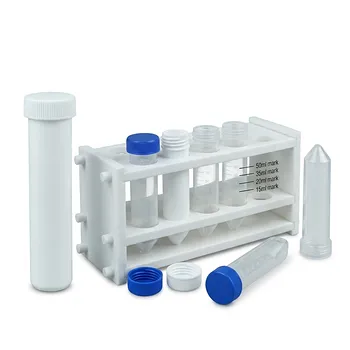
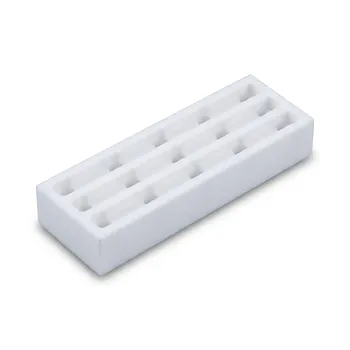
Acid scavengers are needed when a fluororesin or fluoroelastomer can generate HF during high-temperature processing or curing. Materials such as calcium carbonate neutralize the released acid, protecting the coating and underlying substrate. For laboratory containment, however, pure PTFE or PFA is preferred because these fluoropolymers resist HF without relying on reactive fillers that could leach contaminants or change the sample chemistry.
The distinction is formulation stabilization versus chemical containment: acid scavengers deliberately react with HF inside a resin system, while pure PTFE/PFA labware is selected to avoid reacting with HF and to maintain sample purity.
Why Some Fluororesin Formulations Need Acid Scavengers
HF can form during heating or curing
Certain fluororesin and fluoroelastomer systems can release corrosive HF when exposed to elevated processing or curing temperatures. The risk depends on the specific polymer chemistry, additives, curing system, and processing conditions.
The emitted HF can remain within the film, diffuse toward the surface, or attack nearby materials.
HF can damage the film and substrate
Uncontrolled acid release may cause degradation of the coating itself or corrosion of the underlying substrate. It can also contribute to defects, loss of adhesion, discoloration, or premature failure.
This is why the problem is not simply “fluoropolymer versus acid.” A finished formulation may contain components that behave differently from the fluoropolymer backbone.
Scavengers neutralize the acid in place
Acid scavengers such as calcium carbonate are incorporated to react with emitted HF before it can cause substantial damage. In simplified terms, calcium carbonate converts HF into a relatively stable fluoride salt while producing carbon dioxide and water.
The scavenger therefore acts as an internal protective reserve. It does not make the entire formulation chemically identical to pure PTFE or PFA.
Why Pure PTFE and PFA Are Preferred for HF Labware
They resist HF rather than neutralizing it
Pure PTFE and PFA have exceptionally high chemical resistance to HF and many other strong acids. Their value in laboratory equipment is that the container itself generally does not need a reactive acid-neutralizing additive to survive contact.
This is fundamentally different from a filled or stabilized coating, where an additive is intentionally included to consume acid.
They avoid filler-related contamination
Formulation additives, pigments, stabilizers, and mineral fillers can introduce elements or extractable species into a sample. That is unacceptable in trace analysis, digestion, high-purity synthesis, and mass spectrometry workflows.
Pure PTFE/PFA labware minimizes this risk by avoiding unnecessary reactive or inorganic constituents.
They protect against the most vulnerable materials
HF rapidly attacks glass, quartz, and other silica-based materials. It can also corrode or contaminate many metallic components.
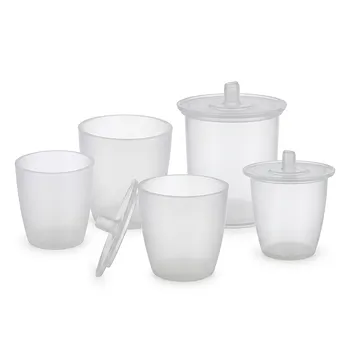
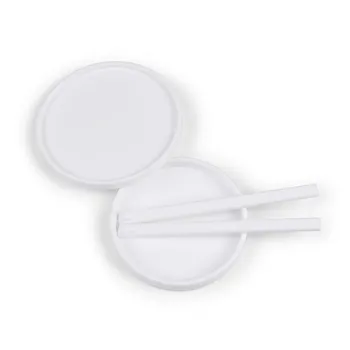
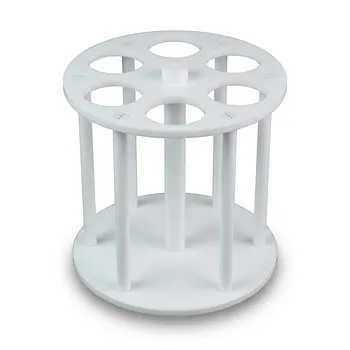
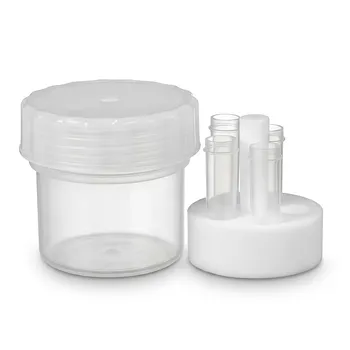
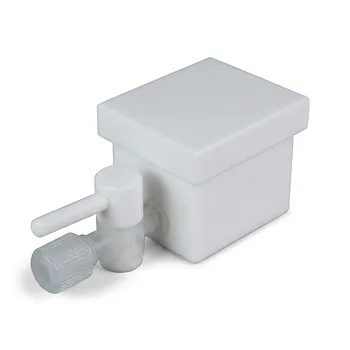
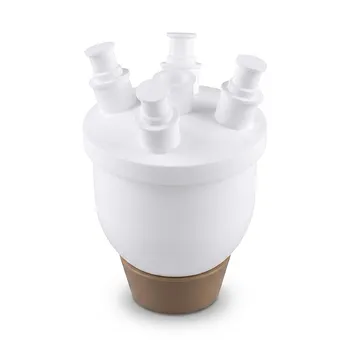
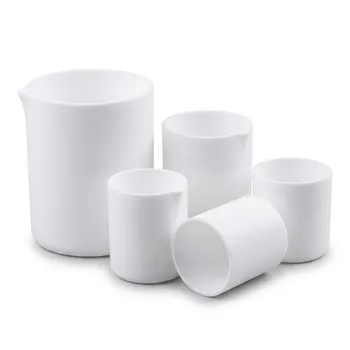
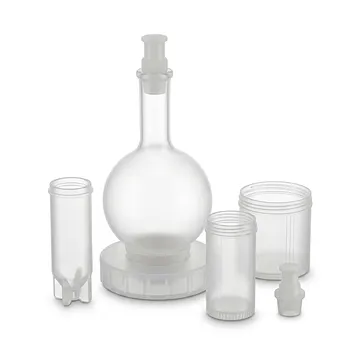
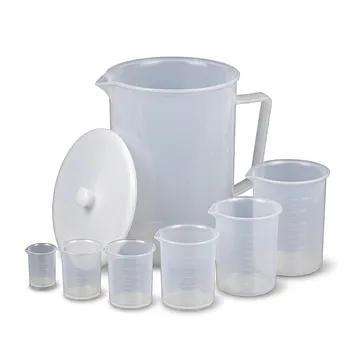
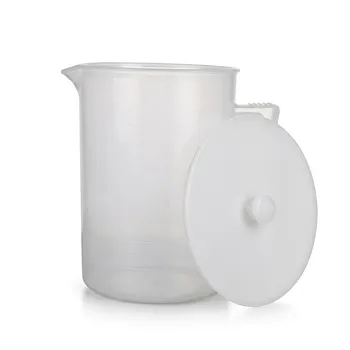
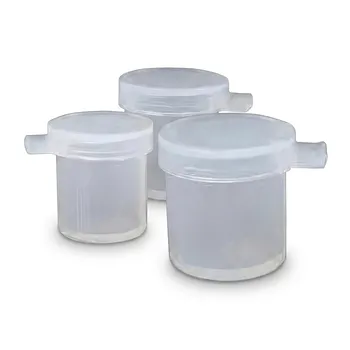
PTFE and PFA crucibles, beakers, bottles, tubing, fittings, and transfer tools provide a practical alternative for vessels and fluid paths exposed to HF or strong fluorinated acid vapors.
They help preserve analytical integrity
High-purity fluoropolymer surfaces have low metal backgrounds and are resistant to chemical erosion. This reduces the chance that container-derived ions will enter the sample or that target analytes will be lost through unwanted surface interactions.
Smooth fluoropolymer fluid paths can also reduce cross-contamination and memory effects between samples.
The Key Difference Between a Scavenger and Pure Labware
A scavenger is an active chemical defense
An acid scavenger is designed to react with HF. Its effectiveness depends on factors such as loading, dispersion, acid-generation rate, temperature, and whether the reaction products remain compatible with the formulation.
Once consumed, its protective capacity is reduced.
PTFE and PFA are passive chemical barriers
Pure PTFE and PFA are selected because they normally do not need to react with HF to provide protection. They function as chemically resistant containment surfaces rather than as acid-neutralizing systems.
This avoids adding a new chemical reaction to the analytical system.
The material choice follows the operating environment
A coating must often balance acid control with adhesion, flexibility, curing behavior, mechanical performance, and cost. A laboratory vessel has a different priority: it must remain stable while contributing as little contamination as possible.
Consequently, an additive that is useful inside a coating may be undesirable in a high-purity sample container.
Understanding the Trade-offs
“Fluoropolymer” does not mean every formulation is equivalent
Commercial fluoropolymer products may contain fillers, pigments, processing aids, or other additives. Their HF resistance and extractables can differ substantially from those of unfilled PTFE or PFA.
For high-purity work, specify the material grade and composition, not merely the word “fluoropolymer.”
Chemical resistance is not unlimited under every condition
PTFE and PFA are highly resistant to HF under many laboratory conditions, but temperature, concentration, exposure time, mechanical stress, permeation, and component design still matter.
Compatibility should be confirmed for the actual process, especially when heated, pressurized, or sealed systems are involved.
Resistant labware does not eliminate HF hazards
PTFE or PFA containers prevent the vessel from being rapidly attacked; they do not make HF safe. HF remains highly hazardous, and appropriate ventilation, compatible secondary containment, protective equipment, operating procedures, and emergency controls are essential.
Acid scavengers can introduce their own consequences
A calcium-containing scavenger, for example, may produce fluoride salts or other residues that affect film properties or extraction behavior. Scavengers should therefore be evaluated for compatibility with the resin, substrate, curing schedule, and intended service life.
How to Apply This to Your Project
The correct choice depends on whether you are stabilizing a material during manufacture or containing an aggressive reagent during use.
- If your primary focus is fluororesin or fluoroelastomer processing: Determine whether the formulation can release HF at processing or curing temperature, then evaluate an acid scavenger such as calcium carbonate for neutralization capacity and compatibility.
- If your primary focus is HF containment: Use appropriately specified, unfilled PTFE or PFA for vessels, tubing, fittings, and transfer components that contact HF or its vapors.
- If your primary focus is trace analysis or high-purity synthesis: Prefer pure, low-background PTFE/PFA components to minimize metal-ion leaching, extractables, adsorption, and cross-contamination.
- If your primary focus is equipment safety: Eliminate glass and quartz from HF-contact paths, verify the complete system’s chemical and temperature compatibility, and maintain dedicated HF handling controls.
Use scavengers to control HF generated within a formulation, and use pure PTFE/PFA to contain HF while preserving chemical and analytical integrity.
Summary Table:
| Aspect | Acid Scavengers in Fluororesins | Pure PTFE/PFA Labware |
|---|---|---|
| Purpose | Neutralize HF generated during processing | Contain HF without reaction |
| Mechanism | Active chemical reaction with HF | Passive chemical barrier |
| Application | Coatings, seals, gaskets | Labware, tubing, fittings |
| Purity Impact | Possible contamination | Minimal contamination |
| Best For | Formulation stability | Analytical integrity |
Upgrade your lab with high-purity PTFE/PFA vessels, tubing, and custom parts—resistant to HF and free from contaminants. Our experts can help you select the right material for your application. Contact us today to ensure safety and accuracy in your HF handling processes. Get in touch with our team to request a quote or discuss your needs.
Related Products
- High Purity PFA Crucible and Corrosion Resistant PTFE Beaker for Trace Analysis and Custom Laboratory Applications
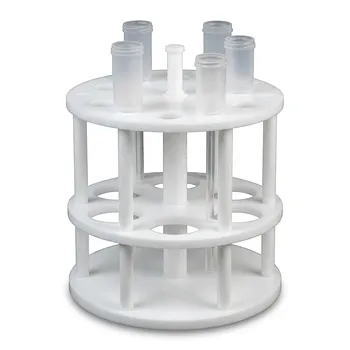
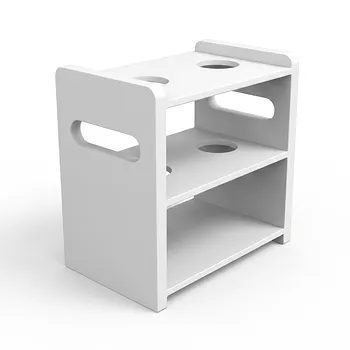
- Custom PFA Microcolumn Racks and PTFE Machined Low Background Corrosion Resistant Laboratory Fixtures
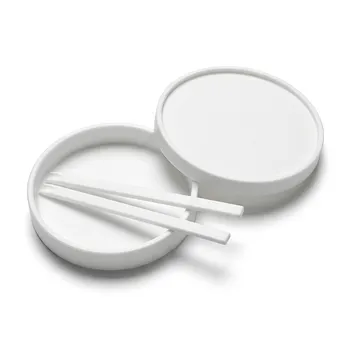
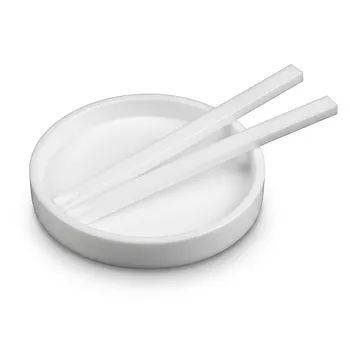
- Custom Polytetrafluoroethylene PTFE Petri Dishes 60mm Corrosion Resistant Low Background Labware
- Custom PTFE Petri Dishes Corrosion Resistant High Purity Low Background Labware
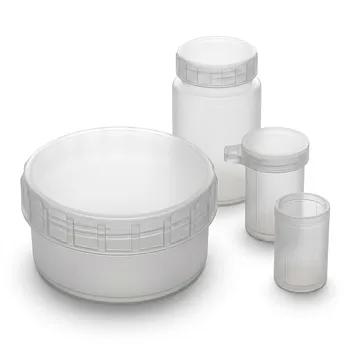
- PFA Reaction Jar Corrosion Resistant Wide Mouth PTFE Lab Bottle High Purity Chemical Vessel
People Also Ask
- Why are high-purity vessels critical for BiFeO3 synthesis? Ensuring Phase Purity
- Why is the use of high-purity PFA or PTFE labware critical during TiO2 nanoparticle purification? Protect Sample Purity
- Why is high-purity PFA trace analysis labware recommended for trace element detection? Achieve Gold Standard PPT Accuracy
- Why is high-purity PFA trace analysis labware used for MXene? Ensure Superior Material Integrity in Research
- Why is high-purity PFA labware necessary for Znx@LS-2 zeolite ICP-OES analysis? Ensure Trace-Level Precision