Use chemically compatible, temperature-rated equipment—not ordinary plasticware—for hot PVDF solutions in NMP, DMF, or DMSO. For solution casting above approximately 120 °C, PFA or PTFE vessels, transfer components, and accessories are preferred because they minimize solvent absorption, degradation, and trace contamination. The setup must also provide precise temperature control, effective ventilation, safe handling of hot high-boiling solvents, and a casting surface compatible with the final film.
Core takeaway: The key requirement is a complete, temperature-compatible system: PFA/PTFE wetted parts, controlled heating and stirring, suitable seals and tubing, fume-hood operation, and safe solvent evaporation. Do not assume that every fluoropolymer—or every plastic component—is suitable simply because it is chemically resistant at room temperature.
Why Equipment Selection Matters
Strong polar solvents challenge ordinary labware
NMP, DMF, and DMSO are polar aprotic solvents that can interact with common plastics, elastomers, adhesives, and coatings. At elevated temperatures, these interactions can increase solvent absorption, swelling, softening, leaching, or mechanical failure.
These effects can alter the PVDF solution and introduce contaminants that affect film morphology, crystallinity, electrical properties, or reproducibility.
Temperature increases compatibility risk
A container that performs adequately at room temperature may not remain dimensionally stable during prolonged heating. The supplementary data indicate that fluoropolymer components can show greater solvent absorption and reduced mechanical retention as temperature and exposure time increase.
Equipment should therefore be selected using its actual temperature, solvent, exposure duration, and mechanical-load limits, rather than a general chemical-resistance label.
Recommended Wetted Materials
Prefer PFA or PTFE for vessels
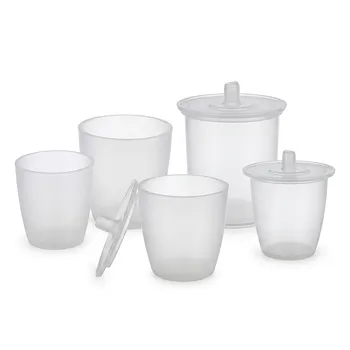
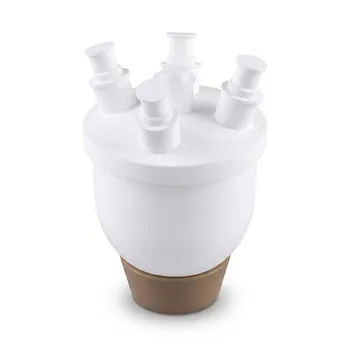
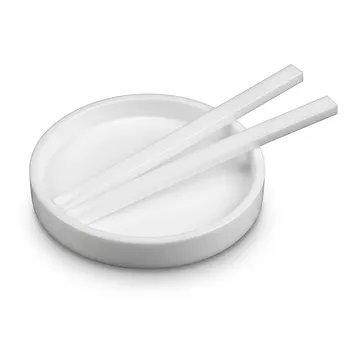
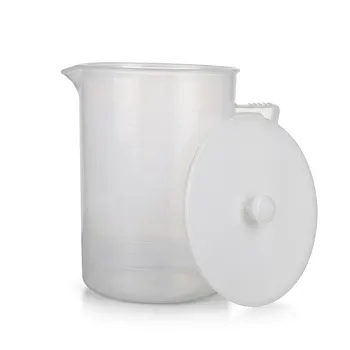
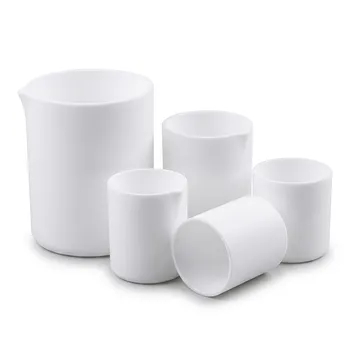
High-purity PFA or PTFE beakers, reaction vessels, evaporating dishes, reagent bottles, and mixing accessories are suitable choices for hot PVDF solutions. These materials provide strong resistance to NMP, DMF, and DMSO over broad temperature ranges.
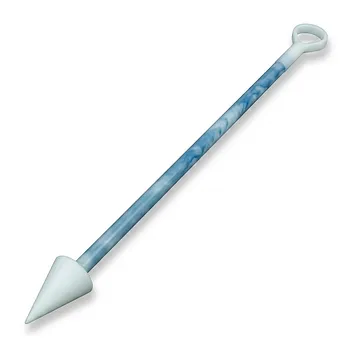
PFA is often advantageous where transparency, dimensional consistency, or heat-forming flexibility is useful. PTFE is useful for stir bars, spatulas, liners, and other components requiring high chemical resistance.
Use compatible tubing and fittings
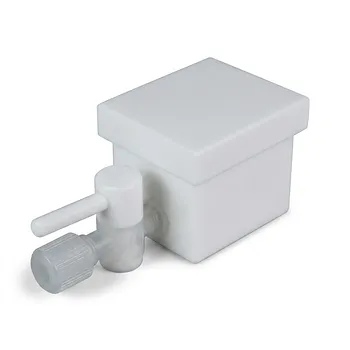
Any tubing, valves, fittings, or transfer lines that contact the solution should be specified for the solvent and operating temperature. PFA or PTFE tubing and fittings are appropriate starting choices for hot-solvent transfer.
Do not overlook small wetted components such as pump heads, valve seats, O-rings, gaskets, syringe plungers, and adhesive-bonded connections. These parts can become the primary source of contamination or leakage.
Do not use PVDF as the solvent-contact material
The process polymer is PVDF, but that does not make PVDF labware suitable for this application. The supplied compatibility information rates PVDF as not recommended for aggressive polar aprotic solvents such as DMF and DMAc because swelling, softening, or matrix degradation may occur.
Use fully fluorinated PTFE or PFA instead of PVDF for vessels and fluid-handling components exposed to these solvents.
Treat glass as application-dependent
Borosilicate glass is commonly used with many laboratory solvents, but it is not automatically the best choice for every high-purity PVDF process. For trace-sensitive work, glass can contribute particulate or ionic contamination, especially if surfaces are damaged, poorly cleaned, or exposed to aggressive conditions.
If glass is used, verify its compatibility, inspect it for scratches or surface damage, clean it rigorously, and determine whether possible trace contamination is acceptable. For the lowest-contamination process, high-purity PFA or PTFE is the more conservative selection.
Heating and Mixing Equipment
Use controlled heating rather than direct flame
Use a temperature-controlled hotplate, heating mantle, or jacketed vessel appropriate for the selected container. The equipment should provide uniform heating and prevent localized overheating of the solvent or polymer.
A direct flame is inappropriate because NMP, DMF, and DMSO are combustible organic solvents and can produce hazardous vapors when heated.
Monitor the actual solution temperature
Place a calibrated temperature probe where it measures the solution temperature, not merely the hotplate surface or vessel exterior. A temperature controller or independent over-temperature cutoff is strongly recommended.
The reference process may require temperatures exceeding 120 °C, but the exact temperature should be established for the PVDF grade, concentration, molecular weight, and desired crystalline phase. Avoid unnecessary thermal exposure.
Use solvent-compatible stirring components
A PTFE-coated stir bar or an overhead mixer with solvent-compatible wetted parts is generally preferable. Mixing should be strong enough to eliminate concentration gradients without introducing excessive air, splashing, or bubbles.
For viscous PVDF solutions, an overhead stirrer may provide better control than a magnetic stirrer. Confirm that the shaft, bearing, seal, and coupling are rated for both the solvent and operating temperature.
Ventilation and Solvent-Handling Controls
Operate in a functioning fume hood
Heating NMP, DMF, or DMSO should be performed in a properly functioning chemical fume hood or an equivalent approved local-exhaust enclosure. The hood reduces exposure to solvent vapor and helps control emissions during dissolution and casting.
DMF and NMP require particular occupational-hygiene attention because repeated exposure can be harmful. DMSO can increase dermal absorption of substances present on the skin, so contaminated gloves must be replaced immediately.
Avoid unplanned sealed heating
Do not heat a tightly sealed vessel unless it is specifically engineered and rated for the resulting pressure. High-boiling solvents can still generate vapor pressure, and casting mixtures may release gas or solvent vapor during heating.
Use a loose-fitting cover, reflux-compatible arrangement, or controlled venting method where appropriate. The design must prevent contamination while avoiding pressure buildup.
Provide secondary containment
Place the heated vessel in a tray or other secondary-containment system sized for the solvent volume. This is especially important when using flexible tubing, elevated vessels, or vacuum-assisted transfer.
Keep the setup stable and route tubing away from hot surfaces, rotating shafts, and vessel edges.
Casting and Drying Equipment
Select a clean, compatible casting surface
The substrate should be chosen based on adhesion, release behavior, surface roughness, and solvent compatibility. Suitable options may include carefully prepared glass, metal, or fluoropolymer-lined surfaces, depending on the required film properties.
The substrate must remain flat and dimensionally stable at the casting temperature. Surface contamination or poor leveling can produce thickness variation, defects, or unwanted crystallinity gradients.
Control evaporation conditions
Use a controlled drying chamber, oven, or vacuum oven that is approved for the solvent involved. NMP, DMF, and DMSO may require extended drying because of their high boiling points and strong retention in polymer films.
Do not place solvent-laden samples in equipment that recirculates vapors into occupied laboratory areas unless it is specifically designed for solvent use. Exhaust and solvent-recovery provisions should be evaluated before scaling up.
Control atmosphere when film quality requires it
A covered or enclosed casting setup can reduce dust deposition and uncontrolled evaporation. However, the enclosure must not become a pressure vessel, and solvent vapor must be safely exhausted or condensed.
For reproducible morphology, control the casting temperature, evaporation rate, film thickness, and drying schedule—not merely the initial dissolution temperature.
Equipment Qualification and Cleaning
Check the complete assembly
Compatibility must be assessed for every material contacting the solution, including:
- Vessels and liners
- Stir bars and shafts
- Tubing and fittings
- Gaskets, O-rings, and valve seats
- Thermometer sheaths and probe coatings
- Pump components
- Casting substrates
- Cleaning tools and storage containers
A chemically resistant vessel can still fail because of an incompatible gasket or tubing connection.
Consider duration as well as temperature
The supplementary compatibility data show that PFA can retain strong mechanical performance during extended exposure to DMF and DMSO at elevated temperatures. However, compatibility data are test-specific and should not be interpreted as unlimited approval for every geometry, pressure, concentration, or solvent mixture.
For critical processes, conduct a small-scale exposure test and inspect for discoloration, swelling, mass change, cracking, loss of flexibility, or contamination before committing valuable PVDF material.
Clean without introducing residues
Use a validated cleaning procedure appropriate for the vessel material and solvent history. Residual detergents, plasticizers, salts, and particles can affect PVDF nucleation and film properties.
After cleaning, rinse with a compatible high-purity solvent if appropriate, dry thoroughly, and protect the equipment from dust before use.
Understanding the Trade-offs
PTFE and PFA are preferred, but not invulnerable
PTFE and PFA provide excellent resistance to these solvents, but elevated temperature can still affect mechanical strength, dimensional stability, and long-term service life. PFA data cited for DMF and DMSO are favorable at high temperatures, but actual performance depends on exposure conditions and component design.
Flexible tubing, thin walls, threaded fittings, and loaded components require more conservative limits than an unstressed laboratory beaker.
High-purity materials may increase cost
PFA and high-purity PTFE equipment generally costs more than standard glass or commodity plasticware. The cost is justified when contamination, film reproducibility, or equipment failure is more expensive than the initial hardware.
For less demanding work, properly verified glass may be acceptable. The decision should be based on purity requirements and documented compatibility, not material preference alone.
“Fluoropolymer” is not a sufficient specification
Different fluoropolymers have different solvent and temperature behavior. PVDF, PTFE, PFA, ECTFE, and other fluorinated materials should not be treated as interchangeable.
Specify the exact material grade, temperature limit, solvent exposure, duration, and mechanical conditions for each component.
Heat and solvent hazards remain
Chemical compatibility does not eliminate hazards from hot surfaces, combustible solvents, toxic exposure, splashes, or vapor release. Use appropriate laboratory PPE, including solvent-resistant gloves selected for the specific solvent, eye protection, protective clothing, and thermal protection when handling hot equipment.
Consult current safety data sheets and institutional procedures before operation.
Making the Right Choice for Your Goal
Choose the setup according to the process priority:
- If your primary focus is high-purity PVDF films: Use high-purity PFA or PTFE for all wetted components, minimize elastomers and adhesives, and validate the cleaning procedure.
- If your primary focus is reliable high-temperature dissolution: Use a temperature-controlled, stirred PFA/PTFE vessel with an independent temperature probe and over-temperature protection.
- If your primary focus is safe solvent handling: Work in a fume hood, avoid unplanned sealed heating, provide secondary containment, and use solvent-compatible tubing, fittings, and waste containers.
- If your primary focus is reproducible film morphology: Control solution temperature, mixing, casting-substrate condition, evaporation rate, and final drying rather than relying on solvent compatibility alone.
- If your primary focus is cost control: Use verified borosilicate glass where purity requirements permit, but retain PFA/PTFE for high-risk wetted parts, hot transfer lines, seals, and components exposed for long durations.
A properly qualified PFA/PTFE-based, temperature-controlled, ventilated system provides the strongest foundation for clean, reproducible PVDF solution casting.
Summary Table:
| Equipment Category | Recommended Materials | Key Considerations |
|---|---|---|
| Vessels & Containers | PFA or PTFE beakers, reaction vessels | Avoid PVDF; ensure temperature rating; minimize contamination |
| Transfer Components | PFA/PTFE tubing, fittings, valves | Check seals and O-rings; rated for high temp & solvent |
| Heating & Stirring | Temperature-controlled hotplate, PTFE-coated stir bars | Monitor solution temp; avoid direct flame; use solvent-compatible stirrers |
| Safety & Ventilation | Fume hood, secondary containment | Prevent vapor exposure; avoid sealed heating; use proper PPE |
| Casting & Drying | Clean substrates (glass/metal/PFA-lined), controlled oven | Control evaporation rate; ensure solvent-compatible exhaust |
| Cleaning & Qualification | Validated cleaning, small-scale tests | Inspect for swelling/cracking; avoid residues affecting film quality |
Ensure optimal PVDF film quality with our high-purity PFA/PTFE labware. From beakers to custom CNC machined components, KINTEK provides the chemically resistant, temperature-rated equipment you need for hot solvent processes. Contact us today to discuss your requirements and get a tailored solution.
Related Products
- High Purity PFA Crucible and Corrosion Resistant PTFE Beaker for Trace Analysis and Custom Laboratory Applications
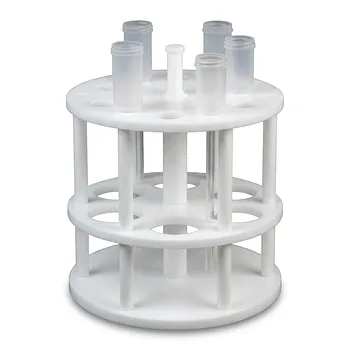
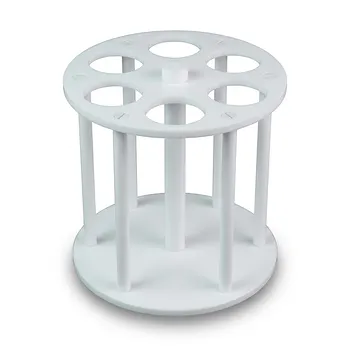
- Custom PFA Microcolumn Racks and PTFE Machined Low Background Corrosion Resistant Laboratory Fixtures
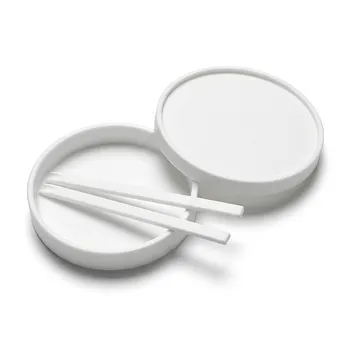
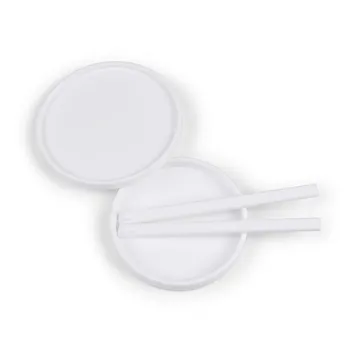
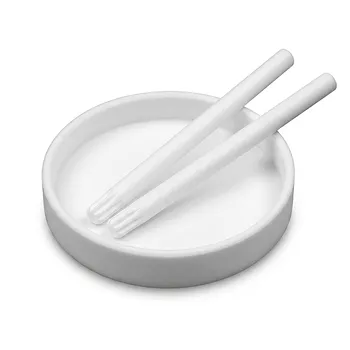
- Custom Polytetrafluoroethylene PTFE Petri Dishes 60mm Corrosion Resistant Low Background Labware
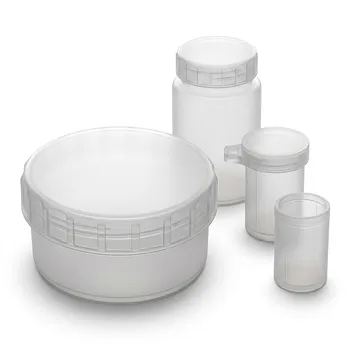
- PFA Reaction Jar Corrosion Resistant Wide Mouth PTFE Lab Bottle High Purity Chemical Vessel
- Custom PTFE Petri Dish 30mm Corrosion Resistant Low Background Non Leaching Laboratory Ware
People Also Ask
- Why are high-purity vessels critical for BiFeO3 synthesis? Ensuring Phase Purity
- Why is the use of high-purity PFA or PTFE labware critical during TiO2 nanoparticle purification? Protect Sample Purity
- Why is high-purity PFA labware necessary for Znx@LS-2 zeolite ICP-OES analysis? Ensure Trace-Level Precision
- Why is high-purity PFA trace analysis labware used for MXene? Ensure Superior Material Integrity in Research
- What key material characteristics make PTFE and PFA suitable for high-purity laboratory labware, trace analysis containers, and medical microporous tubing? Discover the essential properties that ensure purity.