During TFE production, pyrolysis of chlorodifluoromethane (CHClF₂) can form several unwanted by-products. These include hexafluoropropylene (HFP), perfluorocyclobutane, toxic perfluoroisobutylene, and other chlorofluorocarbons. Excessive conversion can also cause carbon fouling inside pyrolysis tubes, while residual impurities carried into polymerization may produce structural defects, branching, and extractables in PTFE or PFA labware.
The central issue is impurity control: stable pyrolysis conditions and effective purification are necessary to produce TFE that can be converted into fluoropolymers with low defect levels, low leachables, and minimal trace-metal background.
What Happens During TFE Monomer Pyrolysis
Primary reaction and competing pathways
Commercial TFE is produced by the high-temperature pyrolysis of chlorodifluoromethane, or HCFC-22. The desired reaction generates TFE, but the severe thermal conditions also allow secondary reactions involving radical fragments and intermediate fluorocarbon species.
These competing pathways generate both high-boiling organic impurities and lighter chlorofluorocarbon by-products that must be separated from the TFE stream.
HFP and cyclic fluorocarbon formation
Important side products include hexafluoropropylene (HFP) and perfluorocyclobutane. Their formation becomes more significant when temperature, residence time, dilution, or conversion moves away from the preferred operating range.
HFP is particularly undesirable because it can participate in downstream polymer chemistry and alter the molecular structure of fluoropolymers. Cyclic and high-boiling fluorocarbon compounds can also complicate purification and increase the impurity burden entering polymerization.
Formation of toxic perfluoroisobutylene
Pyrolysis can also produce perfluoroisobutylene, a highly toxic fluorocarbon by-product. Its presence creates both a process-safety concern and a purification requirement.
This compound cannot be treated as an ordinary trace impurity. Production systems require appropriate containment, scrubbing, monitoring, and controlled handling of off-gas and separated by-products.
Other chlorofluorocarbon impurities
The pyrolysis product is not simply TFE plus one identifiable contaminant. It may contain various chlorofluorocarbons and other secondary fluorinated compounds produced by incomplete conversion, recombination, or further degradation of reactive intermediates.
The practical consequence is that downstream purification is part of monomer quality control, not merely a waste-treatment step.
Why Process Conditions Must Be Tightly Controlled
Temperature controls selectivity
A commonly cited operating window is approximately 700–900°C, with commercial operation often concentrated near 850–900°C. The correct temperature depends on reactor design, dilution, feed composition, and residence time.
If the temperature is too low, conversion and TFE yield may fall. If it is too high, secondary reactions and decomposition become more prominent, increasing HFP, other fluorocarbon impurities, and carbon deposition.
Pressure and dilution affect reaction behavior
The process is typically operated at relatively low pressure, around 0.5–1.2 atm, with steam used to dilute the reactants and moderate the reaction environment. Supplementary process information identifies steam-to-reactant ratios in the approximate range of 7:1 to 10:1.
These conditions help limit uncontrolled interactions among reactive intermediates. Deviations can increase by-product formation, reduce selectivity, or make heat removal more difficult.
Short residence time limits secondary reactions
The pyrolysis contact time should generally remain below approximately two seconds. Once the desired cracking reaction has occurred, continued exposure to high temperature gives reactive species more opportunity to recombine or decompose.
Short contact time therefore helps preserve TFE selectivity and reduces the formation of high-boiling impurities and HFP.
Extreme conversion causes carbon fouling
Pushing conversion beyond roughly 94% can cause carbon fouling inside the pyrolysis tubes. The drive for maximum single-pass conversion can therefore become counterproductive.
Fouling changes heat transfer, narrows flow passages, increases pressure drop, and creates less predictable reactor conditions. Those changes can further accelerate selectivity loss and make product quality harder to maintain.
How Monomer Impurities Affect Fluoropolymer Labware
Impurities can alter polymer structure
TFE purity directly affects the polymerization step used to make PTFE and PFA. Reactive impurities may act as chain-transfer or branching influences, or otherwise disturb the intended polymer-growth process.
The resulting resin may contain unwanted branching, structural micro-defects, or nonuniform molecular architecture. These defects can affect mechanical consistency, thermal performance, and resistance to aggressive chemicals.
Defects matter in trace-analysis equipment
Trace-analysis labware is not judged only by whether it appears clean or remains intact. Its internal surface must also avoid releasing contaminants into samples and reagents.
For components such as ICP-MS vessels, microwave digestion vessels, tubing, valves, reaction vessels, and wash or cleaning tanks, small changes in polymer quality can increase extractables, adsorption sites, or leachable background.
Chemical impurities increase background signals
Residual fluorocarbon-derived impurities, polymerization residues, initiator fragments, surfactants, or trace metals can migrate from the polymer into the process fluid. In ultra-trace elemental analysis, even very small releases can be interpreted as analyte.
This can produce false elevated readings, higher blank values, poor detection limits, and apparent cross-contamination between samples.
Surface integrity supports aggressive cleaning
High-quality PTFE and PFA provide strong resistance to digestion acids and other aggressive reagents. That performance depends on more than the nominal polymer designation; it also depends on resin purity, processing quality, and the absence of defects or contaminating additives.
A chemically resistant but contaminated component can still compromise an analytical workflow. Chemical inertness and low extractables must be achieved together.
The Link Between Pyrolysis Control and Final Part Quality
Control must continue beyond the pyrolysis reactor
Stable pyrolysis is the first control point, not the entire quality system. The TFE stream must be rigorously purified and scrubbed before polymerization so that secondary fluorocarbons and other contaminants do not enter the resin.
Polymerization also requires control of water quality, initiators, telogenic agents, surfactants, and metallic contamination. Ultra-pure water and clean process equipment help prevent non-pyrolysis contaminants from undermining the final material.
Polymerization conditions add their own risks
TFE has a strong tendency toward energetic self-decomposition under unfavorable conditions. Polymerization also releases substantial heat, and PTFE’s thermal insulation can promote localized hot spots.
Accordingly, low-temperature and pressure operation, inert-gas blanketing, polymerization control agents, rupture protection, and flame-arresting measures are important for safe production. These safeguards also help prevent thermally damaged or contaminated resin from entering the labware manufacturing process.
Surfactant residues can become extractables
In PTFE emulsion polymerization, historical fluorinated surfactants such as APFO/PFOA could remain in the polymer or dispersion. Residual surfactants and organic materials may leach into samples and reagents.
Modern laboratory-grade materials may use alternative surfactants or suspension/granular polymerization approaches to reduce these residues. This is especially important for ICP-MS digestion tubes, high-purity vessels, and other ultra-trace applications.
Understanding the Trade-offs
Maximum conversion is not always best
Increasing conversion can improve apparent TFE yield, but excessive conversion may promote carbon fouling and unstable reactor operation. A slightly less aggressive conversion target can provide better long-term selectivity, maintainability, and product consistency.
The correct objective is therefore controlled yield with acceptable impurity levels, not maximum conversion at any cost.
Higher temperature can improve throughput but reduce selectivity
Higher temperature can support rapid pyrolysis and high conversion. It can also increase secondary reactions, thermal degradation, and fouling if heat transfer or residence time is not tightly managed.
Temperature must be evaluated together with pressure, steam dilution, and contact time rather than optimized in isolation.
Appearance is not a sufficient quality test
A machined PTFE or PFA component may look smooth and clean while still releasing trace contaminants. Visual inspection cannot establish low-metal background, low organic extractables, or suitability for ultra-trace analysis.
Material qualification should therefore include appropriate extractables, leachables, blank, and trace-metal testing for the intended application.
Purity control does not eliminate all contamination risks
Even high-purity TFE cannot compensate for contaminated reactors, poor-quality water, metallic equipment contact, uncontrolled initiator residues, or unsuitable surfactants downstream.
The final quality of fluoropolymer labware is determined by the complete chain: pyrolysis, purification, polymerization, processing, machining, cleaning, and packaging.
Making the Right Choice for Your Goal
The most reliable approach is to treat monomer purity and labware cleanliness as one connected process-control problem.
- If your primary focus is pyrolysis yield: Operate within the validated temperature, pressure, dilution, and sub-two-second contact-time window rather than pursuing conversion beyond the point where carbon fouling begins.
- If your primary focus is TFE purity: Control secondary reactions, remove HFP, perfluorocyclobutane, perfluoroisobutylene, chlorofluorocarbons, and high-boiling impurities before polymerization.
- If your primary focus is fluoropolymer resin quality: Control pyrolysis-derived impurities together with water quality, initiator residues, telogenic agents, surfactants, and trace metals.
- If your primary focus is trace-analysis labware: Specify low-extractable PTFE or PFA and verify low trace-metal backgrounds, minimal leaching, and resistance to the actual digestion and cleaning chemicals.
- If your primary focus is process safety: Treat TFE and its pyrolysis products as energetically hazardous materials requiring containment, off-gas scrubbing, thermal control, pressure protection, and appropriate emergency safeguards.
Tight process control converts a hazardous, side-reaction-prone monomer process into the consistent high-purity resin needed for reliable fluoropolymer trace-analysis labware.
Summary Table:
| Side Reaction | By-products | Impact on Quality | Control Strategy |
|---|---|---|---|
| Secondary pyrolysis | HFP, perfluorocyclobutane | Alters polymer structure, branching | Maintain temp 700–900°C, short contact time |
| Formation of PFIB | Toxic perfluoroisobutylene | Safety hazard, purification burden | Use containment, scrubbing, monitoring |
| Excessive conversion | Carbon fouling in pyrolysis tubes | Heat transfer issues, reduces selectivity | Keep conversion below ~94%, use steam dilution |
| Chlorofluorocarbon formation | Various CFCs | Increase impurity burden | Optimize dilution ratio, purification stages |
Ensure your trace-analysis labware meets the highest purity standards. At KINTEK, we specialize in manufacturing PTFE and PFA products with stringent process control from monomer to finished part. Our labware includes beakers, digestion vessels, tubing, valves, and custom CNC-machined components. We support distributors with OEM/ODM services, certifications, and reliable supply. Contact us today to discuss your requirements and experience the KINTEK difference. Get in touch now.
Related Products
- High Purity PFA Crucible and Corrosion Resistant PTFE Beaker for Trace Analysis and Custom Laboratory Applications
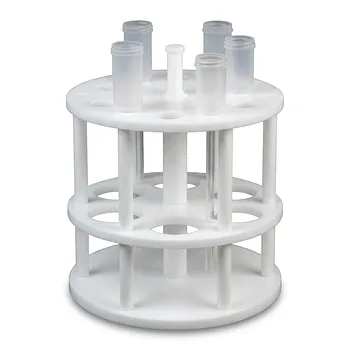
- Custom PFA Microcolumn Racks and PTFE Machined Low Background Corrosion Resistant Laboratory Fixtures
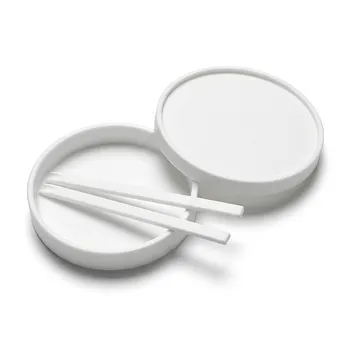
- Custom Polytetrafluoroethylene PTFE Petri Dishes 60mm Corrosion Resistant Low Background Labware
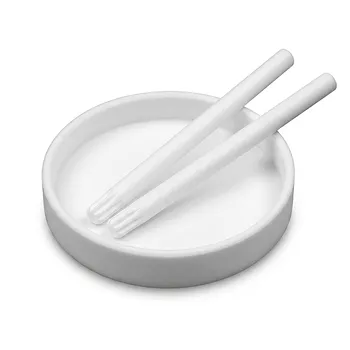
- Custom PTFE Petri Dishes Corrosion Resistant High Purity Low Background Labware
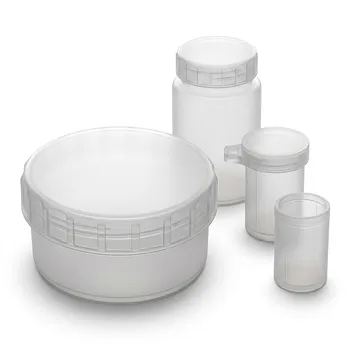
- PFA Reaction Jar Corrosion Resistant Wide Mouth PTFE Lab Bottle High Purity Chemical Vessel
People Also Ask
- Why are high-purity vessels critical for BiFeO3 synthesis? Ensuring Phase Purity
- Why is the use of high-purity PFA or PTFE labware critical during TiO2 nanoparticle purification? Protect Sample Purity
- Why is high-purity PFA labware necessary for Znx@LS-2 zeolite ICP-OES analysis? Ensure Trace-Level Precision
- Why is high-purity PFA trace analysis labware used for MXene? Ensure Superior Material Integrity in Research
- What key material characteristics make PTFE and PFA suitable for high-purity laboratory labware, trace analysis containers, and medical microporous tubing? Discover the essential properties that ensure purity.