Knowledge PTFE(Teflon) Labware What chemical reaction process and thermodynamic conditions are utilized to synthesize tetrafluoroethylene (TFE) monomer, the primary precursor for PTFE laboratory products? Discover the key reaction conditions for high-yield TFE production.
Author avatar

Tech Team · Kintek

Updated 3 months ago

What chemical reaction process and thermodynamic conditions are utilized to synthesize tetrafluoroethylene (TFE) monomer, the primary precursor for PTFE laboratory products? Discover the key reaction conditions for high-yield TFE production.


Tetrafluoroethylene (TFE) is produced primarily by high-temperature gas-phase pyrolysis of chlorodifluoromethane (CHClF₂, HCFC-22). At approximately 700–900°C, CHClF₂ undergoes endothermic dehydrochlorination to form difluorocarbene intermediates, which rapidly combine to produce TFE and hydrogen chloride:

[ 2,\mathrm{CHClF_2} \rightleftharpoons \mathrm{CF_2{=}CF_2} + 2,\mathrm{HCl} ]

The reaction is favored by low reactant partial pressure, dilution with steam or nitrogen, and rapid cooling of the product gas. Industrial TFE yields can approach 90% under appropriately controlled conditions.

Core takeaway: TFE synthesis is a high-temperature, endothermic pyrolysis process in which chlorodifluoromethane is converted to TFE and HCl. Reduced gas-phase partial pressures and rapid quenching help shift the equilibrium toward TFE while limiting unwanted secondary reactions.

How the TFE Precursor Is Prepared

Fluorspar Provides the Fluorine Source

The industrial chain commonly begins with fluorspar, or calcium fluoride:

[ \mathrm{CaF_2 + H_2SO_4 \rightarrow 2HF + CaSO_4} ]

This reaction produces hydrogen fluoride, the principal fluorine-containing feedstock used to manufacture fluorinated intermediates.

HF and Chloroform Produce CHClF₂

Hydrogen fluoride can be reacted with chloroform over an antimony trifluoride-based catalyst to produce chlorodifluoromethane:

[ \mathrm{CHCl_3 + 2HF \rightarrow CHClF_2 + 2HCl} ]

The exact industrial chemistry may use related fluorination catalysts and process configurations, but the important point is that CHClF₂ is the direct pyrolysis feedstock for TFE.

The Main Chemical Reaction

Endothermic Dehydrochlorination

In the pyrolysis reactor, CHClF₂ is heated until carbon-hydrogen and carbon-chlorine bonds undergo thermal cleavage. The simplified net reaction is:

[ 2,\mathrm{CHClF_2 \rightarrow CF_2{=}CF_2 + 2HCl} ]

The reaction is often described as proceeding through difluorocarbene (:CF₂) intermediates. These highly reactive species combine to form the carbon-carbon double bond in tetrafluoroethylene.

TFE Is the Desired Monomer

TFE has the molecular formula C₂F₄ and contains a carbon-carbon double bond:

[ \mathrm{CF_2{=}CF_2} ]

That double bond allows TFE molecules to polymerize into PTFE. The quality of the TFE feed directly affects PTFE molecular weight, structural integrity, and impurity levels.

Thermodynamic Conditions That Favor TFE

High Temperature Supplies Reaction Energy

The pyrolysis is strongly endothermic, so the reactor must operate at high temperature. Typical conditions are approximately 700–900°C, equivalent to about 1,290–1,650°F.

Temperatures near the lower end may reduce conversion, while excessively severe conditions can increase decomposition and unwanted byproducts. The practical operating temperature is therefore a balance between conversion, selectivity, reactor materials, and downstream separation requirements.

Reduced Partial Pressure Favors the Gas Products

The reaction converts two moles of gaseous CHClF₂ into three moles of gaseous products: one mole of TFE and two moles of HCl. Because the product side has the greater gas mole volume, lowering total pressure or reducing reactant partial pressure favors TFE formation under Le Chatelier’s principle.

This can be achieved through:

  • Operation at reduced pressure.
  • Dilution with superheated steam.
  • Dilution with an inert gas such as nitrogen.

Dilution also helps moderate the reactor temperature and reduce contact between reactive intermediates, which can limit secondary reactions.

Rapid Quenching Preserves the Product

After the desired conversion is reached, the hot product stream is cooled rapidly. This quench limits further reactions of TFE and reactive fluorocarbon intermediates at high temperature.

The cooled gas is then processed to remove HCl, unreacted feedstock, and fluorocarbon byproducts before final purification.

How the Product Is Purified

Acidic Products Must Be Removed

The crude pyrolysis gas contains TFE along with HCl, unreacted CHClF₂, and other fluorinated compounds. HCl is corrosive and must be separated from the TFE stream.

Process equipment must therefore tolerate highly corrosive environments, particularly where residual HCl or HF may be present. Specialized nickel-based or otherwise corrosion-resistant materials are used in relevant reactor and separation equipment.

Distillation Produces High-Purity TFE

Cooling, absorption or scrubbing, drying, and fractional distillation are used to purify the TFE. The monomer may ultimately be compressed or liquefied for controlled storage and transfer.

For high-molecular-weight PTFE production, trace impurities are especially important. Hydrogen-, chlorine-, and chain-transfer-containing compounds can interfere with polymerization and reduce the attainable polymer molecular weight.

Understanding the Trade-offs

Higher Temperature Does Not Always Improve Yield

Increasing temperature can increase the pyrolysis rate, but it can also promote decomposition and the formation of undesired high-boiling fluorocarbon materials. Reactor residence time must therefore be tightly controlled along with temperature.

Dilution Improves Equilibrium but Adds Separation Work

Steam or nitrogen lowers reactant partial pressure and can improve TFE selectivity. However, the diluent must later be separated, dried, or recycled, increasing equipment requirements and energy consumption.

TFE Requires Strict Thermal Control

TFE polymerization is highly exothermic, releasing approximately 172 kJ/mol of heat. Uncontrolled polymerization or accumulation of TFE can create severe pressure and thermal hazards, including rapid decomposition under extreme conditions.

For this reason, industrial systems use controlled inventories, heat removal, specialized vessels, monitoring, and engineered emergency controls.

Purity and Yield Are Different Objectives

A high conversion rate does not automatically produce polymer-grade TFE. The monomer must also be dried and purified to remove species that act as chain-transfer agents or otherwise inhibit formation of high-molecular-weight PTFE.

Making the Right Choice for Your Goal

The synthesis conditions should be evaluated as an integrated reaction, quench, purification, and safety system.

  • If your primary focus is maximum TFE yield: Use high-temperature pyrolysis with controlled residence time, reduced partial pressures, and an appropriate steam or inert-gas dilution ratio.
  • If your primary focus is high-purity PTFE laboratory products: Prioritize downstream drying and distillation capable of removing trace hydrogen-, chlorine-, and chain-transfer-containing impurities.
  • If your primary focus is process safety: Control TFE concentration, temperature, pressure, residence time, and heat removal throughout pyrolysis, quenching, storage, and polymerization.
  • If your primary focus is equipment durability: Select reactor and separation materials designed for exposure to hot fluorocarbon streams and corrosive HCl or HF residues.

In practice, high-quality PTFE laboratory products begin with TFE made through tightly controlled pyrolysis and purification, not simply with a high nominal conversion percentage.

Summary Table:

Condition Optimal Range Purpose
Temperature 700-900°C Drive endothermic dehydrochlorination
Pressure Low or diluted Shift equilibrium toward products
Diluent steam/N₂ Common Lower partial pressure, control temperature
Quench Rapid cooling Preserve TFE, limit side reactions

Ensure high-purity PTFE labware for your experiments. At KINTEK, we specialize in top-grade PTFE and PFA products, from beakers to custom electrochemical cells. Contact us today to discuss your needs and elevate your lab performance — Get in touch with our experts.

Related Products

People Also Ask

Related Products

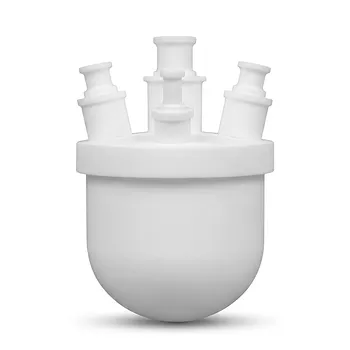
High Purity PTFE Multi Neck Reaction Flask for Corrosive Chemical Processing and Custom Industrial Laboratory Synthesis

High Purity PTFE Multi Neck Reaction Flask for Corrosive Chemical Processing and Custom Industrial Laboratory Synthesis

Optimize chemical processing with high-purity PTFE multi-neck reaction flasks. Engineered for extreme corrosion resistance and fully customizable configurations, these systems ensure zero-contamination environments for advanced research, pilot-scale synthesis, and demanding industrial laboratory applications. Contact us for custom designs.

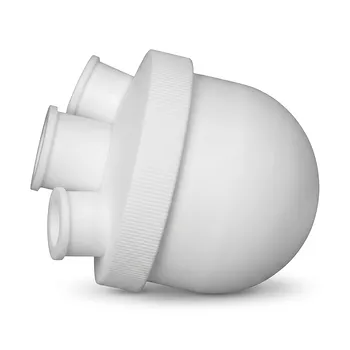
Custom Multi Neck PTFE Round Bottom Flask for Chemical Synthesis and High Purity Laboratory Research

Custom Multi Neck PTFE Round Bottom Flask for Chemical Synthesis and High Purity Laboratory Research

Professional grade custom PTFE multi neck flasks designed for extreme chemical resistance and high purity synthesis. Engineered for seamless integration with stirring paddles and funnels in demanding industrial laboratory environments to ensure zero contamination results for researchers.

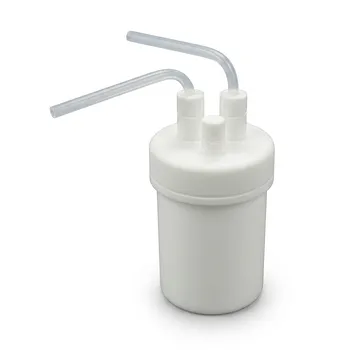
Custom PTFE Continuous Reaction Bottles Virgin Fluoropolymer High Purity Low Background Synthesis Vessels

Custom PTFE Continuous Reaction Bottles Virgin Fluoropolymer High Purity Low Background Synthesis Vessels

High-purity custom PTFE continuous reaction bottles engineered for demanding chemical synthesis. Manufactured from virgin fluoropolymer for low background leaching, these corrosion-resistant vessels offer unmatched reliability for trace analysis and aggressive reagent handling in professional laboratory environments.

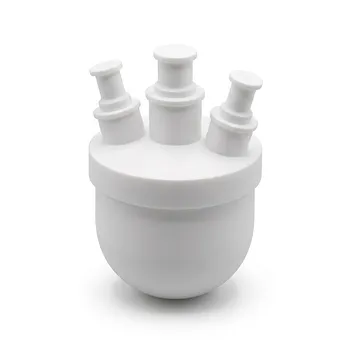
Custom High Purity PTFE Multi Neck Flask 200ml Chemical Synthesis Reaction Vessel

Custom High Purity PTFE Multi Neck Flask 200ml Chemical Synthesis Reaction Vessel

Procure custom high-performance PTFE multi-neck flasks for critical chemical synthesis. These 200ml reaction vessels offer unmatched chemical resistance and thermal stability for demanding industrial laboratory applications. Contact us for bespoke CNC-machined laboratory solutions tailored specifically to your needs today.

Custom Multi Neck PTFE Flask for Chemical Engineering and High Purity Laboratory Synthesis Applications

Custom Multi Neck PTFE Flask for Chemical Engineering and High Purity Laboratory Synthesis Applications

High performance custom multi neck PTFE flask for chemical engineering and high purity synthesis. This heavy duty fluoropolymer vessel offers unmatched chemical resistance and compatibility with stirring paddles and funnels for demanding industrial laboratory processes and advanced reactor setups.

Custom Multi Neck PTFE Round Bottom Flask for High Purity Chemical Laboratory Experiments and Industrial Synthesis

Custom Multi Neck PTFE Round Bottom Flask for High Purity Chemical Laboratory Experiments and Industrial Synthesis

Engineered for extreme chemical resistance, this custom multi-neck PTFE flask supports complex laboratory synthesis and high-purity chemical processing. Featuring a robust fluoropolymer build, it ensures leak-free performance and compatibility with stirring systems and specialized filtration funnels for industrial labs.

Custom PTFE Reaction System with Hose Barb Fittings Corrosion Resistant High Sealing 2L 4L Lab Reactor with Separatory Funnel

Custom PTFE Reaction System with Hose Barb Fittings Corrosion Resistant High Sealing 2L 4L Lab Reactor with Separatory Funnel

Enhance laboratory efficiency with our custom PTFE reaction system featuring superior corrosion resistance, high-integrity sealing, and integrated separatory funnels. Designed for demanding chemical synthesis, this modular fluoropolymer apparatus ensures high purity and reliable fluid transfer in extreme environments.

Large Capacity PTFE Reaction Flask 20L Custom Multi Neck Laboratory Boiling Flask Fluoropolymer Chemical Processing Vessel

Large Capacity PTFE Reaction Flask 20L Custom Multi Neck Laboratory Boiling Flask Fluoropolymer Chemical Processing Vessel

Optimized for extreme chemical resistance, this customizable 20L PTFE flask supports multi-neck configurations for complex laboratory reactions. Engineered for high-purity trace analysis and corrosive chemical processing, it ensures leak-free performance and exceptional durability in demanding industrial research environments.

Custom Multi Neck PTFE Flask 18L Laboratory Chemical Reactor Vessel for High Purity Synthesis and Stirring Applications

Custom Multi Neck PTFE Flask 18L Laboratory Chemical Reactor Vessel for High Purity Synthesis and Stirring Applications

Secure your laboratory operations with our customizable 18L multi neck PTFE reaction flask engineered for ultimate chemical resistance and thermal stability providing a durable alternative to glass for high purity synthesis and complex industrial chemical processing systems today

Custom PTFE Reaction Tank Corrosion Resistant Fluoropolymer Chemical Processing Barrel 10L 20L 30L

Custom PTFE Reaction Tank Corrosion Resistant Fluoropolymer Chemical Processing Barrel 10L 20L 30L

High-performance custom PTFE reaction tanks provide extreme corrosion resistance and chemical inertness for fluorochemical processing. Available in 10L, 20L, and 30L capacities, these bespoke laboratory barrels ensure pure environments for sensitive industrial applications and demanding laboratory workflows with custom configurations.

High Temperature Teflon Continuous Reaction System and HF Resistant Three Neck Flask for Petrochemical Processing

High Temperature Teflon Continuous Reaction System and HF Resistant Three Neck Flask for Petrochemical Processing

Optimize your petrochemical laboratory with our high-temperature Teflon continuous reaction systems and HF-resistant flasks, featuring precision CNC fabrication for superior chemical resistance, unmatched thermal stability, and complete custom engineering to meet your most demanding industrial synthesis requirements today.

PTFE Distillation Condensation Apparatus High Temperature Hydrofluoric Acid Resistant Fluorination Reaction Flask

PTFE Distillation Condensation Apparatus High Temperature Hydrofluoric Acid Resistant Fluorination Reaction Flask

Premium PTFE distillation condensation apparatus engineered for extreme chemical resistance and high-temperature fluorination processes. Fully customizable configurations ensure superior performance in hydrofluoric acid environments and ultra-pure trace analysis applications for industrial and laboratory procurement.

Custom PTFE Condensation Reflux Distillation Purification System 500ml Corrosion Resistant Low Background

Custom PTFE Condensation Reflux Distillation Purification System 500ml Corrosion Resistant Low Background

Professional high-purity PTFE condensation and reflux apparatus for distillation and purification. This customizable 500ml system offers exceptional corrosion resistance and low background interference for trace analysis and sensitive chemical reactions in demanding laboratory environments.

High Purity PTFE Reaction Vessel with Electric Stirring System and Customizable 5L Tank including Buchner Funnel Filtration Assembly

High Purity PTFE Reaction Vessel with Electric Stirring System and Customizable 5L Tank including Buchner Funnel Filtration Assembly

Engineered for high-purity chemical processing, this customizable 5L PTFE reaction vessel features an integrated electric stirring system and Buchner funnel filtration, ensuring superior chemical resistance and scratch-proof performance for demanding laboratory research and industrial trace analysis applications.

High Purity Custom PTFE Reaction Cell Electrolytic Tank for Semiconductor and Polysilicon Industrial Applications

High Purity Custom PTFE Reaction Cell Electrolytic Tank for Semiconductor and Polysilicon Industrial Applications

Discover custom PTFE reaction cells and electrolytic tanks designed for semiconductor and polysilicon manufacturing. These corrosion-resistant units ensure high purity in trace analysis and chemical processing, offering unmatched durability and thermal stability for demanding laboratory and industrial applications.

Custom PTFE Condenser Tube Reflux Reaction Condensation Purification Device Semiconductor Chemical Lab Equipment

Custom PTFE Condenser Tube Reflux Reaction Condensation Purification Device Semiconductor Chemical Lab Equipment

High-performance custom PTFE condenser tubes for reflux reactions and condensation purification. Engineered for semiconductor and chemical processing, these corrosion-resistant units ensure extreme purity, non-stick performance, and long-term durability in aggressive acidic environments and industrial laboratory applications.

High Temperature PTFE Reaction Flask 1000ml Single Neck Round and Flat Bottom Laboratory Bottle

High Temperature PTFE Reaction Flask 1000ml Single Neck Round and Flat Bottom Laboratory Bottle

Premium PTFE reaction flasks designed for extreme chemical resistance and high-temperature laboratory synthesis. These 1000ml custom-engineered single-neck vessels offer unmatched purity, non-stick surfaces, and durability for semiconductor, pharmaceutical, and aggressive chemical research applications.

High Temperature Corrosion Resistant PTFE Reaction Flask Custom Multi Neck Laboratory Vessel with Flat or U Bottom

High Temperature Corrosion Resistant PTFE Reaction Flask Custom Multi Neck Laboratory Vessel with Flat or U Bottom

High-performance PTFE reaction flasks offer unmatched chemical resistance and thermal stability for aggressive laboratory synthesis. These customizable multi-neck vessels ensure high-purity results in pharmaceutical and semiconductor research through precision CNC fabrication and inert fluoropolymer construction.

Custom PTFE Volatile Matter Condensation Reflux Reaction Device Corrosion Resistant Pressure Resistant

Custom PTFE Volatile Matter Condensation Reflux Reaction Device Corrosion Resistant Pressure Resistant

High-performance custom PTFE condensation reflux reaction device offering exceptional corrosion resistance and 0.1MPa pressure stability. Ideal for volatile matter recovery in trace analysis and aggressive chemical synthesis where high-purity laboratory standards are non-negotiable and strictly required.

Custom PTFE Condensation Reflux Apparatus with Serpentine Coil and Flask Collection System for Corrosive Chemical Processing

Custom PTFE Condensation Reflux Apparatus with Serpentine Coil and Flask Collection System for Corrosive Chemical Processing

High-performance custom PTFE condensation reflux apparatus designed for extreme chemical resistance. This integrated serpentine coil and flask system offers superior thermal stability and purity for advanced laboratory synthesis and industrial chemical processing applications. Contact us for bespoke solutions.


Leave Your Message