Use an inorganic base before polymerization. During the copolymerization of vinyl ethers with fluoroalkenes, add potassium carbonate (K₂CO₃) to the reaction mixture before vacuum conditioning. The base suppresses acid-catalyzed vinyl ether homopolymerization and acetal formation, allowing the intended radical copolymerization to proceed at approximately 75 °C in a fluorinated solvent with a peroxide initiator.
The required strategy is chemical stabilization with K₂CO₃, combined with contamination control using high-purity PTFE or PFA laboratory vessels. The base limits unwanted vinyl ether reactions, while fluoropolymer labware prevents chemical attack, ion leaching, particulate contamination, and polymer adhesion during preparation and recovery.
Why Vinyl Ethers Require Chemical Control
Acid-Catalyzed Side Reactions
Vinyl ether groups are highly sensitive to acidic conditions. During a high-temperature radical reaction, even acidic impurities or reaction byproducts can promote homopolymerization or acetal formation instead of the desired copolymerization with the fluoroalkene.
These competing reactions can consume functional monomer, alter polymer composition, and reduce control over the final polymer structure.
Role of Potassium Carbonate
K₂CO₃ acts as an inorganic base and acid scavenger in the reaction mixture. It is added before vacuum conditioning so that acidic contaminants and species generated during preparation are neutralized before the reaction is heated.
This chemical control helps preserve the vinyl ether functionality until radical initiation and reduces the probability of acid-driven side reactions.
How the Copolymerization Is Controlled
Reaction Conditions
After base addition and vacuum conditioning, the radical copolymerization is conducted at approximately 75 °C. A fluorinated solvent, such as 1,1,1,3,3-pentafluorobutane, provides a compatible reaction medium for the fluorinated monomers.
A peroxide initiator generates the radicals required to drive the intended copolymerization pathway.
Why Monomer and Reagent Purity Matter
Fluorinated polymerizations are sensitive to trace contaminants because reactive monomers, initiator-derived radicals, and acidic or ionic impurities can affect chain growth. Impurities may change molecular weight, end-group chemistry, polymer composition, or the balance between propagation and termination.
The base therefore forms only one part of the control strategy. Consistent results also depend on clean reagents, controlled atmosphere and vacuum handling, and compatible laboratory equipment.
How Fluoropolymer Vessels Protect Process Purity
Resistance to Aggressive Chemistry
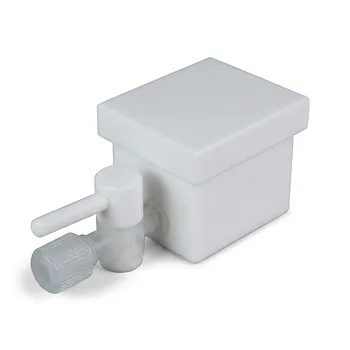
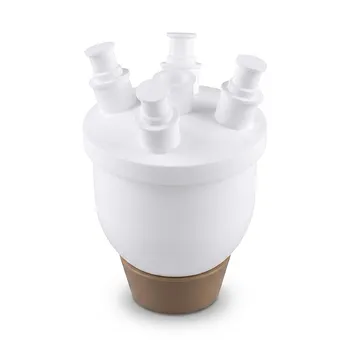
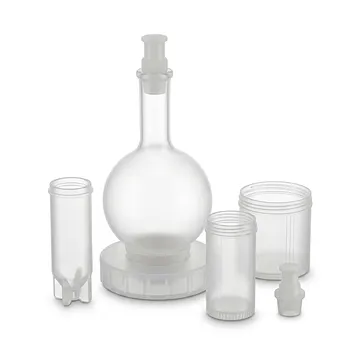
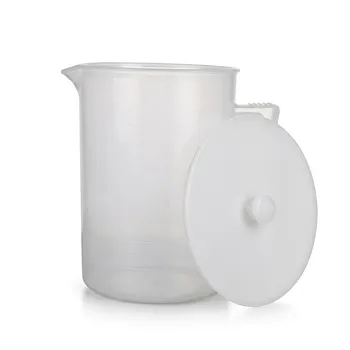
High-purity PTFE and PFA vessels, beakers, storage containers, and tubing resist strong bases, organic solvents, reactive fluorinated species, and elevated temperatures. They remain substantially inert under conditions that can attack conventional metals, glass coatings, or less-resistant plastics.
This resistance helps prevent the vessel itself from becoming a source of contamination or reaction interference.
Prevention of Ion Leaching
Fluoropolymer labware minimizes the risk of trace ion and metallic-element leaching into the reaction mixture, precipitate, or analytical sample. This is important when small amounts of ionic contamination could affect polymerization behavior or sensitive downstream measurements.
The same principle is relevant in fluoropolymer synthesis and other high-purity chemical processes, including trace analysis and aggressive wet-chemical processing.
Cleaner Polymer Recovery
PTFE and PFA surfaces also reduce polymer adhesion during precipitation, collection, and vacuum drying. Less material remains attached to the container, which improves recovery and reduces the risk that residual polymer or cleaning agents will contaminate later batches.
For this reason, fluoropolymer containers are useful not only during reaction preparation but also during post-reaction isolation and storage.
Understanding the Trade-offs
The Base Does Not Replace Process Control
Adding K₂CO₃ suppresses acid-related pathways, but it does not eliminate every possible side reaction. Excessive base, poor dispersion, residual moisture, or uncontrolled heating can still affect the reaction environment and polymer properties.
The amount and handling of the base should therefore be consistent across batches and compatible with the monomers, solvent, initiator, and downstream purification steps.
Labware Compatibility Is Not Absolute
PTFE and PFA provide strong chemical and thermal resistance, but laboratory vessels still need to be selected for the actual temperature, pressure, vacuum, mechanical loading, and solvent exposure. Seals, valves, tubing connections, and accessory materials may be less resistant than the fluoropolymer vessel itself.
The complete fluid-contact path must be evaluated, not just the main reaction container.
Purity Must Be Maintained Across the Workflow
Using a high-purity vessel cannot compensate for contaminated monomers, poorly cleaned transfer lines, impure storage containers, or trace telogenic compounds. In fluoropolymer synthesis, hydrogen- or chlorine-bearing impurities can act as chain terminators and reduce molecular weight growth.
Process purity is therefore a system property involving reagents, equipment, atmosphere, handling, and recovery.
Making the Right Choice for Your Goal
The practical recommendations depend on the main process objective:
- If your primary focus is suppressing side reactions: Add K₂CO₃ before vacuum conditioning to neutralize acidic species and limit vinyl ether homopolymerization and acetal formation during heating.
- If your primary focus is controlled copolymerization: Maintain the specified temperature, fluorinated solvent, peroxide initiation, and consistent reagent preparation conditions.
- If your primary focus is product purity: Use high-purity PTFE or PFA for reaction preparation, precipitation, storage, transfer, and vacuum drying wherever the material contacts the process stream.
- If your primary focus is molecular-weight control: Minimize trace impurities, particularly chain-terminating hydrogen- or chlorine-bearing compounds, and inspect the entire contact path for contamination sources.
A controlled base environment and inert, high-purity fluoropolymer labware together provide the foundation for clean and reproducible vinyl ether–fluoroalkene copolymerization.
Summary Table:
| Aspect | Strategy | Key Details |
|---|---|---|
| Chemical Control | Add K₂CO₃ before vacuum conditioning | Suppresses acid-catalyzed homopolymerization and acetal formation |
| Reaction Conditions | ~75 °C, fluorinated solvent, peroxide initiator | Enables controlled radical copolymerization |
| Material Purity | High-purity PTFE/PFA vessels | Prevents ion leaching, contamination, and polymer adhesion |
| Overall Purity | Combined chemical and material control | Ensures reproducible, high-quality polymer synthesis |
Elevate your fluoropolymer synthesis with KINTEK's high-purity PTFE and PFA labware. Our corrosion-resistant, low-leaching vessels ensure contamination-free reactions and reliable results. From beakers to custom reaction cells, our products are designed for demanding fluorochemical processes. Contact us today to discuss your requirements and get a quote. Contact KINTEK now!
Related Products
- High Purity PFA Crucible and Corrosion Resistant PTFE Beaker for Trace Analysis and Custom Laboratory Applications
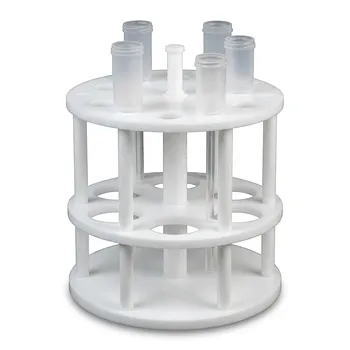
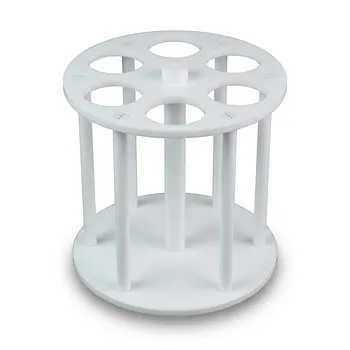
- Custom PFA Microcolumn Racks and PTFE Machined Low Background Corrosion Resistant Laboratory Fixtures
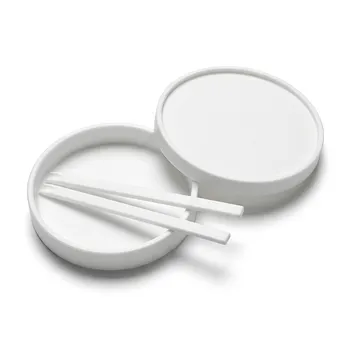
- Custom Polytetrafluoroethylene PTFE Petri Dishes 60mm Corrosion Resistant Low Background Labware
- Custom PTFE Petri Dishes Corrosion Resistant High Purity Low Background Labware
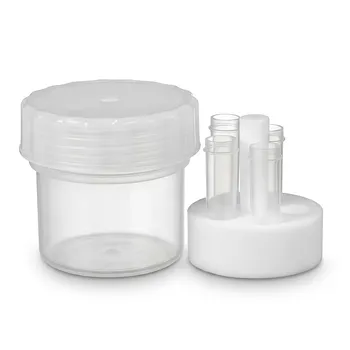
- PFA Reaction Jar Corrosion Resistant Wide Mouth PTFE Lab Bottle High Purity Chemical Vessel
People Also Ask
- Why are high-purity vessels critical for BiFeO3 synthesis? Ensuring Phase Purity
- Why is the use of high-purity PFA or PTFE labware critical during TiO2 nanoparticle purification? Protect Sample Purity
- Why is high-purity PFA trace analysis labware used for MXene? Ensure Superior Material Integrity in Research
- Why is high-purity PFA trace analysis labware recommended for trace element detection? Achieve Gold Standard PPT Accuracy
- Why is high-purity PFA labware necessary for Znx@LS-2 zeolite ICP-OES analysis? Ensure Trace-Level Precision