PTFE and PFA laboratory consumables are compatible with nearly all acids, bases, oxidizers, and organic solvents, but they are not universally resistant. Both materials generally support continuous operation up to approximately 260 °C, although the exact limit depends on the resin, component design, load, pressure, and manufacturer rating. Their principal chemical boundaries are molten or dissolved alkali metals, elemental fluorine, and certain highly aggressive fluorinating conditions, especially at elevated temperatures.
PTFE and PFA are reliable choices for highly corrosive laboratory chemistry within their rated temperature range. Treat 260 °C as an upper continuous-use guideline, and exclude molten alkali metals, liquid-metal solutions, elemental fluorine, chlorine trifluoride, and concentrated sodium hydroxide at temperatures above 300 °C unless the specific product has been validated for that service.
Where PTFE and PFA Are Chemically Compatible
Resistance to Acids and Bases
PTFE and PFA resist virtually all commonly encountered laboratory acids and bases, including hydrofluoric acid, concentrated sulfuric acid, concentrated nitric acid, and many superacid systems.
This resistance makes them suitable for digestion vessels, sample containers, liners, tubing, fittings, and other consumables used in trace analysis and aggressive chemical processing.
Resistance to Solvents and Oxidizers
Both fluoropolymers remain stable in most organic solvents, alcohols, and oxidizing chemicals used in laboratory workflows. Their low surface energy also limits sample adhesion and reduces the risk of cross-contamination during high-purity sample preparation.
Compatibility should still be checked for the exact solvent mixture, temperature, exposure time, and mechanical stress involved.
Similar Chemical Performance
PTFE and PFA are both fully fluorinated polymers and provide broadly comparable chemical inertness. The practical distinction is usually not chemical resistance but manufacturability, mechanical design, transparency, flexibility, and temperature rating.
PFA is melt-processable, which allows it to be formed into certain tubing and complex components more readily than PTFE. PTFE often provides slightly greater thermal headroom, depending on the product specification.
Operating Temperature Limits
Continuous Use: Approximately 260 °C
A continuous service limit of approximately 260 °C is the most defensible general guideline for PTFE and high-performance PFA laboratory consumables.
Some product literature gives narrower PFA ratings, commonly ranging from approximately 225 °C to 260 °C. The manufacturer’s rating for the specific vessel, fitting, seal, tubing, or machined component takes precedence over a generic resin value.
Short-Term Exposure
PTFE may tolerate short-term exposure near 300 °C, but this should not be treated as a normal operating condition. Prolonged operation above the continuous-use rating can cause softening, deformation, loss of seal integrity, or gradual thermal degradation.
PFA products may have different short-term limits because their melting range and formulation differ from those of PTFE.
Melting and Thermal Decomposition
PTFE softens and sinters rather than flowing like a conventional thermoplastic. Its melting or transition behavior is commonly reported near 327 °C, although published values vary with material and measurement method.
Thermal degradation begins gradually above the recommended continuous-use range and accelerates significantly above approximately 400 °C. Therefore, a melting point is not an operating temperature: structural and chemical performance can be lost well before melting occurs.
Low-Temperature Operation
PTFE can operate across an exceptionally broad low-temperature range, with commonly cited service limits near -200 °C and cryogenic capability substantially below that under suitable conditions.
At cryogenic temperatures, the complete assembly still requires evaluation. Thermal contraction, brittleness of connected materials, pressure changes, and seal design may determine the practical limit before the PTFE itself becomes the limiting factor.
The Chemical Boundaries That Matter
Molten and Dissolved Alkali Metals
The most important chemical exception is exposure to molten alkali metals, including sodium and potassium. Liquid sodium solutions and other highly reducing alkali-metal systems can attack fluoropolymer structures under severe conditions.
This is a fundamentally different hazard from ordinary sodium or potassium compounds dissolved in typical laboratory solvents. The relevant concern is the highly reducing metallic species itself, particularly when molten or present in a liquid-metal solution.
Elemental Fluorine and Fluorinating Agents
Elemental fluorine can react with PTFE and PFA under severe conditions, particularly at elevated temperature. Other highly aggressive fluorinating agents, such as chlorine trifluoride, should also be treated as outside ordinary fluoropolymer compatibility assumptions.
Compatibility tables that describe PTFE or PFA as resistant to “all chemicals” are therefore incomplete. The correct interpretation is near-universal resistance across normal laboratory chemicals, with specific exceptions for extreme fluorinating and reducing environments.
Hot Concentrated Sodium Hydroxide
Concentrated sodium hydroxide at temperatures above approximately 300 °C represents another boundary identified for these materials. At such temperatures, both the chemical aggressiveness and thermal stress are significant.
This condition should not be grouped with normal aqueous caustic service at laboratory temperatures. The concentration, temperature, pressure, and exposure duration must all be considered.
Understanding the Trade-offs
Generic Ratings Are Not Component Ratings
A polymer’s nominal temperature rating does not automatically apply to a complete consumable. Thin tubing, threaded fittings, pressure vessels, seals, and custom-machined parts can have lower practical limits because of geometry, load, wall thickness, or connection design.
Use the rating for the assembled product, especially when the component is under pressure or must maintain a leak-tight seal.
Temperature Reduces Mechanical Margin
PTFE and PFA may remain chemically stable while becoming softer and less mechanically capable at elevated temperature. High temperature can therefore cause deformation or seal failure even when there is no obvious chemical attack.
Pressure, clamping force, agitation, thermal cycling, and dimensional tolerances should be included in the operating assessment.
Chemical Compatibility Is Not the Same as Process Suitability
A material may resist a reagent chemically but still be unsuitable for a particular process. Long exposure, repeated thermal cycling, permeation, pressure, abrasion, or contamination requirements can change the decision.
For trace analysis, the low surface energy of PTFE and PFA is beneficial because it limits adhesion, but the entire workflow must still be controlled for cleaning, blank levels, and carryover.
How to Apply This to Your Project
Select the material and operating limit based on the full chemical and mechanical environment, not on chemical resistance alone.
- If your primary focus is corrosive acids, bases, solvents, or oxidizers: PTFE or PFA is generally appropriate, subject to verification of the specific formulation, concentration, temperature, and exposure duration.
- If your primary focus is continuous high-temperature service: Use approximately 260 °C as the general upper boundary, then apply the lower manufacturer rating for the specific PFA or PTFE component.
- If your primary focus is cryogenic work: PTFE is broadly suitable at very low temperatures, but evaluate contraction, connected materials, seals, pressure, and thermal cycling.
- If your primary focus is molten alkali metals or liquid-metal reducing systems: Do not assume PTFE or PFA compatibility; these conditions require a dedicated materials assessment.
- If your primary focus is elemental fluorine, chlorine trifluoride, or other extreme fluorinating chemistry: Treat PTFE and PFA as unsuitable unless a specialist compatibility review and product-specific validation establish otherwise.
- If your primary focus is hot concentrated sodium hydroxide above 300 °C: Avoid standard PTFE/PFA consumables because the combined thermal and chemical severity exceeds ordinary laboratory service assumptions.
PTFE and PFA provide exceptional laboratory chemical resistance when their specific reducing, fluorinating, and temperature boundaries are respected.
Summary Table:
| Property | PTFE | PFA |
|---|---|---|
| Chemical Resistance | Resists nearly all acids, bases, solvents, oxidizers | Similar to PTFE, melt-processable for complex parts |
| Max Continuous Operating Temperature | ~260°C | ~225-260°C (varies by manufacturer) |
| Short-Term Exposure | ~300°C (short term) | Slightly lower than PTFE, depends on formulation |
| Melting Point | ~327°C | ~305°C (varies) |
| Chemical Exceptions | Molten alkali metals, elemental fluorine, ClF3, hot NaOH >300°C | Same as PTFE |
| Low-Temperature Limit | ~-200°C or lower | Similar to PTFE, but verify assembly components |
Maximize the reliability and safety of your laboratory processes with our high-performance PTFE and PFA consumables. Engineered for exceptional chemical resistance and precision, our products are ideal for demanding applications, including trace analysis and aggressive chemical handling. Contact us today to discuss your specific requirements and discover how our solutions can enhance your lab's efficiency and accuracy. Get in touch with our experts.
Related Products
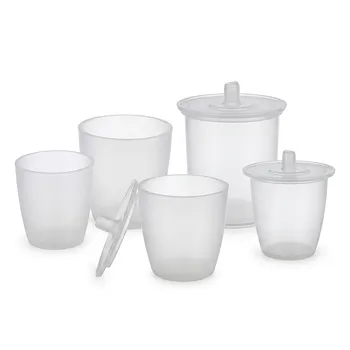
- High Purity PFA Crucible and Corrosion Resistant PTFE Beaker for Trace Analysis and Custom Laboratory Applications
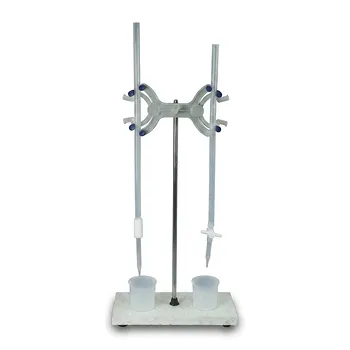
- High Purity PTFE PFA Burette Translucent Acid Base Resistant Reusable Laboratory Titration Equipment
- PTFE PFA Vacuum Filtration System Corrosion Resistant Customizable Shatterproof Laboratory Device
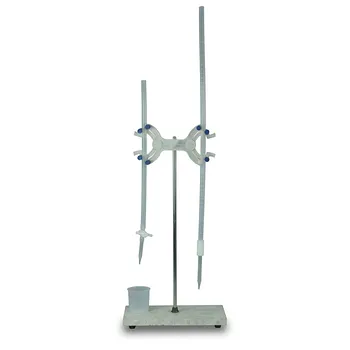
- PFA Acid and Base Burette with PTFE Valve for Corrosive Chemical Analysis and Hydrofluoric Acid Resistance Customizable Labware
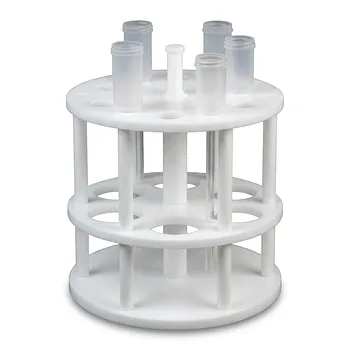
- Custom PFA Microcolumn Racks and PTFE Machined Low Background Corrosion Resistant Laboratory Fixtures
People Also Ask
- Why are high-purity vessels critical for BiFeO3 synthesis? Ensuring Phase Purity
- Why is the use of high-purity PFA or PTFE labware critical during TiO2 nanoparticle purification? Protect Sample Purity
- Why is high-purity PFA labware necessary for Znx@LS-2 zeolite ICP-OES analysis? Ensure Trace-Level Precision
- Why is high-purity PFA trace analysis labware used for MXene? Ensure Superior Material Integrity in Research
- What key material characteristics make PTFE and PFA suitable for high-purity laboratory labware, trace analysis containers, and medical microporous tubing? Discover the essential properties that ensure purity.