HFP is thermally stable only within a defined process window, not indefinitely. Hexafluoropropylene (HFP) is generally stable up to approximately 400–500 °C, but at around 600 °C under vacuum it can decompose into octafluoro-2-butene and perfluoroisobutylene (PFiB), a highly toxic byproduct. At still higher fluorocarbon-pyrolysis temperatures, roughly 900–1000 °C and above, rapid secondary reactions can generate carbon deposits and uncontrolled exothermic heat.
The key point is that HFP decomposition limits and fluoropolymer service limits are different. Laboratory apparatus must be selected according to the lower, application-specific operating limit of the polymer, seal, vessel design, pressure, and chemical environment—not according to HFP's upper decomposition threshold.
Why HFP Thermal Limits Matter
HFP stability changes with temperature
HFP can tolerate substantial heat within the approximate 400–500 °C stability range. This does not mean that laboratory equipment made from fluoropolymers can safely operate at those temperatures.
At approximately 600 °C under vacuum, HFP decomposition becomes significant. The resulting PFiB presents a serious toxicological hazard, so high-temperature systems require containment, monitoring, and appropriate exhaust treatment.
Extreme pyrolysis creates additional hazards
Above approximately 900–1000 °C, fluorocarbon pyrolysis can proceed through rapid side reactions. These reactions may produce carbon deposits, alter heat transfer, foul equipment, and create uncontrolled exothermic behavior.
These temperatures are far beyond the normal service range of PTFE and PFA laboratory apparatus. They are relevant when evaluating upstream fluorocarbon processing, pyrolysis systems, or accidental overheating scenarios.
Why Polymer Service Temperature Is Lower
Fluoropolymer apparatus has a continuous-use limit
High-performance fluoropolymers such as PTFE and PFA are highly heat-resistant, but their practical continuous service temperatures are commonly around 260 °C, depending on grade, load, pressure, geometry, and exposure time.
This is a mechanical-design limit as much as a chemical-stability limit. A component may remain chemically inert while losing stiffness, dimensional accuracy, sealing force, or pressure capability.
PFA has its own degradation threshold
PFA products can begin thermal degradation at approximately 400 °C, particularly when heated in air. Decomposition may release hazardous products such as carbonyl fluoride.
Therefore, the approximately 400 °C PFA degradation threshold should be treated as a failure boundary, not as a normal operating temperature. PFA vessels, tubing, and fittings should operate well below that point, with the exact limit taken from the manufacturer's data for the specific product.
Temperature ratings are material- and design-specific
A fluoropolymer's usable temperature range depends on more than its chemical name. Important variables include:
- Polymer grade and formulation
- Component thickness and geometry
- Mechanical load and internal pressure
- Heating rate and exposure duration
- Air, vacuum, or inert atmosphere
- Contact with acids, bases, solvents, or Lewis acids
- Seals, liners, supports, and attached fittings
For example, a tubing material that is acceptable for short-duration exposure may be unsuitable for continuous pressurized service at the same temperature.
How Thermal Limits Affect Apparatus Selection
Mechanical integrity must be preserved
Heating can reduce the strength and stiffness of fluoropolymer components before obvious chemical decomposition occurs. A vessel may deform, a tube may creep, or a fitting may lose its sealing load even when the material still appears visually intact.
Selecting apparatus requires comparing the actual operating temperature and pressure with the component's continuous and short-term ratings. The weakest component, often a seal or fitting, determines the safe system limit.
Chemical inertness must remain intact
Fluoropolymers are valued for their low reactivity and resistance to corrosive reagents. Thermal damage can undermine that advantage by causing off-gassing, fluoride-containing emissions, surface changes, or contamination of the sample.
This is particularly important in trace analysis, acid digestion, and high-purity processing, where even small amounts of leached or volatilized material can compromise results.
Thermal decomposition can release hazardous gases
At elevated temperatures, fluoropolymer degradation may produce hazardous fluorinated compounds, including hydrogen fluoride and, for some materials and conditions, carbonyl fluoride. These risks require controlled heating, suitable ventilation, and a design that prevents accidental overheating.
Strong Lewis acids, including some BF3-containing systems, can catalyze fluoropolymer decomposition at temperatures lower than the material's nominal thermal limit. Chemical compatibility must therefore be evaluated together with temperature compatibility.
HFP-modified polymers solve a different problem
Adding HFP to polymers such as ETFE can improve stress-crack resistance under elevated-temperature mechanical stress. Some HFP-modified formulations show substantially better resistance at approximately 200 °C than formulations with little or no HFP.
That improvement does not make the polymer immune to thermal decomposition. It addresses mechanical cracking and leakage, while the material's thermal, chemical, pressure, and processing limits still apply.
Understanding the Trade-offs
Higher temperature does not automatically improve performance
Operating closer to a material's upper temperature limit may accelerate reactions or shorten processing time, but it also reduces mechanical margin and increases the consequences of control failure.
A lower operating temperature with adequate reaction time is often the more reliable choice for reusable laboratory apparatus.
The highest material threshold is not the design temperature
HFP's decomposition near 600 °C under vacuum and PFA's degradation near 400 °C describe different substances and different failure modes. Neither threshold should be used as the recommended operating temperature for a complete apparatus.
The correct limit is normally the lowest applicable rating among the polymer, vessel, liner, tubing, seal, support structure, pressure boundary, and heating system.
Apparatus ratings are not interchangeable
PTFE, PFA, ETFE, films, molded parts, and composite assemblies do not share one universal temperature rating. A product's construction and duty cycle can matter as much as its base polymer.
Manufacturer data should be checked for continuous use, intermittent use, pressure at temperature, vacuum service, chemical exposure, and any restrictions on microwave or digestion applications.
Thermal control must account for local hot spots
A programmed heater temperature may not equal the temperature at the vessel wall, reaction zone, fitting, or seal. Exothermic reactions and poor heat distribution can create local temperatures above the measured bulk temperature.
Independent temperature monitoring and over-temperature protection are especially important for sealed or pressurized systems.
Making the Right Choice for Your Goal
Choose apparatus based on the complete operating envelope rather than on the thermal stability of HFP alone.
- If your primary focus is routine high-temperature laboratory use: Select PTFE or PFA components with a documented continuous-use rating comfortably above the intended operating temperature, and include the ratings of seals and fittings in the assessment.
- If your primary focus is acid digestion or trace analysis: Prioritize chemical purity, low leachables, controlled heating, and protection against off-gassing so thermal degradation cannot contaminate samples.
- If your primary focus is vacuum fluorocarbon processing: Design for containment and exhaust treatment around the approximately 600 °C HFP decomposition region, with specific controls for PFiB formation.
- If your primary focus is tubing or fittings under thermal and mechanical stress: Consider an HFP-modified fluoropolymer where its documented stress-crack performance is relevant, while separately verifying temperature, pressure, and chemical compatibility.
- If your primary focus is preventing catastrophic overheating: Use temperature interlocks, independent sensors, suitable ventilation, and an operating limit well below the relevant polymer degradation threshold.
Understanding the difference between chemical decomposition, mechanical service limits, and system-level failure is the basis for selecting fluoropolymer apparatus that remains safe, clean, and reliable.
Summary Table:
| Parameter | HFP (Fluorocarbon Intermediate) | PTFE/PFA Lab Apparatus |
|---|---|---|
| Stability Range | ~400–500°C | Continuous use ~260°C (depending on grade & design) |
| Decomposition Threshold | ~600°C (vacuum) forms toxic PFiB; >900°C rapid pyrolysis | PFA degradation ~400°C; releases hazardous gases |
| Key Hazard | Toxic byproducts, exothermic reactions | Loss of mechanical integrity, off-gassing, contamination |
| Selection Criteria | For processing systems: containment & monitoring | For lab use: lower of polymer, seal, & design limits |
Ensure Safety and Performance with the Right Fluoropolymer Apparatus
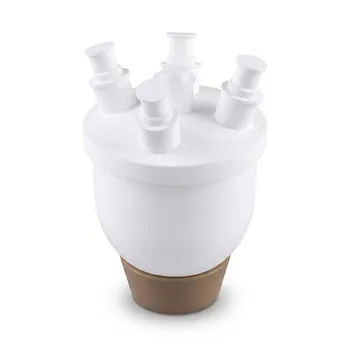
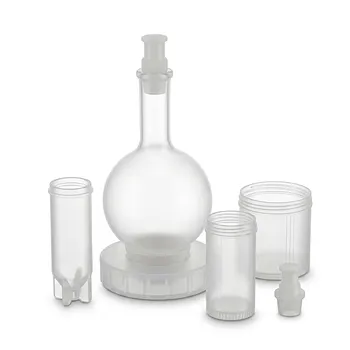
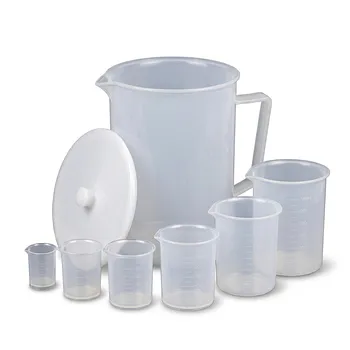
Selecting labware that withstands your specific operating conditions is critical for both safety and accurate results. KINTEK specializes in high-performance PTFE and PFA labware, from basic beakers to complex custom reaction vessels. Our products are designed to operate reliably within their thermal limits, preventing hazards and contamination.
Whether you need standard components or bespoke solutions for demanding thermal and chemical environments, our team can help you choose the ideal apparatus for your application. We support OEM/ODM projects and offer robust supply chains for high-volume requirements.
Contact us today to discuss your needs and get a quote!
Related Products
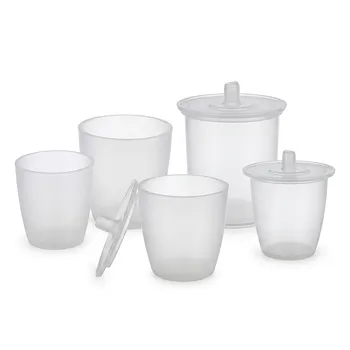
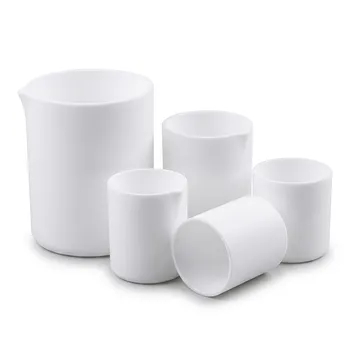
- High Purity PFA Crucible and Corrosion Resistant PTFE Beaker for Trace Analysis and Custom Laboratory Applications
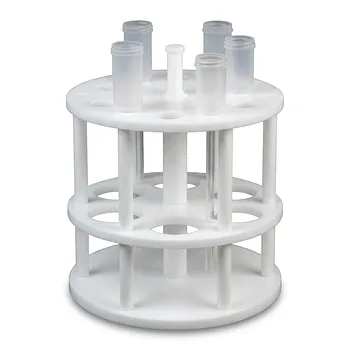
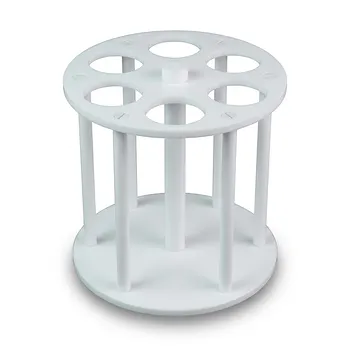
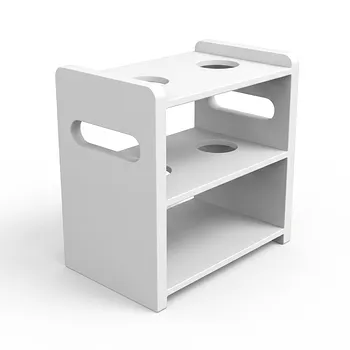
- Custom PFA Microcolumn Racks and PTFE Machined Low Background Corrosion Resistant Laboratory Fixtures
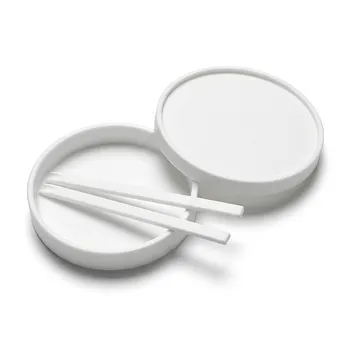
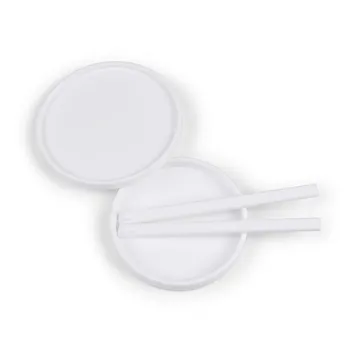
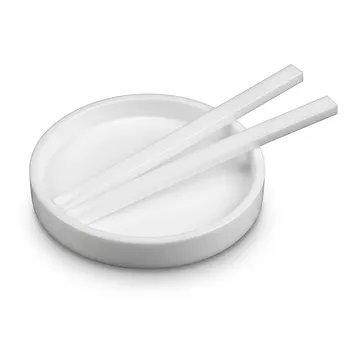
- Custom Polytetrafluoroethylene PTFE Petri Dishes 60mm Corrosion Resistant Low Background Labware
- Custom PTFE Petri Dishes Corrosion Resistant High Purity Low Background Labware
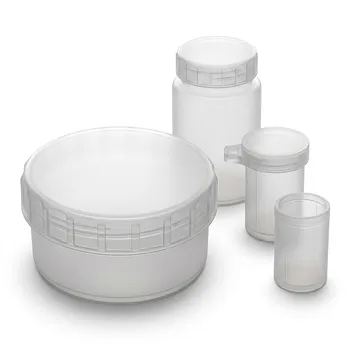
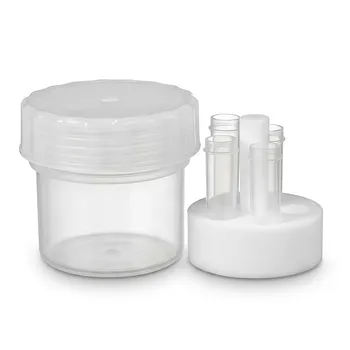
- PFA Reaction Jar Corrosion Resistant Wide Mouth PTFE Lab Bottle High Purity Chemical Vessel
People Also Ask
- Why are high-purity vessels critical for BiFeO3 synthesis? Ensuring Phase Purity
- Why is the use of high-purity PFA or PTFE labware critical during TiO2 nanoparticle purification? Protect Sample Purity
- Why is high-purity PFA trace analysis labware used for MXene? Ensure Superior Material Integrity in Research
- Why is high-purity PFA labware necessary for Znx@LS-2 zeolite ICP-OES analysis? Ensure Trace-Level Precision
- What key material characteristics make PTFE and PFA suitable for high-purity laboratory labware, trace analysis containers, and medical microporous tubing? Discover the essential properties that ensure purity.