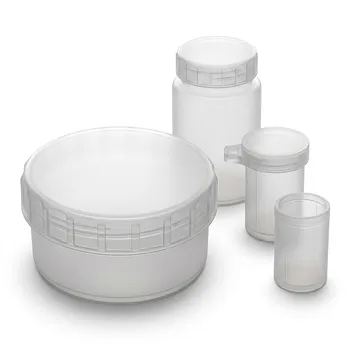
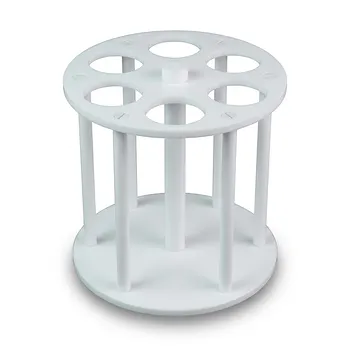
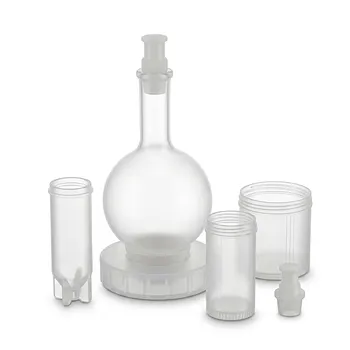
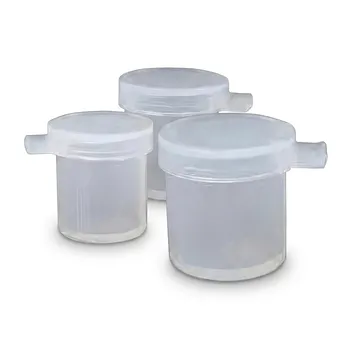
PTFE and PFA labware improve high-purity trace analysis by reducing sample retention, adsorption, water absorption, and contamination from the container itself. Their fluorinated, nonpolar surfaces have exceptionally low surface energy, typically around 14–18 dyn/cm, so aqueous samples, reagents, particles, and biological residues are less likely to wet or adhere to the walls. This supports higher sample recovery, cleaner blanks, easier decontamination, and more reliable measurements at trace concentrations.
The central benefit is control over the sample–container interface. PTFE and PFA do not make contamination impossible, but their low-energy, non-wetting, chemically resistant surfaces substantially reduce analyte loss, memory effects, and vessel-derived interference when the labware is properly cleaned and selected for the application.
Why Surface Energy Matters in Trace Analysis
Low surface energy reduces wetting
Surface energy describes how strongly a solid surface interacts with liquids and other materials. Because PTFE and PFA have very low surface energy, liquids tend to form droplets and roll away rather than spread across and strongly wet the vessel wall.
This is particularly useful for dilute samples, where even a small amount of liquid left behind can produce a meaningful loss of analyte.
Nonpolarity limits surface interactions
The fluorinated surfaces of PTFE and PFA are nonpolar, so they have relatively weak interactions with many aqueous solutions and other polar materials. This reduces the tendency of dissolved species, particles, and biological macromolecules to remain attached to the container surface.
Lower adsorption helps the measured concentration more closely represent the original sample rather than the portion retained by the labware.
Hydrophobicity limits water retention
PTFE and PFA have high water contact angles, approximately 114° for PTFE and 115° for PFA, along with very low reported water absorption. These properties make aqueous solutions less likely to spread across the surface or penetrate into the material.
The practical result is less residual moisture and less sample hold-up during transfers, rinsing, and volumetric delivery.
How This Improves Sample Preparation
More complete sample recovery
During digestion, dilution, transfer, or concentration, a portion of the sample can remain on vessel walls or in tubing. The non-stick behavior of PTFE and PFA reduces this retention and helps more of the prepared sample reach the analytical instrument.
This matters most when working with low analyte concentrations or very small sample volumes.
Better performance during aggressive digestion
PTFE and PFA resist strong acids, bases, oxidizing reagents, and many organic solvents. They are therefore suitable for demanding preparation steps such as acid digestion, including applications involving microwave digestion vessels.
Chemical resistance alone does not ensure clean results, but it allows the vessel to withstand the preparation chemistry without readily corroding or contributing reaction products to the sample.
Lower risk of memory effects
Residue from one sample can carry into the next measurement as a memory effect. Because fluoropolymer surfaces retain fewer residues and are easier to rinse effectively, PTFE and PFA labware can reduce this source of carryover.
The reduction is strongest when the labware is compatible with a validated cleaning and acid-washing procedure.
Why This Matters for Trace Metals
Reduced vessel-derived backgrounds
Trace metal analysis is sensitive to contamination from the container walls. High-purity PTFE and PFA labware generally provide very low metal backgrounds and minimal leaching when appropriately manufactured, cleaned, and handled.
This helps prevent the vessel from contributing nickel, zinc, copper, sodium, or other elements that could be mistaken for analyte in the sample.
Less ion-exchange interference than some glass surfaces
Glass can interact with dissolved ions through surface adsorption or ion-exchange mechanisms, depending on the solution and analyte. Fluoropolymer surfaces generally provide weaker interactions, reducing one potential source of analyte loss or compositional change.
This does not mean glass is unsuitable for all trace work. It means PTFE and PFA are often preferable when the analyte, matrix, or concentration makes surface interaction a significant concern.
Cleaner blanks and more defensible results
A low-contamination vessel contributes to lower reagent and procedural blanks. Lower blanks improve the distinction between the true sample signal and background interference, which is essential when concentrations approach the method detection limit.
The benefit is analytical reliability: the result is more likely to reflect the sample rather than the preparation hardware.
How Nonpolarity Supports Liquid Handling
More complete volumetric delivery
When liquid does not strongly wet the vessel wall, less of it remains behind after pouring, pipetting, or transferring. This supports more complete delivery and reduces concentration changes caused by unrecognized sample hold-up.
For trace work, this can improve both recovery and consistency between preparation steps.
Easier rinsing and cleaning
Low adhesion allows residues to be removed more readily during rinsing. Acid washing and appropriate cleaning protocols can then be used to control contamination without relying on aggressive mechanical scrubbing that could damage the labware.
Cleaning remains essential because low surface adsorption reduces contamination; it does not eliminate contamination introduced by dirty handling, reagents, or the environment.
Lower cross-contamination risk
Reduced residue retention means less material is available to transfer into the next batch. This is valuable for digestion vessels, reagent bottles, centrifuge tubes, measuring vessels, and transfer tubing used across multiple samples.
Dedicated labware or validated cleaning is still necessary when samples contain unusually high analyte concentrations.
PTFE and PFA: Similar Benefits, Different Uses
PTFE provides strong chemical resistance and non-stick behavior
PTFE offers exceptionally low surface energy, low friction, and broad chemical resistance. It is widely used for digestion vessels, beakers, tubing, fittings, and other components exposed to aggressive reagents.
Its properties make it effective where chemical compatibility and low residue retention are the primary requirements.
PFA supports high-purity fluid handling
PFA combines fluoropolymer chemical resistance with strong suitability for high-purity containers and fluid-handling components. It is commonly used for reagent bottles, vessels, tubing, and other applications where low leaching and clean sample contact are important.
PFA is often selected when purity, transparency, or processability requirements influence the design of the labware.
Understanding the Trade-offs
Low adsorption is not zero adsorption
PTFE and PFA reduce surface interactions, but no material guarantees complete sample recovery for every analyte and matrix. Surfactants, particulates, hydrophobic compounds, concentrated residues, and complex biological samples may still adhere to surfaces.
Recovery should therefore be verified with method-specific spikes, rinses, and blank controls.
Purity depends on manufacturing and handling
The fluoropolymer itself may have excellent chemical resistance, but contamination can be introduced during manufacturing, machining, packaging, cleaning, or laboratory use. Fittings, seals, pigments, and other components may also contribute impurities.
Choose labware with an appropriate purity specification and condition it using a validated cleaning protocol.
Chemical resistance has application limits
PTFE and PFA resist a broad range of laboratory chemicals, but temperature, pressure, chemical concentration, and exposure time still matter. Compatibility should be confirmed for the exact digestion or storage conditions, especially when using highly reactive fluorinating or alkali-metal systems.
Material selection should consider the full process rather than chemical resistance in isolation.
Surface properties do not replace contamination control
Low-energy surfaces help reduce contamination and carryover, but they cannot compensate for contaminated reagents, poor laboratory technique, airborne particles, or inadequate blank correction. High-purity trace analysis still requires clean handling, controlled storage, and documented procedures.
How to Apply This to Your Project
The right choice depends on whether your main concern is analyte recovery, vessel-derived contamination, chemical compatibility, or repeated high-purity handling.
- If your primary focus is minimizing sample loss: Use properly cleaned PTFE or PFA vessels and transfer components to reduce wall wetting, adsorption, and residual sample hold-up.
- If your primary focus is trace-metal accuracy: Select high-purity PTFE or PFA labware with low-background specifications, and verify performance through procedural blanks and recovery studies.
- If your primary focus is aggressive digestion: Confirm the temperature, pressure, reagents, and exposure time against the fluoropolymer’s application limits before selecting the vessel.
- If your primary focus is preventing carryover: Use non-stick fluoropolymer surfaces together with validated acid-washing, rinsing, and storage procedures.
- If your primary focus is high-purity reagent storage: Use compatible PFA or PTFE bottles and fluid paths that minimize leaching, absorption, and contamination during repeated handling.
The practical principle is simple: low-energy, nonpolar PTFE and PFA surfaces give trace-analysis methods a cleaner and more predictable sample–container interface.
Summary Table:
| Property | Benefit for Trace Analysis |
|---|---|
| Low surface energy (14–18 dyn/cm) | Reduces wetting, improving sample recovery |
| Nonpolar surface | Minimizes adsorption of polar analytes |
| Hydrophobicity (contact angle ~114–115°) | Limits water retention, aiding volumetric delivery |
| Chemical resistance | Withstands aggressive digestion reagents |
| Low metal backgrounds | Reduces vessel-derived contamination |
| Easy cleaning | Lowers memory effects and cross-contamination |
Upgrade your trace analysis with KINTEK's high-purity PTFE and PFA labware. Our products minimize contamination and maximize recovery, ensuring accurate results. Contact us today to find the perfect solution for your lab!
Related Products
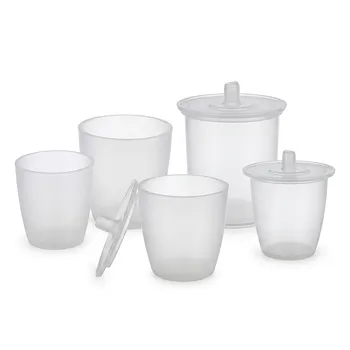
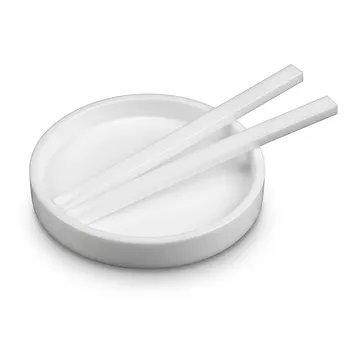
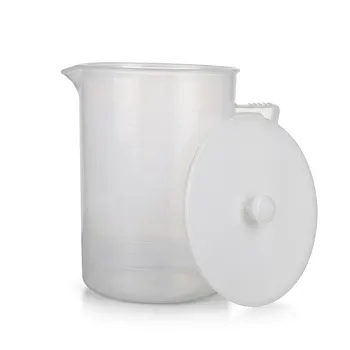
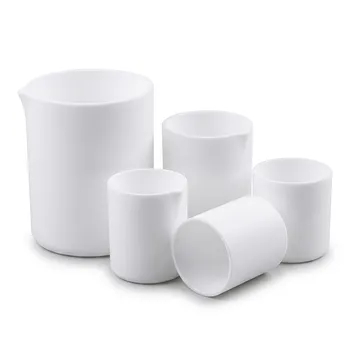
- High Purity PFA Crucible and Corrosion Resistant PTFE Beaker for Trace Analysis and Custom Laboratory Applications
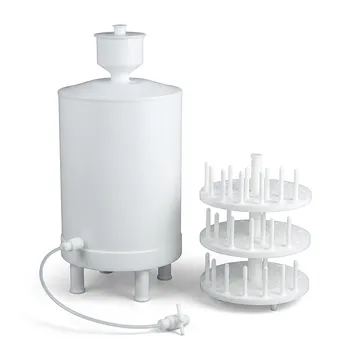
- Custom PTFE Constant Pressure Separatory Funnel Corrosion Resistant Low Background Labware for PFA Flasks
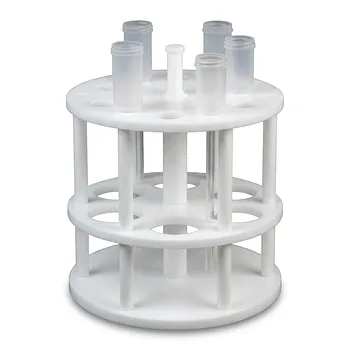
- Custom PFA Microcolumn Racks and PTFE Machined Low Background Corrosion Resistant Laboratory Fixtures
- PTFE PFA Vacuum Filtration System Corrosion Resistant Customizable Shatterproof Laboratory Device
- Corrosion Resistant PTFE Support with PFA Transparent Reaction Tank and High Purity PFA Sampling Tube for Trace Analysis
People Also Ask
- Why are high-purity vessels critical for BiFeO3 synthesis? Ensuring Phase Purity
- Why is the use of high-purity PFA or PTFE labware critical during TiO2 nanoparticle purification? Protect Sample Purity
- Why is high-purity PFA labware necessary for Znx@LS-2 zeolite ICP-OES analysis? Ensure Trace-Level Precision
- Why is high-purity PFA trace analysis labware used for MXene? Ensure Superior Material Integrity in Research
- Why is high-purity PFA trace analysis labware used for sample processing when preparing Mo2CTx@MoS2? Ensure Material Purity