PTFE and melt-processible fluoropolymers require fundamentally different manufacturing routes. PTFE’s extremely high melt viscosity prevents conventional injection molding and melt extrusion, so manufacturers typically use compression molding and sintering, paste extrusion, or machining from sintered stock shapes. PFA and FEP can be processed as thermoplastics, allowing injection molding, melt extrusion, blow molding, and related methods for complex, seamless, high-purity components.
The key distinction is processability, not chemical resistance. PTFE is often selected for robust custom-machined parts, while PFA and FEP are better suited to intricate molded or extruded components where seamless construction, smooth surfaces, translucency, and leak-tight fluid handling are important.
Why PTFE Requires Specialized Processing
Extremely high melt viscosity limits conventional molding
PTFE has an exceptionally high melt viscosity and high crystallinity. Even when heated above its melting range, it does not flow readily enough for standard thermoplastic injection-molding or extrusion equipment.
As a result, PTFE cannot normally be fed, melted, and shaped like PFA or FEP. Its manufacturing process must form the material before or during sintering rather than relying on free-flowing melt behavior.
Compression molding and sintering form the basic route
Granular PTFE is commonly placed into a mold and compressed into a preform. The preform is then heated through a controlled sintering cycle so that the particles consolidate into a solid structure.
This route is well suited to producing tubes, rods, plates, blocks, and other stock shapes. Those shapes can subsequently be cut or machined into specialized laboratory equipment.
Paste extrusion serves fine-powder applications
Fine-powder PTFE can be mixed with a processing lubricant and formed through paste extrusion. The lubricant is later removed, followed by sintering.
Paste extrusion is particularly useful for producing PTFE tubing and other continuous profiles, but it requires specialized equipment and process control. It is not equivalent to the high-throughput melt extrusion used for PFA or FEP.
CNC machining becomes part of the manufacturing strategy
Because PTFE can be produced as machinable stock, manufacturers can use precision CNC machining to create custom reaction vessels, electrochemical cell bodies, heavy-duty labware, seals, and other specialized components.
This approach provides design flexibility for low-volume or highly customized equipment. However, it introduces machining time, material waste, and potential assembly requirements that may be avoided with a directly molded PFA or FEP component.
Why PFA and FEP Can Be Melt-Processed
Modified polymer structures improve melt flow
PFA and FEP are perfluorinated copolymers designed to retain much of PTFE’s chemical and thermal performance while reducing the structural characteristics that make PTFE difficult to process.
Their lower crystallinity and more favorable melt-flow behavior allow them to be processed using conventional thermoplastic equipment.
Injection molding enables complex geometries
PFA and FEP can be injection molded into intricate fittings, valves, connectors, vessels, and other fluid-handling parts.
This is valuable in high-purity equipment because a complex component can often be formed as a single molded piece rather than assembled from multiple machined parts.
Melt extrusion produces continuous tubing and profiles
Both materials can be melt-extruded into tubing and specialized profiles. This supports the production of smooth-bore, continuous fluid paths with fewer joints and fewer potential leak points.
PFA is commonly favored where high-temperature performance, chemical resistance, dimensional stability, and high-purity fluid handling are central requirements. FEP also provides strong chemical resistance and offers useful optical clarity and lower-temperature melt-flow characteristics.
Seamless molding supports high-purity designs
Melt processing can produce translucent, pore-free, and geometrically complex components with smooth internal surfaces. These characteristics are important for trace-analysis vessels, digestion equipment, fluid-control components, and low-dead-volume laboratory systems.
Reducing joints and internal irregularities also simplifies cleaning and lowers the risk that contaminants will collect in difficult-to-access areas.
How the Difference Affects High-Purity Equipment
PTFE is strong for custom, robust components
Sintered PTFE stock shapes are appropriate when the equipment must be heavily customized, mechanically robust, or produced in relatively low volumes.
Typical examples include custom reaction vessels, microwave digestion components, electrochemical cells, and machined labware. The manufacturing route is slower, but it supports substantial design freedom after the stock material has been produced.
PFA is strong for seamless fluid handling
PFA’s melt-processability makes it well suited to high-purity valves, tubing fittings, molded connectors, trace-analysis bottles, digestion vessels, and other components with complex internal passages.
The ability to mold or extrude the component directly can reduce assembly interfaces and provide smooth, continuous surfaces.
FEP is useful where clarity and melt flow matter
FEP can be selected when optical clarity, chemical resistance, and easier melt flow at comparatively lower processing temperatures are useful.
It is often appropriate for transparent or translucent tubing, liners, containers, and fluid-handling parts, although the final choice still depends on temperature, mechanical, dimensional, and chemical-service requirements.
Processing influences contamination control
Material selection alone does not guarantee high purity. Mold design, tooling cleanliness, resin handling, thermal history, machining practices, post-processing, and packaging all affect contamination performance.
However, melt-processible PFA and FEP can offer a manufacturing advantage by enabling continuous, joint-minimized structures that are difficult or impractical to produce from machined PTFE assemblies.
Understanding the Trade-offs
PTFE offers exceptional chemical and thermal performance
PTFE remains a highly chemically inert and thermally stable material. Its limitations are primarily manufacturing-related rather than a lack of suitability for aggressive chemical environments.
For custom apparatus, its ability to be machined from solid stock can outweigh the additional processing effort.
PTFE processing can increase fabrication complexity
Compression molding, sintering, paste extrusion, and subsequent machining require specialized process steps. Complex parts may need multiple operations or separate pieces joined together.
Those additional interfaces can complicate sealing, cleaning, inspection, and validation in high-purity systems.
PFA and FEP require thermoplastic processing controls
Melt-processing does not eliminate manufacturing difficulty. It requires careful control of melt temperature, residence time, mold filling, cooling, shrinkage, and dimensional tolerances.
Poorly controlled processing can affect part geometry, surface quality, residual stress, or sealing performance.
Melt-processibility does not make every design economical
Injection molding generally becomes more attractive as production volume and part repeatability increase. For one-off laboratory apparatus, tooling costs may make machined PTFE more practical.
The correct comparison is therefore not simply “PTFE versus PFA or FEP,” but the required geometry, production volume, purity level, operating conditions, and validation burden.
Sintered and molded parts should not be treated identically
PTFE’s sintered structure and PFA or FEP’s melt-molded structure result from different thermal and forming histories. Manufacturers must account for differences in dimensional behavior, machining response, joining methods, and inspection criteria.
A design qualified for one fluoropolymer should not automatically be transferred to another without reviewing these process-specific characteristics.
Making the Right Choice for Your Goal
The manufacturing route should follow the equipment’s geometry, purity requirements, operating conditions, and expected production volume.
- If your primary focus is custom, heavy-duty laboratory apparatus: Use granular or fine-powder PTFE processing followed by sintering and, where necessary, CNC machining for specialized vessels, cells, seals, and labware.
- If your primary focus is complex, seamless, high-purity fluid components: Favor melt-processible PFA or FEP for molded valves, fittings, tubing, containers, and low-dead-volume flow paths.
- If your primary focus is high-temperature chemical service and trace analysis: PFA is generally the stronger melt-processible candidate because it combines chemical and thermal stability with seamless molding capability.
- If your primary focus is optical clarity or lower-temperature melt processing: Evaluate FEP, particularly for transparent or translucent tubing, liners, and fluid-handling components.
- If your primary focus is low-volume customization: PTFE stock shapes and precision machining may be more economical than creating tooling for an injection-molded PFA or FEP part.
The central decision is whether the application benefits more from PTFE’s machinable solid form or from the seamless melt-processing capability of PFA and FEP.
Summary Table:
| Aspect | PTFE | PFA/FEP |
|---|---|---|
| Processing | Compression molding, sintering, paste extrusion, CNC machining | Injection molding, melt extrusion, blow molding |
| Complexity | High for intricate parts; requires multiple steps | Can form complex shapes directly in one step |
| Seams/Joints | May require joining parts; potential leak points | Seamless construction; reduced contamination risk |
| Surface Finish | Machined surfaces may have tool marks | Smooth, pore-free surfaces for high purity |
| Ideal Products | Custom vessels, reaction cells, heavy-duty labware | Tubing, fittings, valves, trace-analysis bottles |
| Volume Flexibility | Good for low volume or unique parts | More cost-effective for high volume production |
Need help selecting the right fluoropolymer for your high-purity lab equipment?
At KINTEK, we specialize in crafting precision laboratory supplies from PTFE and PFA. Whether you require custom-machined PTFE components for robust, heavy-duty applications or seamless, molded PFA parts for ultra-high-purity fluid handling, our end-to-end CNC machining and molding capabilities have you covered. From complex reaction vessels to high-volume consumables, we deliver tailored solutions that meet the strictest contamination control standards.
Contact us today to discuss your project and discover how our expertise can enhance the performance and purity of your lab systems!
Related Products
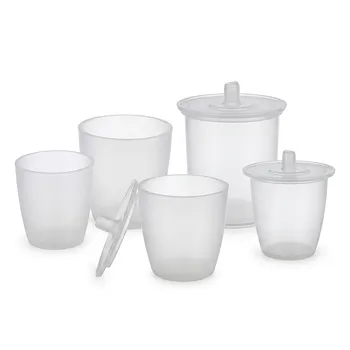
- High Purity PFA Crucible and Corrosion Resistant PTFE Beaker for Trace Analysis and Custom Laboratory Applications
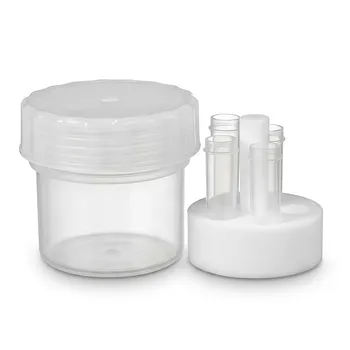
- Corrosion Resistant PTFE Support with PFA Transparent Reaction Tank and High Purity PFA Sampling Tube for Trace Analysis
- High Purity PTFE PFA Plastic Crucible for Corrosion Resistant Acid Digestion and Trace Analysis
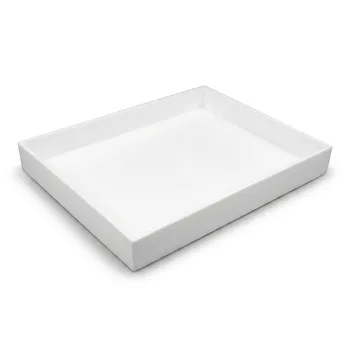
- High Purity PTFE Trays Corrosion Resistant Laboratory Labware Customizable Square Round Fluoropolymer Trays
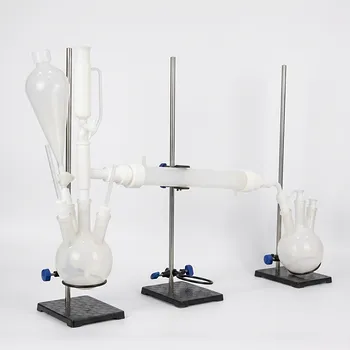
- High Purity PFA Constant Pressure Condensation Reaction System Acid Resistant High Temperature Customizable Teflon Labware
People Also Ask
- Why are high-purity vessels critical for BiFeO3 synthesis? Ensuring Phase Purity
- Why is the use of high-purity PFA or PTFE labware critical during TiO2 nanoparticle purification? Protect Sample Purity
- Why is high-purity PFA labware necessary for Znx@LS-2 zeolite ICP-OES analysis? Ensure Trace-Level Precision
- Why is high-purity PFA trace analysis labware used for MXene? Ensure Superior Material Integrity in Research
- What key material characteristics make PTFE and PFA suitable for high-purity laboratory labware, trace analysis containers, and medical microporous tubing? Discover the essential properties that ensure purity.