Polymer cross-linking and glass transition temperature (Tg) determine whether a material stays rigid, becomes flexible, or loses its load-bearing capability as temperature rises. Below Tg, amorphous polymer regions are glassy, stiff, and potentially brittle. Near and above Tg, chain segments move more freely, reducing mechanical modulus and increasing flexibility; cross-linked polymers resist this softening more effectively, while lightly cross-linked or uncross-linked thermoplastics eventually become leathery, rubbery, and, at higher temperatures, molten.
Tg identifies a major change in polymer mechanics, while cross-link density determines how much strength and dimensional stability remain after that transition. For high-performance labware, material selection must consider Tg, cross-linking, melting behavior, decomposition temperature, applied loads, pressure, and chemical exposure together.
Why Temperature Changes Polymer Stiffness
Chain Mobility Controls Mechanical Modulus
As temperature increases, polymer chain segments gain mobility. The material therefore offers less resistance to deformation, causing its Young's modulus, flexural modulus, hardness, and yield strength to decline.
This effect matters even when the polymer has not reached its melting or decomposition temperature. A component can remain chemically intact while becoming too flexible to support a load, hold a seal, or maintain dimensional accuracy.
The Glass Transition Separates Mechanical Regimes
Below Tg, amorphous polymer regions behave in a glassy state. They are relatively rigid but may have limited ability to absorb strain, making them more vulnerable to cracking under impact, thermal shock, or concentrated stress.
Above Tg, those regions enter a leathery or rubbery state. The polymer becomes more compliant and ductile, but its stiffness and load-bearing capacity decrease substantially.
Tg Is Not the Same as the Maximum Service Temperature
Tg marks a major mechanical transition, not automatically the highest temperature at which a component can be used. The practical temperature limit also depends on stress, duration, geometry, pressure, chemical environment, creep, melting behavior, and thermal decomposition.
For semicrystalline fluoropolymers such as PTFE and PFA, crystalline regions can continue providing structure above the amorphous Tg. However, their stiffness and strength still decline with temperature, and the material ultimately approaches its melting or processing range.
How Cross-Linking Changes High-Temperature Behavior
Uncrosslinked Thermoplastics Soften Progressively
Thermoplastics with little or no cross-linking consist primarily of separate polymer chains. When heated through Tg, those chains can move relative to one another, producing a major reduction in stiffness.
With further heating, the material becomes increasingly rubbery or viscous and may eventually melt. This behavior allows thermoplastics to be reshaped, but it also creates risks of creep, sagging, seal relaxation, and loss of dimensional control during high-temperature laboratory use.
Cross-Linked Networks Resist Flow
Cross-linking connects polymer chains into a three-dimensional network. These chemical links restrict large-scale chain movement, so the material retains more of its modulus, strength, and shape stability at elevated temperatures above Tg.
A thermoset does not melt in the same way as an uncrosslinked thermoplastic. Instead, excessive heating eventually causes irreversible chemical degradation or decomposition of the network.
More Cross-Linking Is Not Always Better
Increasing cross-link density generally improves high-temperature rigidity, creep resistance, and dimensional stability. It can also reduce flexibility and increase brittleness, particularly when the material is used below Tg or exposed to thermal shock.
The appropriate network structure depends on the component. A rigid digestion-vessel support may benefit from high cross-link density, while a sealing ring requires sufficient elasticity and strain recovery.
What Tg Means for Labware and Components
Rigid Structural Parts
For brackets, fixtures, vessels, and machined components carrying sustained loads, operating near or above Tg can cause unacceptable deformation even when the material has not chemically degraded.
Designers must evaluate temperature-dependent modulus rather than relying only on a room-temperature strength or hardness value. A material that is rigid at ambient conditions may provide inadequate support at the process temperature.
Tubing and Fluid-Transfer Components
Tubing becomes more flexible as temperature rises, which can simplify routing but reduce resistance to collapse, kinking, and pressure-driven deformation. Pressure ratings must therefore be reduced or otherwise validated at elevated temperatures.
PFA illustrates this behavior: its tensile strength, flexural modulus, hardness, and yield stress decline as temperature increases, while ductility rises. These changes directly affect fluid lines, fittings, and heated reaction assemblies.
Sealing Rings and Gaskets
A seal needs enough compliance to conform to mating surfaces, but it must also retain sufficient elastic recovery and strength. Below the relevant Tg, a polymer can become too brittle to accommodate strain, increasing the risk of micro-cracks and leakage.
Above Tg, excessive softening can cause compression set, extrusion, or loss of contact pressure. The useful sealing range is therefore a design window, not simply “above Tg” or “below Tg.”
Precision-Machined Parts
Thermal softening can alter dimensions, tolerances, surface finish, and hole or thread geometry. Parts that fit accurately at room temperature may deform under clamping force or pressure when heated.
For PTFE, the Young's modulus is reported to fall from approximately 600 MPa at 25°C to around 100 MPa at 150°C and below 50 MPa at 250°C. Such a change must be included in calculations for high-temperature fixtures, vessels, and custom-machined parts.
Molecular Structure Also Controls Tg
Steric Crowding Can Raise Tg
Bulky cyclic or substituted side groups restrict backbone movement and reduce the ease with which chains rearrange. This can elevate Tg and improve thermal rigidity.
In perfluorinated dioxolane polymers, highly crowded structures can produce Tg values in the approximate range of 165°C to 185°C, depending on composition and molecular architecture.
Flexible Side Chains Can Lower Tg
Pendant dialkylether groups introduce additional free volume and can increase local flexibility. These structural features can lower Tg to approximately 93°C in some fluoropolymer compositions.
This trade-off can be useful when a component must remain flexible or tough, but it may reduce rigidity at moderate operating temperatures.
Copolymer Composition Enables Tuning
Changing monomer ratios allows engineers to balance thermal resistance, flexibility, toughness, optical properties, and chemical performance. The resulting Tg should be treated as a material-specific design parameter rather than inferred from the polymer family name alone.
Backbone regularity also matters. Increasing head-to-head or tail-to-tail structural defects can suppress Tg; the cited simulations and experiments show that increasing defect concentration from 0% to 20% reduced Tg by more than 30 K in one fluoropolymer system.
Tg, Decomposition, and Temperature Limits
Mechanical Failure Can Precede Chemical Failure
A polymer may have a high decomposition temperature while already being too soft for its application. This is why Td alone cannot establish a safe operating temperature for a load-bearing part.
For example, fluorinated polymers may show degradation-onset temperatures between approximately 380°C and 480°C, while their Tg values can range from about 89°C to above 220°C. The material may therefore lose mechanical performance long before decomposition begins.
Chemical Stability Does Not Guarantee Dimensional Stability
Fluorinated functional groups and cross-linkable structures can improve resistance to aggressive solvents, corrosive reagents, and thermal degradation. They do not eliminate temperature-dependent creep, modulus loss, or seal relaxation.
High-performance labware must be assessed against both chemical attack and mechanical demand at the actual operating temperature.
Time and Stress Must Be Included
Short exposures and sustained exposures can produce different outcomes. A component may tolerate a brief temperature excursion but deform under constant pressure or load during a long experiment.
Creep testing, pressure testing, thermal cycling, and dimensional inspection are more reliable than a single nominal temperature rating when the application is demanding.
Understanding the Trade-offs
High Cross-Link Density Versus Flexibility
A highly cross-linked network generally improves stiffness and resistance to flow above Tg. The corresponding reduction in chain mobility can make the material less flexible and more susceptible to brittle failure under impact or low-temperature strain.
High Tg Versus Toughness
Raising Tg can improve rigidity and thermal dimensional stability. However, a high-Tg polymer may be less forgiving when cooled below its transition or when subjected to sudden mechanical or thermal stress.
Thermoplastic Processability Versus High-Temperature Stability
Uncrosslinked thermoplastics are easier to melt-process, machine, weld, or reform. Their ability to flow under heat is also the source of their vulnerability to creep and loss of shape under load.
Chemical Resistance Versus Structural Performance
Fluoropolymers can provide exceptional chemical resistance and low contamination risk, but their modulus and pressure capability still decline at elevated temperature. Chemical compatibility should never substitute for temperature-dependent mechanical data.
Common Specification Mistakes
A frequent error is selecting a polymer based only on its maximum published temperature or decomposition temperature. The specification must also account for modulus, tensile and yield strength, creep, hardness, sealing behavior, and the applied load at temperature.
Another mistake is assuming that “above Tg” always means better sealing. A seal needs a controlled balance between compliance and elastic recovery; excessive softening can be as damaging as low-temperature brittleness.
Making the Right Choice for Your Goal
The correct material choice follows from the component's dominant failure mode and actual thermal duty.
- If your primary focus is high-temperature structural stiffness: Select a material with an appropriately high Tg or cross-linked network, then verify temperature-dependent modulus, creep, and dimensional stability under the intended load.
- If your primary focus is flexible, leak-resistant sealing: Confirm that the material remains sufficiently compliant at the lowest service temperature while retaining elastic recovery and resistance to extrusion at the highest temperature.
- If your primary focus is chemical resistance in severe laboratory environments: Evaluate decomposition temperature, reagent compatibility, contamination risk, and mechanical strength together rather than using chemical resistance as the sole selection criterion.
- If your primary focus is precision-machined PTFE or PFA components: Use temperature-specific mechanical data and derate pressure, clamping, and load limits as stiffness and yield strength decline.
- If your primary focus is custom fluoropolymer performance: Use molecular design, copolymer composition, backbone regularity, and cross-link density to balance Tg, flexibility, toughness, and thermal stability.
Tg identifies where polymer mechanics change; cross-linking and molecular structure determine how strongly the material responds, so reliable labware design must evaluate both together under real operating conditions.
Summary Table:
| Factor | Effect on Stiffness | Temperature Limit |
|---|---|---|
| Tg | Below Tg: glassy, rigid; above Tg: flexible, softer | Not max service temp; depends on load & time |
| Cross-linking | Increases rigidity and creep resistance above Tg | Prevents melting; decomposes at high T |
| PTFE | High chemical resistance; low friction | Tg ~ -115°C; use up to 260°C (short term) |
| PFA | Similar to PTFE but melt-processable | Tg ~ -115°C; use up to 260°C (short term) |
| Thermal decomposition | Chemical breakdown at high T | Typically >380°C for fluoropolymers |
Key Takeaway: For labware, both Tg and cross-linking must be considered alongside mechanical load and temperature.
Ready to upgrade your lab with high-performance PTFE/PFA solutions? At KINTEK, we specialize in precision-crafted fluoropolymer labware and custom CNC-machined components. Whether you need digestion vessels, tubing, or complex custom parts, our materials maintain reliability under demanding temperatures and harsh chemicals. Contact us today to discuss your requirements and benefit from our expertise in high-purity, high-performance polymers. Get in touch with our team and let's engineer the perfect solution for your lab.
Related Products
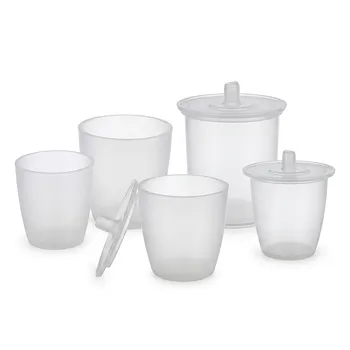
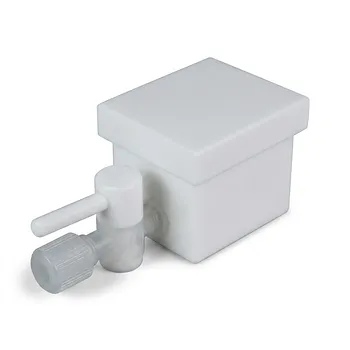
- High Purity PFA Crucible and Corrosion Resistant PTFE Beaker for Trace Analysis and Custom Laboratory Applications
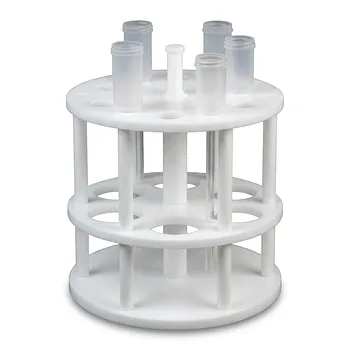
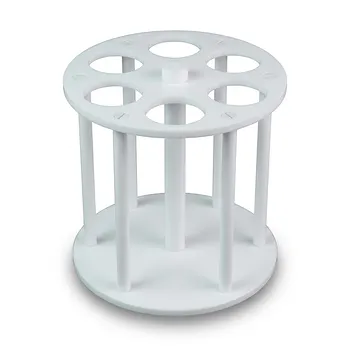
- Custom PFA Microcolumn Racks and PTFE Machined Low Background Corrosion Resistant Laboratory Fixtures
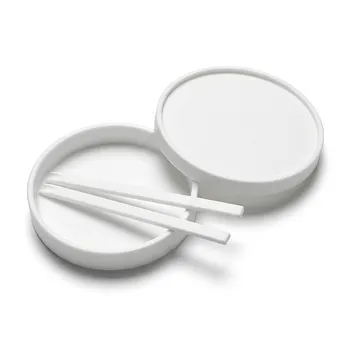
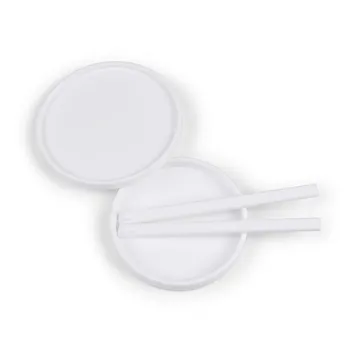
- Custom Polytetrafluoroethylene PTFE Petri Dishes 60mm Corrosion Resistant Low Background Labware
- Custom PTFE Petri Dishes Corrosion Resistant High Purity Low Background Labware
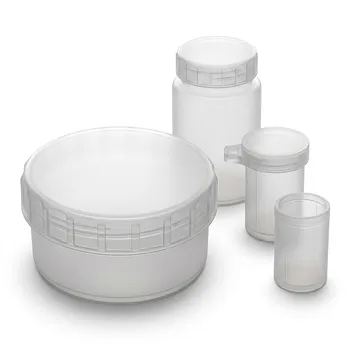
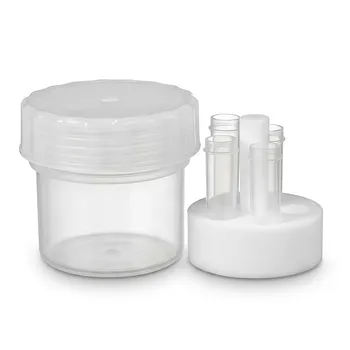
- PFA Reaction Jar Corrosion Resistant Wide Mouth PTFE Lab Bottle High Purity Chemical Vessel
People Also Ask
- Why are high-purity vessels critical for BiFeO3 synthesis? Ensuring Phase Purity
- Why is the use of high-purity PFA or PTFE labware critical during TiO2 nanoparticle purification? Protect Sample Purity
- Why is high-purity PFA labware necessary for Znx@LS-2 zeolite ICP-OES analysis? Ensure Trace-Level Precision
- Why is high-purity PFA trace analysis labware used for MXene? Ensure Superior Material Integrity in Research
- What key material characteristics make PTFE and PFA suitable for high-purity laboratory labware, trace analysis containers, and medical microporous tubing? Discover the essential properties that ensure purity.