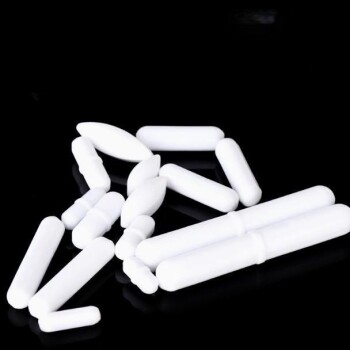
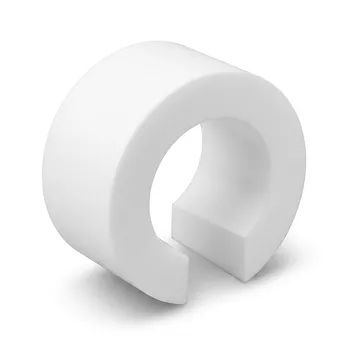
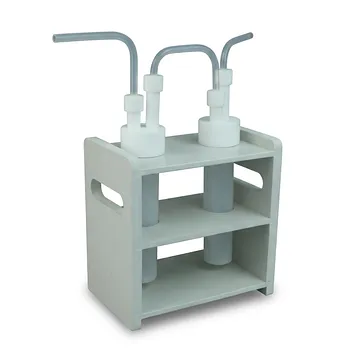
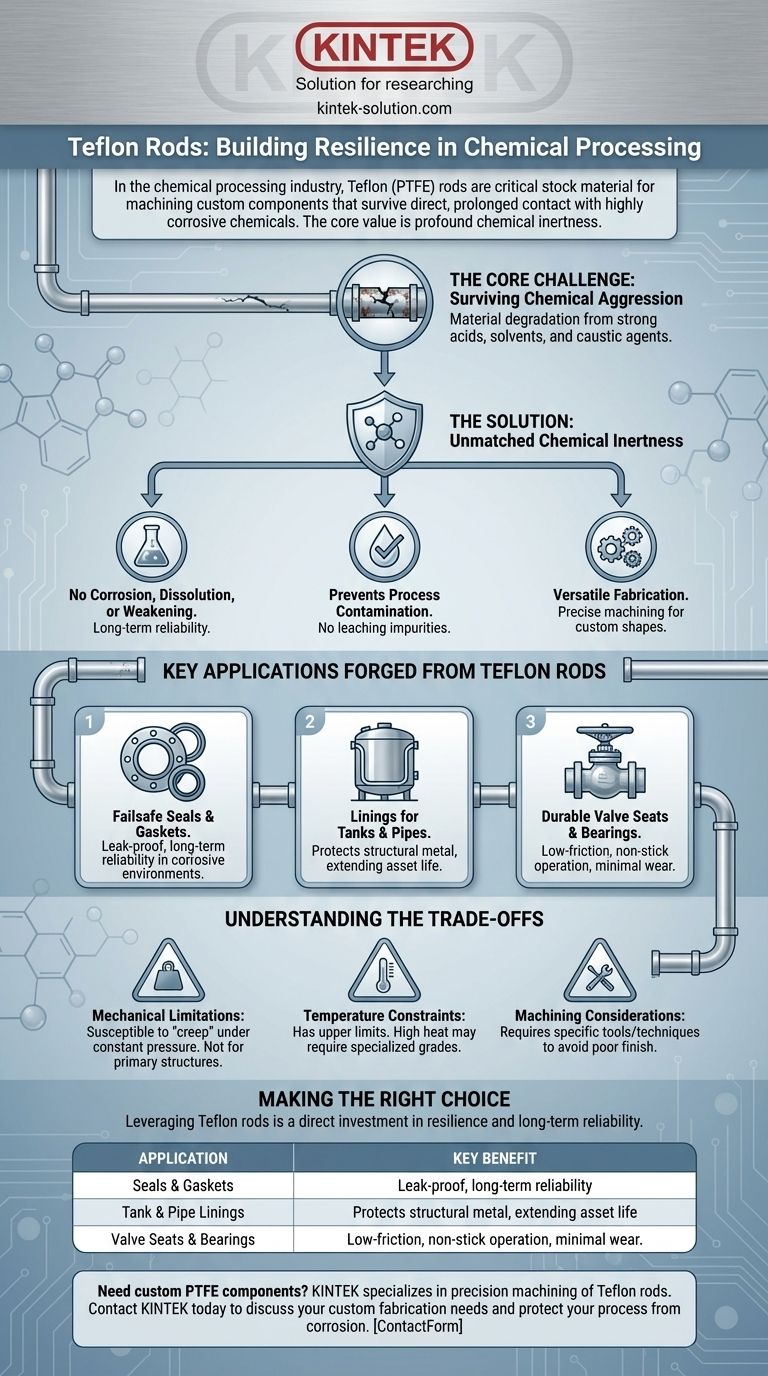
In the chemical processing industry, Teflon rods are a critical stock material used to machine custom components that can survive direct, prolonged contact with highly corrosive chemicals. These components primarily include durable seals, gaskets, valve seats, and linings for tanks and pipes, where material failure is not an option.
The core value of Teflon in chemical processing isn't just its non-stick quality; it's the material's profound chemical inertness. This property allows engineers to build systems that contain and control aggressive substances without the risk of corrosion, equipment failure, or process contamination.
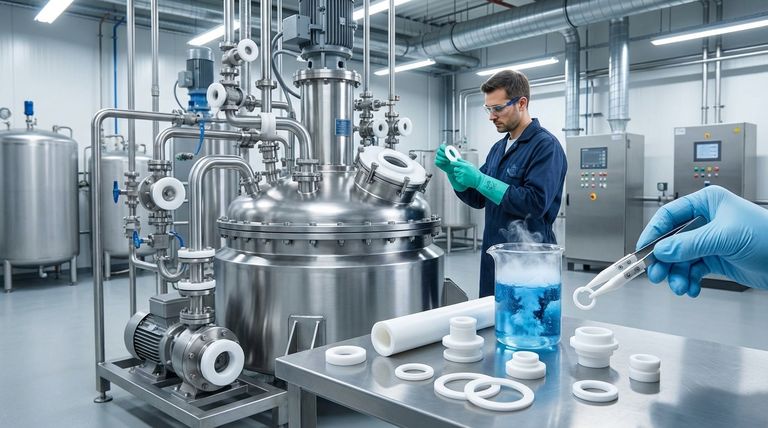
The Core Challenge: Surviving Chemical Aggression
The fundamental problem in any chemical plant is material degradation. Most metals, plastics, and elastomers will quickly break down when exposed to the strong acids, solvents, and caustic agents used in processing. Teflon provides a definitive solution.
Unmatched Chemical Inertness
Teflon, or Polytetrafluoroethylene (PTFE), is one of the most chemically resistant materials known. It is virtually immune to attack from acids, alkalis, and organic solvents.
This inertness ensures that components made from Teflon rods do not corrode, dissolve, or weaken over time, providing exceptional long-term reliability.
Preventing Process Contamination
Because Teflon does not react with the chemicals it contains, it does not leach impurities into the process stream. This is critical for industries like pharmaceuticals or specialty chemicals where product purity is paramount.
Versatility in Fabrication
Teflon rods serve as a versatile raw material. They can be precisely machined into a wide variety of custom shapes and sizes to fit specific equipment, making them ideal for creating bespoke parts for reactors, pumps, and valves.
Key Applications Forged from Teflon Rods
The unique properties of Teflon make it the material of choice for several critical applications where both chemical resistance and physical durability are required.
Failsafe Seals and Gaskets
The ability of Teflon to form a tight, leak-proof seal is essential for safety and operational efficiency. Gaskets and seals machined from Teflon rods prevent hazardous leaks and maintain pressure within vessels and pipes.
These components remain functional and do not become brittle or degrade, even after years of exposure to harsh chemicals.
Linings for Tanks and Pipes
To protect large, expensive steel tanks and piping systems from corrosion, they are often lined with Teflon. This lining acts as a barrier, shielding the structural metal from the aggressive contents.
Using Teflon in this way extends the life of critical infrastructure and prevents catastrophic failures.
Durable Valve Seats, Bearings, and Bushings
In components with moving parts, such as valves, Teflon’s low coefficient of friction is a major advantage. It ensures smooth, non-stick operation.
Valve seats, bearings, and bushings made from Teflon resist abrasion and wear, even in environments with high loads or constant motion. This drastically reduces the need for maintenance and prevents equipment seizure.
Understanding the Trade-offs
While incredibly effective, Teflon is not a universal solution. An expert understands its limitations and when to specify it.
Mechanical Limitations
Teflon is not as rigid or strong as metal. It is susceptible to "creep," or slow deformation, under constant high pressure. For this reason, it is typically used as a component or lining rather than for primary structural purposes.
Temperature Constraints
Although Teflon has a wide operating temperature range, it has distinct upper limits. In extremely high-temperature applications, other materials or specialized filled-grade versions of PTFE may be required.
Machining Considerations
Machining Teflon requires specific tools and techniques. Its relative softness compared to metals means that improper handling can result in poor surface finishes or dimensional inaccuracies, compromising the performance of the final part.
Making the Right Choice for Your Application
Selecting Teflon is a strategic engineering decision based on a specific operational need.
- If your primary focus is preventing leaks: Teflon rods are the ideal source material for machining custom gaskets and seals that remain inert and effective against aggressive chemicals.
- If your primary focus is protecting equipment integrity: Use Teflon for lining tanks and pipes to shield structural metals from corrosion, dramatically extending asset life and preventing failures.
- If your primary focus is reliable mechanical operation: Fabricate valve seats, bearings, and bushings from Teflon to ensure low-friction, non-stick performance that minimizes wear and reduces maintenance cycles.
Ultimately, leveraging Teflon rods is a direct investment in the resilience and long-term reliability of your chemical processing operations.
Summary Table:
| Application | Key Benefit |
|---|---|
| Seals & Gaskets | Leak-proof, long-term reliability in corrosive environments. |
| Tank & Pipe Linings | Protects structural metal from chemical attack, extending asset life. |
| Valve Seats & Bearings | Low-friction, non-stick operation with minimal wear and maintenance. |
Need custom PTFE components that guarantee chemical resistance and reliability?
KINTEK specializes in precision machining of Teflon rods into durable seals, liners, labware, and valve components for the semiconductor, medical, laboratory, and industrial sectors. We ensure your parts are fabricated to the highest standards, from prototypes to high-volume production.
Contact KINTEK today to discuss your custom fabrication needs and protect your process from corrosion.
Visual Guide
Related Products
- Customizable PTFE Rods for Advanced Industrial Applications
- Custom Graphite Filled PTFE Rods for Advanced Industrial Applications
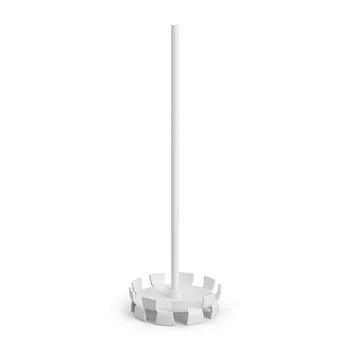
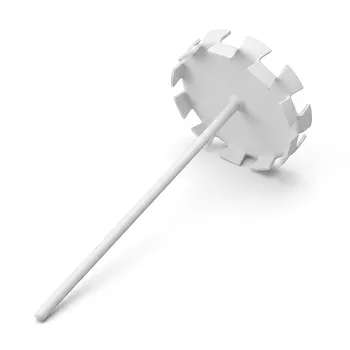
- Custom PTFE Dispersing Disc and Stirring Rod for Chemical Processing and Laboratory Mixing
- Custom PTFE Sleeves and Hollow Rods for Advanced Applications
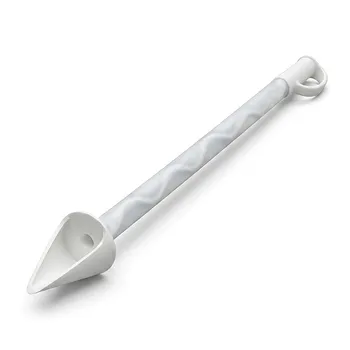
- Corrosion Resistant White PTFE Solid Sampler Manual Sampling Tool Customizable Length
People Also Ask
- How do PTFE rods contribute to energy efficiency in industrial applications? Reduce Friction & Power Consumption
- What are PTFE rods and how are they manufactured? A Guide to Their Properties and Production
- What are the different types of PTFE rods available based on manufacturing technology? Choose the Right Type for Your Project
- Why are PTFE rods suitable for medical applications? Unmatched Safety and Sterilization Performance
- How are PTFE rods utilized in electronic and electrical applications? Unlock Superior Performance & Reliability