At their core, Metal-Polymer Bronze Backed PTFE Plain Bearings are considered versatile because their composite structure intelligently combines the mechanical strength of metal with the self-lubricating, low-friction, and corrosion-resistant properties of Polytetrafluoroethylene (PTFE). This fusion creates a single component that solves multiple engineering challenges simultaneously, from load-bearing to maintenance-free operation in harsh environments.
The key to their versatility is not a single feature, but a layered design. A strong metal backing provides structural integrity, while a bonded PTFE sliding layer delivers exceptional surface performance, making them adaptable to a vast range of mechanical applications.
The Anatomy of a High-Performance Bearing
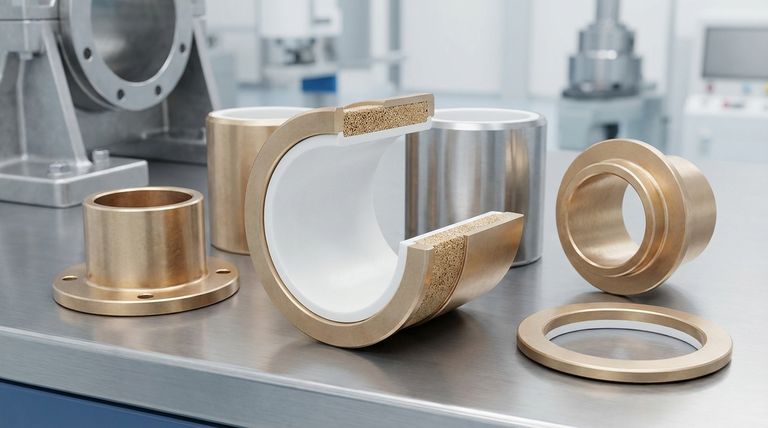
To understand their adaptability, you must first understand their construction. These are not monolithic components but a carefully engineered system of layers, each serving a distinct and critical function.
The Foundation: Metal Backing
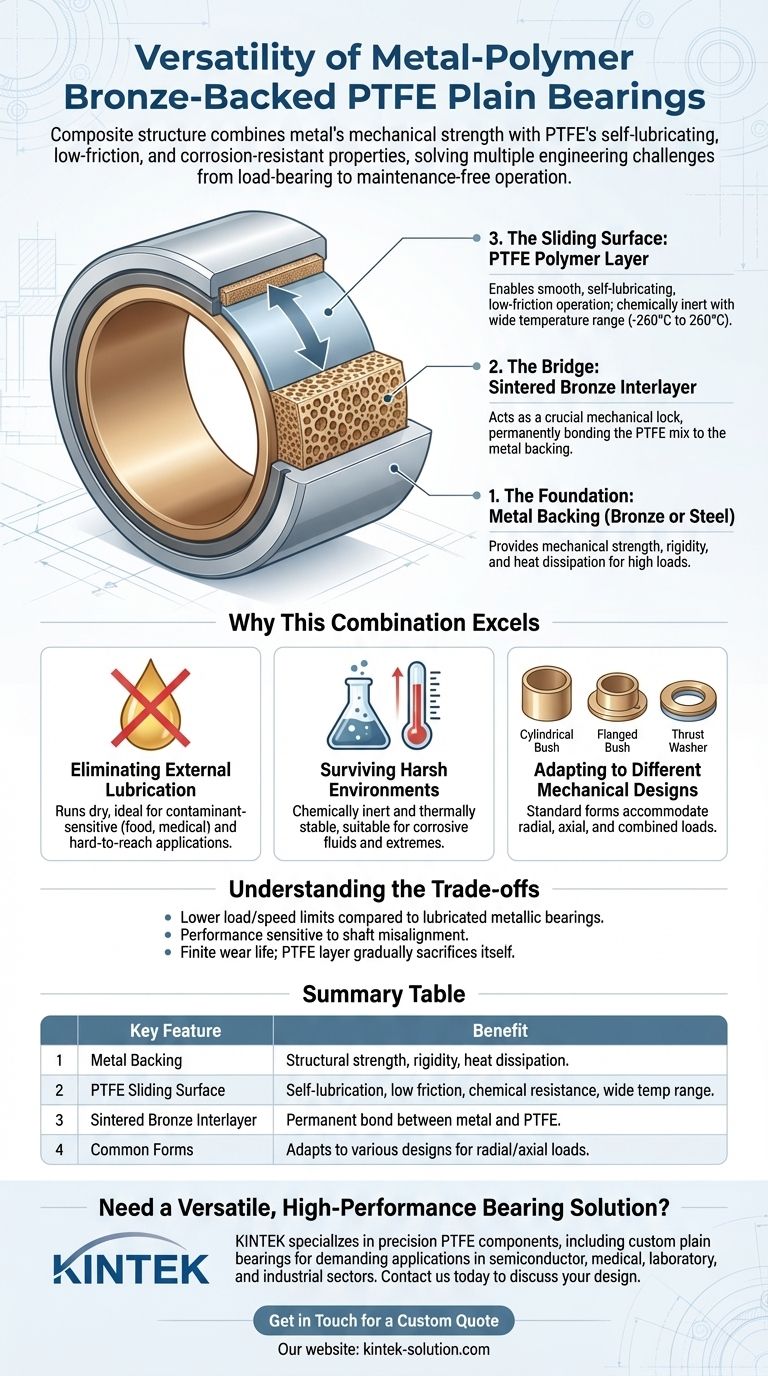
The outer layer, typically a bronze or steel backing, provides the bearing's mechanical strength and rigidity.
This metal shell is responsible for handling high loads and provides the structural integrity needed to maintain its shape under pressure. It also facilitates heat dissipation away from the sliding surface.
The Sliding Surface: PTFE Polymer Layer
The innermost layer, which makes contact with the moving shaft, is a PTFE-based polymer. This is the source of the bearing's low-friction characteristics.
PTFE is an incredibly slick material, which allows for smooth, self-lubricating operation without the need for external grease or oil. It is also chemically inert and has a wide operating temperature range (from -260°C to 260°C), making it highly resistant to chemical attack and environmental extremes.
The Bridge: The Sintered Interlayer
Between the metal backing and the PTFE surface is typically a porous sintered bronze layer. This layer acts as a crucial mechanical lock.
The PTFE polymer mix is impregnated into this porous structure, creating an inseparable bond with the metal backing. This ensures the soft PTFE layer doesn't deform or delaminate under load.
Why This Combination Excels in Practice
The synergy between these layers translates directly into practical benefits that allow these bearings to be deployed in diverse and demanding applications.
Eliminating External Lubrication
The self-lubricating nature of the PTFE surface means these bearings can run dry. This is a critical advantage in applications where grease or oil would cause contamination, such as in food processing, textile, or medical equipment. It also makes them ideal for hard-to-reach locations where regular maintenance is impractical.
Surviving Harsh Environments
Because PTFE is chemically inert, these bearings can operate reliably in the presence of corrosive fluids and chemicals. This, combined with their thermal stability, makes them suitable for everything from chemical pumps to outdoor agricultural machinery.
Adapting to Different Mechanical Designs
These bearings are not limited to a single form. They are commonly manufactured in a variety of standard shapes to accommodate different types of motion and assembly needs.
The most common forms include:
- Cylindrical Bushes: For rotating shafts.
- Flanged Bushes: To handle both radial (rotating) and light axial (thrust) loads.
- Thrust Washers: Specifically for axial loads.
Understanding the Trade-offs
While highly versatile, these bearings are not a universal solution. An objective assessment requires understanding their limitations.
Load and Speed Boundaries
Compared to lubricated metallic roller bearings, metal-polymer bearings have lower limits for load and speed. Extremely high loads combined with high speeds can generate excessive frictional heat, which can accelerate wear of the PTFE layer.
Sensitivity to Misalignment
Like most plain bearings, their performance can be compromised by shaft misalignment. Proper alignment is crucial to ensure even load distribution across the bearing surface and prevent premature, localized wear.
Finite Wear Life
The self-lubricating function relies on the gradual transfer of a thin film of PTFE to the mating shaft. The PTFE layer is, by design, a sacrificial surface. In continuous or highly demanding applications, this layer will eventually wear away, requiring the bearing to be replaced.
Making the Right Choice for Your Application
Selecting the correct bearing depends entirely on the primary goal of your design.
- If your primary focus is maintenance-free operation: These bearings are an excellent choice for sealed-for-life applications or in equipment where regular lubrication is not feasible.
- If your primary focus is performance in a contaminated or corrosive environment: The chemical inertness and dry-running capability of the PTFE layer make them a superior and reliable option.
- If your primary focus is compact, cost-effective design: They offer excellent load-bearing and low-friction performance in a small, lightweight package, often at a lower total system cost than rolling-element bearings.
By combining the best attributes of metal and polymer, these bearings provide a robust and adaptable solution for a remarkable array of engineering challenges.
Summary Table:
| Key Feature | Benefit |
|---|---|
| Metal Backing (Bronze/Steel) | Provides structural strength, rigidity, and heat dissipation for high loads. |
| PTFE Sliding Surface | Enables self-lubrication, low-friction, chemical resistance, and a wide temperature range (-260°C to 260°C). |
| Sintered Bronze Interlayer | Creates a permanent, inseparable bond between the metal backing and PTFE layer. |
| Common Forms (Bushes, Washers) | Adapts to various mechanical designs for radial, axial, and combined loads. |
Need a Versatile, High-Performance Bearing Solution?
KINTEK specializes in manufacturing precision PTFE components, including custom-designed plain bearings for demanding applications. Whether you require a standard design or a custom fabrication from prototype to high-volume production, our expertise ensures a reliable, maintenance-free solution tailored to your needs in the semiconductor, medical, laboratory, and industrial sectors.
Contact us today to discuss how our PTFE components can enhance your design's performance and reliability.
Get in Touch for a Custom Quote
Visual Guide
Related Products
- Custom Graphite Filled PTFE Rods for Advanced Industrial Applications
- PTFE Silicon Wafer Holder for Acid Etching and Cleaning Process 2 4 6 8 Inch Customizable High Temperature Resistant
- Custom PTFE Flower Basket Cleaning Support Corrosion Resistant Low Background Wafer Carrier for Advanced Polymer Research
- Custom PTFE Laboratory Cleaning Basket Carrier High Purity Acid Base Resistant Wafer Holder Low Background Contamination Free Chemical Bath Rack
- Customizable PTFE Heat Insulation Plate High Temperature Corrosion Resistant Laboratory Support Layered Multi Tier Stand
People Also Ask
- What property does graphite filler provide to PTFE? Achieve Superior Self-Lubrication and Low Friction
- How does graphite-filled PTFE perform? A Guide to Superior Self-Lubricating Components
- What are the advantages of Polytetrafluoroethylene (PTFE) with Graphite Fill? Enhance Wear and Friction Performance
- How do graphite fillers enhance PTFE? Achieve Superior Self-Lubrication and Wear Resistance
- How is graphite filler typically used in PTFE? Enhance Wear Resistance & Self-Lubrication