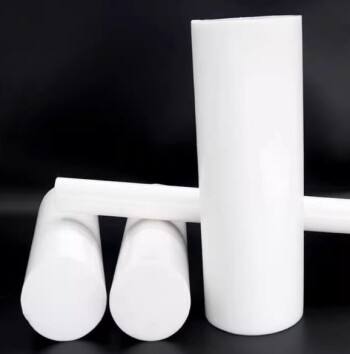
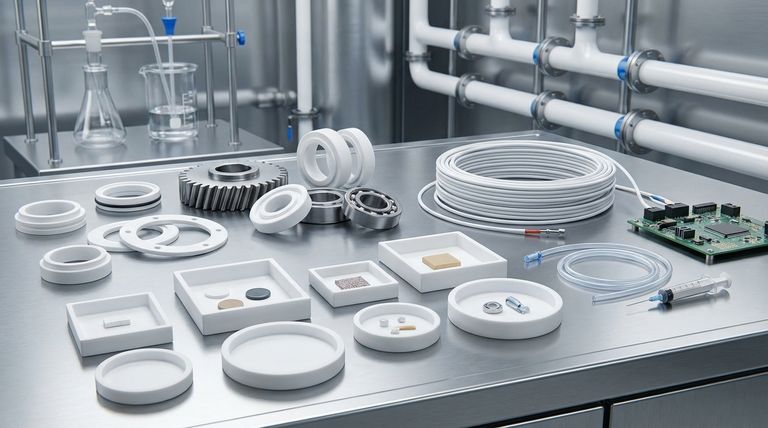
Polytetrafluoroethylene (PTFE) is a high-performance fluoropolymer used across a vast range of sectors due to its unique material properties. Its most common applications are in the chemical processing, aerospace, automotive, medical, and electrical industries for components like corrosion-resistant linings, low-friction seals, high-temperature electrical insulation, and biocompatible implants.
The true value of PTFE isn't one single feature, but its unique combination of extreme chemical inertness, a remarkably low coefficient of friction, and high-temperature tolerance. This trifecta makes it an essential problem-solving material wherever harsh conditions, smooth movement, or purity are required.
The Core Properties Driving PTFE Adoption
To understand why PTFE is so prevalent, you must first understand its fundamental characteristics. Its use is almost always driven by one or more of its four defining properties.
Unmatched Chemical Resistance
PTFE is virtually inert and does not react with the vast majority of industrial chemicals, acids, and bases. This makes it an ideal material for handling and storing corrosive substances.
Exceptionally Low Friction
PTFE has one of the lowest coefficients of friction of any solid material, a quality often compared to wet ice on wet ice. This "non-stick" or self-lubricating property is critical for applications involving sliding action.
High Thermal Stability
This material can perform reliably across a wide range of temperatures without degrading. It maintains its properties in both extremely cold and very hot environments where other polymers would fail.
Superior Electrical Insulation
PTFE is an excellent electrical insulator with high dielectric strength. It does not conduct electricity, making it a safe and reliable choice for insulating wires and electronic components, especially at high frequencies.
Key Industrial Applications: A Deeper Look
Different industries leverage specific PTFE properties to solve critical engineering challenges. The application dictates which characteristic is most important.
Chemical & Food Processing
In these sectors, chemical inertness is paramount. PTFE is used to line pipes, valves, and containers to protect them from corrosive fluids. Its non-stick quality also prevents materials from building up on surfaces in food processing equipment, like conveyor belts.
Aerospace & Automotive
Here, low friction and thermal stability are key. PTFE is machined into seals, gaskets, bearings, and bushings that must operate smoothly with minimal wear and withstand the extreme temperatures found in engines and hydraulic systems.
Medical & Pharmaceutical
The purity and biocompatibility of PTFE, stemming from its inertness, make it a trusted material for medical applications. It is used for surgical implants, catheters, and precision instruments that must not react with the human body.
Electrical & Electronics
The primary driver in this industry is PTFE's role as a superior electrical insulator. It is widely used as insulation for high-performance cables and wires, particularly in applications where signal integrity and safety are critical.
Understanding the Trade-offs
While incredibly versatile, PTFE is not the solution for every problem. Acknowledging its limitations is crucial for proper material selection.
Limited Mechanical Strength
PTFE is a relatively soft material. It lacks the rigidity and tensile strength of many engineering plastics and is not suitable for load-bearing structural components on its own.
Susceptibility to Creep
Under a sustained load, especially at elevated temperatures, PTFE can slowly deform over time. This phenomenon, known as "creep," must be accounted for in component design.
Higher Relative Cost
As a high-performance polymer, PTFE is more expensive than common plastics like polyethylene or polypropylene. Its use is justified when its unique properties are a strict requirement for performance and safety.
Making the Right Choice for Your Goal
Selecting PTFE should be a deliberate decision based on the primary challenge you need to solve.
- If your primary focus is handling corrosive materials: PTFE's chemical inertness makes it the definitive choice for lining pipes, valves, and containers.
- If your primary focus is reducing friction: Its low-friction surface is perfect for self-lubricating bearings, non-stick coatings, and slide plates.
- If your primary focus is high-performance insulation: Its excellent dielectric properties are essential for critical wiring and electronic components.
- If your primary focus is biocompatibility and purity: Its inert nature makes it a safe and reliable choice for medical implants and sterile instruments.
Ultimately, understanding PTFE's core strengths and weaknesses is the key to leveraging its power in the right application.
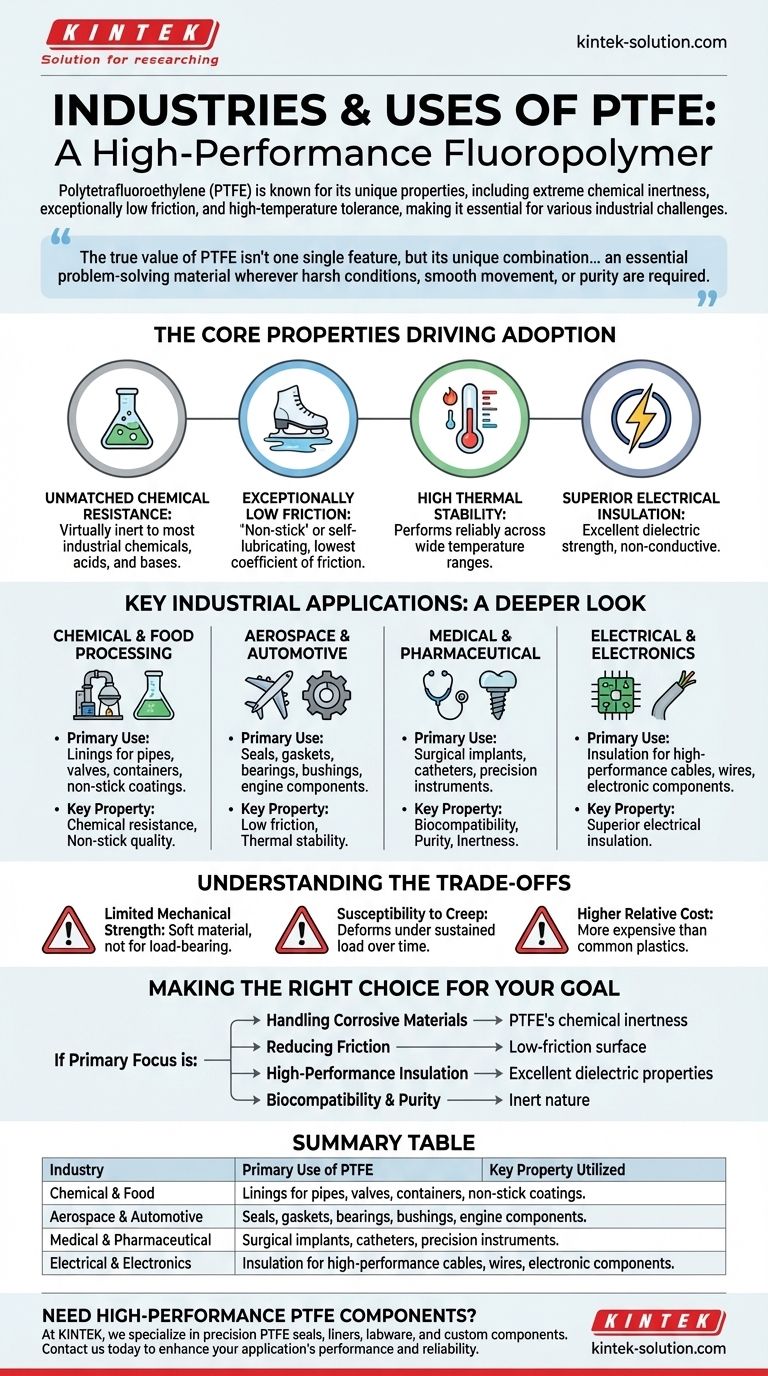
Summary Table:
| Industry | Primary Use of PTFE | Key Property Utilized |
|---|---|---|
| Chemical & Food Processing | Linings for pipes, valves, containers | Chemical resistance, non-stick |
| Aerospace & Automotive | Seals, gaskets, bearings | Low friction, thermal stability |
| Medical & Pharmaceutical | Surgical implants, catheters | Biocompatibility, purity |
| Electrical & Electronics | Insulation for cables, wires | Superior electrical insulation |
Need high-performance PTFE components for your industry?
At KINTEK, we specialize in manufacturing precision PTFE seals, liners, labware, and custom components for the semiconductor, medical, laboratory, and industrial sectors. Whether you require prototypes or high-volume orders, our expertise ensures components that meet the demanding requirements of chemical resistance, low friction, and thermal stability.
Contact us today to discuss how our custom PTFE solutions can enhance your application's performance and reliability.
Visual Guide
Related Products
- Custom PTFE Filtration System Acid Resistant High Purity Semiconductor Grade Chemical Processing Filter
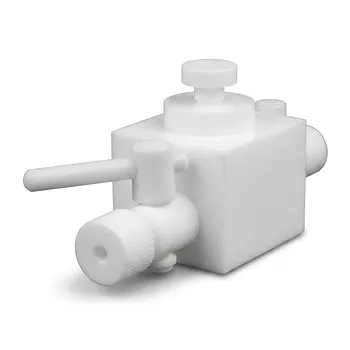
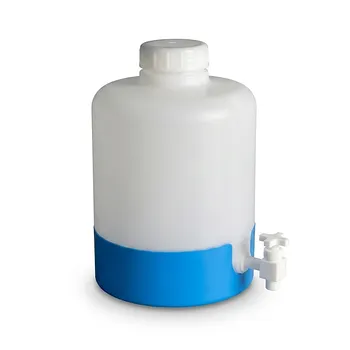
- High Corrosion Resistant PTFE Faucet Polytetrafluoroethylene Valve for Chemical Storage Drums and Fluid Transfer Systems Customizable Industrial Grade
- PTFE PFA Vacuum Filtration System Corrosion Resistant Customizable Shatterproof Laboratory Device
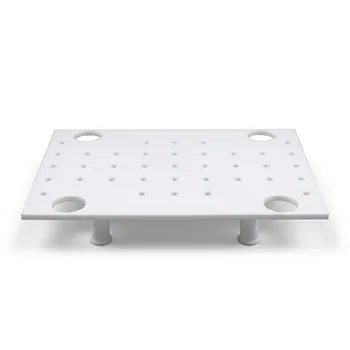
- PTFE Corrosion Resistant Filter with PFA Valve Connections and Integrated Sieve Plate
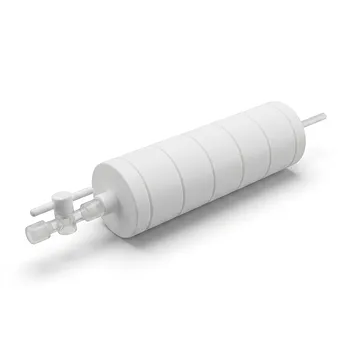
- High Temperature Chemical Resistant 50ml PTFE Syringe Customized Teflon Injector with Threaded Seal for Trace Analysis
People Also Ask
- What makes PTFE filtration systems advantageous for industrial and scientific use? Unmatched Chemical & Thermal Stability
- What sizes and pore options are available for PTFE filters? Choose the Right Filter for Your Application
- What steps are involved in selecting the proper PTFE filter? A 4-Step Guide to Optimal Filtration
- What temperature resistance do PTFE filters offer? Unmatched Thermal Stability from -200°C to +260°C
- How does the hydrophobicity of PTFE filters benefit their use? Ensure Uninterrupted Gas Flow and Solvent Filtration