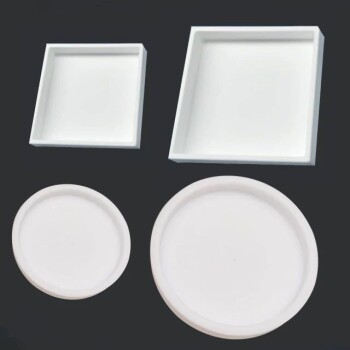
Polytetrafluoroethylene (PTFE) is a high-performance fluoropolymer specified for demanding industrial applications due to a unique combination of properties. Its value stems from its exceptional chemical resistance, an extremely low coefficient of friction, stability across a wide temperature range, and excellent electrical insulation. These traits make it a reliable material in environments where others would quickly degrade.
While often recognized for its non-stick surface, PTFE's true industrial power lies in its ability to solve multiple engineering challenges at once. It performs reliably in harsh environments where materials are simultaneously exposed to corrosive chemicals, extreme temperatures, and mechanical friction.
The Core Properties of PTFE Explained
To understand why PTFE is a go-to material for critical components, we must examine its primary characteristics and how they translate to real-world performance.
Unmatched Chemical Inertness
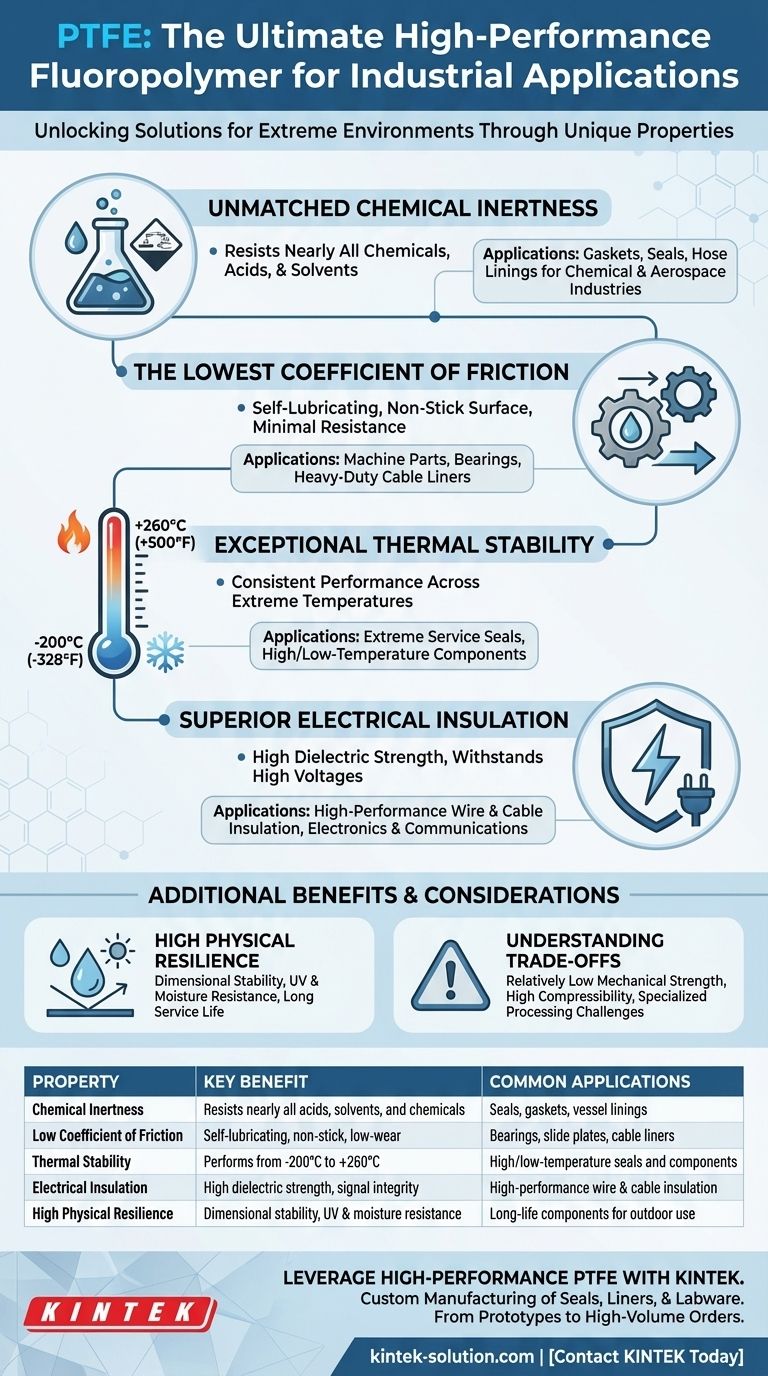
PTFE is resistant to nearly all common chemicals, acids, and solvents. This inertness means it will not corrode or degrade when used to handle aggressive substances.
This property makes it indispensable for applications like gaskets, seals, and linings for hoses and vessels in the chemical processing and aerospace industries.
The Lowest Coefficient of Friction
Among all solid materials, PTFE has one of the lowest coefficients of friction. This means surfaces slide against it with minimal resistance, creating a self-lubricating effect.
Its non-stick, low-wear characteristics are ideal for machine parts, bearings, and heavy-duty cable liners where smooth movement and durability are critical.
Exceptional Thermal Stability
PTFE performs consistently across an exceptionally wide temperature range, from as low as -200°C to a high of +260°C (-328°F to +500°F).
Unlike many plastics that become brittle in the cold or deform with heat, PTFE retains its core properties, making it the most thermally-stable plastic for extreme service conditions.
Superior Electrical Insulation
PTFE is an excellent electrical insulator with high dielectric strength, meaning it can withstand high voltages without conducting electricity.
This makes it a first-choice material for insulating high-performance wires and cables, especially in electronics and communications where signal integrity is paramount.
High Physical Resilience
PTFE exhibits excellent dimensional stability, low water absorption, and high resistance to UV light.
These features ensure that components made from PTFE do not swell, warp, or degrade when exposed to moisture or outdoor environments, giving them a long and predictable service life.
Understanding the Trade-offs
While its properties are exceptional, PTFE is not the solution for every problem. Understanding its limitations is key to using it effectively.
Relatively Low Mechanical Strength
Compared to engineering plastics like Nylon or metals, PTFE is a softer material. It has lower tensile strength and can be susceptible to creep, which is the tendency to slowly deform under a constant load.
High Compressibility
While its dimensional stability is generally good, PTFE is highly compressible. This can be an advantage for creating tight seals in gaskets but must be accounted for in the design of structural components.
Processing Challenges
PTFE has a very high melting temperature and viscosity, which means it cannot be processed using conventional melt-extrusion or molding techniques common for other thermoplastics. This requires specialized manufacturing processes that can impact cost and design possibilities.
Making the Right Choice for Your Application
Selecting the right material requires aligning its properties with your primary engineering goal.
- If your primary focus is chemical compatibility: PTFE is an almost universally safe choice for seals, gaskets, and linings exposed to aggressive media.
- If your primary focus is reducing friction: Its self-lubricating properties make it ideal for low-wear bearings, slide plates, and non-stick surfaces.
- If your primary focus is performance at extreme temperatures: PTFE maintains its integrity in environments up to 260°C (500°F), far exceeding most other polymers.
- If your primary focus is electrical insulation: It is a top-tier material for high-voltage or high-frequency applications where other insulators would fail.
Ultimately, PTFE is the definitive choice for applications where a combination of extreme conditions would cause lesser materials to fail.
Summary Table:
| Property | Key Benefit | Common Applications |
|---|---|---|
| Chemical Inertness | Resists nearly all acids, solvents, and chemicals | Seals, gaskets, vessel linings |
| Low Coefficient of Friction | Self-lubricating, non-stick, low-wear | Bearings, slide plates, cable liners |
| Thermal Stability | Performs from -200°C to +260°C | High/low-temperature seals and components |
| Electrical Insulation | High dielectric strength, signal integrity | High-performance wire & cable insulation |
| High Physical Resilience | Dimensional stability, UV & moisture resistance | Long-life components for outdoor use |
Need High-Performance PTFE Components?
Leverage the unique properties of PTFE to solve your most demanding engineering challenges. KINTEK specializes in the precision manufacturing of custom PTFE components—including seals, liners, and labware—for the semiconductor, medical, laboratory, and industrial sectors.
We provide custom fabrication from prototypes to high-volume orders, ensuring your components meet exact specifications for performance in extreme conditions.
Contact KINTEK today to discuss your project and get a quote!
Visual Guide
Related Products
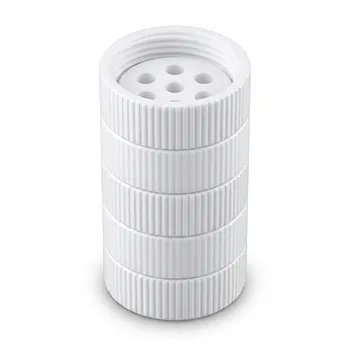
- Custom PTFE Filtration System Acid Resistant High Purity Semiconductor Grade Chemical Processing Filter
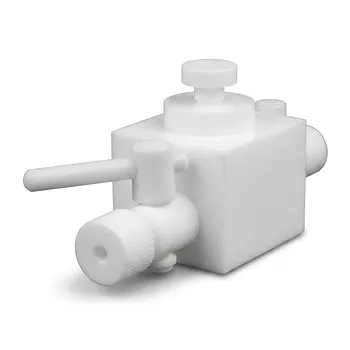
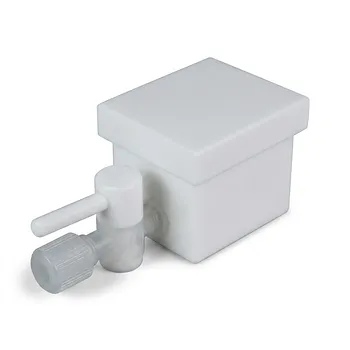
- High Corrosion Resistant PTFE Faucet Polytetrafluoroethylene Valve for Chemical Storage Drums and Fluid Transfer Systems Customizable Industrial Grade
- PTFE PFA Vacuum Filtration System Corrosion Resistant Customizable Shatterproof Laboratory Device
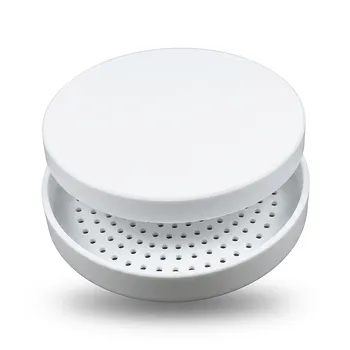
- PTFE Corrosion Resistant Filter with PFA Valve Connections and Integrated Sieve Plate
- High Temperature Chemical Resistant 50ml PTFE Syringe Customized Teflon Injector with Threaded Seal for Trace Analysis
People Also Ask
- What makes PTFE filtration systems advantageous for industrial and scientific use? Unmatched Chemical & Thermal Stability
- What sizes and pore options are available for PTFE filters? Choose the Right Filter for Your Application
- What steps are involved in selecting the proper PTFE filter? A 4-Step Guide to Optimal Filtration
- How does the hydrophobicity of PTFE filters benefit their use? Ensure Uninterrupted Gas Flow and Solvent Filtration
- What temperature resistance do PTFE filters offer? Unmatched Thermal Stability from -200°C to +260°C