In short, PTFE bellows and diaphragms are high-performance, flexible components essential for controlling pressure, isolating fluids, and absorbing movement in demanding industrial environments. Their importance stems from the unique properties of Polytetrafluoroethylene (PTFE), which allows them to operate reliably in conditions where nearly all other materials would fail, ensuring the safety and integrity of critical systems.
The decision to use PTFE for bellows and diaphragms is a deliberate engineering choice for systems where failure is not an option. Its unique combination of chemical inertness, thermal stability, and low friction provides a level of reliability that is unattainable with traditional elastomers or metals.
The Core Function of Flexible Components
To understand why PTFE is so critical, we must first understand the roles these components play. They are not static parts; they are designed to move, flex, and respond to system dynamics.
Bellows: Accommodating Movement and Pressure
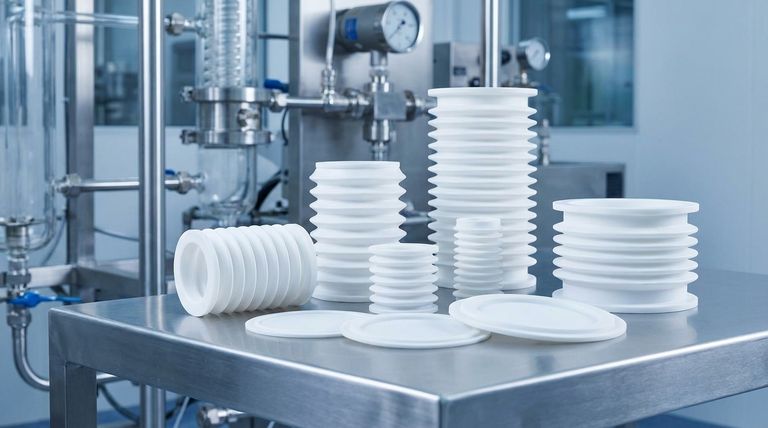
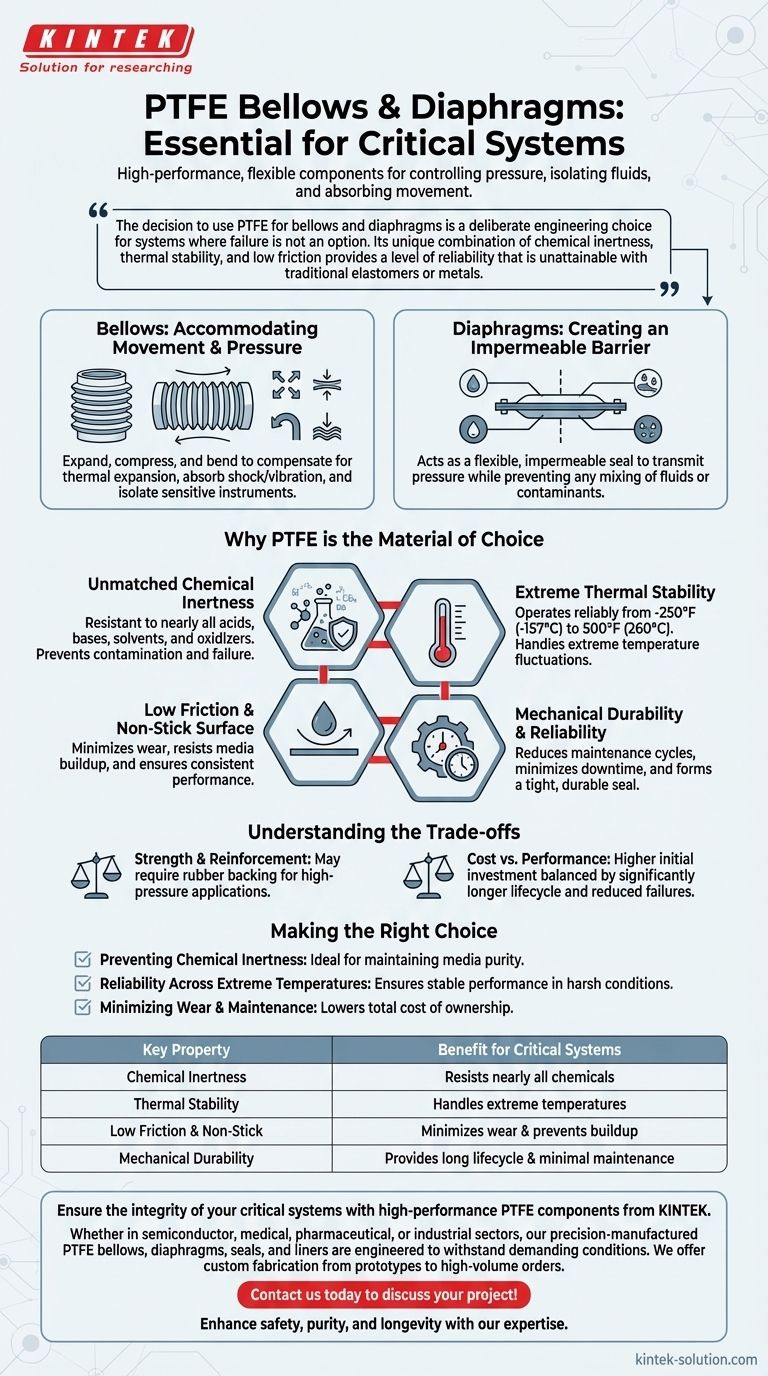
PTFE bellows have an accordion-like design that allows them to expand, compress, and bend. This flexibility is crucial for compensating for thermal expansion, absorbing shock and vibration, and isolating sensitive instruments from system stresses.
Diaphragms: Creating an Impermeable Barrier
A PTFE diaphragm acts as a flexible, impermeable seal between two chambers. Its primary function is to transmit pressure while preventing any mixing of fluids or contaminants, which is vital for maintaining media purity and system safety.
Why PTFE is the Material of Choice
The performance of bellows and diaphragms is defined entirely by the material they are made from. PTFE offers a set of properties that make it uniquely suited for the most hostile operating conditions.
Unmatched Chemical Inertness
PTFE is resistant to nearly all industrial chemicals, including aggressive acids, bases, solvents, and oxidizers. This makes it the default choice for chemical processing and semiconductor manufacturing, where component degradation could lead to catastrophic failure or product contamination.
Extreme Thermal Stability
These components maintain their integrity and flexibility across an exceptionally wide temperature range, from cryogenic lows of -250°F (-157°C) to high-heat applications exceeding 500°F (260°C). This stability is essential for aerospace, defense, and industrial systems that experience severe temperature fluctuations.
Inherent Low Friction and Non-Stick Surface
PTFE has one of the lowest coefficients of friction of any solid, minimizing wear and tear during repeated movement. Its non-adhesive surface resists the buildup of process media, ensuring consistent performance and preventing contamination in pharmaceutical and medical applications.
Mechanical Durability and Reliability
The material's resilience reduces the frequency of maintenance and replacement, which minimizes costly downtime. Its ability to form a tight, durable seal prevents leaks, ensuring both the safety and the operational efficiency of the system.
Understanding the Trade-offs
While PTFE offers exceptional performance, it is important to recognize its operational context. Its selection is a solution for specific, high-stakes challenges.
Strength and Reinforcement
PTFE is not as rigid as metal. In high-pressure applications, a diaphragm may require a rubber or elastomeric backing to provide additional mechanical strength and resilience, combining the chemical resistance of PTFE with the structural integrity of another material.
Cost vs. Performance
PTFE components represent a higher initial investment compared to those made from standard elastomers. However, this cost is justified by their significantly longer lifecycle, reduced maintenance needs, and the prevention of failures in systems where the consequences would be far more expensive.
Making the Right Choice for Your System
Selecting the right component is about matching its capabilities to the primary demands of your application.
- If your primary focus is preventing chemical contamination: PTFE's inertness and non-adhesive surface make it the definitive choice for maintaining media purity.
- If your primary focus is reliability across extreme temperatures: PTFE's wide operating range ensures stable and predictable performance where other materials would become brittle or degrade.
- If your primary focus is minimizing wear and maintenance: The low-friction, durable nature of PTFE reduces replacement cycles, lowering the total cost of ownership over the system's life.
Ultimately, selecting PTFE bellows and diaphragms is a strategic investment in the safety, purity, and longevity of your most critical systems.
Summary Table:
| Key Property | Benefit for Critical Systems |
|---|---|
| Chemical Inertness | Resists nearly all acids, bases, and solvents, preventing contamination and failure. |
| Thermal Stability | Operates reliably from -250°F to 500°F, handling extreme temperature fluctuations. |
| Low Friction & Non-Stick | Minimizes wear and prevents media buildup, ensuring consistent performance. |
| Mechanical Durability | Provides a long lifecycle with minimal maintenance, reducing costly downtime. |
Ensure the integrity of your critical systems with high-performance PTFE components from KINTEK.
Whether you are in the semiconductor, medical, pharmaceutical, or industrial sector, our precision-manufactured PTFE bellows, diaphragms, seals, and liners are engineered to withstand your most demanding operating conditions. We offer custom fabrication from prototypes to high-volume orders, ensuring a perfect fit for your application's unique requirements.
Contact us today to discuss your project and discover how our expertise can enhance the safety, purity, and longevity of your systems.
Visual Guide
Related Products
- Custom PTFE Teflon Balls for Advanced Industrial Applications
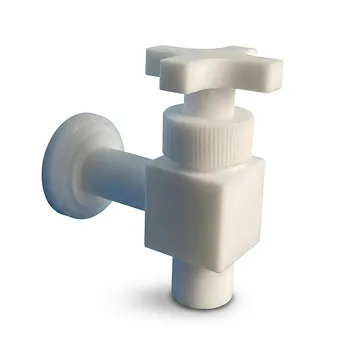
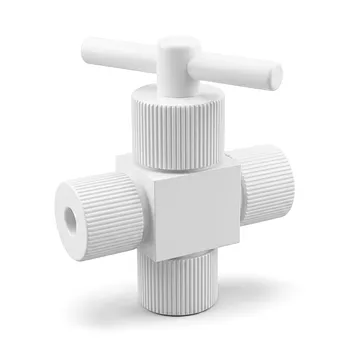
- Corrosion Resistant PTFE Polytetrafluoroethylene Valve and Customizable Laboratory Fluid Dispensing Faucet for Aggressive Chemical Handling in Industrial Storage Tanks and Plastic Drums
- High Corrosion Resistant PTFE Faucet Polytetrafluoroethylene Valve for Chemical Storage Drums and Fluid Transfer Systems Customizable Industrial Grade
- Custom PTFE Insulating Gaskets Corrosion Resistant Teflon Seals Tailored Engineering Plastic Components
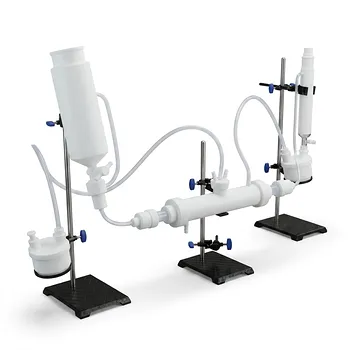
- Custom PTFE Constant Pressure Separatory Funnel Corrosion Resistant Low Background Labware for PFA Flasks
People Also Ask
- In what applications are PTFE balls highly functional? Ideal for Corrosive, Self-Lubricating Systems
- How do the chemical properties of PTFE balls influence their performance? Unmatched Durability in Harsh Environments
- What materials can PTFE balls be made from? Virgin, Modified, or Filled Compounds for Specific Performance
- What are the available grades of PTFE balls? Choose the Right Grade for Your Application
- What are the key properties of PTFE balls? Unlock Superior Performance for Demanding Applications