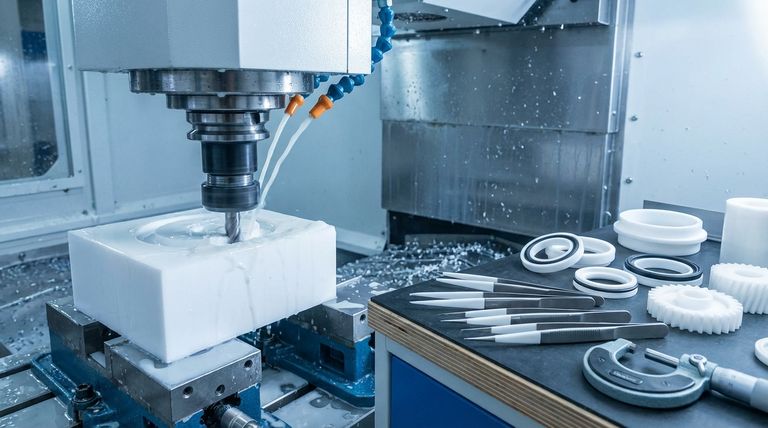
Yes, PTFE can be machined and is most commonly known as Teflon. This incredibly versatile polymer is favored for its unique properties, and standard techniques like CNC milling and turning are used to shape it into custom components for a vast range of industrial applications.
While PTFE's softness makes it surprisingly easy to cut, achieving high-precision results is a significant challenge. Success requires a deep understanding of the material's tendency to expand with heat and deform under pressure.
The Fundamentals of Machining PTFE
Polytetrafluoroethylene (PTFE) has a unique set of properties that directly influence how it is machined. Understanding these fundamentals is the first step toward producing quality parts.
What Makes PTFE Machinable?
PTFE is a soft polymer with the lowest coefficient of friction of any known solid. This inherent slipperiness and softness mean that cutting tools can move through the material with relative ease, requiring less force than metals or harder plastics.
Common Machining Techniques
Standard CNC equipment is perfectly suitable for processing PTFE. The specific method depends on the desired geometry of the final part.
- CNC Turning: This is ideal for creating cylindrical parts like rings, shafts, seals, and rollers.
- CNC Milling: This technique is used for more complex shapes, including intricate patterns, blocks, and parts with cavities.
- Drilling and Tapping: These processes are used to create precise holes and internal threads within PTFE components.
Critical Considerations for Precision
The primary challenge in machining PTFE is not cutting the material, but controlling its physical response to the machining process. Its properties make achieving and holding tight tolerances difficult.
Managing Thermal Expansion
PTFE has a very high coefficient of thermal expansion. Even a small amount of heat generated from cutting friction will cause the material to expand, compromising dimensional accuracy. To counter this, integrated coolant systems are essential to dissipate heat at the point of contact.
The Importance of Sharp Tooling
Using extremely sharp and polished cutting tools is non-negotiable. HSS (High-Speed Steel) or carbide tools are recommended. A sharp edge produces a clean shearing action, which minimizes friction, heat buildup, and material deformation.
Optimizing Speeds and Feeds
The goal is to remove material efficiently without generating excessive heat. Machinists typically use moderate cutting speeds (around 200 to 500 surface feet per minute) and relatively high feed rates (0.002 to 0.010 inches per revolution) to prevent the tool from dwelling and imparting heat.
Applying Correct Clamping Pressure
PTFE is soft and prone to stress creep, meaning it will slowly deform under constant pressure. Fixtures and clamps must apply only the minimum pressure necessary to hold the workpiece securely. Excessive force will compress the material, leading to inaccurate dimensions once the part is released.
Understanding the Trade-offs
Machining PTFE involves balancing its ease of cutting against its challenging physical properties. Ignoring these trade-offs is a common source of failure.
The Challenge of Tight Tolerances
The combination of high thermal expansion and stress creep makes PTFE a difficult material for applications requiring extremely tight tolerances. The part's final dimensions can change significantly as it returns to ambient temperature or is removed from the fixture.
Designing for the Material
Successful PTFE parts are designed with the material's properties in mind. Instead of forcing it to hold a dimension it naturally wants to change, engineers design applications that leverage its strengths, such as its unparalleled chemical resistance and low-friction surface.
Why Choose PTFE?
Despite the machining challenges, PTFE is chosen for its remarkable combination of properties. It is virtually impervious to chemical attack, is an excellent electrical insulator, and has fantastic non-stick characteristics. This makes it indispensable for components like chemical-resistant seals, high-performance bearings, non-stick coatings, and electrical insulators.
Making the Right Choice for Your Goal
Your approach to machining PTFE should be dictated by the final application's requirements.
- If your primary focus is high-precision components: Prioritize aggressive thermal management with coolant and minimize all clamping pressure to prevent distortion.
- If your primary focus is prototypes or non-critical parts: You can leverage PTFE's easy machinability for rapid production, as minor dimensional variances may be acceptable.
- If your primary focus is chemical resistance or low friction: Design the part from the outset to capitalize on these unique strengths, allowing for more generous tolerances where possible.
Ultimately, mastering PTFE machining is about controlling the environment to work with the material's nature, not against it.
Summary Table:
| Property | Impact on Machining | Key Consideration |
|---|---|---|
| Soft & Slippery | Easy to cut | Requires sharp tools for clean shearing |
| High Thermal Expansion | Dimensions change with heat | Coolant systems are essential |
| Prone to Stress Creep | Deforms under pressure | Minimal clamping force required |
| Excellent Chemical Resistance | Ideal for harsh environments | Design to leverage this strength |
Need high-precision, chemically resistant PTFE components?
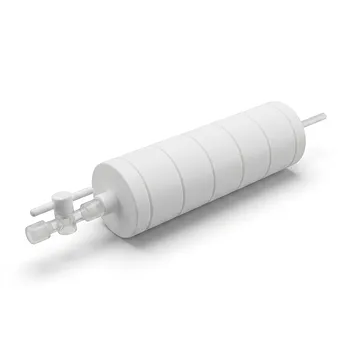
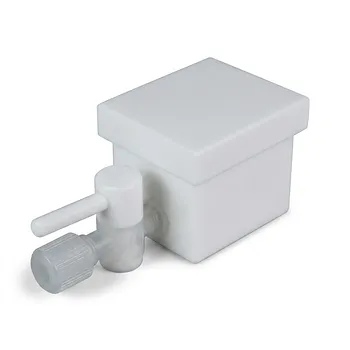
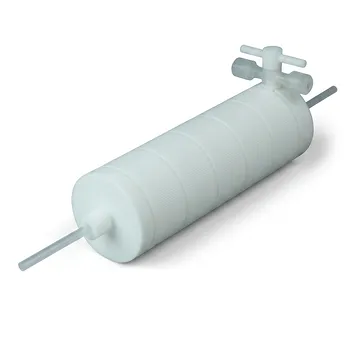
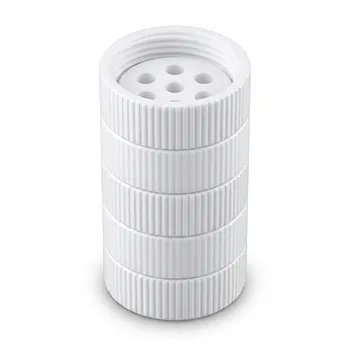
At KINTEK, we specialize in machining PTFE (Teflon) for the most demanding applications. Our expertise in managing thermal expansion and stress creep ensures your custom seals, liners, and labware meet exact specifications.
We serve the semiconductor, medical, laboratory, and industrial sectors with:
- Prototype to high-volume production
- Precision CNC milling and turning
- Custom fabrication for complex geometries
Leverage our material science knowledge to get parts that perform. Contact our engineering team today to discuss your project requirements.
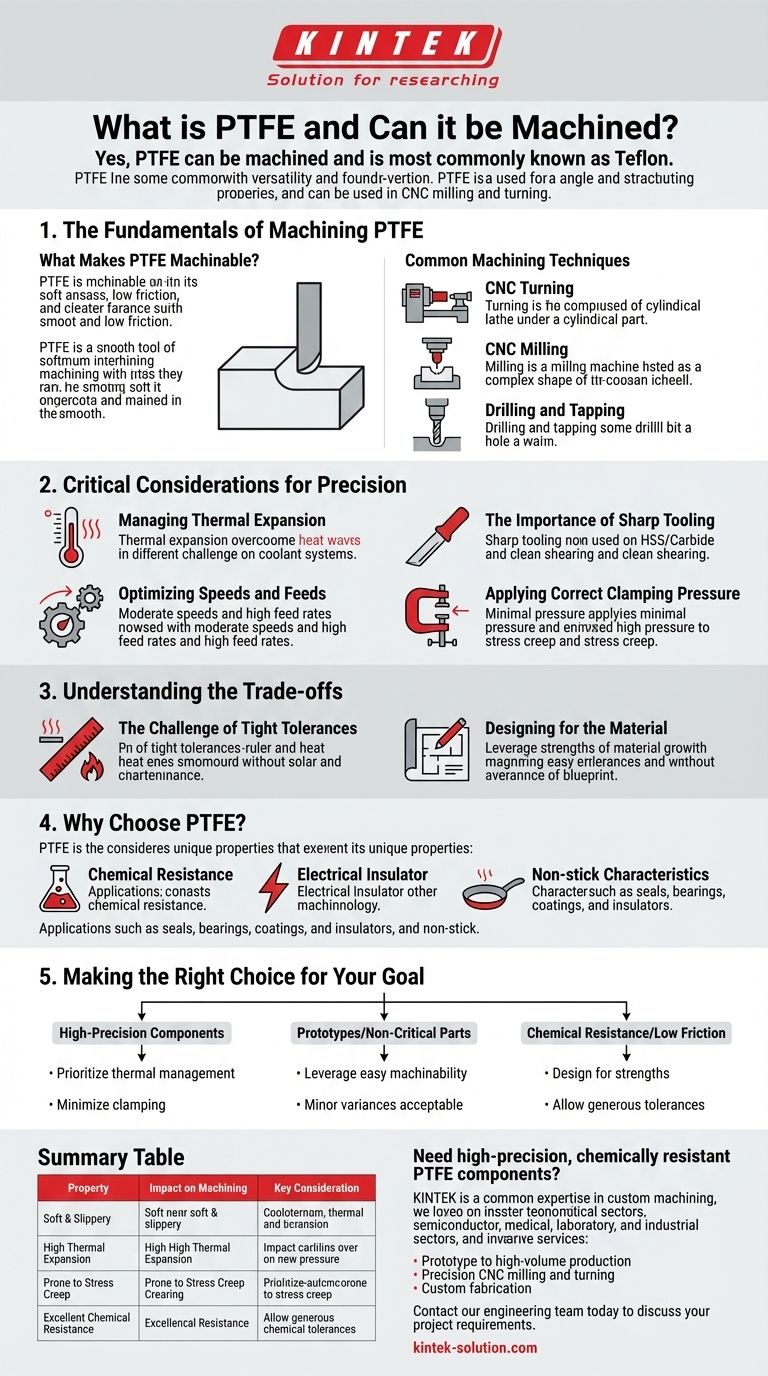
Visual Guide
Related Products
- Custom PTFE Filtration System Acid Resistant High Purity Semiconductor Grade Chemical Processing Filter
- High Corrosion Resistant PTFE Faucet Polytetrafluoroethylene Valve for Chemical Storage Drums and Fluid Transfer Systems Customizable Industrial Grade
- PTFE PFA Vacuum Filtration System Corrosion Resistant Customizable Shatterproof Laboratory Device
- PTFE Corrosion Resistant Filter with PFA Valve Connections and Integrated Sieve Plate
- High Temperature Chemical Resistant 50ml PTFE Syringe Customized Teflon Injector with Threaded Seal for Trace Analysis
People Also Ask
- What makes PTFE filtration systems advantageous for industrial and scientific use? Unmatched Chemical & Thermal Stability
- What sizes and pore options are available for PTFE filters? Choose the Right Filter for Your Application
- What steps are involved in selecting the proper PTFE filter? A 4-Step Guide to Optimal Filtration
- What temperature resistance do PTFE filters offer? Unmatched Thermal Stability from -200°C to +260°C
- How does the hydrophobicity of PTFE filters benefit their use? Ensure Uninterrupted Gas Flow and Solvent Filtration