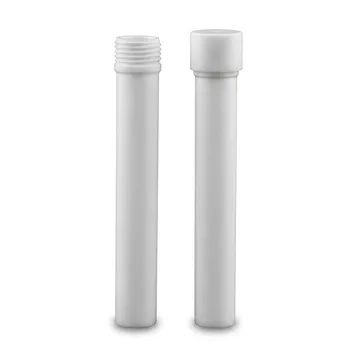
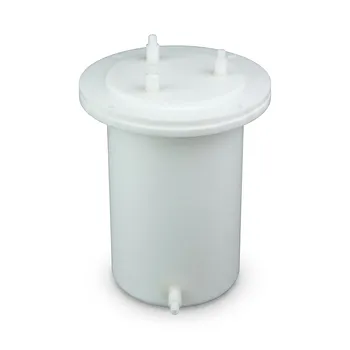
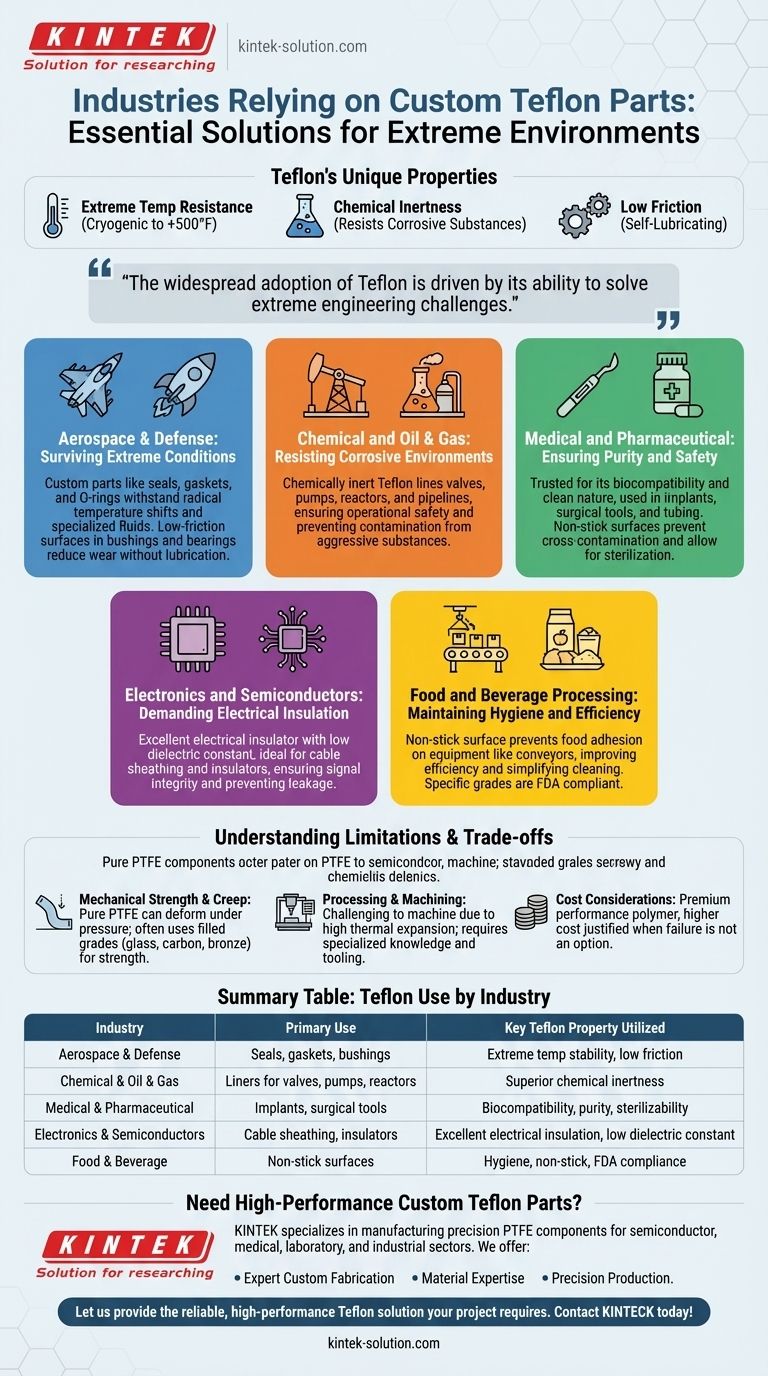
Custom Teflon parts are indispensable in a range of high-performance industries, most notably aerospace, chemical processing, medical, electronics, and food manufacturing. These sectors rely on Teflon's unique properties—including extreme temperature resistance, chemical inertness, and low friction—to function in environments where standard materials would quickly fail.
The widespread adoption of Teflon is driven by its ability to solve extreme engineering challenges. Industries turn to custom Teflon parts when they require an unmatched combination of chemical inertness, thermal stability, and low friction in a single, reliable material.
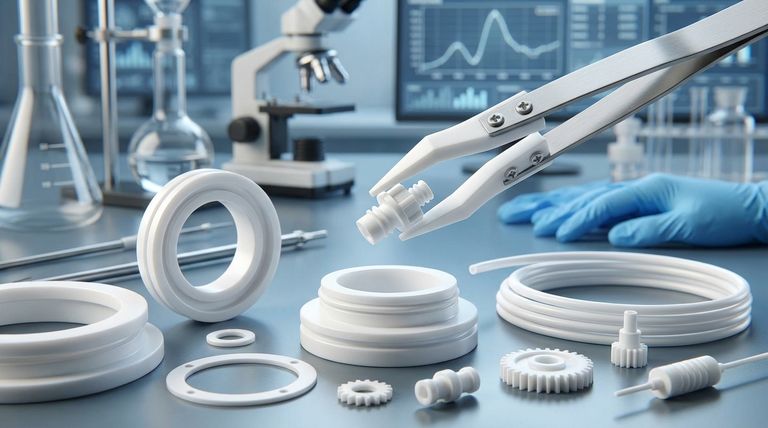
Why High-Stakes Industries Depend on Teflon
Teflon (PTFE) is rarely chosen for simple applications. It is specified when operational conditions are severe and component failure is not an option. Each industry leverages a distinct combination of its core properties.
Aerospace and Defense: Surviving Extreme Conditions
In aerospace, components must withstand radical temperature shifts, high pressure, and exposure to specialized fluids.
Custom Teflon parts like seals, gaskets, and O-rings are critical for their ability to remain stable and flexible from cryogenic temperatures to over 500°F (260°C).
Its low-friction surface is also used in bushings and bearings, reducing wear on moving parts without lubrication.
Chemical and Oil & Gas: Resisting Corrosive Environments
The chemical processing and energy sectors handle some of the most aggressive substances known.
Teflon is almost completely chemically inert, meaning it will not react with or degrade from contact with strong acids, solvents, or bases.
This makes it the default material for lining valves, pumps, reactors, and pipelines, ensuring operational safety and preventing contamination.
Medical and Pharmaceutical: Ensuring Purity and Safety
Purity and biocompatibility are non-negotiable in medical applications. Teflon is trusted for its clean, non-reactive nature.
It is used for medical implants, surgical tools, and tubing because it does not trigger immune responses and can be sterilized repeatedly.
In pharmaceutical manufacturing, its non-stick surface prevents cross-contamination and ensures equipment hygiene.
Electronics and Semiconductors: Demanding Electrical Insulation
Modern electronics require materials that can insulate sensitive components without interfering with high-frequency signals.
Teflon is an excellent electrical insulator with a very low dielectric constant, making it ideal for cable sheathing and insulators in high-performance computing and telecommunications.
This property ensures signal integrity and prevents electrical leakage, even in compact and complex devices.
Food and Beverage Processing: Maintaining Hygiene and Efficiency
Beyond non-stick cookware, Teflon plays a vital role in industrial food manufacturing.
Its non-stick surface prevents food from adhering to processing equipment like conveyors and hoppers, which improves efficiency and simplifies cleaning.
Furthermore, specific grades of Teflon are compliant with food safety regulations, ensuring that all parts are safe for direct contact with food products.
Understanding the Limitations and Trade-offs
While its properties are exceptional, Teflon is not a universal solution. Understanding its limitations is key to using it correctly.
Mechanical Strength and Creep
Pure Teflon (PTFE) is a relatively soft material and can deform or "creep" under sustained pressure, especially at higher temperatures.
Custom parts often use filled grades of Teflon—mixed with materials like glass, carbon, or bronze—to significantly improve strength, rigidity, and wear resistance.
Processing and Machining
Teflon's unique properties, such as high thermal expansion, make it challenging to machine to extremely tight tolerances.
Achieving precision requires specialized knowledge and tooling, which is why partnering with experienced machinists is critical for custom components.
Cost Considerations
Teflon is a premium performance polymer, and its cost is higher than that of common plastics like nylon or polyethylene.
Its use is typically justified in applications where the cost of failure—due to chemical attack, heat degradation, or friction—is far greater than the material cost.
Making the Right Choice for Your Application
Selecting Teflon is about matching its specific strengths to a clear engineering need.
- If your primary focus is extreme chemical resistance: Teflon is a premier choice for handling aggressive substances where nearly all other materials would degrade.
- If your primary focus is high-temperature stability and low friction: Teflon is ideal for seals, bearings, and wear components in demanding thermal environments.
- If your primary focus is biocompatibility and purity: Medical-grade Teflon is essential for applications requiring direct contact with biological systems or hygienic processing.
- If your primary focus is superior electrical insulation: Teflon provides exceptional dielectric properties for critical electronic components and high-frequency applications.
Ultimately, custom Teflon parts are chosen not as a general-purpose plastic, but as a specific engineering solution for problems no other material can solve as effectively.
Summary Table:
| Industry | Primary Use of Custom Teflon Parts | Key Teflon Property Utilized |
|---|---|---|
| Aerospace & Defense | Seals, gaskets, O-rings, bushings, bearings | Extreme temperature stability, low friction |
| Chemical & Oil & Gas | Liners for valves, pumps, reactors, pipelines | Superior chemical inertness |
| Medical & Pharmaceutical | Implants, surgical tools, tubing | Biocompatibility, purity, sterilizability |
| Electronics & Semiconductors | Cable sheathing, insulators | Excellent electrical insulation, low dielectric constant |
| Food & Beverage | Non-stick surfaces for processing equipment | Hygiene, non-stick properties, FDA compliance |
Need High-Performance Custom Teflon Parts?
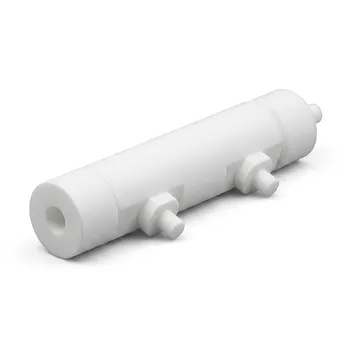
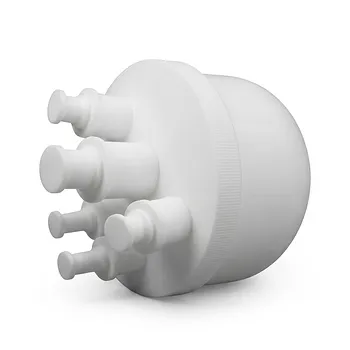
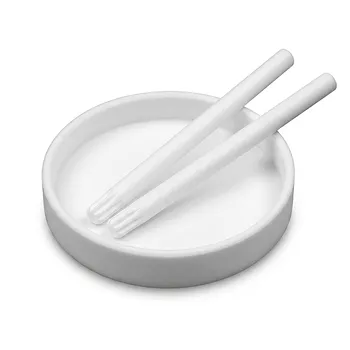
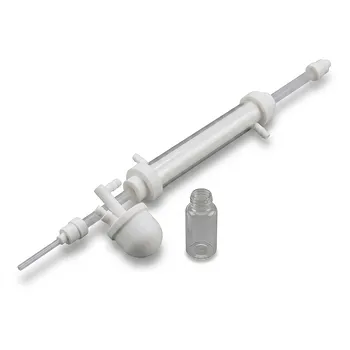
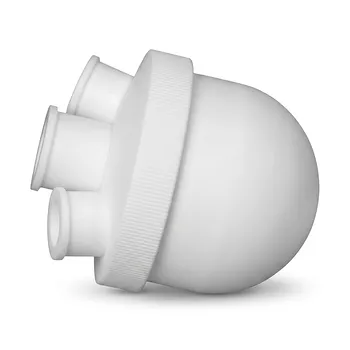
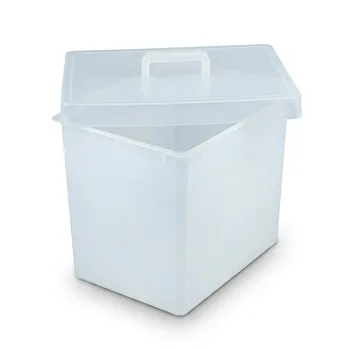
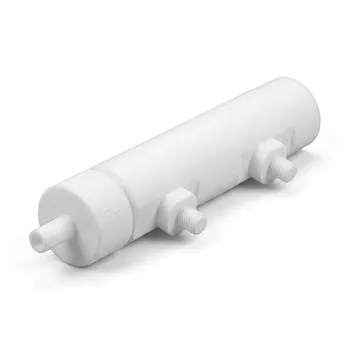
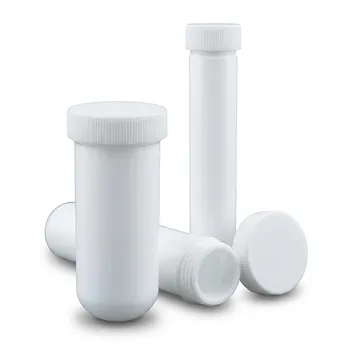
KINTEK specializes in manufacturing precision PTFE components—including seals, liners, and custom labware—for the semiconductor, medical, laboratory, and industrial sectors. We understand the critical demands of high-stakes applications.
We offer:
- Expert Custom Fabrication: From initial prototypes to high-volume production runs.
- Material Expertise: Guidance on selecting the right PTFE or filled Teflon grade for your specific needs, whether it's for chemical resistance, temperature stability, or electrical insulation.
- Precision Production: Overcoming the machining challenges of PTFE to deliver components that meet your exact specifications.
Let us provide the reliable, high-performance Teflon solution your project requires.
Contact KINTECK today to discuss your custom Teflon part needs
Visual Guide
Related Products
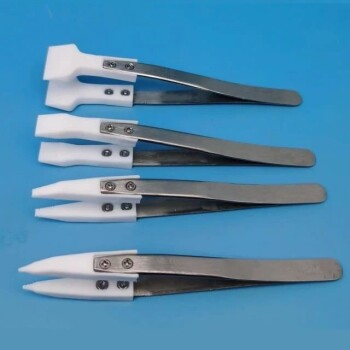
- Custom PTFE Parts Manufacturer for Teflon Parts and PTFE Tweezers
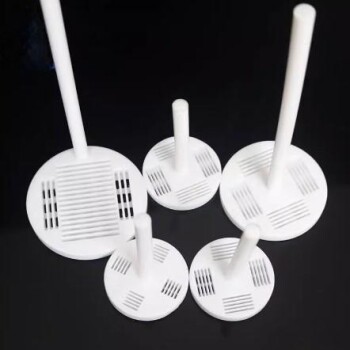
- Custom Machined Molded PTFE Teflon Parts Manufacturer for Laboratory ITO FTO Conductive Glass Cleaning Flower Basket
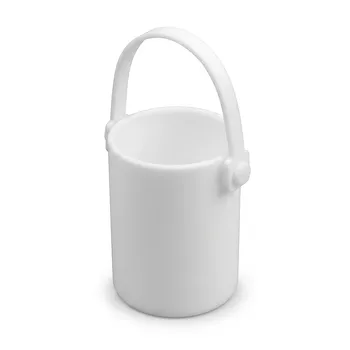
- Custom PTFE Parts Manufacturer for Teflon Containers and Components
- Custom PTFE Teflon Balls for Advanced Industrial Applications
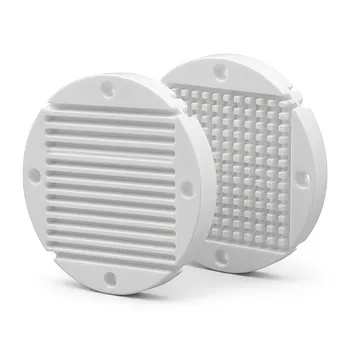
- Custom PTFE Insulating Gaskets Corrosion Resistant Teflon Seals Tailored Engineering Plastic Components
People Also Ask
- What are the main advantages of using PTFE for custom parts? Solve Complex Engineering Challenges
- What are the key properties of Teflon (PTFE) used in custom parts? | Achieve Peak Performance
- What industries use custom PTFE parts and for what purposes? Solve Critical Challenges with High-Performance Materials
- What design considerations are important for custom PTFE parts? Design for Performance & Reliability
- What industries benefit most from custom PTFE parts? Solve Extreme Environment Challenges